Publish with Us

Follow Penguin

Follow Penguinsters

Follow Penguin Swadesh

The Nitopadesha

In the distant land of Gandhara, there once was a janapada called Chakrapuri. Its elders were a worried lot. Their children were uninterested in the welfare and upkeep of the janapada. Most of them were consumed by self-interest and avarice, seeking personal gains, even at the cost of their fellow citizens. Realizing that the young must learn the arts and crafts of citizenship, the Sabha of Chakrapuri decided to employ Nitina of Takshashila, whose wisdom was said to be unparalleled, to teach their children. So it came to pass that the unconventional scholar was entrusted with the charge of these boys and girls for the next ninety days.

Thus begins the Nitopadesha. A labyrinth of stories in the style of the Panchatantra and the Jataka tales, this is a book about good citizenship and citizen-craft that will speak to the modern reader. Covering aspects such as what citizenship means, the ethical dilemmas one faces as a citizen and how one can deal with social issues, Nitin Pai’s absorbing translation is an essential read for conscientious citizens of all ages.

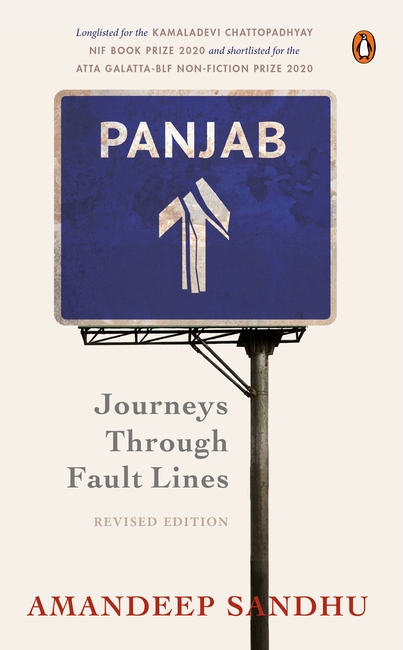
Panjab

Unlike people born in Panjab who have a direct connection with, and hence a memory of the land, I have no liminal or tangible marker of belonging to Panjab. While my family did hail from Panjab, I was neither born here, nor do I live here. I have no address, bank statement, Aadhaar card, passport or land ownership to prove my connection with Panjab.
In 2015, Amandeep Sandhu began an investigation that was meant to resolve the ‘hole in his heart’, his ’emptiness about matters Panjab’. For three years, he crisscrossed the state and discovered a land that was nothing like the one he had imagined and not like the stories he had heard.
Present-day Panjab prides itself on legends of its military and valorous past even as it struggles with daily horrors. The Green Revolution has wreaked ecological havoc in the state, and a decade and a half of militancy has destabilised its economy and governance. Sikhism-the state’s eclectic and syncretic religion- is in crisis, its gatekeepers brooking no dissent and giving little spiritual guidance. And Panjab has yet to recover from the loss of its other half, now in Pakistan.
This revised edition includes a chapter on the 2020-21 farmers’ struggle which proved beyond doubt that the old spirit of the land with its undercurrent of resistance to power and hegemony still beats away. The hope that Panjab’s unyielding knots can be untied continues to linger.

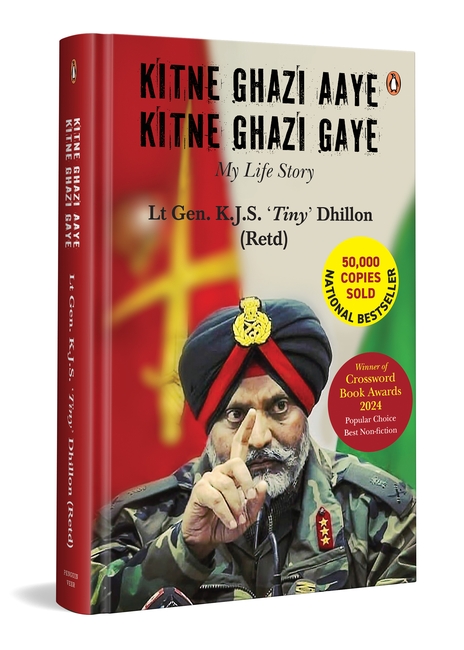
Kitne Ghazi Aaye, Kitne Ghazi Gaye

Lieutenant General K.J.S. ‘Tiny’ Dhillon, an Infantry veteran from the Rajputana Rifles with about four decades of military service, has served multiple tenures in Kashmir.

In this book, ‘Tiny’ Dhillon opens a hitherto-closed window, not only to his life but also to Kashmir. He recounts fascinating tales about the toughest challenges he encountered, from age three right up to those from his multiple tenures in Kashmir from 1988 to 2020, where it was his responsibility to maintain a balance between counter-terrorism operations on the one hand and to use military soft power on the other. Dhillon retraces his entire journey, from being a young boy to becoming the Commander of the Chinar Corps, with Kashmir as an inseparable part of this story.

As a first-hand account, the book touches on and demystifies the myths, half-truths, whats, ifs and whys of the exodus of the Kashmiri Pandits; the barbarous attack on an Indian security convoy in Pulwama district, in which forty CRPF personnel were killed; the Balakot air strikes; and the abrogation of Article 370 and its impact on the socio-political, economic and law-and-order situation, among other incidents. It takes us behind the scenes to bring out the nuances of various intriguing developments at a critical juncture in the history of J&K.

Anecdotal, candid and evocative, Kitne Ghazi Aaye, Kitne Ghazi Gaye brings to light the true stories from this Army veteran’s life. It focuses on the personal, professional and, most importantly, family life of a soldier in the Army, and will not only provide an insight into the trials and tribulations he faced but will also inspire a wide spectrum of readers, especially young defence aspirants.

Find Tiny Dhillon online:

Twitter: @Tiny_Dhillon
Instagram: @tinydhillon
Facebook: @TinyDhillon

Grasping Greatness

Since its independence in 1947, India’s leaders have sought to grasp the greatness that the country seemed destined for. India’s first prime minister, Jawaharlal Nehru, articulated these aspirations early on but, overwhelmed by development challenges, his successors focused largely on domestic concerns rather than on global leadership. The post-1991 era saw India positioned for the first time in many decades as an economic success, suggesting that it was on the cusp of breaking out as a global player.

The twenty-odd years following the 1991 reforms were heady for India. Based on the expectation that India was now poised to ascend as a major power, Prime Minister Narendra Modi-less than a year after he first took office in May 2014-expressed his desire that India assume a leading role: completing the transformation from being merely an influential entity into one whose weight and preferences are defining for international politics.

Grasping Greatness explores the various tasks pertaining to this push for eminence in world affairs. It elaborates the economic, state-building, and international dimensions of this ambition. Eminent thinkers like Rakesh Mohan, Ila Patnaik, Surjit Bhalla, Arjun Subramanian, and others reflect upon the tasks at hand and the desirable routes to achieve them.

Edited by Ashley J. Tellis, Bibek Debroy and C. Raja Mohan, Grasping Greatness is an important contribution to the intellectual debates as India enters into a new era on the world stage.

Our Hindu Rashtra

India has taken so sharp a turn in recent years that the very centre has shifted considerably. What led to this swing? Is it possible to trace the path to this point? Is there a way back to the just, secular, inclusive vision of our Constitution-makers?

This country has long been an outlier in its South Asian neighbourhood, with its inclusive Constitution and functioning democracy. The growth of Hindutva, in some sense, brings India in line with the other polities here. In Our Hindu Rashtra, writer and activist Aakar Patel peels back layer after layer of cause and effect through independent India’s history to understand how Hindutva came to gain such a hold on the country. He examines what it means for India that its laws and judiciary have been permeated by prejudice and bigotry, what the breach of fundamental rights portends in these circumstances, and what the all-round institutional collapse signifies for the future of Indians.

Most importantly, Patel asks and answers that most important of questions: What possibilities exist for a return? Thought-provoking and pulling no punches, this book is an essential read for anyone who wishes to understand the nature of politics in India and, indeed, South Asia.

India in Search of Glory

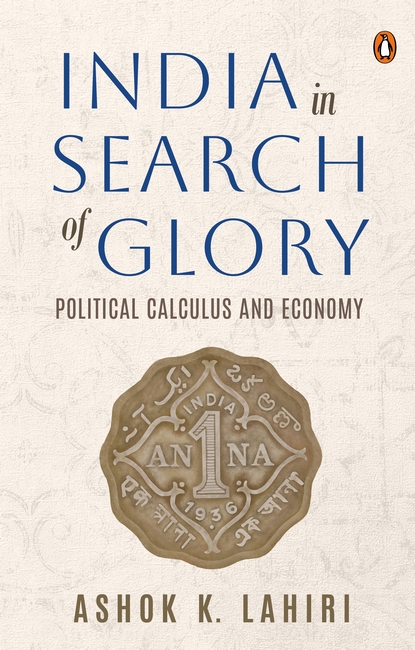
India and the Indians have made some progress in 75 years after Independence. The number of literates has gone up. The Indians have become healthier and their life expectancy at birth has gone up. The proportion of people below the poverty line has also halved. But the shine from the story fades when India is compared with that of the East Asian Tigers and China. It looks good but not good enough. India looks far away from the glory it seeks. This issue forms the core subject matter of this book. It tries to argue why India could not achieve more and what all it could have achieved. It paints a picture of its possible future and highlights the areas that need immediate attention.

The People of India

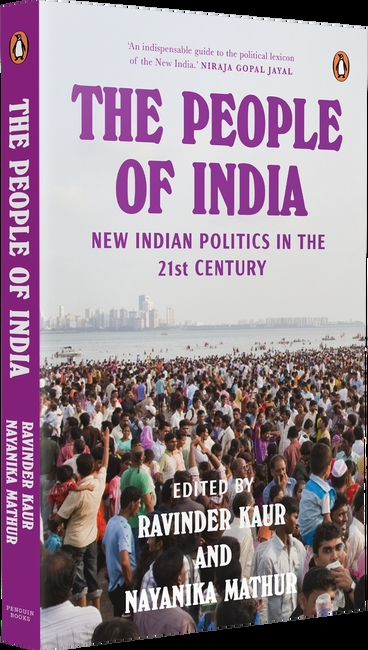
‘The People’ and ‘New India’ are terms that are being invoked freely to both understand and govern India as she enters her 75th year of post-colonial nationhood. Yet, there is little clarity on who these people of India really are, what they do, their desires, histories and attachments to India. Similarly, the phrase ‘New India’ is used far
too loosely to explain away a dangerously confounding politics.
In this book, some of the most respected scholars of South Asia come together to write about a person or a concept that holds particular sway in the politics of contemporary India. In doing so, they collectively open up an original understanding of what the politics at the heart of New India are-and how best we might come to analyse them.
This brilliant collection put together by Ravinder Kaur and Nayanika Mathur includes original and accessible essays by leading social science and humanities scholars of South Asia.

Challenges to A Liberal Polity

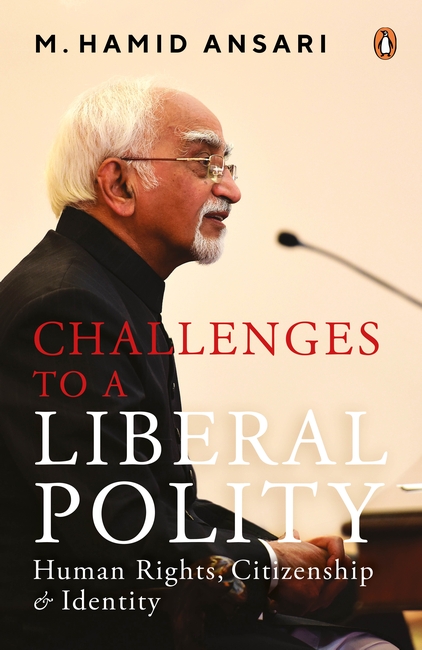
Challenges to a Liberal Polity, amazingly relevant and thought provoking for our times-by Hamid Ansari, former Vice President of India-brings to light some of the most critical issues, which influence our thoughts every day.

From Nehru’s vision for India as a major world power to the issues of citizenship, religion, democracy, the idea of plurality and Muslim identity in Indian society, inclusion/exclusion of Indian Muslims, the ‘mainstream’ decision making process in India, the role of women in order to build a compassionate society, implication for dissent, Muslims’ role and contribution to Indian culture, civilization and nation-building in the post-Independent India, among others, the book thrashes some of the burning issues of Indian polity and society.

Comprehensive, argumentative and evocative, this title will not only interest a wide spectrum of readers but also politicians, policymakers and students and scholars of Indian politics, history and sociology.

Writer, Rebel, Soldier, Lover

“An outstanding literary biography” AMITAV GHOSH

“Mukul writes beautifully, and brings to life a man who has often been misunderstood” BENJAMIN MOSER

“This book is a remarkable contribution to the world of Indian letters: ANNIE ZAIDI

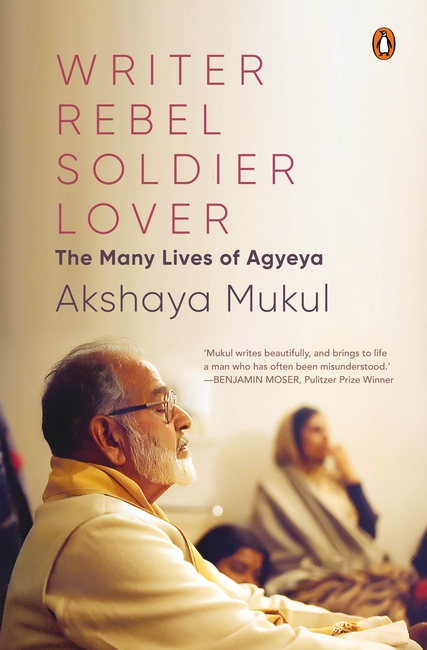
Sachchidanand Hirananda Vatsyayan ‘Agyeya’ is unarguably one of the most remarkable figures of Indian literature. From his revolutionary youth to acquiring the mantle of a (highly controversial) patron saint of Hindi literature, Agyeya’s turbulent life also tells a history of the Hindi literary world and of a new nation-spanning as it does two world wars, Independence and Partition, and the building and fraying of the Nehruvian state.

Akshaya Mukul’s comprehensive and unflinching biography is a journey into Agyeya’s public, private and secret lives. Based on never-seen-before archival material-including a mammoth trove of private papers, documents of the CIA-funded Congress for Cultural Freedom and colonial records of his years in jail-the book delves deep into the life of the nonconformist poet-novelist. Mukul reveals Agyeya’s revolutionary life and bomb-making skills, his CIA connection, a secret lover, his intense relationship with a first cousin, the trajectory of his political positions, from following M.N. Roy to exploring issues dear to the Hindu right, and much more. Along the way, we get a rare peek into the factionalism and pettiness of the Hindi literary world of the twentieth century, and the wondrous and grand debates which characterized that milieu.

Writer, Rebel, Soldier, Lover features a formidable cast of characters: from writers like Premchand, Phanishwarnath Renu, Raja Rao, Mulk Raj Anand and Josephine Miles to Prime Minister Jawaharlal Nehru, revolutionary Chandra Shekhar Azad and actor Balraj Sahni. And its landscapes stretch from British jails, an intellectually robust Allahabad and modern-day Delhi to monasteries in Europe, the homes of Agyeya’s friends in the Himalayas and universities in
the US. This book is a magnificent examination of Agyeya’s civilizational enterprise.

Ambitious and scholarly, Writer, Rebel, Soldier, Lover is also an unputdownable, whirlwind of a read.

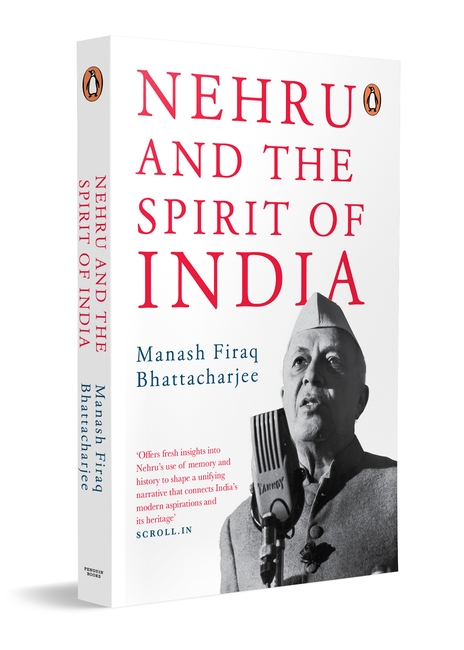
Nehru And The Spirit Of India

Jawaharlal Nehru was Plato’s philosopher king, who ‘discovered’ an India that remains an undiscovered possibility. Nehru and the Spirit of India is a critical and nuanced perusal of his intellectual and political legacy.

From the ‘politics of friendship’ between Nehru and Sheikh Abdullah, Nehru’s defense of secularism in the Constituent Assembly Debates, to what propelled Nehru to curb free speech in the First Amendment, Manash Firaq Bhattacharjee draws from political history to illuminate fierce debates in India today: Kashmir, the CAA, and hate speech. Be it contemporary events like the miracle of Ganesha drinking milk and the use of Vedic astrology in Chandrayaan-2, or the agonising suicide of a doctor, the author examines the fractured nature of Indian modernity, which Nehru had suggestively called a ‘garb’. Bhattacharjee bolsters Nehru’s view that India is enriched by the encounter of cultures and that we must not discard the past, but engage with it.

As a second-generation refugee, Bhattacharjee argues for a ‘minoritarian’ approach to national politics. Breaking ideological and disciplinary protocols, he compels us to learn from the insights of poets and thinkers. Lucidly written, this provocative book offers an original perspective on Nehru and Indian history.

error: Content is protected !!