KERALA SAHITYA AKADEMI AWARD WINNER
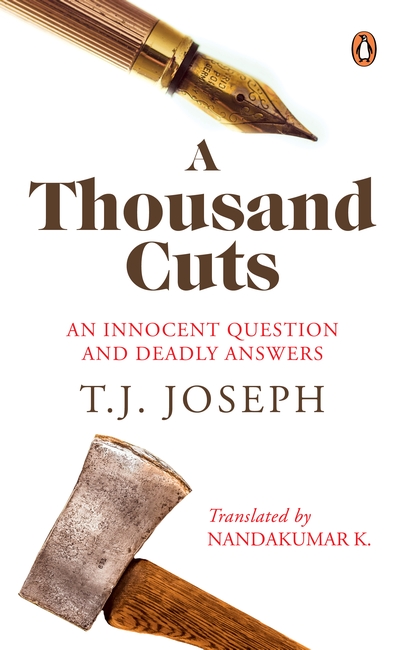
A Thousand Cuts is a harrowing, sobering and ultimately inspiring autobiography of Professor T.J. Joseph, who in 2010 became the victim of a brutal terrorist assault, accused of blasphemy after setting an exam question that enraged fundamentalists. This book is an important reminder of the pernicious effect of religious extremism and the duty of every person to speak out against those who would silence free expression’ SHASHI THAROOR
‘There is excruciating agony here, but also black humour and irony that enliven and lighten the narrative even at the height of anguish’ K. SATCHIDANANDAN
‘The poignant tale, with its sense of urgency and helplessness, has been sensitively translated as A Thousand Cuts‘ RANA SAFVI
A chilling account of religious extremism
In 2010, T.J. Joseph, a professor of Malayalam at Newman College, Kerala, framed an innocuous question for an internal examination that changed his life forever. Following a trumped-up charge of blasphemy, members of a radical Islamist organization set upon him in public, viciously maiming him and chopping off his right hand. His memoir, told with amazing restraint and wry humour, is the moving tale of his life and family as they went through hell and beyond. Here’s the extraordinary story of a man who survived dismembering only to be betrayed by his
own Church. Let alone stand by him, it robbed him of his livelihood and isolated him from his community, driving Joseph’s long-suffering wife to melancholia and eventual suicide. Joseph’s story is one of fortitude, will power, forgiveness and compassion, told with rare wit that will make readers chuckle through their tears.
This is a tale that will leave the reader seething, weeping and smiling by turns.

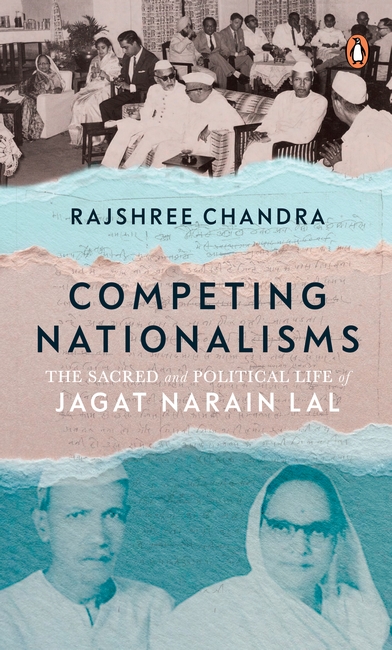
Competing Nationalisms is more than a political biography of Jagat Narain Lal-now forgotten by history, but once an influential member of the freedom movement in Bihar. As a member of the Congress and of the Hindu Mahasabha; as a Hindu nationalist who wanted to combine religion with civic virtues; as a Gandhian and an ‘ascetic nationalist’ seeking freedom in a political world, Jagat Narain Lal’s life becomes a mirror for the times in which a mix of religiosity, spirituality and ritual could not be separated from either the social or the political field.
The book travels with Jagat Narain Lal on his journey through four pathways-Ascetic, Hindu Nationalist, Anti-Colonial and Civic nationalisms. His life and times give us a glimpse into these intersecting, contesting and mutating idioms of nationalism. There are bigger leaders, taller nationalists, more valiant fighters of freedom, but none who perhaps so tortuously embodied the many possibilities and contradictions of Indian nationalism. In his anxieties, vulnerability, negotiations and truth-telling, we glimpse Indian nationalism’s own fraught relationship with questions of identity, faith and nationhood.
In leafing through her grandfather’s life, page by yellowed page, Chandra presents not just his political biography but, in a sense, a personal biography of Indian nationalism as well. In Jagat Narain Lal’s small story lies a bigger history of competing nationalisms, as well as a tale that
speaks to the present.

A deep dive into understanding India-China relations
Why did India and China go to war in 1962? What propelled Jawaharlal Nehru’s ‘vision’ of China? Why is it necessary to understand the trans-Himalayan power play of India and China in the formative period
of their nationhoods? The past shadows the present in this relationship and shapes current policy options, strongly influencing public debate in India to this day.
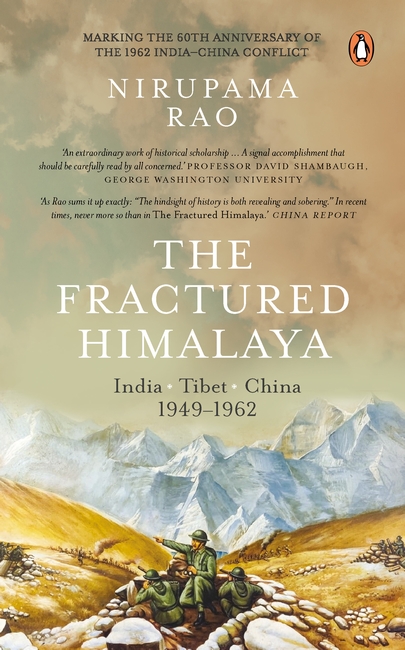
Nirupama Rao, a former Foreign Secretary of India, unknots this intensely complex saga of the early years of the India-China relationship. As a diplomat-practitioner, Rao’s telling is based not only on archival material from India, China, Britain and the United States, but also on a deep personal knowledge of China, where she served as India’s Ambassador. In addition, she brings a practitioner’s keen eye to the labyrinth of negotiations and official interactions that took place between the two countries from 1949 to 1962.
The Fractured Himalaya looks at the inflection points when the trajectory of diplomacy between these two nations could have course-corrected but did not. Importantly, it dwells on the strategic dilemma posed by Tibet in relations between India and China-a dilemma that is far from being resolved. The question of Tibet is closely interwoven into the fabric of this history. It also turns the searchlight on the key personalities involved-Jawaharlal Nehru, Mao Zedong, Zhou Enlai and the 14th Dalai Lama-and their interactions as the tournament of those years was played out, moving step by closer step to the conflict of 1962.

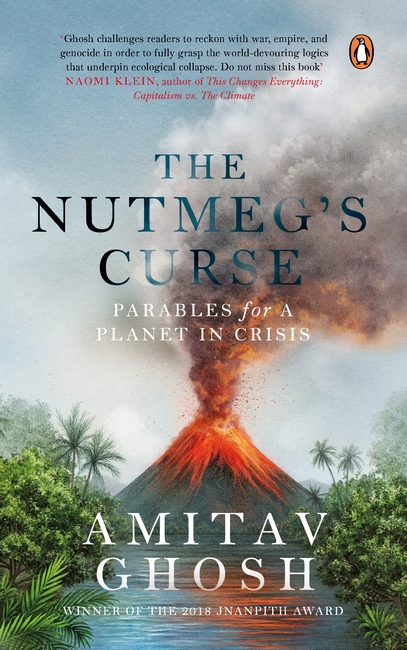
Before the 18th century, every single nutmeg in the world originated around a group of small volcanic islands east of Java, known as the Banda Islands. As the nutmeg made its way across the known world, they became immensely valuable – in 16th century Europe, just a handful could buy a house. It was not long before European traders became conquerors, and the indigenous Bandanese communities – and the islands themselves – would pay a high price for access to this precious commodity. Yet the bloody fate of the Banda Islands forewarns of a threat to our present day.
Amitav Ghosh argues that the nutmeg’s violent trajectory from its native islands is revealing of a wider colonial mindset which justifies the exploitation of human life and the natural environment, and which dominates geopolitics to this day.
Written against the backdrop of the pandemic and the Black Lives Matter protests, and interweaving discussions on everything from climate change, the migrant crisis, and the animist spirituality of indigenous communities around the world, The Nutmeg’s Curse offers a sharp critique of Western society, and reveals the profoundly remarkable ways in which human history is shaped by non-human forces.

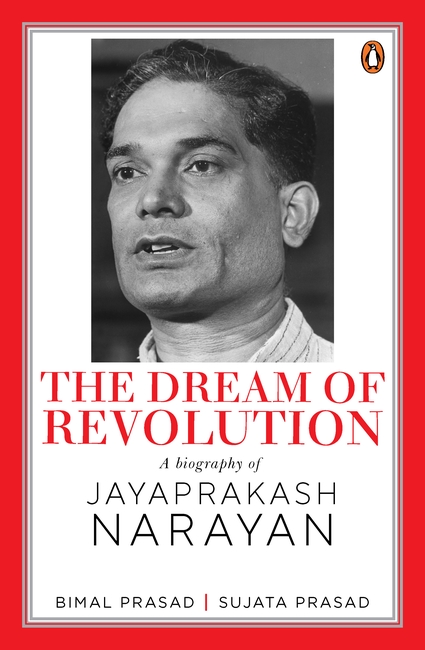
Few figures in modern India have enjoyed such acclaim and adoration as Jayaprakash Narayan. And yet, he has been equally vilified for all that went wrong in the unfinished post-colonial movement for freedom and democracy. Jayaprakash Narayan, or JP as he was universally known, epitomized the Marxian and Gandhian styles of political engagement, and famously brought a powerful government to its knees. Throughout his life, he channelled an emotional hunger for transformative politics, jettisoned easy options, shunned power and incubated revolutionary ideas.
A comprehensive study of JP’s life and ideas-from the radicalism of his thought process at American university campuses in the 1920s to his political coming of age in the 1930s and subsequent disenchantment with Gandhi’s leadership; from his infectious confidence about the future of socialism to his seemingly naive plans to outmanoeuvre powerful forces within the Congress; from his fractious friendship with Jawaharlal Nehru to his relentless crusade against the stifling of dissent-The Dream of Revolution, Bimal and Sujata Prasad’s rigorously researched biography of JP, dispenses with clichés, questions commonly held perceptions and pushes the limits of what a biographical portrait is capable of.
Rich in anecdotes and never-before-told stories, this book explores the ambiguities and ironies of a life lived at the barricades, and one man’s unremitting quest to usher in a society based on equality and freedom.

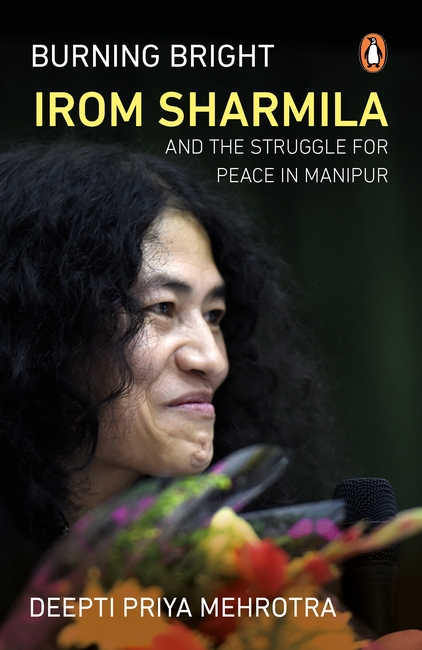
The true story of the ‘Iron Lady of Manipur’ who fasted for 16 years against AFSPA
Ten innocent people were mowed down by security forces in Malom, a village near Imphal, in November 2000. The perpetrators were not punished, protected under the Armed Forces Special Powers Act which empowers military and para-military personnel to arrest, shoot, even kill, anyone on the grounds of mere suspicion. In response to this tragedy–one among many such atrocities–Irom Sharmila, a young Manipuri, began an indefinite hunger strike. The government arrested her and force-fed her through nasal tubes. She was released and re-arrested innumerable times, but she stood by her demand. In July 2016, Irom brought her sixteen years of hunger strike to an end, and decided to contest the elections.
Burning Bright is a hard-hitting account of a people caught between the crossfire of militants and security forces; of a once-sovereign kingdom whose culture has been brutally violated; of the many voices of dissent-from underground groups to the Meira Paibis, a women’s movement opposed to all forms of violence whether by the state or insurgents and a moving portrait of ‘the Iron Lady of Manipur’.

‘…unmatched in its meticulous and careful research into the wellsprings of a truly unique relationship between two neighbouring states.’ SHYAM SARAN
‘Ranjit Rae’s portrayal of India-Nepal relations from the Indian perspective is meticulous, nuanced and insightful.” S.D. MUNI
‘Ranjit Rae breaks down the paradox of India’s very intimate yet troubled relationship with Nepal.’ C. RAJA MOHAN
The first two decades of the new millennium have witnessed a dramatic socio-political transformation of Nepal. A violent Maoist insurgency ended peacefully, a new constitution abolished the monarchy and established a secular federal democratic republic. Nevertheless, political stability and a peace dividend have both remained elusive. Nepal is also buffeted by changing geopolitics, including the US-China contestation for influence and the uneasy relationship between India and China.
As a close neighbour, India has been deeply associated with the seminal changes in Nepal, and the bilateral relationship has seen many twists and turns. Partly a memoir, this book examines India’s perspective on these developments, in the context of the civilizational and economic underpinnings of the India-Nepal relationship, as well as issues that continue to prevent this relationship from exploiting its full potential. Though there are several Nepalese accounts that deal with this subject, there are few from an Indian point of view. Kathmandu Dilemma fills this gap.
In 1935, Zainab Essanji wants to break out of her restricted life and be part of the independence movement. But it seems that all she is destined to do is embroider and wait to get married.
In 2019, Zainab Currimji, class XI student, is unhappy at getting drawn into debates and controversies which she would rather not be part of. But in India of 2019, how can one not be drawn into these?
In this deeply addictive, sweeping book about the life and times of the two Zainabs, is captured a short history of Mumbai, and of India. Of what we were and what we have become.
‘Zipping between the past and the present, between midnight’s children and millennials and getting both right, Shabnam Minwalla has crafted a page-turner whose heart is open, inclusive and populated by a host of memorable characters.’ —Jerry Pinto
Winner of the Crossword Book Award • the BK Children’s Book Award • the VoW-REC Book Award • the Auther Award

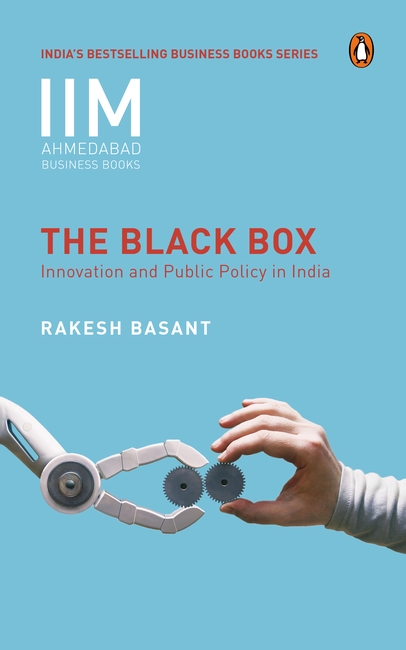
What policies should India pursue for fostering innovation? Taking the perspective that all policies that influence technology-related choices of firms should be considered part of innovation policy, the book analyses the impact on innovation of various policies, including those related to industry, trade, R&D, foreign direct investment, intellectual property rights, start-ups and higher education. It brings together conceptual and empirical literature from diverse intellectual streams to analyse the linkages between innovation and public policy. Combining insights from the disciplines of economics and management, the book highlights the complexity of policy choices, identifies certain focus areas and argues for consistency across various policy instruments to create an appropriate environment for innovation in India.
An exemplar of Indian literature-the only and heart-rending biography of a daughter by her father
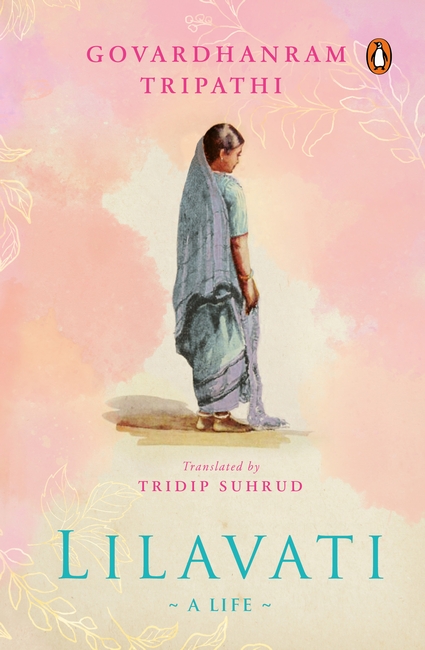
In a moment of rare passion Govardhanram Madhavram Tripathi, author of Sarasvatichandra, exclaimed ‘I only want their souls’. He was referring to the souls of his countrymen and women, which he sought to cultivate through his literary writings. Lilavati was his and Lalitagauri’s eldest daughter. Her education and the writing of Sarasvaticandra were intertwined. She was raised to be the perfect embodiment of virtue, and died at the age of twenty-one, consumed by tuberculosis. In moments of ‘lucidity’ , she spoke of her suffering and that challenged the very foundations of Govardhanram’s life. In 1905 he wrote her biography, Lilavati Jivankala. This is a rare work in biographical literature, a father writing about the life of a deceased daughter. Despite Govardhanram’s attempts to contain Lilavati as a unidimensional figure of his imagination, she goes beyond that, sometimes by questioning the fundamental tenets of Brahminical beliefs, and at others by being so utterly selfless as to be unreal even to him.
Lilavati: A Life is a cross between literature in translation, social and political history, and women’s studies. Tridip Suhrud’s introduction dwells on the themes of the cultivation of selfhood, of nation and the ideal of sacrifice, which is sure to resonate with contemporary readership, especially women.