‘…unmatched in its meticulous and careful research into the wellsprings of a truly unique relationship between two neighbouring states.’ SHYAM SARAN
‘Ranjit Rae’s portrayal of India-Nepal relations from the Indian perspective is meticulous, nuanced and insightful.” S.D. MUNI
‘Ranjit Rae breaks down the paradox of India’s very intimate yet troubled relationship with Nepal.’ C. RAJA MOHAN
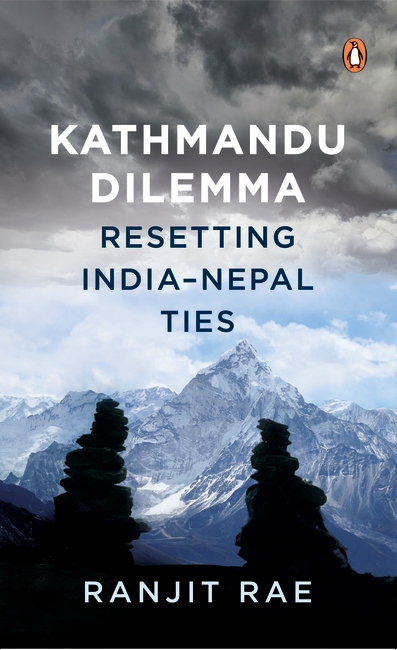
The first two decades of the new millennium have witnessed a dramatic socio-political transformation of Nepal. A violent Maoist insurgency ended peacefully, a new constitution abolished the monarchy and established a secular federal democratic republic. Nevertheless, political stability and a peace dividend have both remained elusive. Nepal is also buffeted by changing geopolitics, including the US-China contestation for influence and the uneasy relationship between India and China.
As a close neighbour, India has been deeply associated with the seminal changes in Nepal, and the bilateral relationship has seen many twists and turns. Partly a memoir, this book examines India’s perspective on these developments, in the context of the civilizational and economic underpinnings of the India-Nepal relationship, as well as issues that continue to prevent this relationship from exploiting its full potential. Though there are several Nepalese accounts that deal with this subject, there are few from an Indian point of view. Kathmandu Dilemma fills this gap.

In 1935, Zainab Essanji wants to break out of her restricted life and be part of the independence movement. But it seems that all she is destined to do is embroider and wait to get married.
In 2019, Zainab Currimji, class XI student, is unhappy at getting drawn into debates and controversies which she would rather not be part of. But in India of 2019, how can one not be drawn into these?
In this deeply addictive, sweeping book about the life and times of the two Zainabs, is captured a short history of Mumbai, and of India. Of what we were and what we have become.
‘Zipping between the past and the present, between midnight’s children and millennials and getting both right, Shabnam Minwalla has crafted a page-turner whose heart is open, inclusive and populated by a host of memorable characters.’ —Jerry Pinto
Winner of the Crossword Book Award • the BK Children’s Book Award • the VoW-REC Book Award • the Auther Award

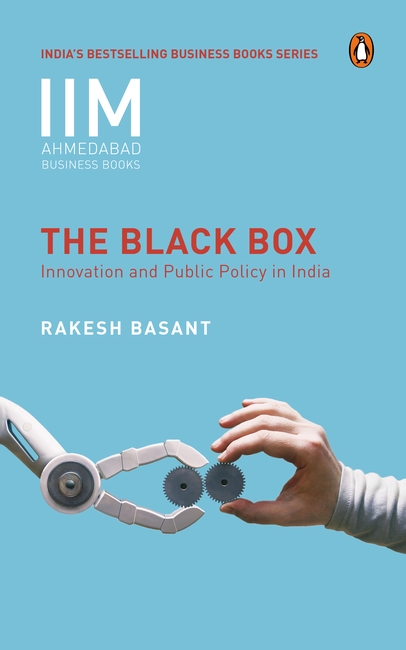
What policies should India pursue for fostering innovation? Taking the perspective that all policies that influence technology-related choices of firms should be considered part of innovation policy, the book analyses the impact on innovation of various policies, including those related to industry, trade, R&D, foreign direct investment, intellectual property rights, start-ups and higher education. It brings together conceptual and empirical literature from diverse intellectual streams to analyse the linkages between innovation and public policy. Combining insights from the disciplines of economics and management, the book highlights the complexity of policy choices, identifies certain focus areas and argues for consistency across various policy instruments to create an appropriate environment for innovation in India.

An exemplar of Indian literature-the only and heart-rending biography of a daughter by her father
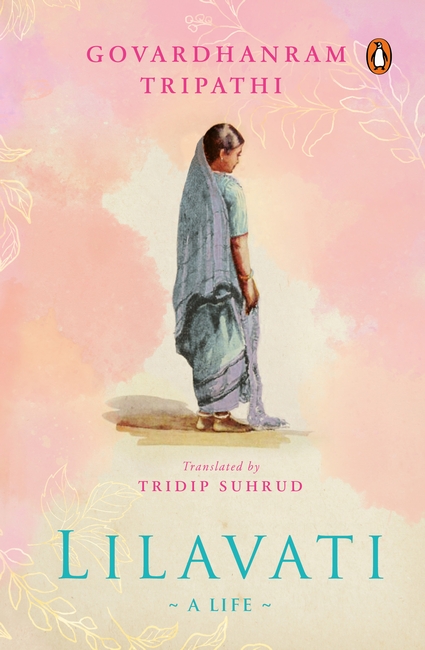
In a moment of rare passion Govardhanram Madhavram Tripathi, author of Sarasvatichandra, exclaimed ‘I only want their souls’. He was referring to the souls of his countrymen and women, which he sought to cultivate through his literary writings. Lilavati was his and Lalitagauri’s eldest daughter. Her education and the writing of Sarasvaticandra were intertwined. She was raised to be the perfect embodiment of virtue, and died at the age of twenty-one, consumed by tuberculosis. In moments of ‘lucidity’ , she spoke of her suffering and that challenged the very foundations of Govardhanram’s life. In 1905 he wrote her biography, Lilavati Jivankala. This is a rare work in biographical literature, a father writing about the life of a deceased daughter. Despite Govardhanram’s attempts to contain Lilavati as a unidimensional figure of his imagination, she goes beyond that, sometimes by questioning the fundamental tenets of Brahminical beliefs, and at others by being so utterly selfless as to be unreal even to him.
Lilavati: A Life is a cross between literature in translation, social and political history, and women’s studies. Tridip Suhrud’s introduction dwells on the themes of the cultivation of selfhood, of nation and the ideal of sacrifice, which is sure to resonate with contemporary readership, especially women.

“I would have considered myself blessed if I could have achieved a fraction of his quality in my writing” – Mahasweta Devi
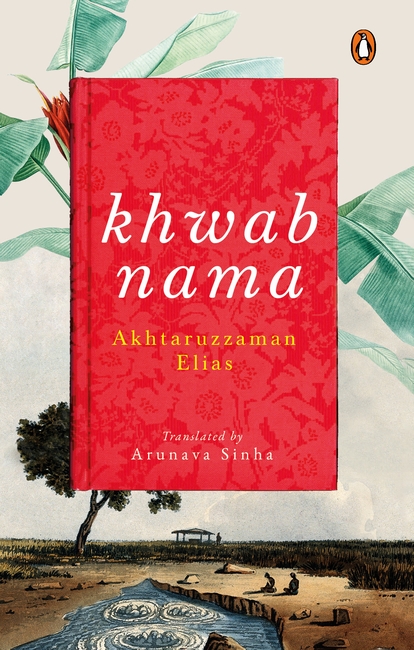
Bengal in the 1940s. Having overcome the famine and the revolt of the sharecroppers, Bengal’s peasants are uniting. Work is scarce and wages are low. There is barely any food to be had. The proposal for the formation of Pakistan, the elections of 1946, and communal riots are rewriting the contours of history furiously. Amidst all this, in an unnamed village, a familiar corporeal spirit plunges into knee-deep mud. This is Tamiz’s father, the man in possession of Khwabnama.
At first glance, Khwabnama is the tale of a harmless young farmhand who becomes a sharecropper and dreams of a future that has everything to do with the land that he cultivates and the soil that he tills. The fabric of his dreams, though, have as much to do with the history of
the land as its future, and as much to do with memories as with hope.
In this magnum opus, which documents the Tebhaga movement, wherein peasants demanded two-thirds of the harvest they produced on the land owned by zamindars, Akhtaruzzaman Elias has created an extraordinary tale of magical realism, blending memory with reality, legend with history and the struggle of marginalized people with the stories of their ancestors.
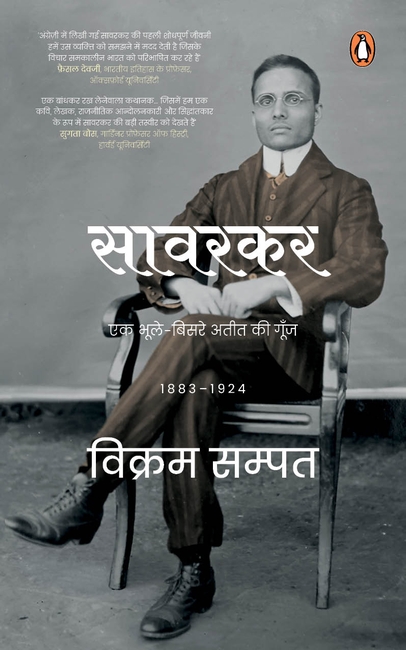
As the intellectual fountainhead of the ideology of Hindutva, which is in political
ascendancy in India today, Vinayak Damodar Savarkar is undoubtedly one of
the most contentious political thinkers and leaders of the twentieth century.
Accounts of his eventful and stormy life have oscillated from eulogizing
hagiographies to disparaging demonization. The truth, as always, lies
somewhere in between and has unfortunately never been brought to light.
Savarkar and his ideology stood as one of the strongest and most virulent
opponents of Gandhi, his pacifist philosophy and the Indian National Congress.
An alleged atheist and a staunch rationalist who opposed orthodox Hindu
beliefs, encouraged inter-caste marriage and dining, and dismissed cow worship
as mere superstition, Savarkar was, arguably, the most vocal political voice for
the Hindu community through the entire course of India’s freedom struggle. From
the heady days of revolution and generating international support for the cause
of India’s freedom as a law student in London, Savarkar found himself arrested,
unfairly tried for sedition, transported and incarcerated at the Cellular Jail, in the
Andamans, for over a decade, where he underwent unimaginable torture.
From being an optimistic advocate of Hindu-Muslim unity in his treatise on the
1857 War of Independence, what was it that transformed him in the Cellular Jail
to a proponent of ‘Hindutva’, which viewed Muslims with suspicion?
Drawing from a vast range of original archival documents across India and
abroad, this biography in two parts-the first focusing on the years leading up to
his incarceration and eventual release from the Kalapani-puts Savarkar, his life
and philosophy in a new perspective and looks at the man with all his
achievements and failings.

‘Essential reading for all those interested in how India will deal with its greatest strategic challenge, an increasingly powerful China‘-SHIVSHANKAR MENON
‘Vijay Gokhale strips away the illusion that China ever shared convergent interests with India in Asia and globally. A disconcerting read, but indispensable.’-ASHLEY J. TELLIS
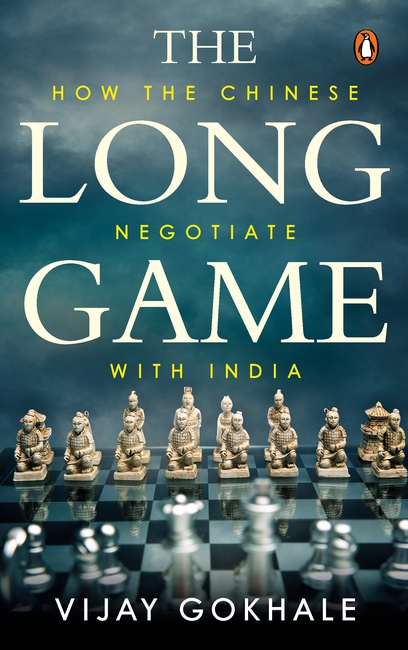
India’s relations with the People’s Republic of China have captured the popular imagination ever since the 1950s but have rarely merited a detailed understanding of the issues. Individual episodes tend to arouse lively debate, which often dissipates without a deeper exploration of the factors that shaped the outcomes. This book explores the dynamics of negotiation between the two countries, from the early years after Independence until the current times, through the prism of six historical and recent events in the India-China relationship. The purpose is to identify the strategy, tactics and tools that China employs in its diplomatic negotiations with India, and the learnings for India from its past dealings with China that may prove helpful in future negotiations with the country.

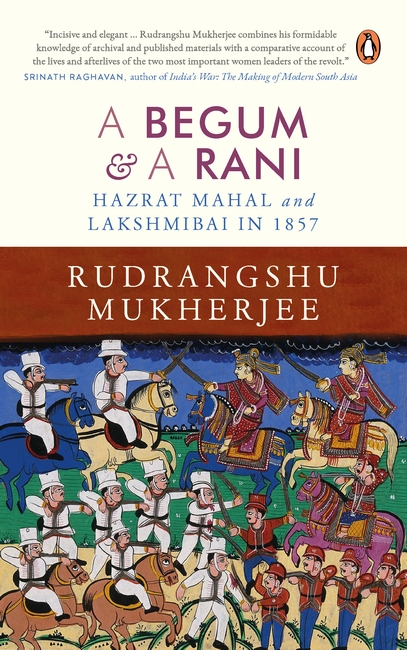
Exploring the lives of two remarkable women who chose to enter a field of activity which, in the middle of the nineteenth century, was seen a male domain, this book brings to light how unusual circumstances catapulted Begum Hazrat Mahal of Awadh and Rani Lakshmibai of Jhansi into the rebellion of 1857. Both of them sacrificed their lives trying to overthrow the British rule, which they considered to be alien and oppressive. Their resistance and their deaths are heroic and poignant.
The book captures the different trajectories of their lives and their struggles. In different but adjacent geographies these two women, both married into royal houses, decided to uphold traditions of ruling and culture that their husbands had established. These traditions had been subverted by the policies of Lord Dalhousie who had annexed both Awadh and Jhansi. While noting these similarities, it should be highlighted that Awadh was a large and sprawling kingdom with a long history whereas Jhansi was a small principality.
The rani and the begum never met, even though they were embroiled in the same struggle. It is the rebellion of 1857-58 that provides the context, which makes these two outstanding women feature in the same narrative. This book tells the story of two women in a rebellion.
The afterlives of the begum and the rani took on very different hues. The rani was made a nationalist icon: a woman on horseback with a raised sword, who died in battle. The begum was a relatively forgotten figure who did not get her due place in the roll call of honour. Revisiting the revolt of 1857 from a unique perspective and looking at their afterlives, the myths, this book attempts to set the record straight.
Looking at the revolt of 1857 from a different perspective, A Begum & A Rani is an act of retrieval.

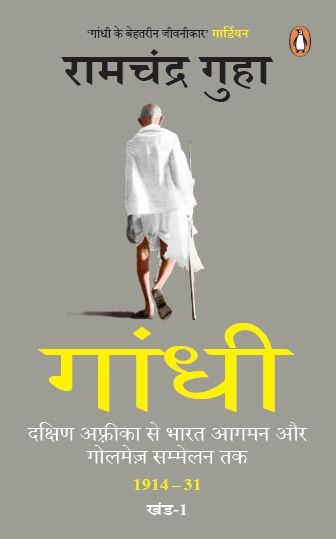
Gandhi lived one of the great 20th- century lives. He inspired and enraged, challanged and delighted millions of men and women around the world. He lived almost entirely in the shadow of British Raj, which for much of his life seemed a permanent fact, but which he did more than anyone else to bring down. In a world defined by violence and warfare and by fascist and communist dictatorships, Gandhi was armed with nothing more than his arguments and example. While fighting for national freedom, he also attacked caste and gender hierarchies and fought-and died-for inter-religious harmony.
This magnificent book tells the story of Gandhi’s life from the time he left South Africa to his participation in the Second Round Table Conference.

Was Savarkar really a co-conspirator in the Gandhi murder?
Was there a pogrom against a particular community after Gandhi’s assassination?
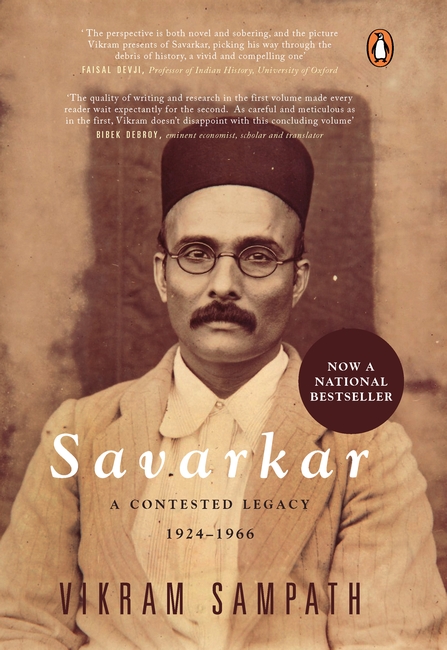
Decades after his death, Vinayak Damodar Savarkar continues to uniquely influence India’s political scenario. An optimistic advocate of Hindu-Muslim unity in his treatise on the 1857 War of Independence, what was it that transformed him into a proponent of ‘Hindutva’? A former president of the All-India Hindu Mahasabha, Savarkar was a severe critic of the Congress’s appeasement politics. After Gandhi’s murder, Savarkar was charged as a co-conspirator in the assassination. While he was acquitted by the court, Savarkar is still alleged to have played a role in Gandhi’s assassination, a topic that is often discussed and debated.
In this concluding volume of the Savarkar series, exploring a vast range of original archival documents from across India and outside it, in English and several Indian languages, historian Vikram Sampath brings to light the life and works of Vinayak Damodar Savarkar, one of the most contentious political thinkers and leaders of the twentieth century.
Savarkar is one of the most debated figures in Indian History and Indian Politics!