Crafted with extraordinary vision and forged through intense debate, The Constitution of India stands as one of humanity’s most remarkable experiments in democratic nation-building. Adopted on 26 January 1950, this foundational text not only establishes the foundational structure of India but also enshrines the ideals of justice, liberty, equality and fraternity for more than a billion citizens.
This Penguin luxury edition presents The Constitution of India as both a legal charter and a moral compass—an evolving document that continues to shape India’s political, social and cultural life. Readers will discover the profound balance it strikes between individual rights and collective responsibilities, the federal framework that binds a diverse nation, and the guiding principles that empower institutions while safeguarding citizens.
Whether you are a student, a scholar, or a curious reader, this edition of The Constitution of India, accompanied by a comprehensive contextual introduction, invites you to engage with the living heartbeat of the Republic—a masterpiece of governance, hope and enduring democratic aspiration.

A collection of essays by experts across fields and their thoughts on the future of India in the next decade
Thought leaders from twenty diverse fields, ranging from politics, economics and foreign policy to health care and energy, predict what 2030 will look like for India and how the nation will evolve in this decade.
Editor Gautam Chikermane has masterfully weaved together essays by Abhijit Iyer-Mitra, Ajay Shah, Amish Tripathi, Amrita Narlikar, Bibek Debroy, David Frawley, Devdip Ganguli, Justice B.N. Srikrishna, Kirit S. Parikh, Manish Sabharwal, Monika Halan, Parth J. Shah, Raghunath Anant Mashelkar, Rajesh Parikh, Ram Madhav, Reuben Abraham, Samir Saran, Sandipan Deb and Vikram Sood into a single volume that looks towards India’s future.
A handbook for citizens, a road map for policymakers and a guide for scholars, this collection captures the many aspects of a future that will see India becoming the world’s third-largest economy and a regional power before the decade gets over.

‘Excellent political biography of NTR. I enjoyed reading it. There is a lot of good stuff here’
SANJAYA BARU, author, political commentator
‘A very objective, lucid, truthful biography’
DR JAYAPRAKASH NARAYAN, founder, Lok Satta
‘…fair, even-handed and objective in assessing NTR’s political journey’
PARAKALA PRABHAKAR, author, political commentator
‘Found it impossible to put down the book till I completed it’
K. PADMANABHAIAH, chairman, Administrative Staff College of India
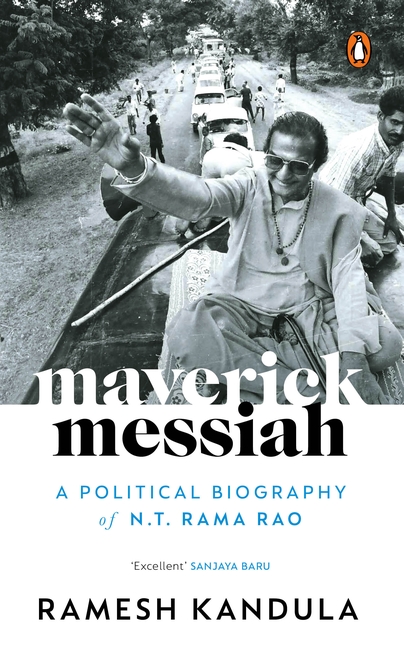
Nandamuri Taraka Rama Rao, widely known as NTR, was not merely a film star who strayed into politics and captured power in Andhra Pradesh. The actor-politician redefined the political culture in the state and scripted a new political idiom.
His rather dramatic entry into politics, the profound impact he left on the people of Andhra Pradesh and the vital role he played in national politics during his relatively short political life, however, have not received deserving recognition.
Maverick Messiah captures the different facets of NTR’s life in all their varied hues and puts in perspective the significant contribution of the actor-politician to the Indian political tapestry.

Mirza Asadullah Khan Ghalib was born in Agra in the closing years of the eighteenth century. A precocious child, he began composing verses at an early age and gained recognition while he was still very young. He wrote in both Urdu and Persian and was also a great prose stylist. He was a careful, even strict, editor of his work who took to publishing long before his peers. His predilection for writing difficult, obscure poetry peppered with complex metaphors produced a unique commentarial tradition that did not extend beyond his work. Commentaries on his current Urdu divan have produced a field of critical writing that eventually lead to the crafting of a critical lens with which to view the classical ghazal.
The nineteenth century was the height of European colonialism. British colonialism in India produced definitive changes in the ways literature was produced, circulated and consumed. Ghalib responded to the cultural challenge with a far-sightedness that was commendable. His imagination sought engagement with a wider community of readers. His deliberate switch to composing in Persian shows that he wanted his works to reach beyond political boundaries and linguistic barriers.
Ghalib’s poetic trajectory begins from Urdu, then moves to composing almost entirely in Persian and finally swings back to Urdu. It is nearly as complex as his poetry. However, his poetic output in Persian is far more than what he wrote in Urdu. More important is that he gave precedence to Persian over Urdu. Ghalib’s voice presents us with a double bind, a linguistic paradox. Exploring his life, works and philosophy, this authoritative critical biography of Ghalib opens a window to many shades of India and the subcontinent’s cultural and literary tradition.

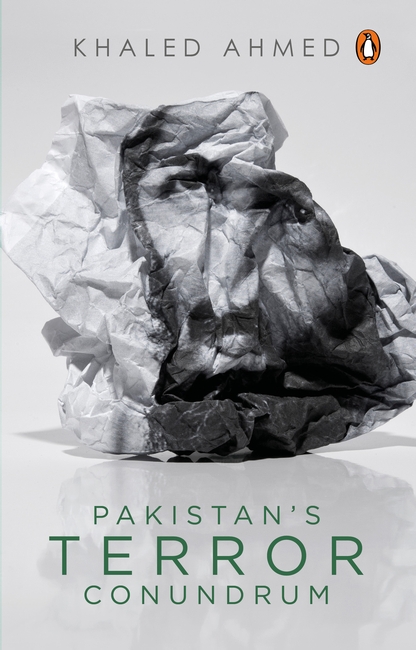
Pakistan was born amid communal violence and a collective consciousness of danger. Right from the outset, democracy was up for debate between the politicians nurtured by the British Raj and an orthodox clergy that advocated a utopia in which Islam was to be the ideological guide. Today, the threat of religion as an extra-legal force is causing many Pakistanis to think if the state can move forward into the future with Islam as its credo.
In this carefully curated collection of his writings in several publications, senior journalist Khaled Ahmed examines Pakistan’s policies regarding terrorism against the backdrop of increasing pressure from international organizations. Despite joining the US in its war against terror after 9/11, the country has been perceived as a safe haven and breeding ground for terrorists. Ahmed looks at the origins and activities of the various terrorist organizations, the role of the state and the ideology of its founding figures, some of whom seem to have been forgotten.

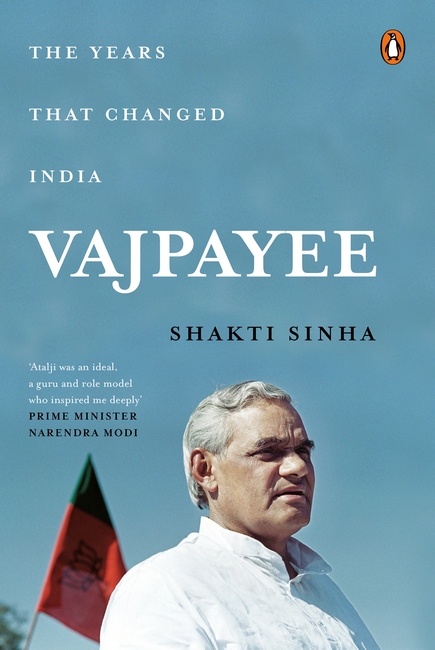
Former prime minister of India and member of the Bharatiya Janata Party, Atal Bihari Vajpayee was an understated and a singular politician of the kind rarely seen in contemporary times. His patriotism was uncompromising, forged out of the paradoxes of his life: the sensitive poet who summoned nerves of steel to conduct the Pokhran-II nuclear tests; the man from humble beginnings who envisioned a project as titanic as the Golden Quadrilateral
highway network. Devoid of any political pedigree or patronage, he harnessed his diplomatic acumen to transform India’s relations with the United States, which had long been mired in misunderstandings rooted in the Cold War. His calculated decisions led to key strategic and economic policy achievements.
In this book, Shakti Sinha, a close associate of Vajpayee, helps us understand Vajpayee as a decision-maker. The narrative focuses on the political challenges Vajpayee faced, and on his key initiatives in the strategic and economic fields during his first term as prime minister, which have had a lasting impact. Vajpayee fleshes out not only Vajpayee’s political philosophy but also provides an insider’s account of how the former PM thought and worked.

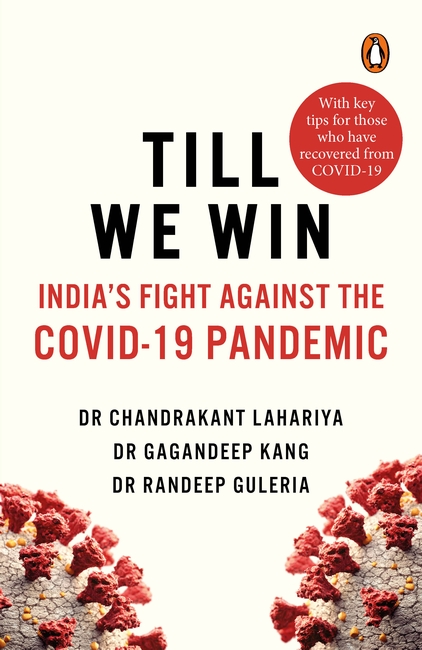
When will India win the fight against the COVID-19 pandemic?
How long do we have to use masks?
When can we expect a safe and effective vaccine? Do we need to wear masks even after we get a vaccine?
What if there is no definitive treatment against COVID-19?
How can we protect our family form this disease?
How should we respond to this ‘new normal’ as an individual and as a community?
What is the way forward?
Offering insights on how India continues to fight the pandemic, Till We Win is a must-read for everyone. It is a book for the people, for political leaders, policymakers and physicians, with the promise and potential to transform public health in India.

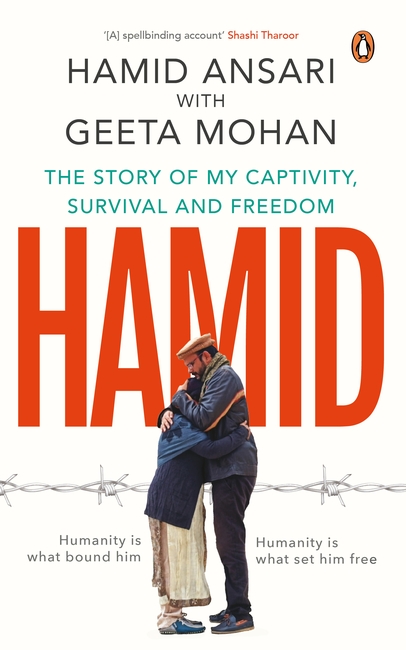
In November 2012, Hamid, a 27-year-old Mumbai-based techie, disappeared into thin air. What happened? Where did he go? All his parents knew was that he had gone to Kabul, Afghanistan, to explore a job opportunity. Upon some investigation, they found out that their son had been chatting online with some Pakistani friends, in particular a girl, across the border.
Authored by Hamid Ansari and Geeta Mohan, this is the definitive insider account of the man who saw no boundaries when it came to saving a girl from forced marriage under the wani custom. Nothing scared or stopped him; until he was betrayed by his friends in Pakistan. He became embroiled in a whirlwind of allegations made by the Pakistani authorities to break him and label him a spy. What followed were years of suffering during the investigations, along with long periods of solitary confinement and a struggle for survival.
In India, his mother, Fauzia Ansari, led a relentless fight, knocking on as many doors as it took, eventually moving three nations, India, Pakistan and Afghanistan, to get him back home, with the help of the then external affairs minister, Sushma Swaraj. On 18 December 2018, Hamid finally touched India soil again. Gritty, heart-wrenching and moving, this is s story of humanity, love, betrayal and hope against all odds.

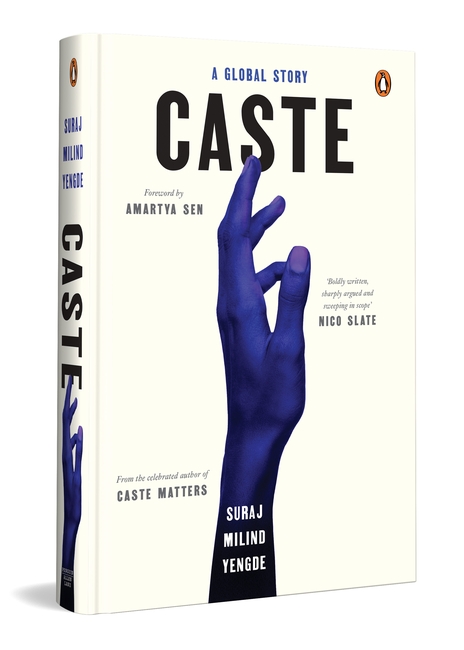
Caste, and caste-based discrimination, are not just Indian issues. They are experienced throughout the world, from Britain to Bahrain, Canada to South Africa. This is a global phenomenon, demanding global solutions.
Leading scholar Suraj Milind Yengde shines a light on the Dalit experience internationally, from indentured labourers in the nineteenth-century Caribbean to present-day migrant workers in the Middle East. Combining history, ethnography and archival research, he offers a compelling, comparative approach to caste and race from ancient times to today. What have been the impacts of colonialism, religion and nationalism on caste-based hierarchies worldwide? What can we learn from caste-related movements in India and internationally? Why hasn’t the South Asian diaspora embraced the anti-caste struggles of the homeland? And what are the limits of Dalit–Black solidarity?
Exploring the global footprint of the anti-caste struggle—from its links with Black Lives Matter to the work of international Ambedkarite organisations—this is a powerful analysis of world politics from the perspective of one of the most oppressed communities on Earth. Asking probing questions about the nature of inequality, Yengde issues an energetic call for a cosmopolitan Dalit universalism, as a vital part of today’s fight for social justice and equality.

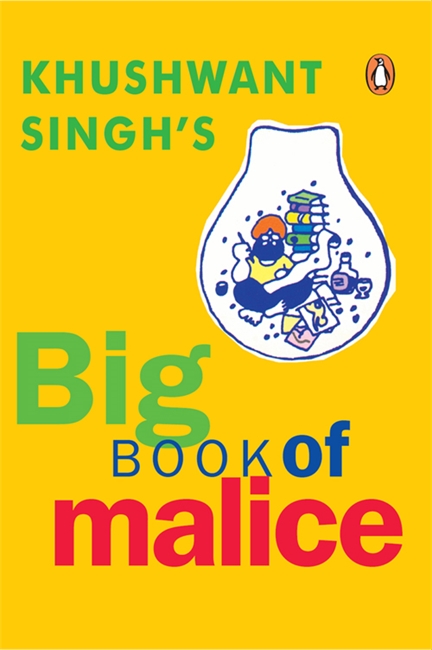
Malice. The word is synonymous with Khushwant Singh; his pen has spared no one. For over four decades as India’s most widely-read columnist, he has commented on just about everything: religion, politics, our future, our past, prohibition, impotency, presidents, politicians, cricket, dog-haters, astrologers, the banning of books, the secret of 1ongevity…the list is endless. Candid to the point of being outrageous, Khushwant Singh makes both his reader and subject wince. He writes unabashedly on nose picking, wife-bashing, bribing journalists, gender wars and the desires of an octogenarian; on Nehru and Edwina, Laloo, Bal Thackeray, Chandraswami and Sonia Gandhi, among host of others.
Khushwant Singh’s Big Book of Malice brings together some of his nastiest and most irreverent pieces. Witty, sharp and brutally honest, this collection is certain to delight and provoke readers of all ages.
‘Good people can be crashing bores. Evil men who combine evil-doing with drunkenness, debauchery and making illicit money make more interesting characters because they pack their lives with action. They do what most of us would like to do but do not have the guts to.’
-Khushwant Singh