“I echo [the authors’] siren call for urgent disruptive change that will shatter patriarchal norms”–Winnie Byanyima, Executive Director of UNAIDS
“…a valuable guide to achieving safety for women and gender equality at home and in social, political and economic life.”-Nitin Desai, former Under-Secretary General for Economic and Social Affairs, United Nations
“A must-read for anyone who believes that women in India deserve better…”-Alankrita Shrivastava, film director, Lipstick Under My Burkha
“Harvesting existent knowledge as a way of shaping the future is a valuable idea… [This book] fulfills exactly this need…”-Devaki Jain, feminist economist and author of The Brass Notebook
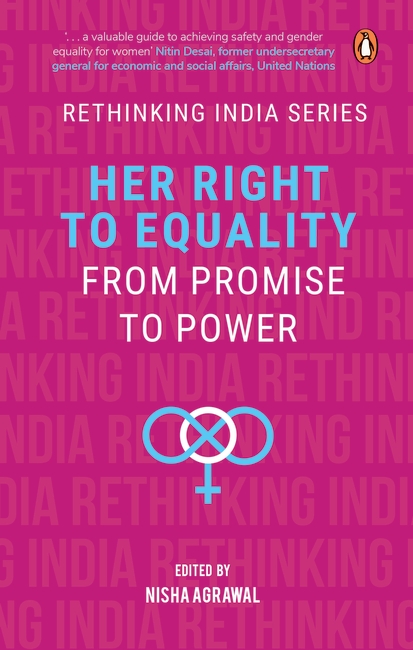
The sixth volume in the Rethinking India series, in collaboration with the Samruddha Bharat Foundation, looks at the reality of gender equality in the country against the promises of justice and equality made in the Constitution of India. What it finds is that even today, India remains an unequal country and that women control, at best, about 10-15 per cent of economic and political resources. While there has been progress in some areas, in many other areas there has been very little and uneven change.
One of the main reasons for this slow progress is that social norms that assign particular roles and identities to men and women are ‘sticky’ and hard to change. In India, a highly patriarchal society, these norms give very little power to women and, consequently, they have little control or influence over decisions taken within their households, in markets or in political spaces.
Challenging the status quo can cause a backlash, leading to high levels of violence against women in the domestic sphere, the workplace and in public places. If we are to see a more safe, just and equal society by 2047, a hundred years after Independence, it cannot be business as usual. Her Right to Equality argues that what we require is disruptive change through individual and collective leadership and action.
Essays by Flavia Agnes, Rajini R. Menon, Amita Pitra, Sumitra Mishra, Shubhika Sachdeva, Poonam Muttreja, Sanghamitra Singh, Swarna Rajagopalan, Ashwini Deshpande, Archana Garodia Gupta, Sushmita Dev, Kanimozhi Karunanidhi, Tara Krishnaswamy, Bina Agarwal.

‘Essential reading’ ~ Shekhar Gupta
‘A handy insight into the activities, reach and influence of the RSS’ ~ Indian Express
‘[Yields] insights for students of Indian democracy’ ~ The Hindu
‘Very insightful and is recommended reading for both critics as well as admirers of the RSS’ ~ Financial Express
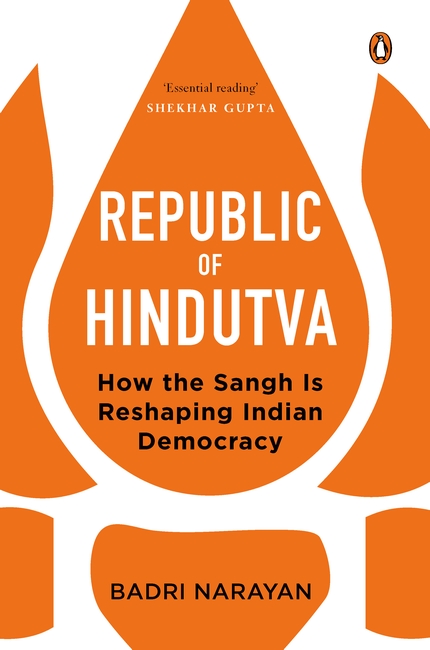
AN EXPLOSIVE ACCOUNT OF HOW THE RSS HELPS THE BJP WIN ELECTIONS
The RSS is like the tip of an iceberg, exerting its influence much beyond what is visible. Beginning with the choice of Narendra Modi as the forerunner for the 2014 general election up to the campaign for the 2019 election, RSS cadres have been a formidable force behind the staggering rise of the BJP in national politics.
In this eye-opening, necessary book, Badri Narayan offers an intimate glimpse of how the Sangh and its vast network of educational, cultural and social outfits have been digging deep roots in the Indian psyche. By refashioning its modes of mobilization as well as assimilating Dalits, OBCs, tribals and other marginalized communities, the RSS has made the Hindutva metanarrative appealing to a large section of Indians. During elections, the BJP-instead of wiping out caste from electoral politics-reaps rich political dividends from this social appropriation.
Drawing on extensive field research in the heartland of India and interviews with RSS volunteers, Narayan reveals how a new public is being forged at the grassroots, which will determine the course of Indian democracy.

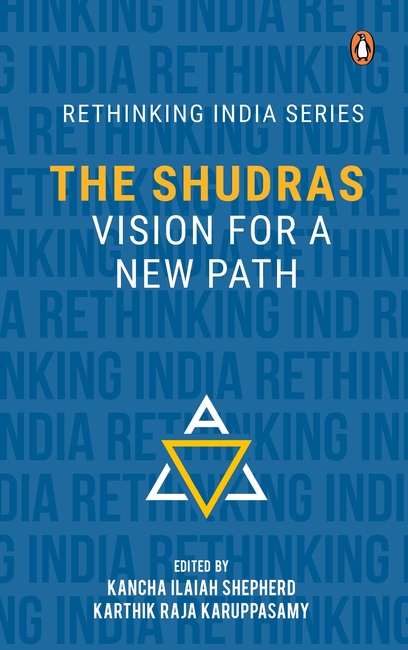
‘The Shudras echoes Dr Ambedkar’s question in Who Were the Shudras? that he asked in 1946. More than 70 years later, Kancha Ilaiah and his team of authors revisit this issue to give Shudras a voice again’ -CHRISTOPHE JAFFRELOT
The Shudras: Vision for a New Path weaves together multiple dimensions of the predicament of India’s productive castes–in the spiritual, social, political, economic, philosophical and historical spheres. It reformulates their current position as well as future pathways. It strives to provoke Shudras-including regional political party leaders-all over India to realize their unique historical role in fighting unequal caste structures. And it gives a call to resist Hindutva, in which they have no liberated, equal space with the Dwija castes. At a juncture when the Shudra castes are regionalized and the Dwijas have become ‘national’, the fifth volume of the Rethinking India series, in collaboration with the Samruddha Bharat Foundation, seeks to bring home the real picture of their marginalized status in all key structures of the nation. It posits that the emancipation and progress of the Shudras are vital to sustain Ambedkar’s constitutional democracy and move towards socio-spiritual equality.

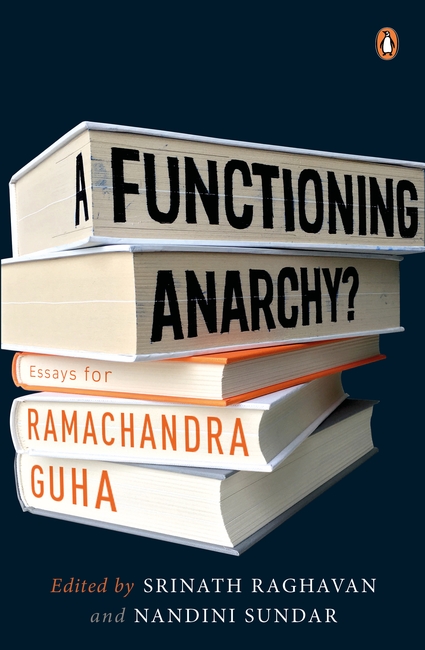
In a long and versatile career spanning thirty-five years, Ramachandra Guha has produced a vast body of work. Each time, he has broken new ground-his pioneering environmental histories of India and his still-relevant work on ecology and equity; his social histories of Indian cricket; his monumental history of the Indian republic; his biographies of Verrier Elwin and Gandhi; his anthologies of ecological, social and political thought in India; and his collections of biographical and political essays.
Sparked by Guha’s wide-ranging and important work, A Functioning Anarchy is a collection of essays by historians, social scientists, ecologists and journalists.

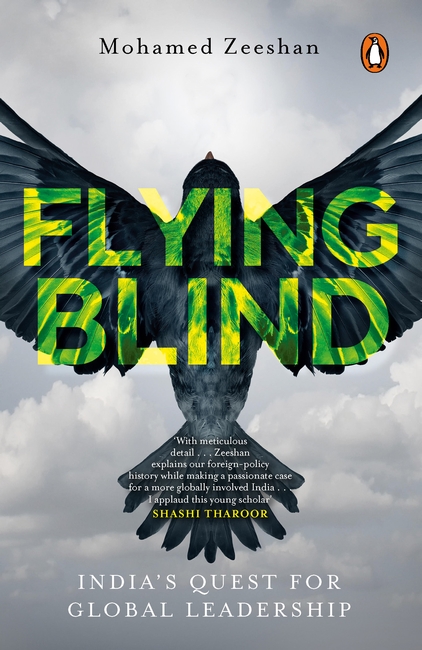
In recent years, India has repeatedly expressed its ambitions of becoming a global power, or ‘jagat guru’. Yet, many believe that India’s economic troubles at home are far more pressing and that foreign policy aspirations can wait. But is a proactive foreign policy really a ‘luxury’ for India, to be postponed until the economy develops; or is it, in fact, a prerequisite for economic growth in a globalized world? Why should the average Indian citizen care about foreign policy? And how can a proactive foreign policy help Indians become more prosperous? Scanning our ever-changing world from east to west, and defining India’s national interests and needs, Mohamed Zeeshan passionately argues that India needs a more coherent strategy for its relations with the outside world. Through travels and debates across continents, Zeeshan lays out a vision for how India can champion the cause of global good.

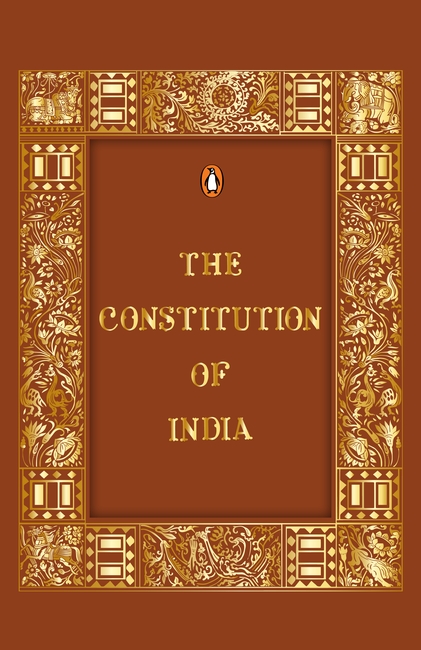
Crafted with extraordinary vision and forged through intense debate, The Constitution of India stands as one of humanity’s most remarkable experiments in democratic nation-building. Adopted on 26 January 1950, this foundational text not only establishes the foundational structure of India but also enshrines the ideals of justice, liberty, equality and fraternity for more than a billion citizens.
This Penguin luxury edition presents The Constitution of India as both a legal charter and a moral compass—an evolving document that continues to shape India’s political, social and cultural life. Readers will discover the profound balance it strikes between individual rights and collective responsibilities, the federal framework that binds a diverse nation, and the guiding principles that empower institutions while safeguarding citizens.
Whether you are a student, a scholar, or a curious reader, this edition of The Constitution of India, accompanied by a comprehensive contextual introduction, invites you to engage with the living heartbeat of the Republic—a masterpiece of governance, hope and enduring democratic aspiration.

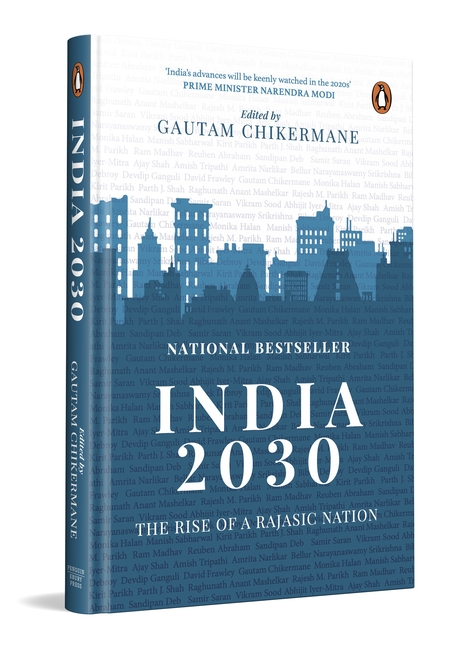
A collection of essays by experts across fields and their thoughts on the future of India in the next decade
Thought leaders from twenty diverse fields, ranging from politics, economics and foreign policy to health care and energy, predict what 2030 will look like for India and how the nation will evolve in this decade.
Editor Gautam Chikermane has masterfully weaved together essays by Abhijit Iyer-Mitra, Ajay Shah, Amish Tripathi, Amrita Narlikar, Bibek Debroy, David Frawley, Devdip Ganguli, Justice B.N. Srikrishna, Kirit S. Parikh, Manish Sabharwal, Monika Halan, Parth J. Shah, Raghunath Anant Mashelkar, Rajesh Parikh, Ram Madhav, Reuben Abraham, Samir Saran, Sandipan Deb and Vikram Sood into a single volume that looks towards India’s future.
A handbook for citizens, a road map for policymakers and a guide for scholars, this collection captures the many aspects of a future that will see India becoming the world’s third-largest economy and a regional power before the decade gets over.

‘Excellent political biography of NTR. I enjoyed reading it. There is a lot of good stuff here’
SANJAYA BARU, author, political commentator
‘A very objective, lucid, truthful biography’
DR JAYAPRAKASH NARAYAN, founder, Lok Satta
‘…fair, even-handed and objective in assessing NTR’s political journey’
PARAKALA PRABHAKAR, author, political commentator
‘Found it impossible to put down the book till I completed it’
K. PADMANABHAIAH, chairman, Administrative Staff College of India
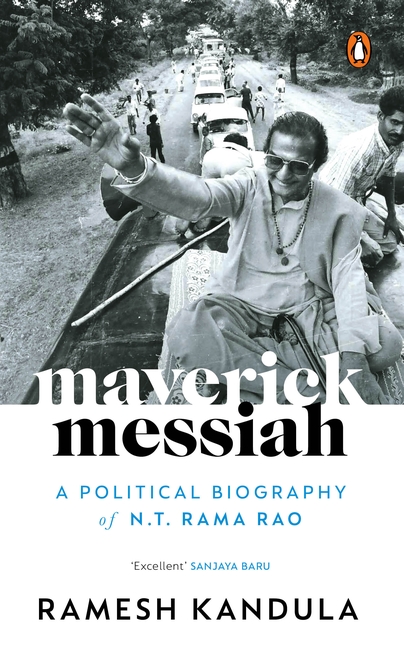
Nandamuri Taraka Rama Rao, widely known as NTR, was not merely a film star who strayed into politics and captured power in Andhra Pradesh. The actor-politician redefined the political culture in the state and scripted a new political idiom.
His rather dramatic entry into politics, the profound impact he left on the people of Andhra Pradesh and the vital role he played in national politics during his relatively short political life, however, have not received deserving recognition.
Maverick Messiah captures the different facets of NTR’s life in all their varied hues and puts in perspective the significant contribution of the actor-politician to the Indian political tapestry.

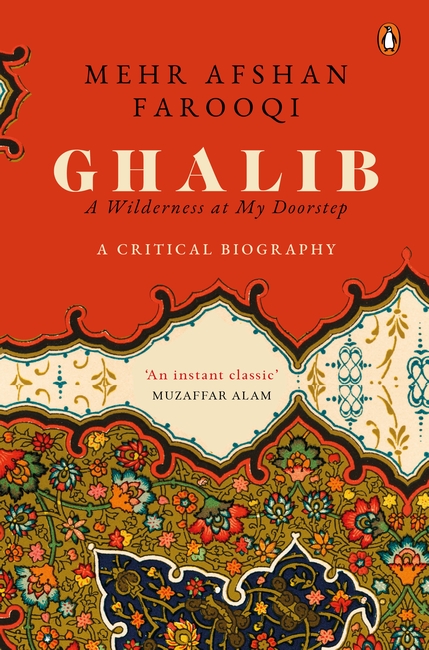
Mirza Asadullah Khan Ghalib was born in Agra in the closing years of the eighteenth century. A precocious child, he began composing verses at an early age and gained recognition while he was still very young. He wrote in both Urdu and Persian and was also a great prose stylist. He was a careful, even strict, editor of his work who took to publishing long before his peers. His predilection for writing difficult, obscure poetry peppered with complex metaphors produced a unique commentarial tradition that did not extend beyond his work. Commentaries on his current Urdu divan have produced a field of critical writing that eventually lead to the crafting of a critical lens with which to view the classical ghazal.
The nineteenth century was the height of European colonialism. British colonialism in India produced definitive changes in the ways literature was produced, circulated and consumed. Ghalib responded to the cultural challenge with a far-sightedness that was commendable. His imagination sought engagement with a wider community of readers. His deliberate switch to composing in Persian shows that he wanted his works to reach beyond political boundaries and linguistic barriers.
Ghalib’s poetic trajectory begins from Urdu, then moves to composing almost entirely in Persian and finally swings back to Urdu. It is nearly as complex as his poetry. However, his poetic output in Persian is far more than what he wrote in Urdu. More important is that he gave precedence to Persian over Urdu. Ghalib’s voice presents us with a double bind, a linguistic paradox. Exploring his life, works and philosophy, this authoritative critical biography of Ghalib opens a window to many shades of India and the subcontinent’s cultural and literary tradition.

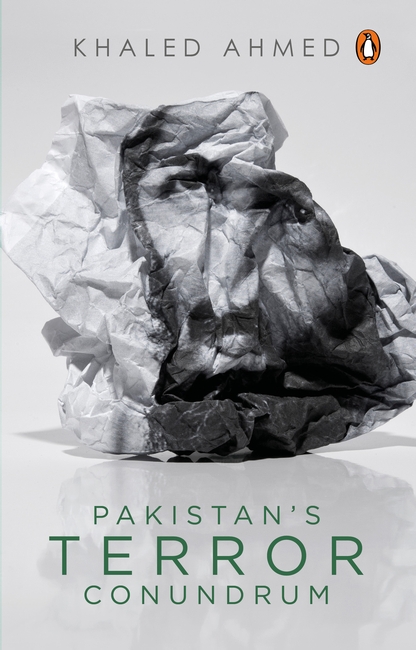
Pakistan was born amid communal violence and a collective consciousness of danger. Right from the outset, democracy was up for debate between the politicians nurtured by the British Raj and an orthodox clergy that advocated a utopia in which Islam was to be the ideological guide. Today, the threat of religion as an extra-legal force is causing many Pakistanis to think if the state can move forward into the future with Islam as its credo.
In this carefully curated collection of his writings in several publications, senior journalist Khaled Ahmed examines Pakistan’s policies regarding terrorism against the backdrop of increasing pressure from international organizations. Despite joining the US in its war against terror after 9/11, the country has been perceived as a safe haven and breeding ground for terrorists. Ahmed looks at the origins and activities of the various terrorist organizations, the role of the state and the ideology of its founding figures, some of whom seem to have been forgotten.