



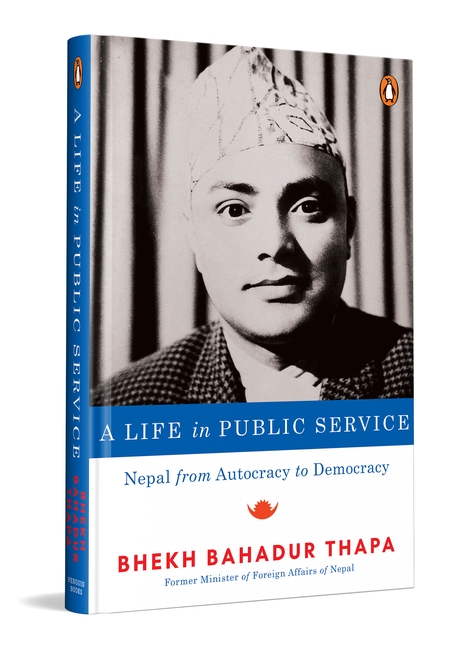
In 1960, King Mahendra Shah summoned a twenty-four-year-old Nepali PhD student in California to serve as the Member Secretary of National Planning Council. In the extraordinary six-decade long career that followed, Bhekh Bahadur Thapa witnessed first-hand the enormous challenges, as well as the heartbreaks and triumphs, of nation-building in Nepal. He revisits those times, offering deeply personal observations into the transformation of his country, from a feudal protectorate under the rule of the Rana dynasty to its current-day manifestation as a boisterous federal democratic republic. An ‘insider-account’ in the truest sense, A Life in Public Service is a fascinating, intimate look at the modern-day governance of South Asia’s oldest nation.
Catagory: Politics
After Nations
The system of nation-states is in convulsion. As American hegemony unwinds, anxious Western countries slide into xenophobia and debt. Liberal ideas and institutions are losing their prestige; autocracies like China, Russia, and the UAE, by contrast, are rising. For those most completely abandoned by nation-states, meanwhile, there is no future except through life-threatening migration. All in all, the global political order offers human beings ever fewer securities—and ever more threats.
Rana Dasgupta traces the formation and rise of this system in order to explain the cause of its multiple failures today. He takes us from the fall of ancient empires and the expansion of European concepts of money and law, right up to the emergence of twenty-first-century tech firms—which present formidable competition to nation-states—and the epochal restoration of Chinese power. He posits that the time has come to develop a new conception of citizenship, law, and economy—one that corresponds to our own globalized and ecologically fragile condition.
An urgent work of astute political and historical analysis, After Nations is an essential text for anyone looking to understand why we seem to be losing our political hold on the world, and how we might try to restore it.
The Constitution of India
Crafted with extraordinary vision and forged through intense debate, The Constitution of India stands as one of humanity’s most remarkable experiments in democratic nation-building. Adopted on 26 January 1950, this foundational text not only establishes the foundational structure of India but also enshrines the ideals of justice, liberty, equality and fraternity for more than a billion citizens.
This Penguin edition presents The Constitution of India as both a legal charter and a moral compass—an evolving document that continues to shape India’s political, social and cultural life. Readers will discover the profound balance it strikes between individual rights and collective responsibilities, the federal framework that binds a diverse nation, and the guiding principles that empower institutions while safeguarding citizens.
Whether you are a student, a scholar, or a curious reader, this edition of The Constitution of India, accompanied by a comprehensive contextual introduction, invites you to engage with the living heartbeat of the Republic—a masterpiece of governance, hope and enduring democratic aspiration.
Era of India
In his narrative-defining book, Era of India, Minhaz Merchant examines interlinked civilizational arcs across centuries and millennia. Through much of recorded history, living standards were broadly similar in the Old World: Europe, Asia and Africa.
The discovery of the New World in the Americas and Australasia brought about great change: catastrophic for some, a boon for others. Differences in per capita income between Europeans and Asians were minimal in 1600. By 1900, the gap had risen multiple times. Europe emerged from plague and penury to great wealth.
Was this extraordinary turn of events due to scientific discoveries, the Industrial Revolution and technological innovation? Or did centuries of exploitative, invasive colonialism, the 250-year-long transatlantic slave trade from Africa to the Americas, and colonist-settlements in the New World result in the largest transfer in history of wealth from East to West? Crucially, is it time for the West to pay reparations for three centuries of extra-territorial colonial conquest and enslavement?
Using empirical data and deeply researched documented evidence, Minhaz Merchant answers these questions in a riveting narrative that examines how the rise of India from an impoverished British colony in 1947 to the world’s third largest economy by 2030 will reshape the world order in the next quarter century
The Arthashastra
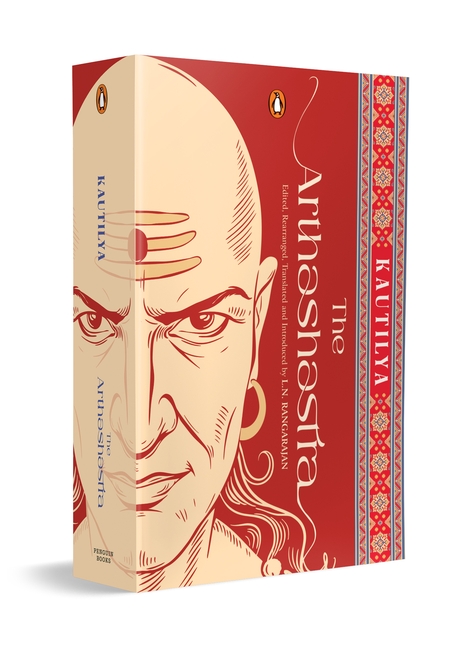
An extraordinary detailed manual on statecraft and the science of living by one of classical India’s greatest minds; Kautilya; also known as Chanakya and Vishnugupta; wrote the Arthashastra not later than 150 AD though the date has not been conclusively established. Legend has it that he was either a Brahmin from Kerala or from north India; however; it is certain that Kautilya was the man who destroyed the Nanda dynasty and installed Chandragupta Maurya as the King of Magadha. A master strategist who was well-versed in the Vedas and adept at creating intrigues and devising political stratagems; Kautilya’s genius is reflected in his Arthashastra which is the most comprehensive treatise of statecraft of classical times.
The text contains fifteen books which cover numerous topics viz.; the King; a complete code of law; foreign policy; secret and occult practices and so on. The Arthashastra is written mainly in prose but also incorporates 380 shlokas.
Artha; literally wealth; is one of four supreme aims prescribed by Hindu tradition. However; it has a much wider significance and the material well-being of individuals is just a part of it. In accordance with this; Kautilya’s Arthashastra maintains that the state or government of a country has a vital role to play in maintaining the material status of both the nation and its people. Therefore; a significant part of the Arthashastra has to do with the science of economics. When it deals with the science of politics; the Arthashastra describes in detail the art of government in its widest sense-the maintenance of law and order as also of an efficient administrative machinery.
City Limits
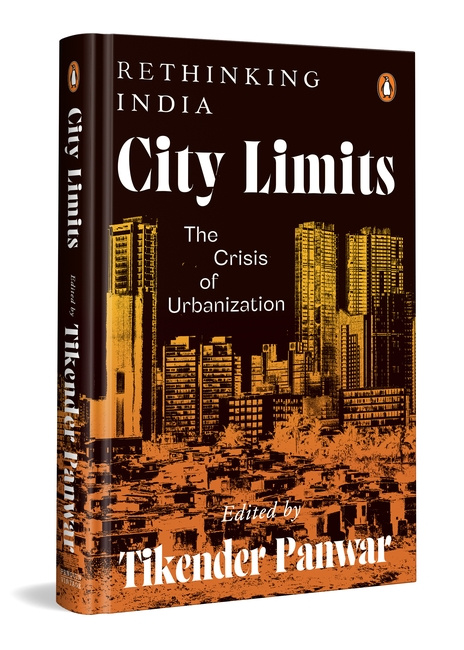
Part of the acclaimed Rethinking India series, the volume deals with the issue of unplanned and unchecked urbanization in Indian cities that has worsened the quality of life and widened the socio-economic divide. Through essays by some of our leading experts in policymaking and urban development, this book addresses the major problems and offers necessary solutions—serving as a guidebook on how to build sustainable and inclusive cities.
General Brasstacks
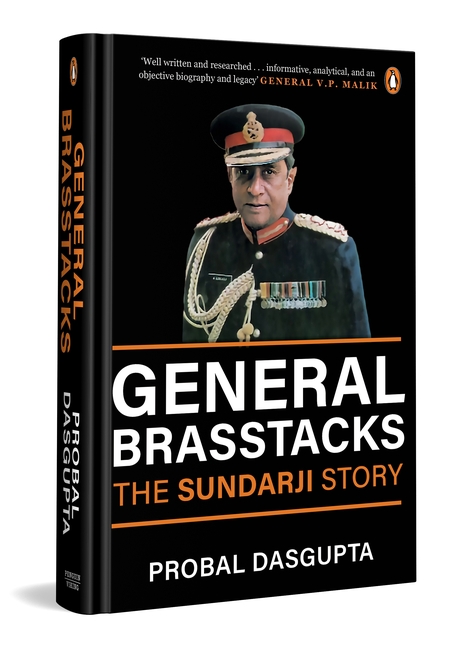
In 1986, as Indian and Chinese troops faced off in Sumdorong Chu in Arunachal Pradesh, an Indian general airlifted a brigade to occupy dominating heights, putting pressure on the Chinese below. The audacious General Krishnaswamy Sundarji swung the momentum decisively in India’s favour, forcing the Chinese to back-pedal in the Himalayas.
The following year, the same army chief planned Operation Brasstacks, one of the largest military exercises since World War II. The move threatened Pakistan’s nuclear ambitions, unnerving General Zia-ul-Haq and prompting him to seek rapprochement.
The 1980s were a decade of dramatic turns: events that led to the assassinations of two Indian prime ministers, political upheaval and military crises. General Sundarji oversaw two of the most controversial operations in independent India: Operation Blue Star, against Sikh militants inside the Golden Temple, and Operation Pawan, against Tamil militants in Sri Lanka. He was also drawn into the Bofors acquisition and the scandal that followed, which helped bring down a government.
But who was Krishnaswamy Sundarji? How did his penchant for bold, sometimes brash decisions take shape? Was he too ambitious? Was he ahead of his time in pushing for technology-driven warfare, or behind it as insurgencies demanded a more improvised approach?
This definitive biography by bestselling author Probal Dasgupta traces the life and times of one of India’s most charismatic yet forgotten army chiefs. Sundarji’s career mirrored the journey of a young nation, often echoing its political choices and contradictions. The only general to have influenced both military and political thinking in India’s democracy, his brisk 820-day tenure saw the army through modernization, crises, controversies and change. This book explores Sundarji’s central role in shaping the modern Indian Army and his influence during the turbulent 1980s.
In the Margins of Empires
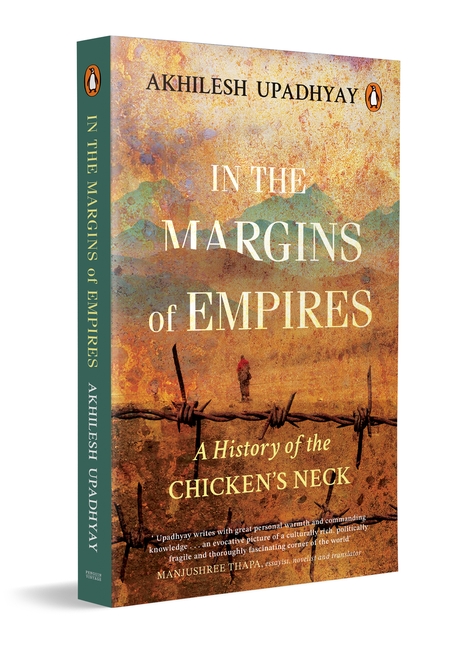
The prevailing narrative and knowledge ecosystem, and most certainly newspaper and TV reporting, on the Himalaya is dominated by colonial and postcolonial situational exposés that are informed by the Centres’ perspectives. Hence, many writings suffer from the imperial gaze, on the one hand, and a recency bias on the other, while approaching the peripheries as either exotic destinations or military hotspots with red lines drawn on snow-capped peaks, crests and arid plateaus.
The Himalaya has always been a contested region and has gained even more political salience after the 1962 Sino-Indian border war and, more so in recent times, with the rise of India and China.
What gets lost are the voices and lives of the people who actually call the Himalaya home.
In the Margins of Empires documents the lives and livelihoods of the borderlands in the Eastern Himalayan region—Nepal, Bhutan, pre-1950 Tibet and the post-1950 Tibetan Autonomous Region, Sikkim, Darjeeling, and India’s North-East. The book is an effort to look at the region as an organic whole, from within the region, connected through centuries of transboundary traders, travellers, scholars, monastic exchanges, but also by missionaries, monks, and moles.
As border infrastructure across the Himalaya in TAR and India is being constantly upgraded, and as India and China play a cat-and-mouse game, smaller states and communities in the borderlands, including the Chicken’s Neck, find themselves caught up in the larger geopolitical arena. With fresh analysis, great insight, and on-the-ground reportage, Akhilesh Upadhyay tells the story of the region and of communities that remain wedged between giants, yet are also shaping their own futures in the shadow of the Himalaya’s peaks.
What does the future of the region look like? Perhaps it will follow the mystique of the Himalaya.
Farmer Power
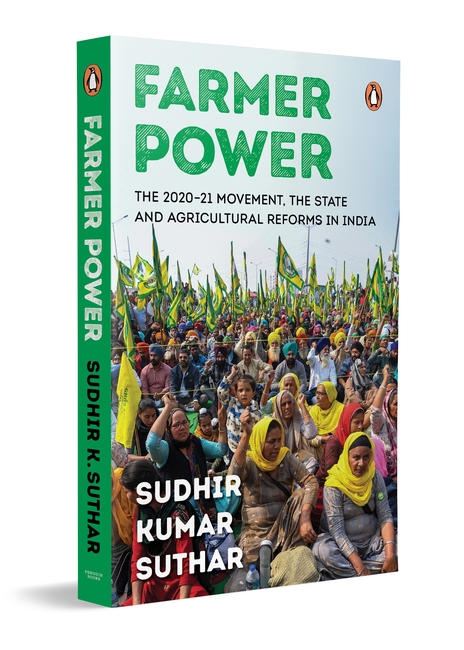
In September-October 2020, around 300,000 Indian farmers marched to New Delhi, to protest against three new farm laws by stationing themselves on national highways around the capital for over a year. This movement, the largest farmer assertion in recent times, with its firm commitment to democracy, civil disobedience and peaceful resistance, carved out a distinct political space for itself.
For over a decade prior, farmer groups had repeatedly tried to highlight agricultural issues neglected by successive governments. However, what transpired after 2020 was a unique moment in the history of world social movements.
Farmer Power examines the 2020-21 movement and delves into its evolution, history and what made it unique on the global scale. This book also looks into broader agricultural sector issues, including the challenges faced by small and marginal farmers, agricultural labourers, and the limitations of the procurement system. It seeks to highlight the policy interventions made by Indian state in the past two decades on these issues. This comprehensive account is essential for anyone interested in the politics of agriculture, livelihoods, and rural scenarios.
Whither Human Rights in India
Whither Human Rights in India, edited by Anand Teltumbde, one of India’s prominent human rights activists, is a searing and indispensable anthology that brings together some of the most important thinkers, activists and human rights defenders of our time. The essays trace the historical and ideological roots of India’s human rights discourse—from colonial legacies and constitutional guarantees to the challenges posed by majoritarian politics, state violence and systemic inequality.
Contributors critically examine institutions and practices shaping the current landscape: judicial responses, hate speech, impunity, ‘bulldozer justice’ and contested models of development. They also turn to the lived realities of vulnerable communities—Dalits, Adivasis, Muslims, Christians, women, children, LGBTQI+ people and prisoners—whose struggles for dignity illuminate the larger battle for justice and democracy.
Featuring incisive contributions from Harsh Mander, Kalpana Kannabiran, Aakar Patel, Teesta Setalvad, Gautam Navlakha, Mihir Desai and others, this volume offers an unflinching exploration of human rights at a critical juncture in India’s history.
Dedicated to the memory of Father Stan Swamy and Prof. G. N. Saibaba, Whither Human Rights in India is both a record of resistance and a call to rethink the future of democracy and human dignity.