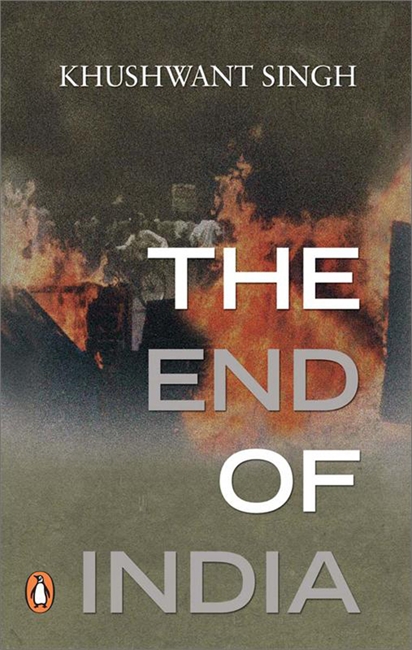
‘I thought the nation was coming to an end,’ wrote Khushwant Singh, looking back on the violence of Partition that he witnesses over half a century ago. He believed then, and for years afterwards, that he had seen the worst that India could do to itself. Over the last few years, however, he has had reason to feel that the worst, perhaps, is still to come.
In this fierce, uncompromising book, he shows us what few of us wish to see: why it is entirely likely that India will come undone in the foreseeable future. Analysing the communal violence in Gujarat in 2002, the anti-Sikh riots of 1984, the burning of Graham Staines and his children, the targeted killings by terrorists in Punjab and Kashmir, Khushwant Singh forces us to confront the absolute corruption of religion that has made us among the most brutal people on earth. He also points out that fundamentalism has less to do with religion than with politics. And communal politics, he reminds us, is only the most visible of the demons we have nurtured and let loose upon ourselves.
Insurgencies in Kashmir and the North-East, caste wars in Bihar, scattered Naxalite movements, and the ghettoization of minorities are proof that our obsession with caste and regional and racial identity has also splintered the nation, perhaps beyond repair. A brave and passionate book, The End of India is a wake-up call for every citizen concerned about his or her own future, if not the nation’s.
The Indian Economy: Problems and Prospects, first published in 1992, looks at the country’s economy and the resolved fiscal crisis from a historical perspective. Edited and updated with a new Introduction by Bimal Jalan, the book retains the thirteen essays written by eminent economic thinkers in 1991 and 1992 in their original form as they provide a comprehensive overview of India’s economic development since Independence and answer questions on key economic issues that are as relevant today as they were at that time. Bipan Chandra conducts a historical survey of fiscal developments during the colonial period, the late V.M. Dandekar evaluates India’s economic performance from 1950 to 1990, and Rakesh Mohan traces the history of industrial controls from the pre-independence era. Also included are essays by C.H. Hanumantha Rao, C. Rangarajan and Narendra Jadhav, Raja Chelliah, Sudipto Mundle and M. Govinda Rao, Jyoti and Kirit Parikh, Pravin Visaria, T.S. Papola, Pranab Bardhan and Kaushik Basu. In his revised Introduction, Bimal Jalan assesses the country’s economic progress since 1991, examines crucial events and their relative significance. Exploring diverse aspects of the Indian economy as well as the political, institutional and legal implications of economic reforms, these insightful and revelatory essays will be of enormous interest to experts and the general reader alike.

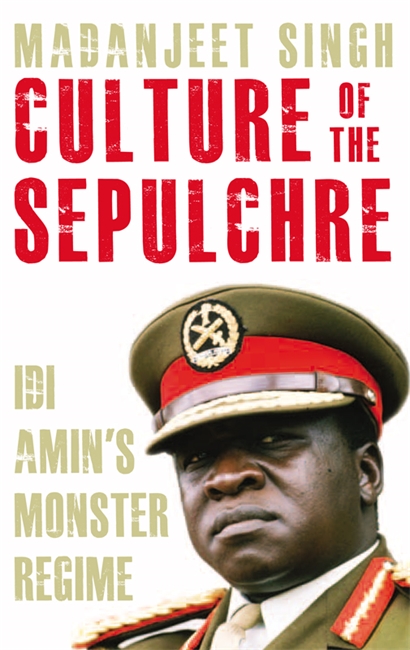
Culture of the Sepulchre is not only a retelling of Idi Amin’s brutality and buffoonery, which unfolded in the seventies, it is also a heart-rending saga of the forced evacuation of the Indian diaspora from Uganda and their trials against the backdrop of a fierce internal armed conflict.
Madanjeet Singh, the Indian High Commissioner to Uganda at the time, gives a first-hand account of the unimaginable violence and savagery unleashed by a man who designated himself ‘His Excellency President for Life, Field Marshal Al Hadji Doctor Idi Amin, VC, DSO, MC, Lord of All the Beasts of the Earth and Fishes of the Sea, and Conqueror of the British Empire in Africa in General and Uganda in Particular’ (and by some accounts even appointed himself the King of Scotland), as well as the ghastly and macabre events that followed Amin’s defeat by the rebel forces led by Museveni.
This is also an account of the extraordinary courage demonstrated by Madanjeet at a time of great personal turmoil—his sister died under mysterious circumstances and his trusted servant turned criminal—and the great risks he took to evacuate hundreds of families desperate to escape the murderous environment

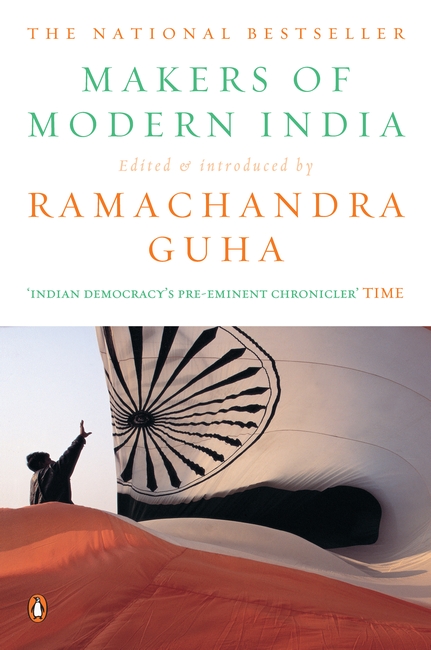
Ramachandra Guha, author of the internationally acclaimed India After Gandhi, profiles nineteen Indians whose ideas had a defining impact on the formation and evolution of our republic and presents rare and compelling excerpts from their writings and speeches. These men and women were not only influential political activists-they also wrote with eloquence, authority and deliberation as they reflected on what Guha describes in his illuminating prologue as ‘the most contentious times in the most interesting country in the world’. Their writings take us from the subcontinent’s first engagement with modernity in the nineteenth century, through the successive phases of the freedom movement, on through the decades after Independence. This book highlights little-known aspects of major figures in Indian history like Tagore and Nehru; it also rehabilitates thinkers who have been unjustly forgotten, such as Tarabai Shinde and Hamid Dalwai. These makers of modern India did not speak in one voice: their perspectives are sometimes complementary, at other times contradictory. The topics they explore and analyse include religion, caste, gender, language, nationalism, colonialism, democracy, secularism and the economy-that is to say, all that is significant in the human condition. These issues have a resonance in our own times, not just in India but everywhere in the world as well.

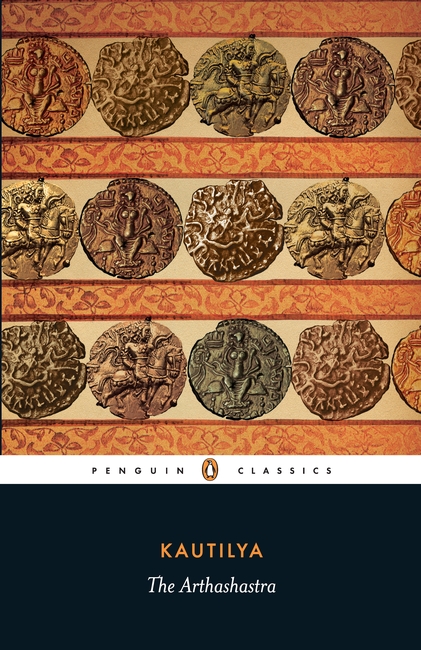
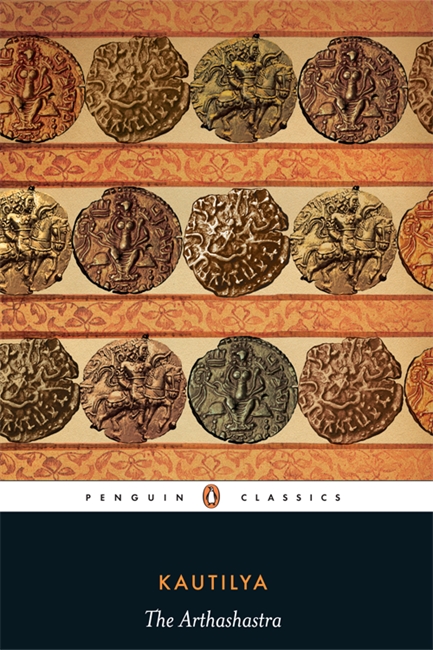
An extraordinary detailed manual on statecraft and the science of living by one of classical India’s greatest minds; Kautilya; also known as Chanakya and Vishnugupta; wrote the Arthashastra not later than 150 AD though the date has not been conclusively established. Legend has it that he was either a Brahmin from Kerala or from north India; however; it is certain that Kautilya was the man who destroyed the Nanda dynasty and installed Chandragupta Maurya as the King of Magadha. A master strategist who was well-versed in the Vedas and adept at creating intrigues and devising political stratagems; Kautilya’s genius is reflected in his Arthashastra which is the most comprehensive treatise of statecraft of classical times.
The text contains fifteen books which cover numerous topics viz.; the King; a complete code of law; foreign policy; secret and occult practices and so on. The Arthashastra is written mainly in prose but also incorporates 380 shlokas.
Artha; literally wealth; is one of four supreme aims prescribed by Hindu tradition. However; it has a much wider significance and the material well-being of individuals is just a part of it. In accordance with this; Kautilya’s Arthashastra maintains that the state or government of a country has a vital role to play in maintaining the material status of both the nation and its people. Therefore; a significant part of the Arthashastra has to do with the science of economics. When it deals with the science of politics; the Arthashastra describes in detail the art of government in its widest sense-the maintenance of law and order as also of an efficient administrative machinery.

Ascribed to Kautilya (commonly identified as the prime minister of Chandragupta Maurya) and dating back more than 2,000 years, the Arthashastra is the world’s first manual in political economy. It has a pre-eminence in Indian thought that is akin to that of Machiavelli’s The Prince in Europe. Arthashastra (literally, ‘the science of wealth’) is a study of economic enterprise; specifically, Kautilya’s treatise advises the king on the business of creating prosperity. This ancient text provides a fascinating window into the social and economic structures of the time, and into the intricacies of statecraft—for the Arthashastra also addresses the question: what makes a good leader? This book is intended to be an introduction to the economic philosophy of the Arthashastra. Its goal is to analyse the relevance of this classic text in its own time—in a world in which kings were regulators of economic activities of their subjects, but also entrepreneurs themselves—in the conviction that it has much to teach us that has value in our own age

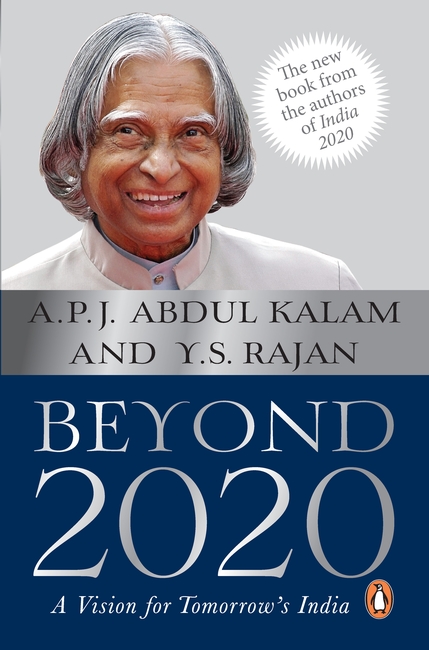
India 2020 is about to become a reality. Are we ready?
In 1998, Dr Kalam and Y.S. Rajan published the now iconic India 2020, a vision document for the new millennium that charted how India could become one of the top five economic powers in the world by 2020. Sixteen years later, as the year 2020 approaches, it is time to take stock of how much India has achieved and what lies ahead.
In many ways, India’s growth story in the twenty-first century has been hamstrung by missed opportunities and slowdowns in project execution; but it has also been marked by new opportunities and emerging technologies that make faster and more inclusive growth viable. A renewed policy focus is now needed for agriculture, manufacturing, mining, the chemicals industry, health care and infrastructure to invigorate these sectors and boost economic growth, argue Kalam and Rajan. Alongside, education, job creation, emerging technologies, biodiversity, waste management, national security and the knowledge economy are some of the other vital areas that we need to build on as we look beyond 2020.
India can still make it to the list of developed nations in a decade. Beyond 2020 provides an action plan for that transformation.
Focusing on the Hindustan Socialist Republican Army (HSRA), A Revolutionary History . . . delivers a fresh perspective on the ambitions, ideologies and practices of this influential organization formed by Chandrashekhar Azad and Bhagat Singh, and inspired by transnational anti-imperial dissent. It is a new interpretation of the activities and political impact of the north Indian revolutionaries who advocated the use of political violence against the British.
Kama Maclean contends that the actions of these revolutionaries had a direct impact on Congress politics and tested its policy of non-violence. In doing so she draws on visual culture studies, demonstrating the efficacy of imagery in constructing-as opposed to merely illustrating-historical narratives. Maclean analyses visual evidence alongside recently declassified government files, memoirs and interviews to elaborate on the complex relationships between the Congress and the HSRA, which were far less antagonistic than is frequently imagined.

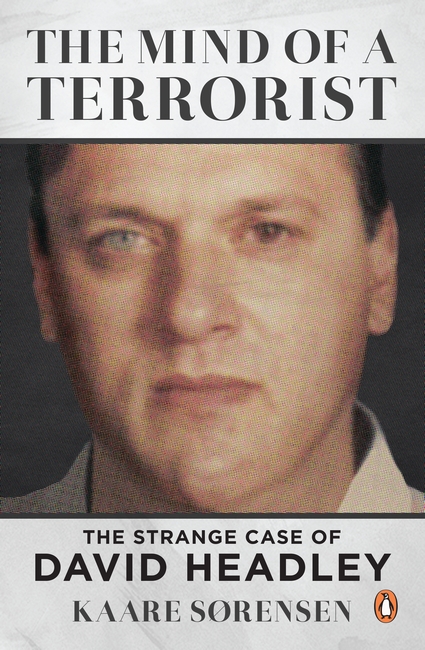
David Headley, the American-Pakistani also known as Daood Gilani, lived a double life. One day he would stroll through Central Park in his tailored Armani suit as a true New Yorker, and the next he would browse in the bazaar in Lahore wearing traditional Pakistani clothes. One day he would drink champagne at the most extravagant clubs; on another he would prostrate himself in prayer in remote Pakistan and pledge fidelity to Allah.
Born in 1960, the son of an American mother and Pakistani father, with one blue eye and one brown, Headley grew up between East and West. He was attracted to both worlds, even working as an informant for the US government, until one day he found he had to choose between the place of his birth and a radical form of Islam preaching global jihad. This is the disturbing story of the mastermind behind the 2008 attacks in Mumbai that killed 166 people-who, two months later, flew to Copenhagen to plan another act of terror with the help of al-Qaeda sleeper cells in Europe.
Veteran journalist Kaare Sørensen has reconstructed his movements and planning in a tense feat of reportage. His account, based on extensive reporting, eyewitness interviews, and documentation, including wiretaps, court transcripts, and emails by Headley accessed from a chat room cache of 9000 messages, offers unprecedented insight into the mind of the terrorist.

In this highly acclaimed seminal work, Edward Said surveys the history and nature of Western attitudes towards the East, considering Orientalism as a powerful European ideological creation-a way for writers, philosophers and colonial administrators to deal with the ‘otherness’ of Eastern culture, customs and beliefs. He traces this view through the writings of Homer, Nerval and Flaubert, Disraeli and Kipling, whose imaginative depictions have greatly contributed to the West’s romantic and exotic picture of the Orient. In the preface, Said examines the continuing effects of Western imperialism and racism, manifest in the events leading up to and post 9/11, establishing Orientalism as a canonical text of cultural studies.