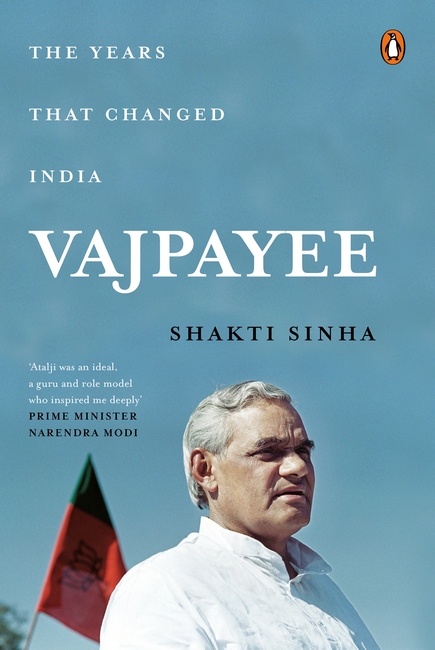
Former prime minister of India and member of the Bharatiya Janata Party, Atal Bihari Vajpayee was an understated and a singular politician of the kind rarely seen in contemporary times. His patriotism was uncompromising, forged out of the paradoxes of his life: the sensitive poet who summoned nerves of steel to conduct the Pokhran-II nuclear tests; the man from humble beginnings who envisioned a project as titanic as the Golden Quadrilateral
highway network. Devoid of any political pedigree or patronage, he harnessed his diplomatic acumen to transform India’s relations with the United States, which had long been mired in misunderstandings rooted in the Cold War. His calculated decisions led to key strategic and economic policy achievements.
In this book, Shakti Sinha, a close associate of Vajpayee, helps us understand Vajpayee as a decision-maker. The narrative focuses on the political challenges Vajpayee faced, and on his key initiatives in the strategic and economic fields during his first term as prime minister, which have had a lasting impact. Vajpayee fleshes out not only Vajpayee’s political philosophy but also provides an insider’s account of how the former PM thought and worked.

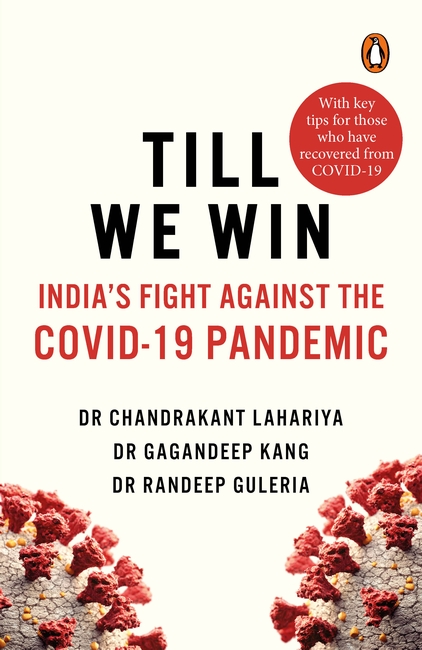
When will India win the fight against the COVID-19 pandemic?
How long do we have to use masks?
When can we expect a safe and effective vaccine? Do we need to wear masks even after we get a vaccine?
What if there is no definitive treatment against COVID-19?
How can we protect our family form this disease?
How should we respond to this ‘new normal’ as an individual and as a community?
What is the way forward?
Offering insights on how India continues to fight the pandemic, Till We Win is a must-read for everyone. It is a book for the people, for political leaders, policymakers and physicians, with the promise and potential to transform public health in India.

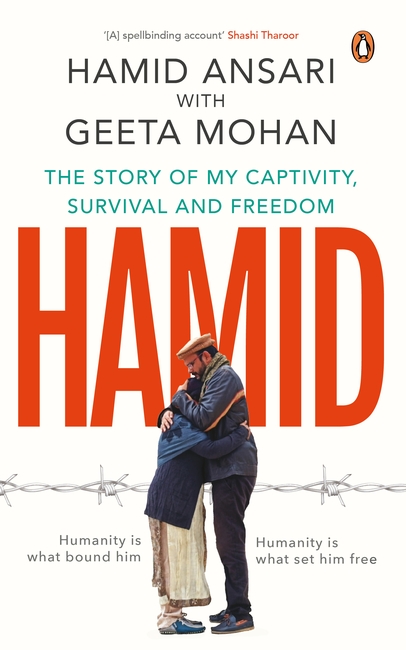
In November 2012, Hamid, a 27-year-old Mumbai-based techie, disappeared into thin air. What happened? Where did he go? All his parents knew was that he had gone to Kabul, Afghanistan, to explore a job opportunity. Upon some investigation, they found out that their son had been chatting online with some Pakistani friends, in particular a girl, across the border.
Authored by Hamid Ansari and Geeta Mohan, this is the definitive insider account of the man who saw no boundaries when it came to saving a girl from forced marriage under the wani custom. Nothing scared or stopped him; until he was betrayed by his friends in Pakistan. He became embroiled in a whirlwind of allegations made by the Pakistani authorities to break him and label him a spy. What followed were years of suffering during the investigations, along with long periods of solitary confinement and a struggle for survival.
In India, his mother, Fauzia Ansari, led a relentless fight, knocking on as many doors as it took, eventually moving three nations, India, Pakistan and Afghanistan, to get him back home, with the help of the then external affairs minister, Sushma Swaraj. On 18 December 2018, Hamid finally touched India soil again. Gritty, heart-wrenching and moving, this is s story of humanity, love, betrayal and hope against all odds.

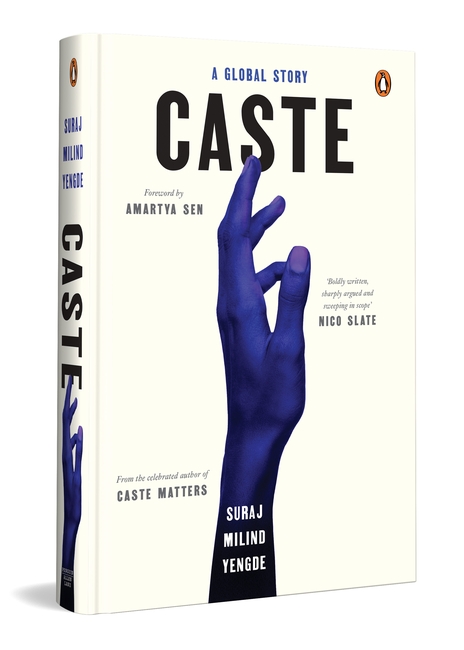
Caste, and caste-based discrimination, are not just Indian issues. They are experienced throughout the world, from Britain to Bahrain, Canada to South Africa. This is a global phenomenon, demanding global solutions.
Leading scholar Suraj Milind Yengde shines a light on the Dalit experience internationally, from indentured labourers in the nineteenth-century Caribbean to present-day migrant workers in the Middle East. Combining history, ethnography and archival research, he offers a compelling, comparative approach to caste and race from ancient times to today. What have been the impacts of colonialism, religion and nationalism on caste-based hierarchies worldwide? What can we learn from caste-related movements in India and internationally? Why hasn’t the South Asian diaspora embraced the anti-caste struggles of the homeland? And what are the limits of Dalit–Black solidarity?
Exploring the global footprint of the anti-caste struggle—from its links with Black Lives Matter to the work of international Ambedkarite organisations—this is a powerful analysis of world politics from the perspective of one of the most oppressed communities on Earth. Asking probing questions about the nature of inequality, Yengde issues an energetic call for a cosmopolitan Dalit universalism, as a vital part of today’s fight for social justice and equality.

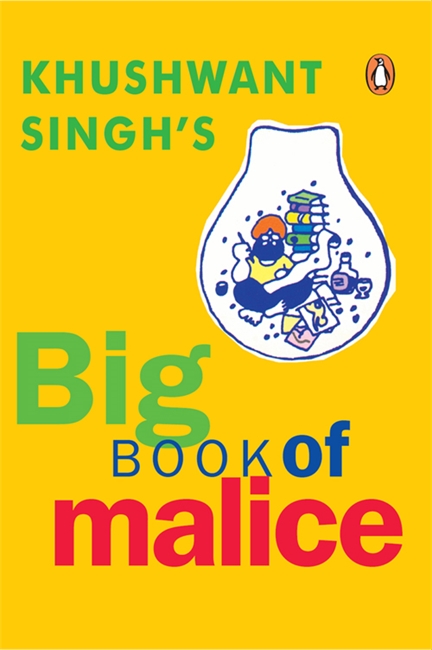
Malice. The word is synonymous with Khushwant Singh; his pen has spared no one. For over four decades as India’s most widely-read columnist, he has commented on just about everything: religion, politics, our future, our past, prohibition, impotency, presidents, politicians, cricket, dog-haters, astrologers, the banning of books, the secret of 1ongevity…the list is endless. Candid to the point of being outrageous, Khushwant Singh makes both his reader and subject wince. He writes unabashedly on nose picking, wife-bashing, bribing journalists, gender wars and the desires of an octogenarian; on Nehru and Edwina, Laloo, Bal Thackeray, Chandraswami and Sonia Gandhi, among host of others.
Khushwant Singh’s Big Book of Malice brings together some of his nastiest and most irreverent pieces. Witty, sharp and brutally honest, this collection is certain to delight and provoke readers of all ages.
‘Good people can be crashing bores. Evil men who combine evil-doing with drunkenness, debauchery and making illicit money make more interesting characters because they pack their lives with action. They do what most of us would like to do but do not have the guts to.’
-Khushwant Singh

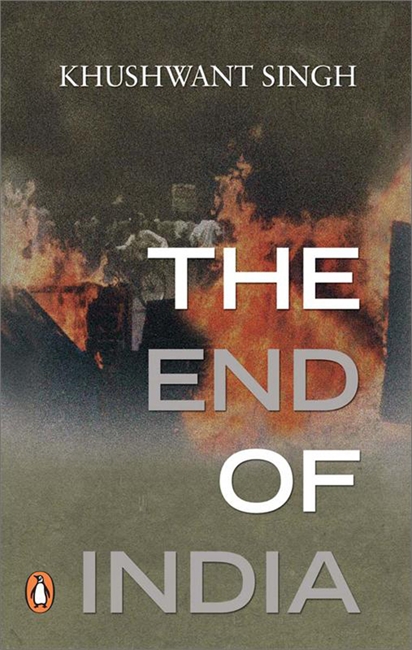
‘I thought the nation was coming to an end,’ wrote Khushwant Singh, looking back on the violence of Partition that he witnesses over half a century ago. He believed then, and for years afterwards, that he had seen the worst that India could do to itself. Over the last few years, however, he has had reason to feel that the worst, perhaps, is still to come.
In this fierce, uncompromising book, he shows us what few of us wish to see: why it is entirely likely that India will come undone in the foreseeable future. Analysing the communal violence in Gujarat in 2002, the anti-Sikh riots of 1984, the burning of Graham Staines and his children, the targeted killings by terrorists in Punjab and Kashmir, Khushwant Singh forces us to confront the absolute corruption of religion that has made us among the most brutal people on earth. He also points out that fundamentalism has less to do with religion than with politics. And communal politics, he reminds us, is only the most visible of the demons we have nurtured and let loose upon ourselves.
Insurgencies in Kashmir and the North-East, caste wars in Bihar, scattered Naxalite movements, and the ghettoization of minorities are proof that our obsession with caste and regional and racial identity has also splintered the nation, perhaps beyond repair. A brave and passionate book, The End of India is a wake-up call for every citizen concerned about his or her own future, if not the nation’s.
The Indian Economy: Problems and Prospects, first published in 1992, looks at the country’s economy and the resolved fiscal crisis from a historical perspective. Edited and updated with a new Introduction by Bimal Jalan, the book retains the thirteen essays written by eminent economic thinkers in 1991 and 1992 in their original form as they provide a comprehensive overview of India’s economic development since Independence and answer questions on key economic issues that are as relevant today as they were at that time. Bipan Chandra conducts a historical survey of fiscal developments during the colonial period, the late V.M. Dandekar evaluates India’s economic performance from 1950 to 1990, and Rakesh Mohan traces the history of industrial controls from the pre-independence era. Also included are essays by C.H. Hanumantha Rao, C. Rangarajan and Narendra Jadhav, Raja Chelliah, Sudipto Mundle and M. Govinda Rao, Jyoti and Kirit Parikh, Pravin Visaria, T.S. Papola, Pranab Bardhan and Kaushik Basu. In his revised Introduction, Bimal Jalan assesses the country’s economic progress since 1991, examines crucial events and their relative significance. Exploring diverse aspects of the Indian economy as well as the political, institutional and legal implications of economic reforms, these insightful and revelatory essays will be of enormous interest to experts and the general reader alike.

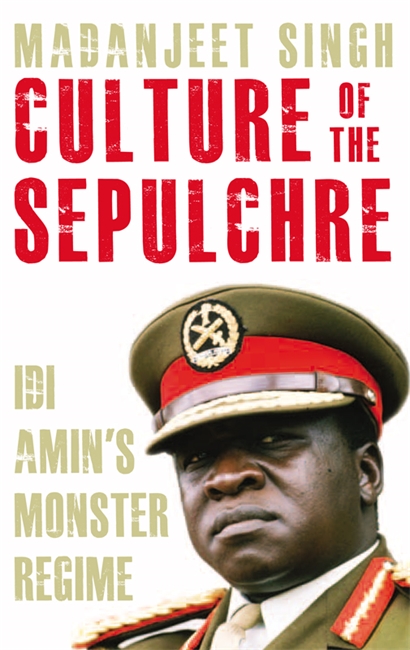
Culture of the Sepulchre is not only a retelling of Idi Amin’s brutality and buffoonery, which unfolded in the seventies, it is also a heart-rending saga of the forced evacuation of the Indian diaspora from Uganda and their trials against the backdrop of a fierce internal armed conflict.
Madanjeet Singh, the Indian High Commissioner to Uganda at the time, gives a first-hand account of the unimaginable violence and savagery unleashed by a man who designated himself ‘His Excellency President for Life, Field Marshal Al Hadji Doctor Idi Amin, VC, DSO, MC, Lord of All the Beasts of the Earth and Fishes of the Sea, and Conqueror of the British Empire in Africa in General and Uganda in Particular’ (and by some accounts even appointed himself the King of Scotland), as well as the ghastly and macabre events that followed Amin’s defeat by the rebel forces led by Museveni.
This is also an account of the extraordinary courage demonstrated by Madanjeet at a time of great personal turmoil—his sister died under mysterious circumstances and his trusted servant turned criminal—and the great risks he took to evacuate hundreds of families desperate to escape the murderous environment

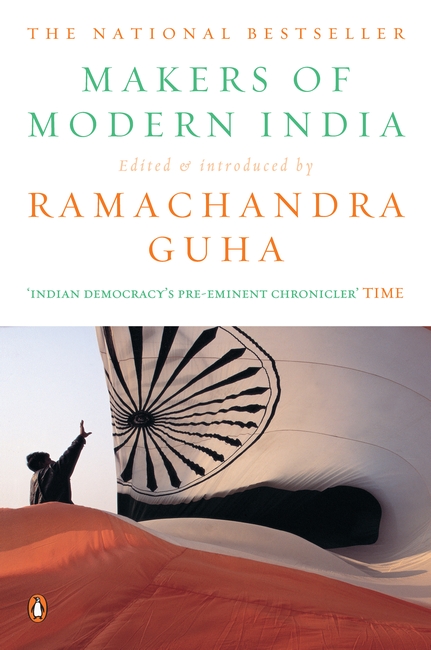
Ramachandra Guha, author of the internationally acclaimed India After Gandhi, profiles nineteen Indians whose ideas had a defining impact on the formation and evolution of our republic and presents rare and compelling excerpts from their writings and speeches. These men and women were not only influential political activists-they also wrote with eloquence, authority and deliberation as they reflected on what Guha describes in his illuminating prologue as ‘the most contentious times in the most interesting country in the world’. Their writings take us from the subcontinent’s first engagement with modernity in the nineteenth century, through the successive phases of the freedom movement, on through the decades after Independence. This book highlights little-known aspects of major figures in Indian history like Tagore and Nehru; it also rehabilitates thinkers who have been unjustly forgotten, such as Tarabai Shinde and Hamid Dalwai. These makers of modern India did not speak in one voice: their perspectives are sometimes complementary, at other times contradictory. The topics they explore and analyse include religion, caste, gender, language, nationalism, colonialism, democracy, secularism and the economy-that is to say, all that is significant in the human condition. These issues have a resonance in our own times, not just in India but everywhere in the world as well.

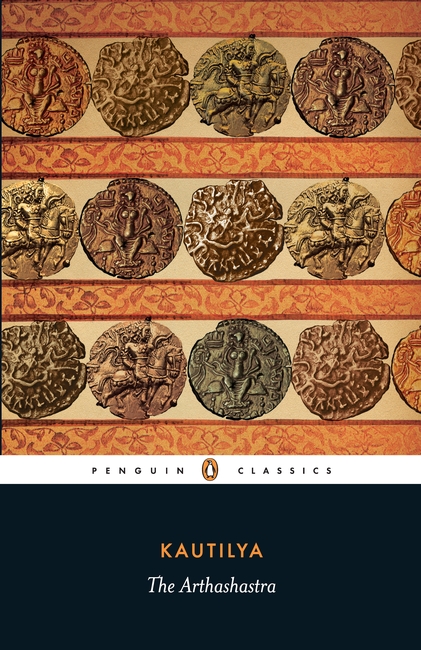
An extraordinary detailed manual on statecraft and the science of living by one of classical India’s greatest minds; Kautilya; also known as Chanakya and Vishnugupta; wrote the Arthashastra not later than 150 AD though the date has not been conclusively established. Legend has it that he was either a Brahmin from Kerala or from north India; however; it is certain that Kautilya was the man who destroyed the Nanda dynasty and installed Chandragupta Maurya as the King of Magadha. A master strategist who was well-versed in the Vedas and adept at creating intrigues and devising political stratagems; Kautilya’s genius is reflected in his Arthashastra which is the most comprehensive treatise of statecraft of classical times.
The text contains fifteen books which cover numerous topics viz.; the King; a complete code of law; foreign policy; secret and occult practices and so on. The Arthashastra is written mainly in prose but also incorporates 380 shlokas.
Artha; literally wealth; is one of four supreme aims prescribed by Hindu tradition. However; it has a much wider significance and the material well-being of individuals is just a part of it. In accordance with this; Kautilya’s Arthashastra maintains that the state or government of a country has a vital role to play in maintaining the material status of both the nation and its people. Therefore; a significant part of the Arthashastra has to do with the science of economics. When it deals with the science of politics; the Arthashastra describes in detail the art of government in its widest sense-the maintenance of law and order as also of an efficient administrative machinery.