‘I am a person of moderate views,’ writes Ramachandra Guha, ‘these sometimes expressed in extreme fashion.’ In this wide-ranging and wonderfully readable collection of essays, Guha defends the liberal centre against the dogmas of left and right, and does so with style, depth, and polemical verve. The book begins with a brilliant overview of the major threats to the Indian Republic. Other essays turn a critical eye on Hindutva, the Communist left, and the dynasty-obsessed Congress party.
The essays in Part II of this book focus on writers and scholars, and include some sparkling portraits. Whether writing about politics or culture, whether profiling individuals or analysing social trends, Ramachandra Guha displays a masterly touch, confirming his standing as India’s most admired historian and public intellectual.

When P.V. Narasimha Rao became the unlikely prime minister of India in 1991, he inherited a nation adrift, violent insurgencies, and economic crisis. Despite being unloved by his people, mistrusted by his party, and ruling under the shadow of 10 Janpath, Rao transformed the economy and ushered India into the global arena.
With exclusive access to Rao’s never-before-seen personal papers and diaries, this definitive biography provides new revelations on the Indian economy, nuclear programme, foreign policy and the Babri Masjid. Tracing his early life from a small town in Telangana through his years in power, and finally, his humiliation in retirement, it never loses sight of the inner man, his difficult childhood, his corruption and love affairs, and his lingering loneliness. Meticulously researched and brutally honest, this landmark political biography is a must-read for anyone interested in knowing about the man responsible for transforming India.

A revealing journey into the heartland of India’s insurgency problem
Spread over fifteen of the country’s twenty-eight states, India’s Maoist movement is now one of the world’s biggest and most sophisticated extreme-left movements. Hardly a week passes without people dying in strikes and counter-strikes by the Maoists-interchangeably known as the Naxalites-and the police and paramilitary forces. In this brilliant and sobering examination of the ‘Other India’, Sudeep Chakravarti combines reportage, political analysis and individual case histories as he takes us to the heart of Maoist zones in the country-areas of extreme destitution, bad governance and perpetual war.

A compilation of witty verses based on current events, The Book of Limericks by Bibek Debroy is a brilliantly illustrated guide for anyone trying to understand what exactly happened last year.
From economic issues to citizen concerns, these hilarious five-liners will take you on a roller coaster ride through the year 2017.

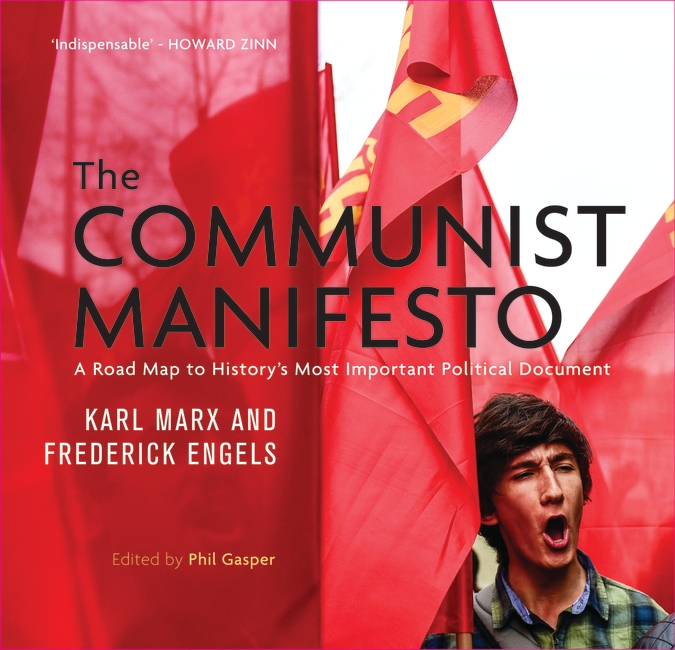
On the occasion of Karl Marx’s 200th birth anniversary, here is an authoritative edition of The Communist Manifesto
‘Apart from Charles Darwin’s Origin of Species,’ notes the Los Angeles Times, The Communist Manifesto ‘is arguably the most important work of nonfiction written in the 19th century.’ The Washington Post calls Marx ‘an astute critic of capitalism.’ Writing in The New York Times, Columbia University Professor Steven Marcus describes the Manifesto as a ‘masterpiece’ with ‘enduring insights into social existence.’
Since it was first written in 1848, the Manifesto by Marx and Engels has been translated into more languages than any other modern text. It has been banned, censored, burned and declared ‘dead’. But year after year, the text only grows more influential and more relevant, and is required reading in courses on philosophy, politics, economics and history.
In this extensively researched edition, renowned Marxist scholar Phil Gasper provides an authoritative introduction to history’s most important political document, with the full text of the Manifesto. Thoughtfully presented in a reader-friendly format, it is fully annotated, with clear historical references and explanations, additional related texts, and a glossary that will bring the text to life for students as well as the general reader.
The New Yorker recently described Karl Marx as ‘The Next Thinker’ for our era. This book shows readers why.

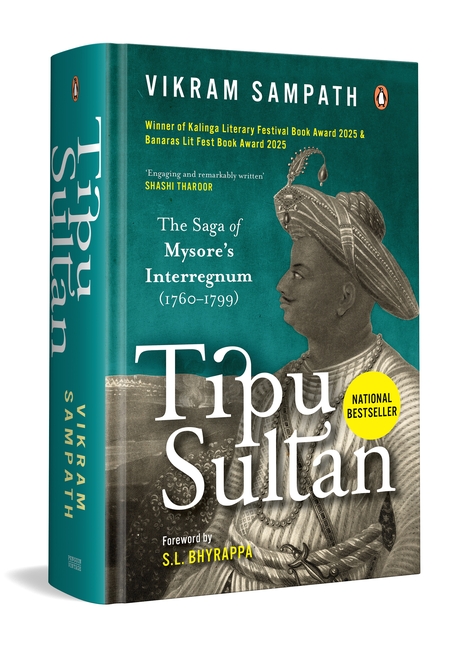
Over two centuries have passed since his death on 4 May 1799, yet Tipu Sultan’s contested legacy continues to perplex India and her contemporary politics. A fascinating and enigmatic figure in India’s military past, he remains a modern historian’s biggest puzzle as he simultaneously means different things to different people, depending on how one chooses to look at his life and its events.
Tipu’s ascent to power was accidental. His father Haidar Ali was a beneficiary of the benevolence of the Maharaja of Mysore. But in a series of fascinating events, the Machiavellian Haidar ran with the hare and hunted with the hounds; he ended up overthrowing his own benefactor and usurping the throne of Mysore from the Wodeyars in 1761. In a war-scarred life, father and son led Mysore through four momentous battles against the British, termed the Anglo-Mysore Wars. The first two, led by Haidar, brought the English East India Company to its knees. Chasing the enemy to the very gates of Madras, Haidar made the British sign such humiliating terms of treaties that sent shockwaves back in London.
In the hubris of this success, Tipu obtained the kingdom on a platter, unlike his father, who worked up the ranks to achieve glory. In a diabolical war thirst, Tipu launched lethal attacks on Malabar, Mangalore, Travancore, Coorg, and left behind a trail of death, destruction and worse, mass-conversions and the desecration of religious places of worship. While he was an astute administrator and a brave soldier, the strategic tact with opponents and the diplomatic balance that Haidar had sought to maintain with the Hindu majority were both dangerously upset by Tipu’s foolhardiness on matters of faith. The social report card of this eighteenth-century ruler was anything but clean. And yet, one simply cannot deny his position as a renowned military warrior and one of the most powerful rulers of Southern India.
Meticulously researched, authoritative and unputdownable, Tipu Sultan: The Saga of Mysore’s Interregnum (1760–1799) opens a window to the life and times of one of the most debated figures from India’s history.

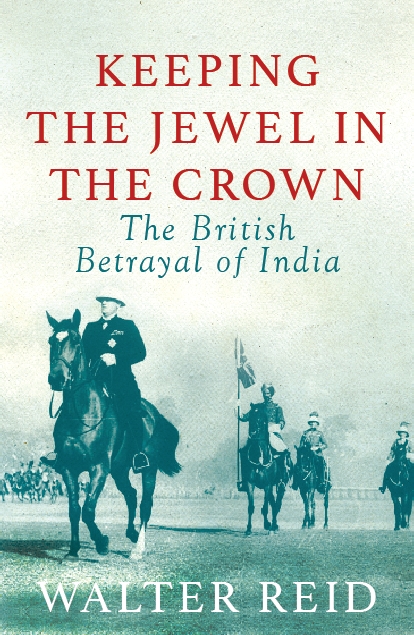
When India became independent in 1947, the general view, which has prevailed until now, is that Britain had been steadily working for an amicable transfer of power for decades. In this book, Walter Reid argues that nothing could be further from the truth. Referring to a vast amount of documentary material, from private letters to public records and state papers, he shows how Britain held back political progress in India for as long as possible-a policy which led to unimaginable chaos and suffering when independence was granted, and which created a legacy of hatred and distrust that continues to this day.

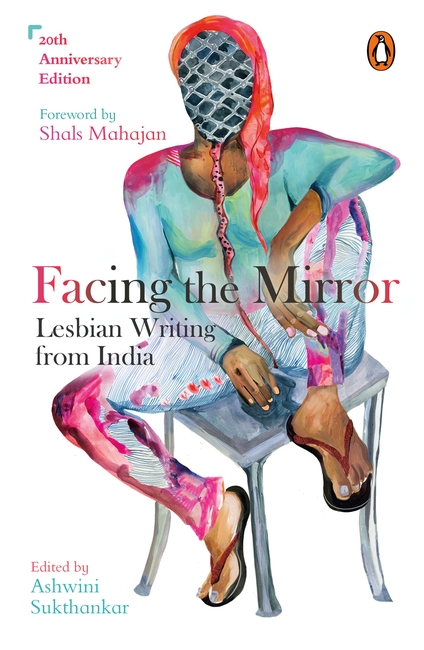
A groundbreaking book where lesbians found their voice for the first time
For decades, most lesbians in India did not know the extent of their presence in the country: networks barely existed and the love they had for other women was a shameful secret to be buried deep within the heart. In Facing the Mirror, Ashwini Sukthankar collected hidden, forgotten, distorted, triumphant stories from across India, revealing the richness and diversity of the lesbian experience for the first time. Going back as far as the 1960s and through the forms of fiction and poetry, essays and personal history, this rare collection mapped a hitherto unknown trajectory.
In celebration of the Supreme Court’s reading down of the draconian Section 377 of the Indian Penal Code, this twentieth-anniversary edition, with a foreword by author and activist Shals Mahajan, brings to readers a remarkable history that illuminates the blood and the tears, the beauty and the magic of the queer movement in India. The raw anger and passion in them still alive, the writings in Facing the Mirror proudly proclaim the courage, the sensuality, the humour and the vulnerability of being lesbian.

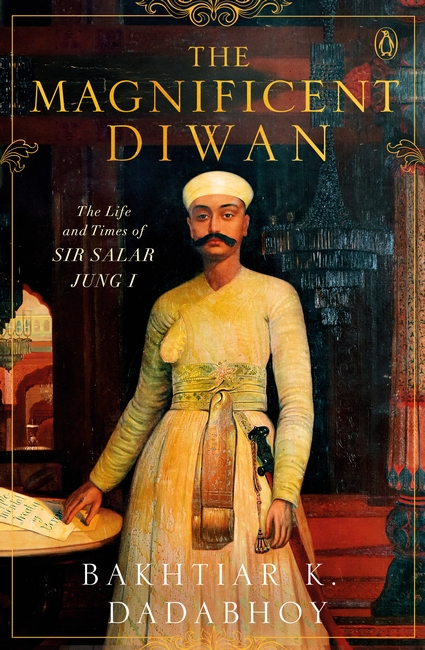
The Magnificent Diwan is the definitive biography of arguably India’s most influential and powerful statesman of the nineteenth century. Drawing on extensive archival material, this is a compelling account of the life and times of a remarkable Indian who, as diwan or prime minister, decisively shaped Hyderabad’s political and economic history for nearly three decades in the second half of the nineteenth century. It was Salar Jung who, by his reforms of the medieval oligarchy that was Hyderabad, ushered the state into the modern era. This account is not merely a chronicle of his life but also a history of Hyderabad-both social and governmental-and gives the reader an encompassing view of the man who has been called the founder of modern Hyderabad. Meticulously researched and engagingly written, this biography introduces Sir Salar Jung I to a new generation, even as it rekindles the memory of a man who has become the victim of collective amnesia.

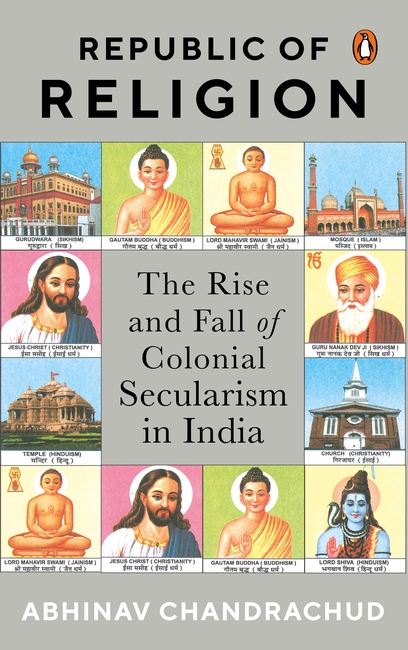
How did India aspire to become a secular country? Given our colonial past, we derive many of our laws and institutions from England. We have a parliamentary democracy with a Westminster model of government. Our courts routinely use catchphrases like ‘rule of law’ or ‘natural justice’, which have their roots in London. However, during the period of colonial rule in India, and even thereafter, England was not a ‘secular’ country. The king or queen of England must mandatorily be a Protestant. The archbishop of Canterbury is still appointed by the government. Senior bishops still sit, by virtue of their office, in the House of Lords.
Thought-provoking and impeccably argued, Republic of Religion reasons that the secular structure of the colonial state in India was imposed by a colonial power on a conquered people. It was an unnatural foreign imposition, perhaps one that was bound, in some measure, to come apart once colonialism ended, given colonial secularism’s dubious origins.