



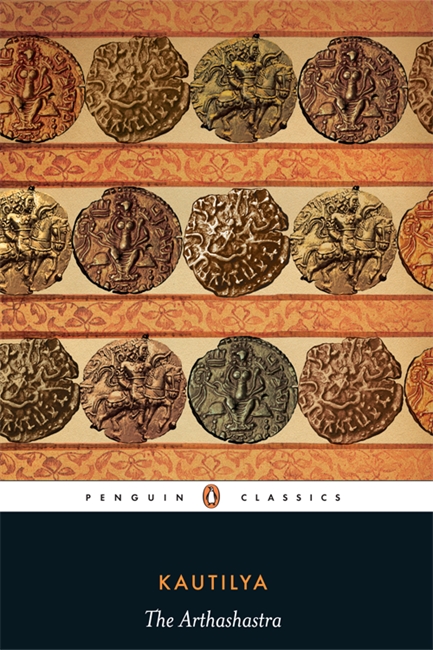
Ascribed to Kautilya (commonly identified as the prime minister of Chandragupta Maurya) and dating back more than 2,000 years, the Arthashastra is the world’s first manual in political economy. It has a pre-eminence in Indian thought that is akin to that of Machiavelli’s The Prince in Europe. Arthashastra (literally, ‘the science of wealth’) is a study of economic enterprise; specifically, Kautilya’s treatise advises the king on the business of creating prosperity. This ancient text provides a fascinating window into the social and economic structures of the time, and into the intricacies of statecraft—for the Arthashastra also addresses the question: what makes a good leader? This book is intended to be an introduction to the economic philosophy of the Arthashastra. Its goal is to analyse the relevance of this classic text in its own time—in a world in which kings were regulators of economic activities of their subjects, but also entrepreneurs themselves—in the conviction that it has much to teach us that has value in our own age
Catagory: Politics
Beyond 2020
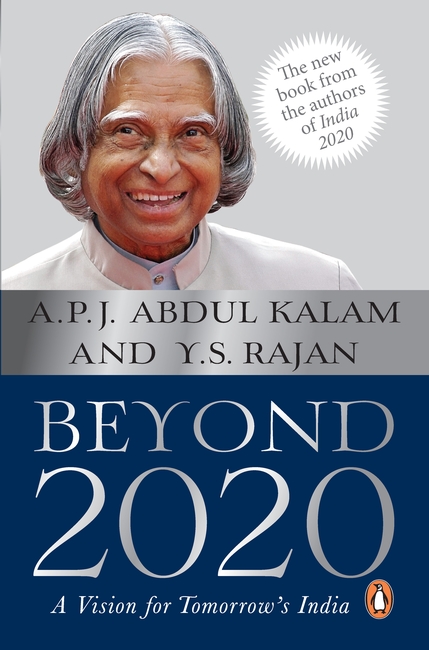
India 2020 is about to become a reality. Are we ready?
In 1998, Dr Kalam and Y.S. Rajan published the now iconic India 2020, a vision document for the new millennium that charted how India could become one of the top five economic powers in the world by 2020. Sixteen years later, as the year 2020 approaches, it is time to take stock of how much India has achieved and what lies ahead.
In many ways, India’s growth story in the twenty-first century has been hamstrung by missed opportunities and slowdowns in project execution; but it has also been marked by new opportunities and emerging technologies that make faster and more inclusive growth viable. A renewed policy focus is now needed for agriculture, manufacturing, mining, the chemicals industry, health care and infrastructure to invigorate these sectors and boost economic growth, argue Kalam and Rajan. Alongside, education, job creation, emerging technologies, biodiversity, waste management, national security and the knowledge economy are some of the other vital areas that we need to build on as we look beyond 2020.
India can still make it to the list of developed nations in a decade. Beyond 2020 provides an action plan for that transformation.
A Revolutionary History of Interwar India
Focusing on the Hindustan Socialist Republican Army (HSRA), A Revolutionary History . . . delivers a fresh perspective on the ambitions, ideologies and practices of this influential organization formed by Chandrashekhar Azad and Bhagat Singh, and inspired by transnational anti-imperial dissent. It is a new interpretation of the activities and political impact of the north Indian revolutionaries who advocated the use of political violence against the British.
Kama Maclean contends that the actions of these revolutionaries had a direct impact on Congress politics and tested its policy of non-violence. In doing so she draws on visual culture studies, demonstrating the efficacy of imagery in constructing-as opposed to merely illustrating-historical narratives. Maclean analyses visual evidence alongside recently declassified government files, memoirs and interviews to elaborate on the complex relationships between the Congress and the HSRA, which were far less antagonistic than is frequently imagined.
The Mind of a Terrorist
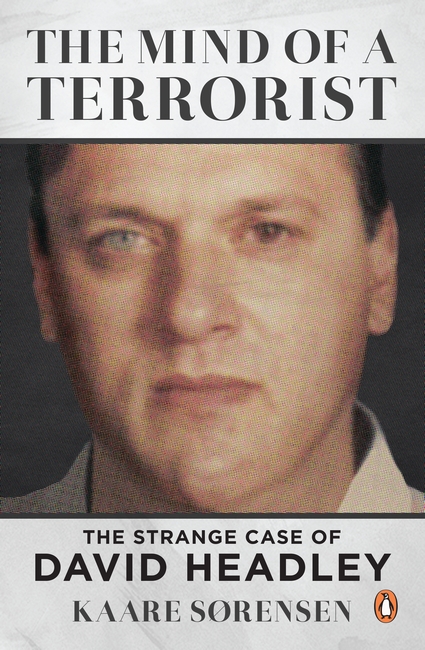
David Headley, the American-Pakistani also known as Daood Gilani, lived a double life. One day he would stroll through Central Park in his tailored Armani suit as a true New Yorker, and the next he would browse in the bazaar in Lahore wearing traditional Pakistani clothes. One day he would drink champagne at the most extravagant clubs; on another he would prostrate himself in prayer in remote Pakistan and pledge fidelity to Allah.
Born in 1960, the son of an American mother and Pakistani father, with one blue eye and one brown, Headley grew up between East and West. He was attracted to both worlds, even working as an informant for the US government, until one day he found he had to choose between the place of his birth and a radical form of Islam preaching global jihad. This is the disturbing story of the mastermind behind the 2008 attacks in Mumbai that killed 166 people-who, two months later, flew to Copenhagen to plan another act of terror with the help of al-Qaeda sleeper cells in Europe.
Veteran journalist Kaare Sørensen has reconstructed his movements and planning in a tense feat of reportage. His account, based on extensive reporting, eyewitness interviews, and documentation, including wiretaps, court transcripts, and emails by Headley accessed from a chat room cache of 9000 messages, offers unprecedented insight into the mind of the terrorist.
Orientalism
In this highly acclaimed seminal work, Edward Said surveys the history and nature of Western attitudes towards the East, considering Orientalism as a powerful European ideological creation-a way for writers, philosophers and colonial administrators to deal with the ‘otherness’ of Eastern culture, customs and beliefs. He traces this view through the writings of Homer, Nerval and Flaubert, Disraeli and Kipling, whose imaginative depictions have greatly contributed to the West’s romantic and exotic picture of the Orient. In the preface, Said examines the continuing effects of Western imperialism and racism, manifest in the events leading up to and post 9/11, establishing Orientalism as a canonical text of cultural studies.
Patriots And Partisans
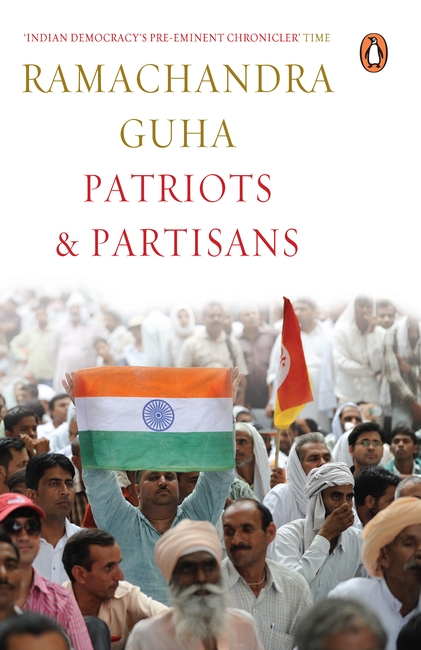
‘I am a person of moderate views,’ writes Ramachandra Guha, ‘these sometimes expressed in extreme fashion.’ In this wide-ranging and wonderfully readable collection of essays, Guha defends the liberal centre against the dogmas of left and right, and does so with style, depth, and polemical verve. The book begins with a brilliant overview of the major threats to the Indian Republic. Other essays turn a critical eye on Hindutva, the Communist left, and the dynasty-obsessed Congress party.
The essays in Part II of this book focus on writers and scholars, and include some sparkling portraits. Whether writing about politics or culture, whether profiling individuals or analysing social trends, Ramachandra Guha displays a masterly touch, confirming his standing as India’s most admired historian and public intellectual.
Half-Lion
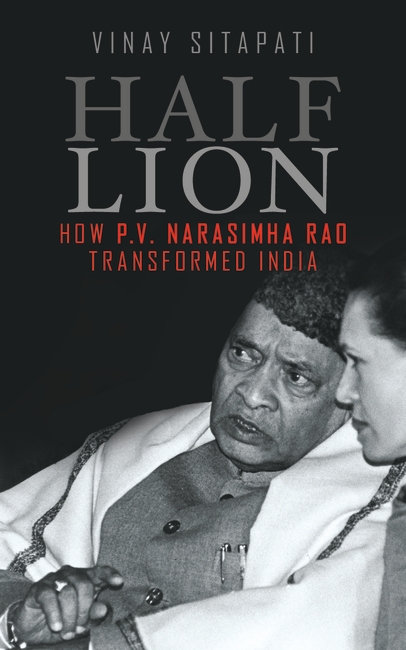
When P.V. Narasimha Rao became the unlikely prime minister of India in 1991, he inherited a nation adrift, violent insurgencies, and economic crisis. Despite being unloved by his people, mistrusted by his party, and ruling under the shadow of 10 Janpath, Rao transformed the economy and ushered India into the global arena.
With exclusive access to Rao’s never-before-seen personal papers and diaries, this definitive biography provides new revelations on the Indian economy, nuclear programme, foreign policy and the Babri Masjid. Tracing his early life from a small town in Telangana through his years in power, and finally, his humiliation in retirement, it never loses sight of the inner man, his difficult childhood, his corruption and love affairs, and his lingering loneliness. Meticulously researched and brutally honest, this landmark political biography is a must-read for anyone interested in knowing about the man responsible for transforming India.
Red Sun
A revealing journey into the heartland of India’s insurgency problem
Spread over fifteen of the country’s twenty-eight states, India’s Maoist movement is now one of the world’s biggest and most sophisticated extreme-left movements. Hardly a week passes without people dying in strikes and counter-strikes by the Maoists-interchangeably known as the Naxalites-and the police and paramilitary forces. In this brilliant and sobering examination of the ‘Other India’, Sudeep Chakravarti combines reportage, political analysis and individual case histories as he takes us to the heart of Maoist zones in the country-areas of extreme destitution, bad governance and perpetual war.
The Book Of Limericks
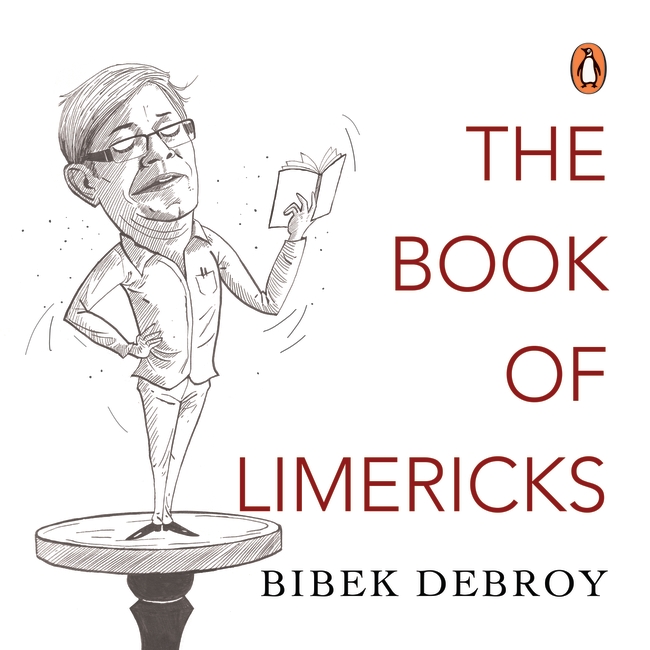
A compilation of witty verses based on current events, The Book of Limericks by Bibek Debroy is a brilliantly illustrated guide for anyone trying to understand what exactly happened last year.
From economic issues to citizen concerns, these hilarious five-liners will take you on a roller coaster ride through the year 2017.
The Communist Manifesto
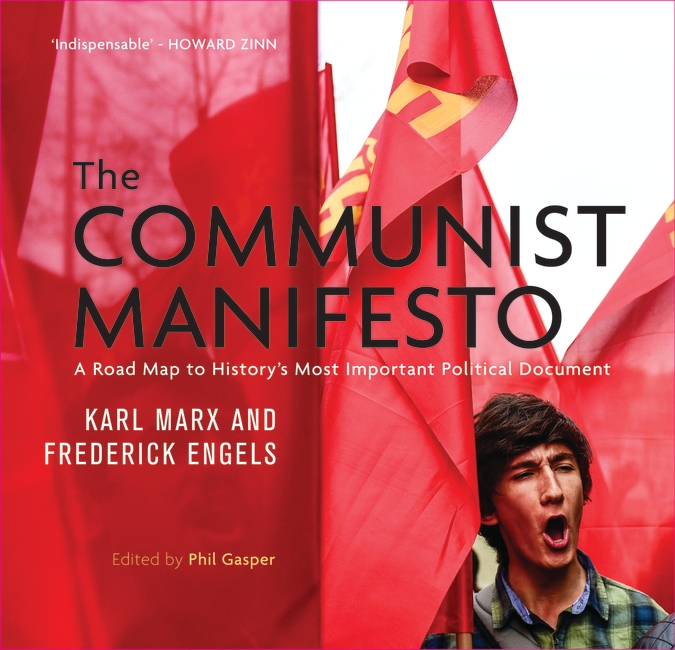
On the occasion of Karl Marx’s 200th birth anniversary, here is an authoritative edition of The Communist Manifesto
‘Apart from Charles Darwin’s Origin of Species,’ notes the Los Angeles Times, The Communist Manifesto ‘is arguably the most important work of nonfiction written in the 19th century.’ The Washington Post calls Marx ‘an astute critic of capitalism.’ Writing in The New York Times, Columbia University Professor Steven Marcus describes the Manifesto as a ‘masterpiece’ with ‘enduring insights into social existence.’
Since it was first written in 1848, the Manifesto by Marx and Engels has been translated into more languages than any other modern text. It has been banned, censored, burned and declared ‘dead’. But year after year, the text only grows more influential and more relevant, and is required reading in courses on philosophy, politics, economics and history.
In this extensively researched edition, renowned Marxist scholar Phil Gasper provides an authoritative introduction to history’s most important political document, with the full text of the Manifesto. Thoughtfully presented in a reader-friendly format, it is fully annotated, with clear historical references and explanations, additional related texts, and a glossary that will bring the text to life for students as well as the general reader.
The New Yorker recently described Karl Marx as ‘The Next Thinker’ for our era. This book shows readers why.