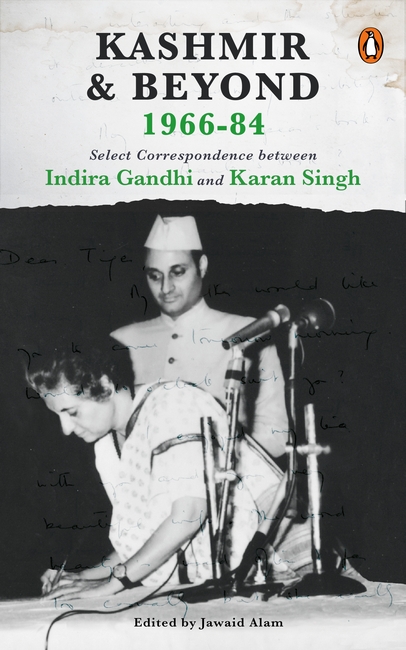
Dr Karan Singh became a member of Prime Minister Indira Gandhi’s Cabinet as minister for tourism and civil aviation, and worked closely with Gandhi for almost the entire duration of her tenure. They held each other in high esteem, shared great rapport as Cabinet colleagues and had mutual regard on a personal level as well.
Bringing together over 300 letters exchanged between Mrs Gandhi and Dr Singh, Kashmir and Beyond provides valuable insights into such historic events as the signing of the Tashkent Declaration, the Emergency and Operation Bluestar. Even as these letters map the important landmarks of recent Indian history, they also provide a fascinating glimpse into the inner workings of the government and the magnitude of the effort of running a country that houses ‘one-seventh of the human race’.
Kashmir and Beyond is an immensely important book for anyone who wants to make sense of the knotty issues that confront contemporary India.
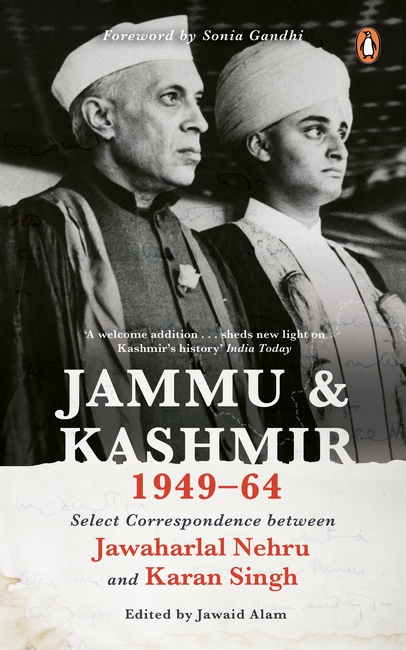
In 1949, Dr Karan Singh had just turned eighteen when he was appointed regent of Jammu and Kashmir, two years after his father, Maharaja Hari Singh, signed the Instrument of Accession merging the then independent state with India. Under the mentorship of Pandit Jawaharlal Nehru, Dr Singh was at the helm of affairs in the state for eighteen years, successively as regent, Sadar-i-Riyasat and governor.
This carefully conceived selection of over 200 letters exchanged between Dr Singh and Pandit Nehru sheds light on significant issues and events, including the teething problems of a fledgling country and a newly grafted state, the emerging conflicts between Pakistan and India, and the Chinese aggression of 1962. In addition to valuable insights into the political situation of the period, these letters also provide rare glimpses into the personal lives and thoughts of Pandit Nehru and Dr Singh. The memorandum submitted by Maharaja Hari Singh to President Rajendra Prasad in August 1952 is published in full, revealing how the identity and future of Kashmir were shaped.
A rare collection, Jammu and Kashmir offers an unmatched ringside view of the momentous events in Kashmir and the rest of India after Independence.
A key question today is whether India and the United States can or should develop ever-closer ties as a way of countering China’s desire to be the dominant power in the broader Asian region. In Fateful Triangle, Tanvi Madan argues that history shows that such a partnership is neither inevitable nor impossible.
Drawing on documents from India and the US, Fateful Triangle contends that China’s influence on the US-India relationship is not a recent phenomenon. It demonstrates that US and Indian perceptions of and their policies towards China shaped US-India relations in three crucial decades, from 1949 to 1979, in significant and complex ways.
Fateful Triangle updates our understanding of the diplomatic history of US-India relations, highlighting China’s central role in it, reassesses the origins and practice of Indian foreign policy and non-alignment, and provides historical context to the interactions between the three countries.

Among the USA’s allies in the war against terrorism, Pakistan cannot be easily characterized as either friend or foe. Nuclear-armed Pakistan is an important centre of radical Islamist ideas and groups. After 9/11, the selective cooperation of President General Pervez Musharraf in sharing intelligence with the United States and apprehending Al-Qaeda members led to the assumption that Pakistan might be ready to give up its long-standing ties with radical Islam. But Pakistan’s status as an Islamic ideological state is closely linked with the Pakistani elite’s world view and the praetorian ambitions of its military.
Pakistan: Between Mosque and Military analyses the origins of the relationships between Islamist groups and Pakistan’s military, and explores the nation’s quest for identity and security. Tracing how the military has sought US support by making itself useful for concerns of the moment-while continuing to strengthen the mosque-military alliance within Pakistan-Haqqani offers an alternative view of political developments since the country’s Independence in 1947.
This new edition of this classic work includes data updates and an Epilogue by the author.

Drawing on his experiences in Punjab as director general of police from 3 July 1984-within weeks of Operation Blue Star-to 22 August 1985, Kirpal Dhillon writes about the phase of militancy in the state as not just a law and order problem but a question of Sikh nationalism, of a minority under threat. This is an insider’s view of the factors that bedeviled Punjab for close to two decades. Coming from a man who witnessed the drama first-hand and analyzed its historical causes, this book is a valuable addition to literature on the Sikh community’s darkest years-a phase that is not necessarily over.

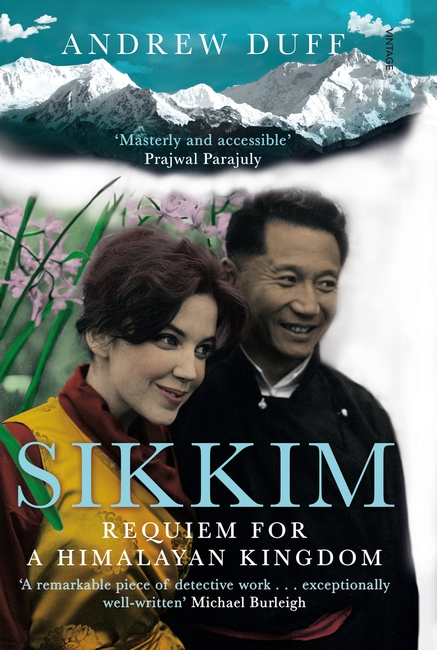
This is the incredible true story of Sikkim, a fairy-tale kingdom in the Himalayas that survived the end of the British Empire in India only to be annexed by India in 1975. Sikkim: Requiem for a Himalayan Kingdom tells the remarkable story of Thondup, the handsome last King of Sikkim, and his young and beautiful American queen, Hope Cooke, thrust unwittingly into the spotlight as they sought support for Sikkim’s independence after their wedding in 1963. But as tensions between India and China spilled over into war in the Himalayas, Sikkim became a pawn in the Cold War ideological battle that played out in Asia during the 1960s and 1970s.
Rumours circulated that Hope was a CIA spy. Meanwhile, a shadowy Scottish adventuress, the Kazini of Chakung, married to Sikkim’s leading political figure, coordinated opposition to the Palace. As the geopolitical tectonic plates of the Himalayas ground together, Sikkim never stood a chance. Thondup died a broken man in 1982; Hope returned to New York; Sikkim began a new phase as India’s twenty-second state.Based on exclusive interviews and new archival research, this is a thrilling, romantic and informative glimpse of life in a lost paradise.

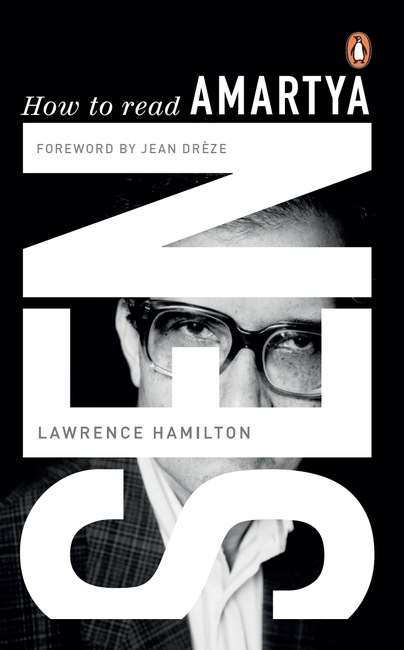
Nobel Laureate Amartya Sen is one of the world’s best-known voices for the poor and the downtrodden, and an inspiration for the proponents of justice across the globe. He has contributed almost without peer to the study of economics, philosophy and politics, transforming social choice theory, development economics, ethics, political philosophy and Indian political economy, to list but a few.
This book offers a much-needed introduction to Amartya Sen’s extraordinary variety of ideas. Lawrence Hamilton provides an excellent, accessible guide to the full range of Sen’s writings, contextualizing his ideas and summarizing the associated debates. In elegant prose, Hamilton reconstructs Sen’s critiques of the major philosophies of his time, assesses his now famous concern for capabilities as an alternative for thinking about poverty, inequality, gender discrimination, development, democracy and justice, and unearths some overlooked gems. Throughout, these major theoretical and philosophical achievements are subjected to rigorous scrutiny.
How to Read Amartya Sen is a major work on one of the most influential economists and philosophers of the last few centuries. It will be illuminating for readers keen to understand the breadth of Sen’s vision, and an invaluable resource for scholars, policy makers and global activists.

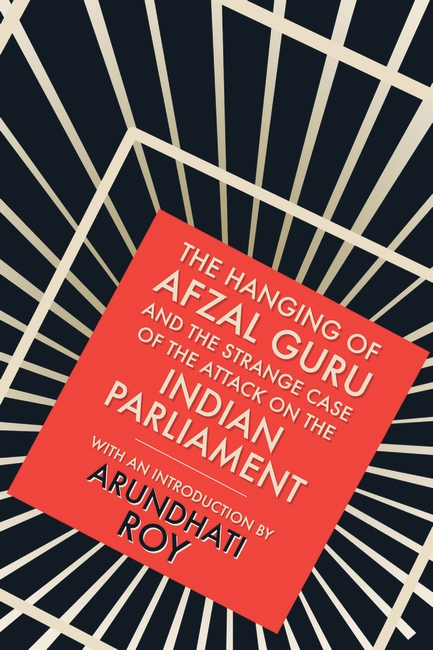
A comprehensive, sensitive view of one of the most controversial hangings of modern India
On 13 December 2001, the Indian Parliament was attacked by a few heavily armed men. Eleven years later, we still do not know who was behind the attack, nor the identity of the attackers. Both the Delhi high court and the Supreme Court of India have noted that the police violated legal safeguards, fabricated evidence and extracted false confessions. Yet, on 9 February 2013, one man, Mohammad Afzal Guru, was hanged to ‘satisfy’ the ‘collective conscience’ of society.
This updated reader brings together essays by lawyers, academics, journalists and writers who have looked closely at the available facts and who have raised serious questions about the investigations and the trial. This new version examines the implications of Mohammad Afzal Guru’s hanging and what it says about the Indian government’s relationship with Kashmir