The Shape of the Beast is our world laid bare by a mind that has consistently and unhesitatingly engaged with its changing realities and often anticipated the way things have moved in the last decade.
In the fourteen interviews collected here, conducted between January 2001 and March 2008, Arundhati Roy examines the nature of state and corporate power as it has emerged during this period, and the shape that resistance movements are taking. As she speaks about people displaced by dams and industry, the genocide in Gujarat, Maoist rebels, the war in Kashmir and the global War on Terror, she raises fundamental questions about democracy, justice and non-violent protest.
Unabashedly political, this is also a deeply personal collection that talks about the necessity of taking a stand and about the dilemma of guarding the private space necessary for writing in a world that demands urgent, unequivocal intervention.

Now with a new introduction by the author discussing the election of India’s new prime minister, Narendra Modi.
In eleven powerful, and closely argued, linked essays, Arundhati Roy takes a hard look at the underbelly of the world’s largest democracy. Beginning with the state-backed killing of Muslims in Gujarat in 2002, she writes about how ‘progress’ and genocide have historically gone hand in hand; about the murky investigations into the 2001 attack on the Indian Parliament; about the dangers of an increasingly powerful and entirely unaccountable judiciary; and about the collusion between large corporations, the government and the mainstream media. The volume ends with an account of the August 2008 uprising in Kashmir and an analysis of the November 2008 attacks on Mumbai. ‘The Briefing’, included as an appendix, is a compelling fictional text that brings together many of the issues central to the collection.

This second volume of Arundhati Roy’s collected non-fiction writing brings together fourteen essays written between June 2002 and November 2004. In these essays she draws the thread of empire through seemingly unconnected arenas, uncovering the links between America’s War on Terror, the growing threat of corporate power, the response of nation states to resistance movements, the role of NGOs, caste and communal politics in India, and the perverse machinery of an increasingly corporatized mass media. Meticulously researched and carefully argued, this is a necessary work for our times.

War has spread from India’s borders to the forests in the very heart of the country. Here are four essays by Arundhati Roy including the heatedly debated ‘Walking with the Comrades’ that combines a clear-eyed, analytical overview with extraordinary reportage from the ground of the Maoist guerrilla zone and her most recent essay, ‘Capitalism: A Ghost Story’. Broken Republic examines the nature of progress and development in the emerging global superpower, and asks some fundamental questions about the real meaning of civilization itself.

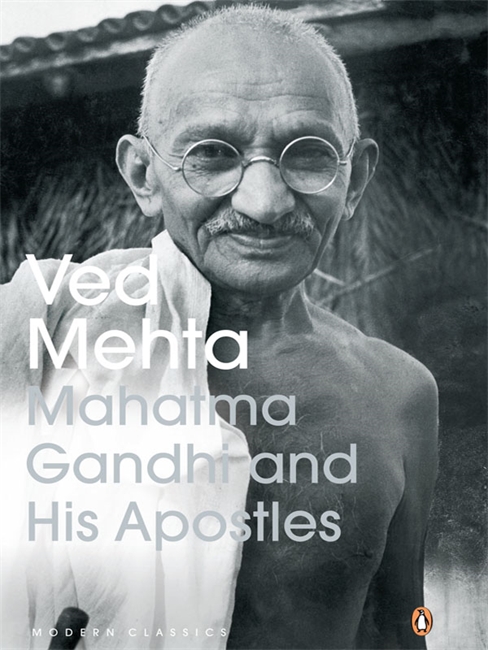
Ved Mehta’s book on Gandhi (1977) is one of the great portraits of the political leader. Travelling the world to talk to Gandhi’s family, friends and followers, drawing his daily life in exacting detail, Mehta gives us a nuanced and complex picture of the great man and brings him vividly alive.

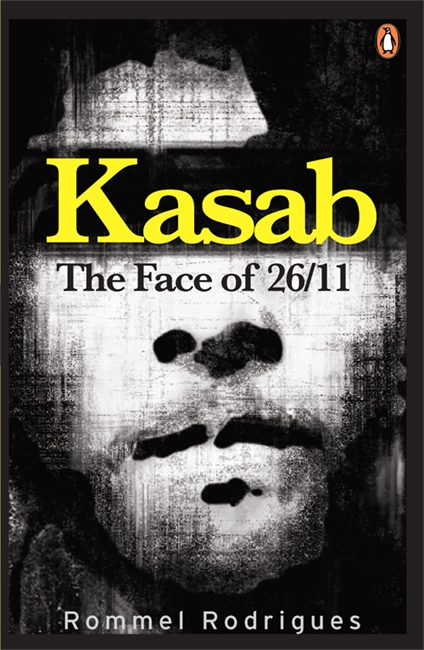
On 26 November 2008 ten heavily armed terrorists entered Mumbai. They headed for the city’s iconic landmarks and the mayhem they unleashed lasted nearly 60 hours.
The audacious terror attacks jolted Mumbai like never before. Even as they mourned; the residents of Maximum City demanded answers. But the information they got in return-accounts of the investigation; government rhetoric; newspaper reports; television features; books and even a film-was sketchy at best. Meanwhile; the courts continued with their prosecution of Mohammed Ajmal Amir Kasab; the lone surviving 26/11 gunman.
The broad picture available to the public is of the Pakistan-based terrorist organization Lashkar-e-Taiba and its ringleaders such as Hafiz Muhammad Saeed and Zaki-ur-Rehman Lakhvi training; arming and dispatching ten young men in a boat to attack India’s commercial capital. All we have been told about Kasab is that he was just another recruit brainwashed into carrying out the plot against Mumbai. Kasab: The Face of 26/11 breaks new ground by painstakingly piecing together Kasab’s terror trail. The narrative follows Kasab through the bylanes of Pakistani villages and cities as he made his way towards PoK; the dense forests where the terrorist-training camps are situated; the trains; buses and jeeps he boarded; the Indian vessel he and the others hijacked en route to Mumbai’s shores; Kasab’s capture and incarceration.
Rommel Rodrigues’ path-breaking investigative journalism fleshes out for the first time the well thought-out planning and organization that lay behind the attacks of 26/11.

What is it that we as a nation are missing?
Why, given all our skills, resources and talents, do we settle so often for the ordinary instead of striving to be the best?
At the heart of Ignited Minds is an irresistible premise: that people do have the power, through hard work, to realize their dream of a truly good life. Kalam’s vision document of aspiration and hope motivates us to unleash the dormant energy within India and guide the country to greatness.

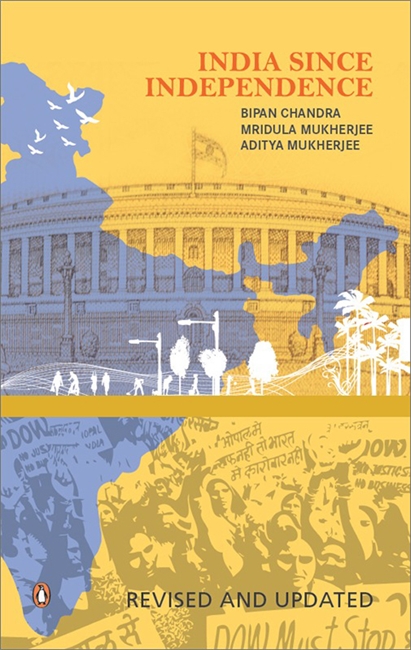
The story of the forging of India, the world’s largest democracy, is a rich and inspiring one. This volume, a sequel to the best-selling India’s Struggle for Independence, analyses the challenges India has faced and the successes it has achieved in the light of its colonial legacy and century-long struggle for freedom. It covers the framing of the Constitution and the evolution of the Nehruvian political and economic agenda and basics of foreign policy; the consolidation of the nation and contentious issues like party politics in the Centre and the states, the Punjab problem, and anti-caste politics and untouchability. These, along with objective assessments of Jawaharlal Nehru, Indira Gandhi, Jayaprakash Narayan, Lal Bahadur Shastri, Rajiv Gandhi, Vishwanath Pratap Singh, Atal Bihari Vajpayee and Manmohan Singh, constitute a remarkable overview of a nation on the move.

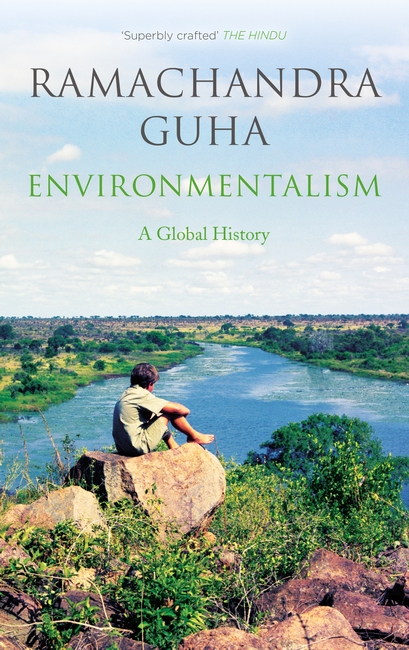
In this book Ramachandra Guha, an acclaimed historian of the environment, draws on many
years of research in three continents. He details the major trends, ideas, campaigns and
thinkers within the environmental movement worldwide. Among the thinkers he profiles are
John Muir, Mahatma Gandhi, Rachel Carson, and Octavia Hill; among the movements, the
Chipko Andolan and the German Greens. Environmentalism: A Global History documents
the flow of ideas across cultures, the ways in which the environmental movement in one
country has been invigorated or transformed by infusions from outside. It interprets the
different directions taken by different national traditions, and also explains why in certain
contexts (such as the former Socialist Bloc) the green movement is marked only by
its absence.
Massive in scope but pointed in analysis, written with passion and verve, this book
presents a comprehensive account of a significant social movement of our times,
and will be of wide interest both within and outside the academy. For this new edition,
the author has added a fresh prologue linking the book’s themes to ongoing
debates about the environmental impacts of global economic development.

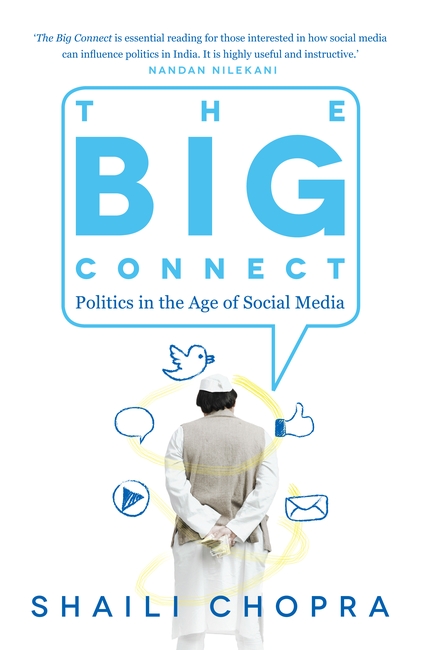
Are digital means of communication better than traditional bhaashans and processions? Will a social media revolution coerce armchair opinion-makers to head to poll booths?
Twitter, Facebook, and LinkedIn are changing the way the denizens of the world, and more specifically youth of this country, communicate and connect. In The Big Connect, Shaili Chopra traces the advent of social media in India and how politics and lobbying has now shifted to the virtual floor. She argues that though a post, a pin, or a tweet may not translate into a vote, it can definitely influence it. With comparisons to the Obama campaign of 2008 and 2012 and analysis of the social media campaigns of political bigwigs like Narendra Modi, Rahul Gandhi and Arvind Kejriwal-the book discusses the role of a digital community in Indian politics.