



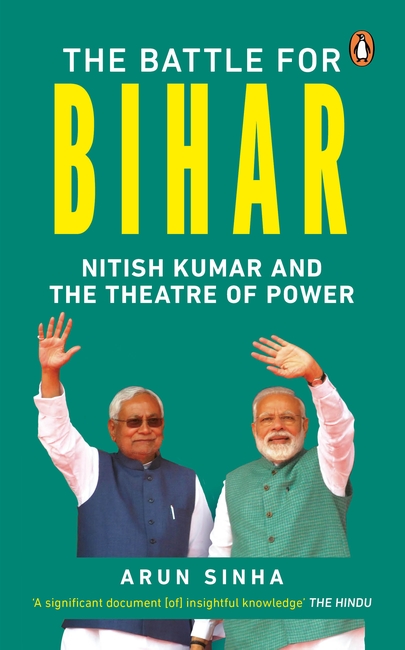
At the centre of India’s social churn and high political drama is Bihar, a state with great untapped potential. After bursting on to the scene in the late 1980s and becoming Bihar’s uncrowned ruler, Lalu Prasad Yadav was challenged by his erstwhile comrade Nitish Kumar. Unable to oust Lalu from power with his small, new party, Nitish made an alliance with the Bharatiya Janata Party (BJP). A quiet but canny politician, Nitish Kumar, as the chief minister, brought back law and order, roads, education and health to the fore of governance, aspects sorely lacking during Lalu’s long rule. But the entry of Narendra Modi into the national political scene in 2013 rocked the alliance’s boat. Nitish’s switching of alliance between the Rashtriya Janata Dal (RJD) and the BJP around that time cost him enormously in terms of political goodwill.
Will Nitish be able to restore his esteem by making Bihar a model state for India’s post-Independence journey? In this riveting narrative, seasoned journalist Arun Sinha tells the intertwined stories of Bihar’s political theatre and Nitish’s rule with incisive candour and in-depth research. The Battle for Bihar is a clear-sighted study of the turbulent state that could show India’s politics its way forward.
Catagory: Politics
Ambedkar’s Preamble
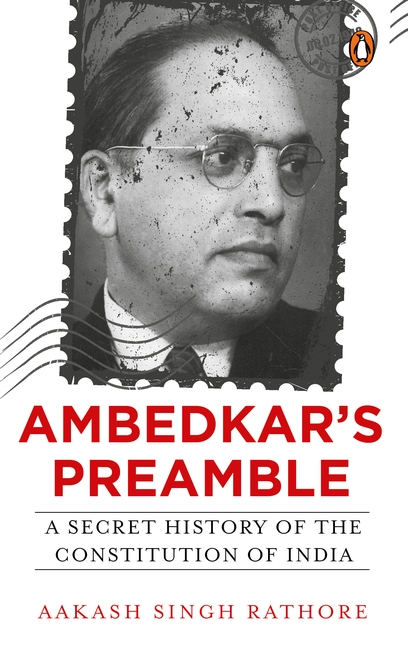
On 26 January 1950, the Constitution of India was formally adopted and came into effect. Its Preamble set out in brief the enlightened values it enshrined and hoped to engender. In a radical shift from mainstream constitutional history, this book establishes B.R. Ambedkar’s irrefutable authorship of the Preamble by uncovering the intellectual origins of its six most central concepts-justice, liberty, equality, fraternity, dignity and nation.
Although Ambedkar is universally regarded as the chief architect of the Constitution, the specifics of his role as chairman of the drafting committee are not widely discussed. Totally neglected is his almost single-handed authorship of the Constitution’s Preamble, which is frequently and mistakenly attributed to Jawaharlal Nehru rather than to Ambedkar. This book establishes how and why the Preamble to the Constitution of India is essentially an Ambedkarite Preamble. It is clear that its central concepts have their provenance in Ambedkar’s writings and speeches.
Through six eponymous chapters, this book unfolds the story of the six constitutional concepts. In doing so, it spotlights fundamental facts about modern Indian history, as well as Ambedkar’s revolutionary political thought, hitherto ignored in conventional accounts.
Anatomy of an Abduction
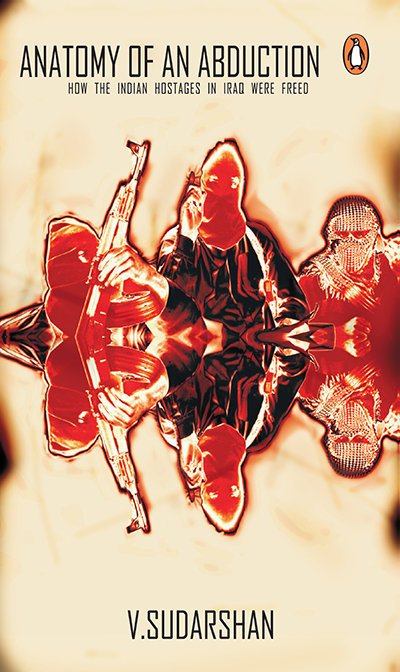
‘It was a bizarre situation. The negotiators were in position in Iraq. The kidnappers and the kidnapped were in Iraq. At the crucial moment, the transport company in Kuwait expressed reservations about the ransom.’
In July 2004, a convoy of KGL trucks drove into Iraq from Kuwait carrying electronic equipment for the American occupiers, when the worst happened-three Indian drivers, three Kenyans and an Egyptian were ambushed, detained by unknown Iraqi dissidents and accused of collaborating with the Americans. A deadline was set for their execution. The countdown had begun.
The abduction drama that ensued had all the ingredients of a thriller: nail-biting suspense, high profile media coverage, international outrage at the plight of these humble workers, and political tightrope-walking. This gripping behind-the-scenes narration recounts what really happened in Baghdad when a team of negotiators was sent there and entered into secret talks through an intermediary whose very existence was not in public domain.
Anatomy of Abduction reveals for the first time the Indian crisis management team’s handling of the situation over forty-four days in occupied, lawless Iraq. The book gives an insight into the pressures that governments have to face as more and more innocent people become pawns in global chess games.
Way Beyond The Three Rs
The education of their children is of paramount importance to all Indian parents. They spend tens of thousands of crores each year to get their young educated. The country fetes its successful students : from class X to board toppers and those who ‘crack the IIT JEE’ to those who clear the civil- services examination.
Yet things on the ground are dire.
About 70 per cent of all students ( in villages, towns and cities) have to make do with inferior schooling. Metropolitan newspapers are full of the difficulty of getting a nursery seat in a good school. And while there is a seat crunch in the better colleges too, only 10 per cent of all students between the ages of 18 and 21 are enrolled in college. Crores of educated Indians discover too late that they do not have the skills to land a suitable job.
Y.S. Rajan examines the gamut of issues involved in India’s efforts to educate its young people and the work required to fix schools, vocational training centres, colleges and universities. He argues that Indian education needs reforms on a scale comparable to those which freed the economy of the shackles of the licence-permit raj almost twenty years ago.
The Mother-In-Law
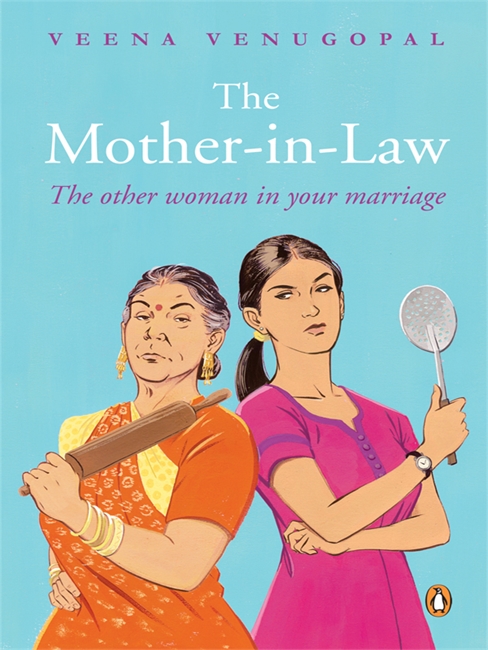
In this witty, acute and often painfully funny book Veena Venugopal follows eleven women through their marriages and explores why the mother-in-law is the dreaded figure she is.Meet Deepa, whose bikini-wearing mother-in-law won’t let her even wear jeans; Carla whose mother-in-law insists that her son keep all his stuff in his family home although he can spend the night at his wife’s; Rachna who fell in love with her mother-in-law even before she met her fiancé only to find both her romances sour; and Lalitha who finds that despite having had a hard-nut mother-in-law herself, she is turning out to be an equally unlikeable Mummyji.Full of incisive observations and deliciously wicked storytelling, The Mother-in-Law is a book that will make you laugh and cry and understand better the most important relationship in a married woman’s life.
Super Power?
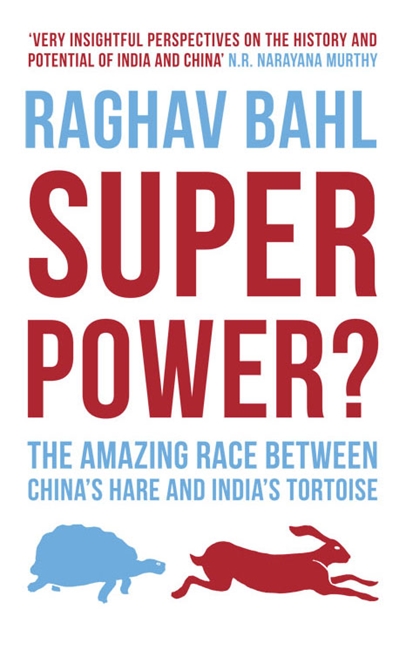
In his career as a journalist and one of India’s top entrepreneurs, Raghav Bahl has often faced a barrage of questions from visiting businesspeople bewildered by India: Why are Indian regulations so weak and confusing? Why is your foreign investment policy so restrictive? How is it that you speak such good English? Inevitably, the questions are followed by the observation: But, you know, that’s not the way it is in China.
Indeed, even as the two economies are together projected to dominate the world, there is a palpable difference in the way China and India work on the ground. China is spectacularly effective in building infrastructure and is currently investing almost half its GDP. Meanwhile, India is a ‘promising’ economy: more than half its GDP is consumed by its billionplus population; half its population is younger than twenty-five, giving it a unique demographic advantage; 350 million Indians understand English, making it the largest English-using country in the world
In the race to superpower status, who is likely to breast the tape-China’s hare or India’s tortoise? For anyone looking to understand China and India and the ways in which these two nations are about to change the history of the world, this is the book to read.
Swinging the Mandate
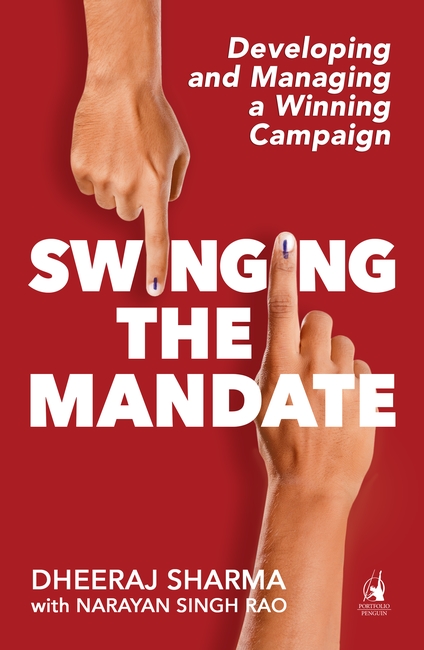
Swinging the Mandate is a first-of-its-kind book on political campaign management in India. Prof. Dheeraj Sharma, chair of marketing at IIM Ahmedabad, and Narayan Singh Rao discuss how sophisticated campaign management strategies have been utilized in recent elections in India. The book offers excellent case studies from the historic general elections of 2014 and the landslide victory of AAP in the 2015 Delhi elections. It also gives examples of some hard-fought elections in Europe and North America to demonstrate increasing use of principles of marketing and management in campaign management. Armed with comprehensive research and interesting case studies, this accessible book reveals how star campaigners are built, what the marketing mix for a political party looks like, and how elections are won in India
The Raisina Model
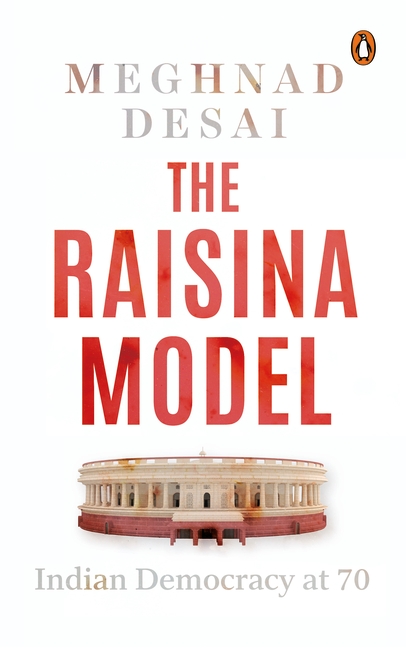
Meghnad Desai reflects on Indian democracy as it completes seventy years of colourful, eventful and energetic parliamentary existence. Pulling no punches, Desai looks at the history and evolution of Indian democratic institutions, pinpointing their achievements, but also their repeated failure to live up to the standards envisaged by the nation’s founders. Drawing on his own career as a Labour peer in Britain’s House of Lords, Desai has the rare understanding and familiarity with the process of politics, and is able therefore to identify its universal features and zoom in on its uniquely Indian aspects. This is a candid, reflective and unsparing view of the precepts and practice of Indian politics. It traces at the evolution and growth of identity politics, coalition governments and single-party rule and the differing political narratives of the north and the south. The Raisina Model is a critical and frequently uncomfortable meditation on India’s contemporary political culture.
The Liberalization Story
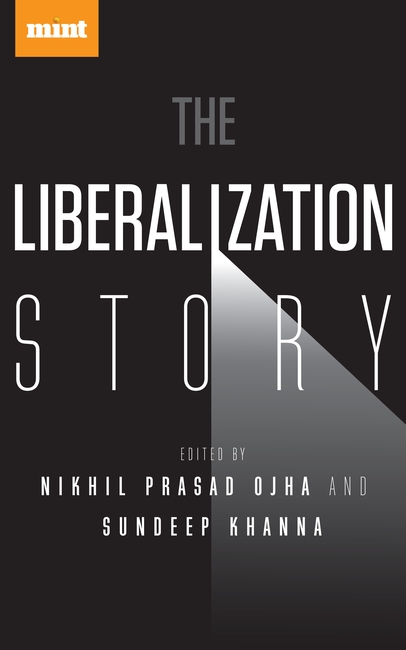
Why was liberalization important for India? What was its effect on sectors like IT, banking, telecom, etc.? How did it help Indian entrepreneurs build international businesses? And where do we go from here?
The Liberalization Story is a selection of essays which explain the most important financial event in modern Indian history and its impact. The book contains candid interviews with decision-makers like Montek Singh Ahluwalia and entrepreneurs like Sunil Bharti Mittal and Uday Kotak, who give a ringside view into the changing Indian economy.
How did we reach here? The book also explains the present in the context of our past. It tackles some important questions which explain the overall Indian economy today: what led to the rise of private equity; how did dynamics of family businesses change; how did MNCs conquer the Indian market; how did the Indian middle class change; what led to the digital wave; what led to India leapfrogging to innovation, among many others. A highly readable book which shares a holistic view of the twenty-five years of Indian liberalization.
The Bhutto Dynasty
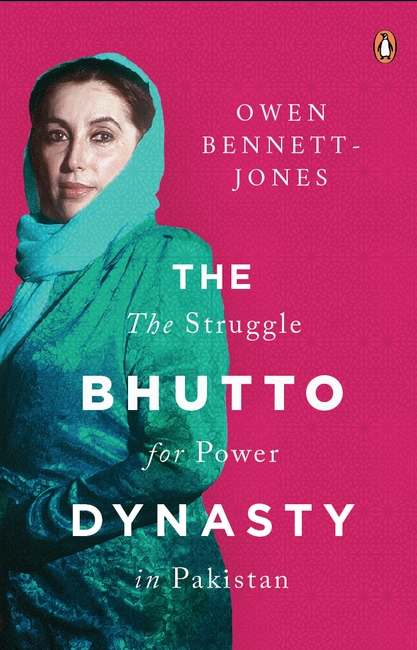
The Bhutto family has long been one of the most ambitious and powerful in Pakistan. But politics has cost the Bhuttos dear. Zulfikar Ali Bhutto, widely regarded as the most astute politician in the country’s history, was removed from power in 1977 and executed two years later, at the age of fifty-one. Of his four children, three met unnatural deaths: Shahnawaz was poisoned in 1985 at the age of twenty-seven; Murtaza was shot by the police outside his home in 1996, aged forty-two; and Benazir Bhutto, who led the Pakistan Peoples Party and became Prime Minister twice, was killed by a suicide bomber in Rawalpindi in 2007, aged fifty-four.
Drawing on original research and unpublished documents gathered over twenty years, Owen Bennett-Jones explores the turbulent existence of this extraordinary family, including their volatile relationship with British colonialists, the Pakistani armed forces and the United States.