On 26 November 2008 ten heavily armed terrorists entered Mumbai. They headed for the city’s iconic landmarks and the mayhem they unleashed lasted nearly 60 hours.
The audacious terror attacks jolted Mumbai like never before. Even as they mourned; the residents of Maximum City demanded answers. But the information they got in return-accounts of the investigation; government rhetoric; newspaper reports; television features; books and even a film-was sketchy at best. Meanwhile; the courts continued with their prosecution of Mohammed Ajmal Amir Kasab; the lone surviving 26/11 gunman.
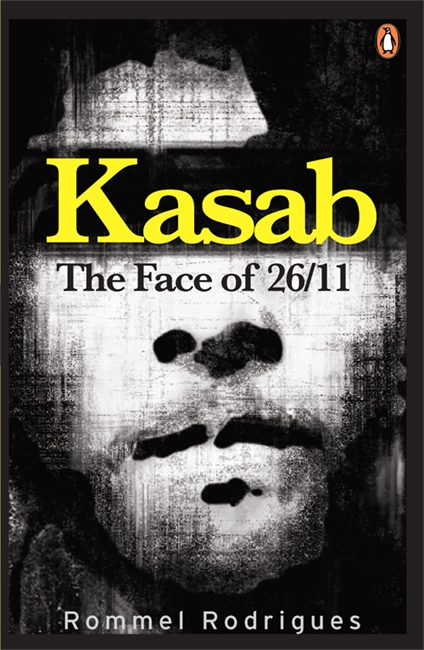
The broad picture available to the public is of the Pakistan-based terrorist organization Lashkar-e-Taiba and its ringleaders such as Hafiz Muhammad Saeed and Zaki-ur-Rehman Lakhvi training; arming and dispatching ten young men in a boat to attack India’s commercial capital. All we have been told about Kasab is that he was just another recruit brainwashed into carrying out the plot against Mumbai. Kasab: The Face of 26/11 breaks new ground by painstakingly piecing together Kasab’s terror trail. The narrative follows Kasab through the bylanes of Pakistani villages and cities as he made his way towards PoK; the dense forests where the terrorist-training camps are situated; the trains; buses and jeeps he boarded; the Indian vessel he and the others hijacked en route to Mumbai’s shores; Kasab’s capture and incarceration.
Rommel Rodrigues’ path-breaking investigative journalism fleshes out for the first time the well thought-out planning and organization that lay behind the attacks of 26/11.

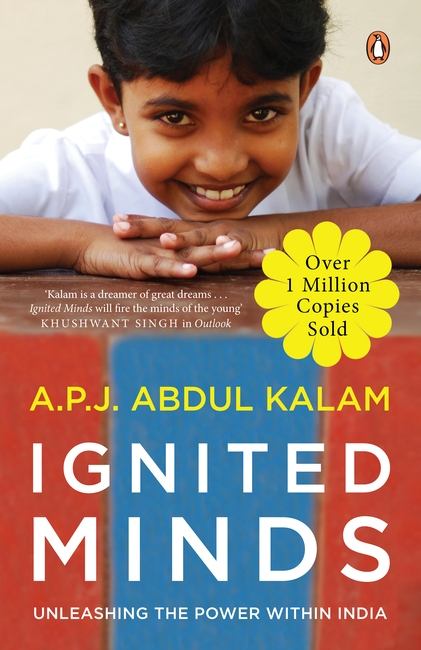
What is it that we as a nation are missing?
Why, given all our skills, resources and talents, do we settle so often for the ordinary instead of striving to be the best?
At the heart of Ignited Minds is an irresistible premise: that people do have the power, through hard work, to realize their dream of a truly good life. Kalam’s vision document of aspiration and hope motivates us to unleash the dormant energy within India and guide the country to greatness.

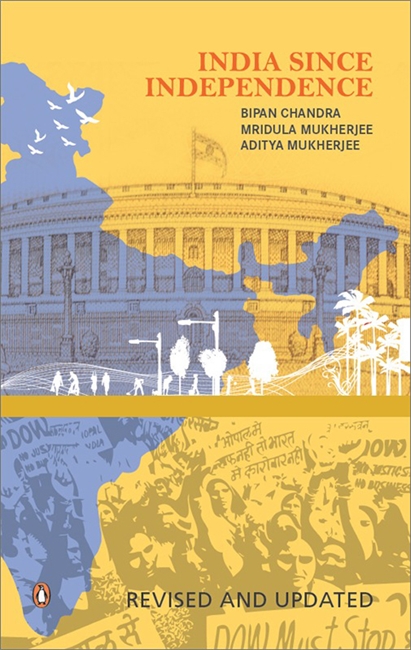
The story of the forging of India, the world’s largest democracy, is a rich and inspiring one. This volume, a sequel to the best-selling India’s Struggle for Independence, analyses the challenges India has faced and the successes it has achieved in the light of its colonial legacy and century-long struggle for freedom. It covers the framing of the Constitution and the evolution of the Nehruvian political and economic agenda and basics of foreign policy; the consolidation of the nation and contentious issues like party politics in the Centre and the states, the Punjab problem, and anti-caste politics and untouchability. These, along with objective assessments of Jawaharlal Nehru, Indira Gandhi, Jayaprakash Narayan, Lal Bahadur Shastri, Rajiv Gandhi, Vishwanath Pratap Singh, Atal Bihari Vajpayee and Manmohan Singh, constitute a remarkable overview of a nation on the move.

In this book Ramachandra Guha, an acclaimed historian of the environment, draws on many
years of research in three continents. He details the major trends, ideas, campaigns and
thinkers within the environmental movement worldwide. Among the thinkers he profiles are
John Muir, Mahatma Gandhi, Rachel Carson, and Octavia Hill; among the movements, the
Chipko Andolan and the German Greens. Environmentalism: A Global History documents
the flow of ideas across cultures, the ways in which the environmental movement in one
country has been invigorated or transformed by infusions from outside. It interprets the
different directions taken by different national traditions, and also explains why in certain
contexts (such as the former Socialist Bloc) the green movement is marked only by
its absence.
Massive in scope but pointed in analysis, written with passion and verve, this book
presents a comprehensive account of a significant social movement of our times,
and will be of wide interest both within and outside the academy. For this new edition,
the author has added a fresh prologue linking the book’s themes to ongoing
debates about the environmental impacts of global economic development.

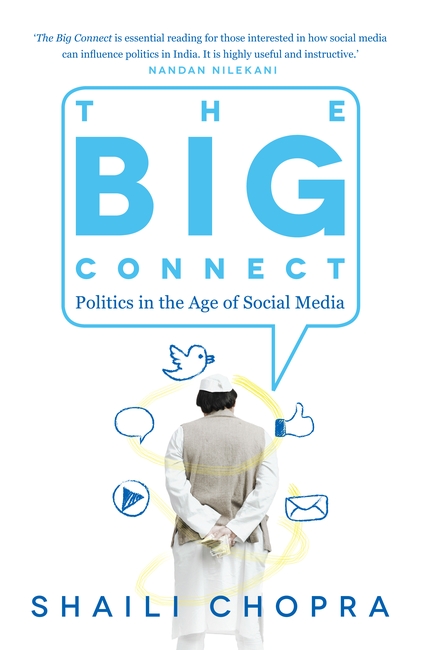
Are digital means of communication better than traditional bhaashans and processions? Will a social media revolution coerce armchair opinion-makers to head to poll booths?
Twitter, Facebook, and LinkedIn are changing the way the denizens of the world, and more specifically youth of this country, communicate and connect. In The Big Connect, Shaili Chopra traces the advent of social media in India and how politics and lobbying has now shifted to the virtual floor. She argues that though a post, a pin, or a tweet may not translate into a vote, it can definitely influence it. With comparisons to the Obama campaign of 2008 and 2012 and analysis of the social media campaigns of political bigwigs like Narendra Modi, Rahul Gandhi and Arvind Kejriwal-the book discusses the role of a digital community in Indian politics.

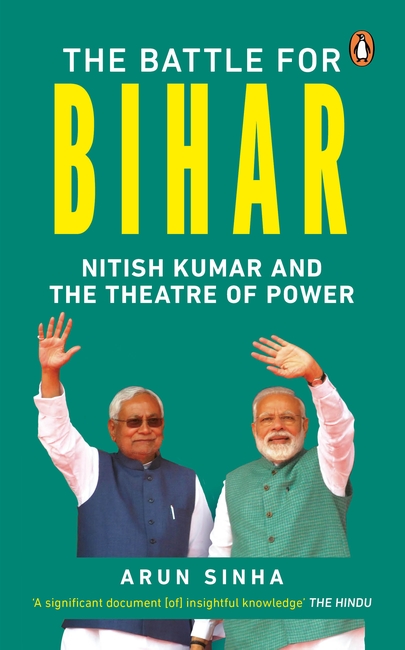
At the centre of India’s social churn and high political drama is Bihar, a state with great untapped potential. After bursting on to the scene in the late 1980s and becoming Bihar’s uncrowned ruler, Lalu Prasad Yadav was challenged by his erstwhile comrade Nitish Kumar. Unable to oust Lalu from power with his small, new party, Nitish made an alliance with the Bharatiya Janata Party (BJP). A quiet but canny politician, Nitish Kumar, as the chief minister, brought back law and order, roads, education and health to the fore of governance, aspects sorely lacking during Lalu’s long rule. But the entry of Narendra Modi into the national political scene in 2013 rocked the alliance’s boat. Nitish’s switching of alliance between the Rashtriya Janata Dal (RJD) and the BJP around that time cost him enormously in terms of political goodwill.
Will Nitish be able to restore his esteem by making Bihar a model state for India’s post-Independence journey? In this riveting narrative, seasoned journalist Arun Sinha tells the intertwined stories of Bihar’s political theatre and Nitish’s rule with incisive candour and in-depth research. The Battle for Bihar is a clear-sighted study of the turbulent state that could show India’s politics its way forward.

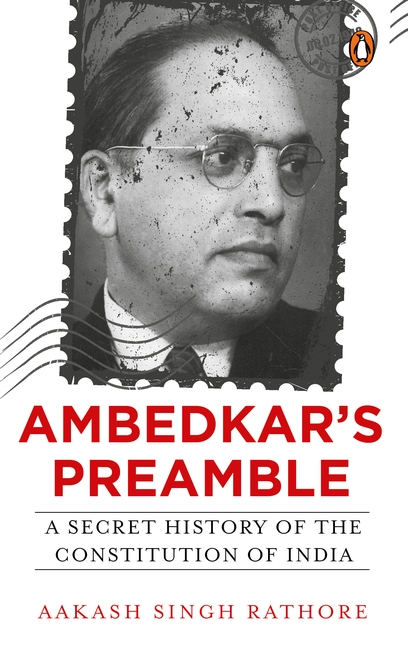
On 26 January 1950, the Constitution of India was formally adopted and came into effect. Its Preamble set out in brief the enlightened values it enshrined and hoped to engender. In a radical shift from mainstream constitutional history, this book establishes B.R. Ambedkar’s irrefutable authorship of the Preamble by uncovering the intellectual origins of its six most central concepts-justice, liberty, equality, fraternity, dignity and nation.
Although Ambedkar is universally regarded as the chief architect of the Constitution, the specifics of his role as chairman of the drafting committee are not widely discussed. Totally neglected is his almost single-handed authorship of the Constitution’s Preamble, which is frequently and mistakenly attributed to Jawaharlal Nehru rather than to Ambedkar. This book establishes how and why the Preamble to the Constitution of India is essentially an Ambedkarite Preamble. It is clear that its central concepts have their provenance in Ambedkar’s writings and speeches.
Through six eponymous chapters, this book unfolds the story of the six constitutional concepts. In doing so, it spotlights fundamental facts about modern Indian history, as well as Ambedkar’s revolutionary political thought, hitherto ignored in conventional accounts.

‘It was a bizarre situation. The negotiators were in position in Iraq. The kidnappers and the kidnapped were in Iraq. At the crucial moment, the transport company in Kuwait expressed reservations about the ransom.’
In July 2004, a convoy of KGL trucks drove into Iraq from Kuwait carrying electronic equipment for the American occupiers, when the worst happened-three Indian drivers, three Kenyans and an Egyptian were ambushed, detained by unknown Iraqi dissidents and accused of collaborating with the Americans. A deadline was set for their execution. The countdown had begun.
The abduction drama that ensued had all the ingredients of a thriller: nail-biting suspense, high profile media coverage, international outrage at the plight of these humble workers, and political tightrope-walking. This gripping behind-the-scenes narration recounts what really happened in Baghdad when a team of negotiators was sent there and entered into secret talks through an intermediary whose very existence was not in public domain.
Anatomy of Abduction reveals for the first time the Indian crisis management team’s handling of the situation over forty-four days in occupied, lawless Iraq. The book gives an insight into the pressures that governments have to face as more and more innocent people become pawns in global chess games.
The education of their children is of paramount importance to all Indian parents. They spend tens of thousands of crores each year to get their young educated. The country fetes its successful students : from class X to board toppers and those who ‘crack the IIT JEE’ to those who clear the civil- services examination.
Yet things on the ground are dire.
About 70 per cent of all students ( in villages, towns and cities) have to make do with inferior schooling. Metropolitan newspapers are full of the difficulty of getting a nursery seat in a good school. And while there is a seat crunch in the better colleges too, only 10 per cent of all students between the ages of 18 and 21 are enrolled in college. Crores of educated Indians discover too late that they do not have the skills to land a suitable job.
Y.S. Rajan examines the gamut of issues involved in India’s efforts to educate its young people and the work required to fix schools, vocational training centres, colleges and universities. He argues that Indian education needs reforms on a scale comparable to those which freed the economy of the shackles of the licence-permit raj almost twenty years ago.

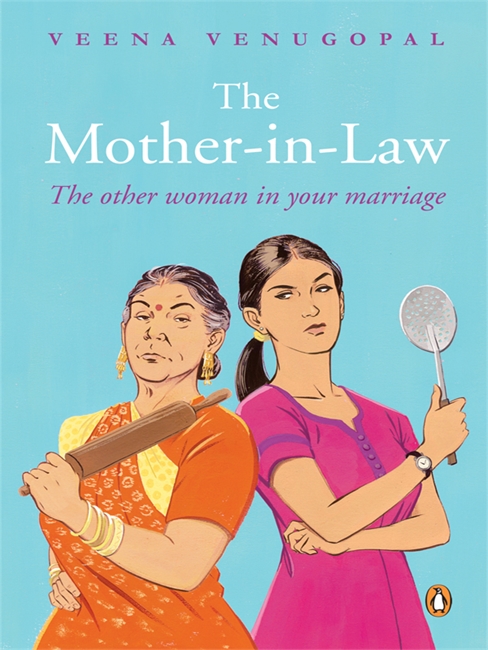
In this witty, acute and often painfully funny book Veena Venugopal follows eleven women through their marriages and explores why the mother-in-law is the dreaded figure she is.Meet Deepa, whose bikini-wearing mother-in-law won’t let her even wear jeans; Carla whose mother-in-law insists that her son keep all his stuff in his family home although he can spend the night at his wife’s; Rachna who fell in love with her mother-in-law even before she met her fiancé only to find both her romances sour; and Lalitha who finds that despite having had a hard-nut mother-in-law herself, she is turning out to be an equally unlikeable Mummyji.Full of incisive observations and deliciously wicked storytelling, The Mother-in-Law is a book that will make you laugh and cry and understand better the most important relationship in a married woman’s life.