



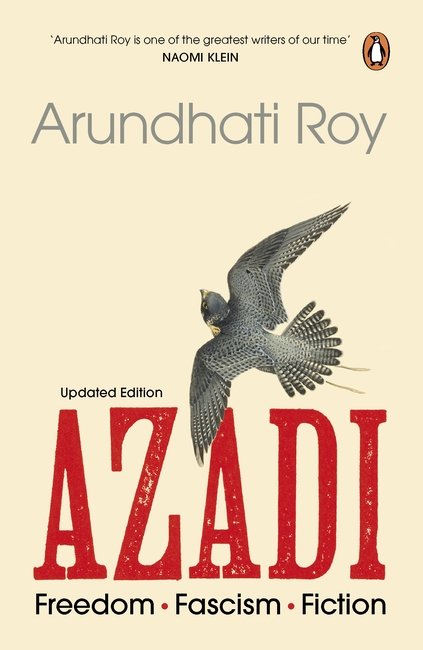
The chant of ‘Azadi!’ – Urdu for ‘Freedom’-is the slogan of the freedom struggle in Kashmir against what the Kashmiris see as the Indian Occupation. Ironically, it also became the chant of millions on the streets of India against the project of Hindu nationalism.
Even as Arundhati Roy began to ask what lay between these two calls for freedom-a chasm or a bridge?-the streets fell silent. Not only in India but all over the world. Covid-19 brought with it another, more terrible, understanding of Azadi, making a nonsense of international borders, incarcerating whole populations, and bringing the modern world to a halt like nothing else ever could.
In this series of electrifying essays, Arundhati Roy challenges us to reflect on the meaning of freedom in a world of growing authoritarianism.
The essays include meditations on language, public as well as private, and on the role of fiction and alternative imaginations in these disturbing times. The pandemic, Roy says, is a portal between one world and another. For all the illness and devastation it has left in its wake, it is an invitation to the human race, an opportunity, to imagine another world.
Catagory: Politics
Rebels with a Cause
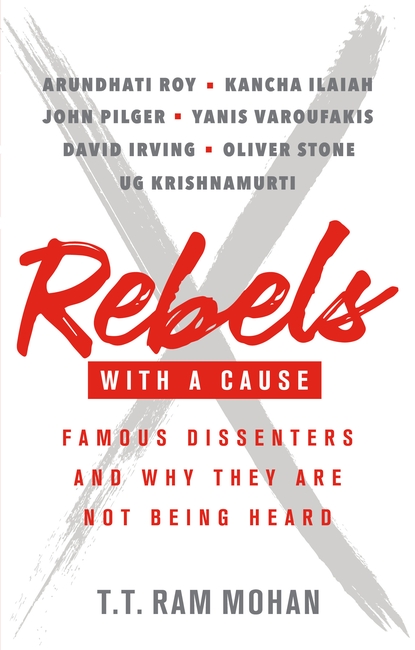
Democratic societies take pride in the freedom of expression. Indeed, the right to dissent and tolerance of diverse viewpoints distinguish a democratic society from a dictatorship. In his new book, Prof. T.T. Ram Mohan profiles well-known dissenters Arundhati Roy, Oliver Stone, Kancha Ilaiah, David Irving, Yanis Varoufakis, U.G. Krishnamurti and John Pilger to illustrate how, in practice, dissent tends to be severely circumscribed. It is only the celebrity status of these dissenters that has kept them from being actively harmed. Through an exploration of the lives and ideas of these personalities, the author argues that, while one may not agree with their positions on various issues, their views merit discussion and debate. Engaging with them and responding to their analyses holds out the prospect for substantive reform within the system. Yet, the dominant elites prefer not to do so, instead marginalizing and even ostracizing dissenters precisely because they find change of any sort threatening.
Rebels with a Cause is a book that asks hard questions to challenge the way we view, and live in, the world-an important book for anyone who refuses to accept the status quo.
The Power Of Promise
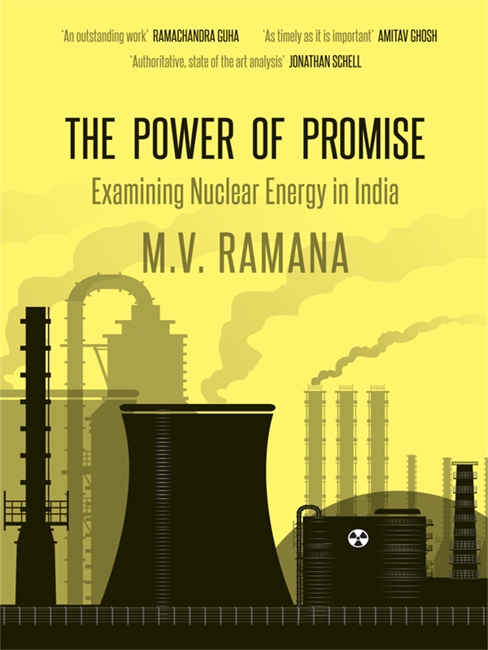
Nuclear power has been held out as possibly the most important source of energy for India. And the dream of a nuclear-powered India has been supported by huge financial budgets and high-level political commitment for over six decades. Nuclear power has also been presented as safe, environmentally benign and cheap.
Physicist and writer M.V. Ramana offers a detailed narrative of the evolution of India’s nuclear energy programme, examining different aspects of it and the claims of success made on its behalf. In The Power of Promise he makes a historically nuanced and compelling argument as to why the nuclear energy programme has failed in the past and why its future is dubious.
Ramana shows that nuclear power has been more expensive than conventional forms of electricity generation, that the ever-present risk of catastrophic accidents is heightened by observed organizational inadequacies at nuclear facilities, and that existing nuclear fuel cycle facilities have been correlated with impacts on public health and the environment. He offers detailed information and analysis that should serve to deepen the debate on whether India should indeed embark on a massive nuclear programme.
An Officer and His Holiness
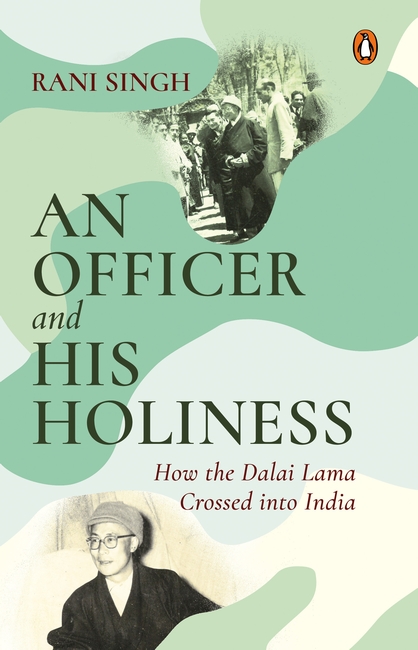
In 1959, the Dalai Lama escaped from Tibet into India, where he was granted refuge. Few know about the carefully calibrated operation to escort him safely from the Indian border. An Officer and His Holiness narrates how political officer Har Mander Singh successfully managed this assignment in the North East Frontier Agency (NEFA) with limited resources, and despite a treacherous terrain and external threats.
Har Mander Singh kept careful diary entries of the period, which have been reproduced for the first time in this book. His niece and renowned journalist, Rani Singh, painstakingly documents the journey through extensive research, travel and interviews with the Dalai Lama, his youngest brother, Tenzin Choegyal, and Har Mander Singh.
Her own experience of retracing her uncle’s journey also provides a comprehensive overview of the situation today. Rare pictures and valuable input from experts bring alive this thrilling operation that forever changed relations between India, China and Tibet.
The Insider
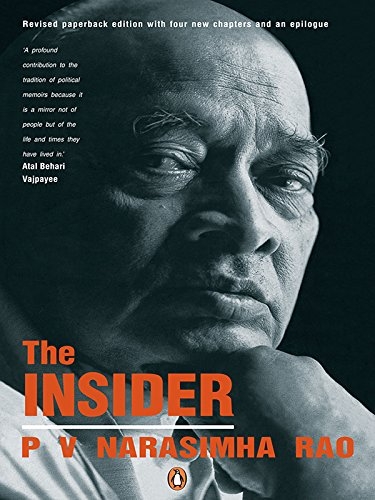
In the story, the author talks about the shocking but true political happenings in the country that he witnessed during his tenure. The plot centers around a character called Anand, a young man who gives up a lucrative career in the hopes of bringing about political reformation. He begins his political career by contesting against the oppressive ruling party. Next, he reaches a spot where he has to choose between the current Chief Minister and his rival. His rival soon wins the post of CM, and he is made to serve under him. Anand then moves to Delhi, at a time when Indira Gandhi takes over the reigns of power. Under her governance, the tables turn, for Anand now replaces his rival Chaudhary and becomes the Chief Minister of Afrozabad. He then has to run the political show under her regime. The book discusses the state of events and the political scenario in India under the leadership of Indira Gandhi, delving into areas like her rise to power, second coming, assassination, followed by her son Rajiv Gandhi’s entry into the world of politics. The Insider reveals to the reader the state of affairs in a political scenario, narrated by a man who has had first-hand experience of it all. The 2nd revised edition of the book was published by Penguin India in the year 2000, and is available in paperback.
We The People
Who are the people of India? What are their rights? What are their claims on the Indian Constitution and on democracy? We the People, the fourth volume in the Rethinking India series, brings together a collection of essays that explores the process of germination and growth of undisputed universal rights, and of them being developed as tangible entitlements in India. The essays also examine the continuing challenge of establishing, realizing and protecting these entitlements.
The authors are academics, activists and practitioners who have a strong relationship with social movements. Their narratives trace the use of the rights-based framework of the Indian Constitution by sociopolitical movements in order to strengthen the economic, cultural and social rights of ordinary Indians. The multiple perspectives draw upon and contextualize the complex relationship of the citizen with the state, society and market in democratic India. Their sharp critiques have a counterpoint in stories of creative, successful alternatives designed by peoples’ collectives.
There is both an explicit and implicit challenge to conservative notions of ‘market-led development’ that see competition and profits as central to ‘progress’ and success. The essays showcase the continuing dialectic between established constitutional rights and shifting state policy. They provide invaluable insight at a time when many sacred pillars of neoliberal ‘globalization’ are crumbling, and the capitalist superstructure is itself turning to the state for survival. They promote understanding and scholarship, and enliven debates as we continue to search for answers in uncertain and challenging times.
Checkmate
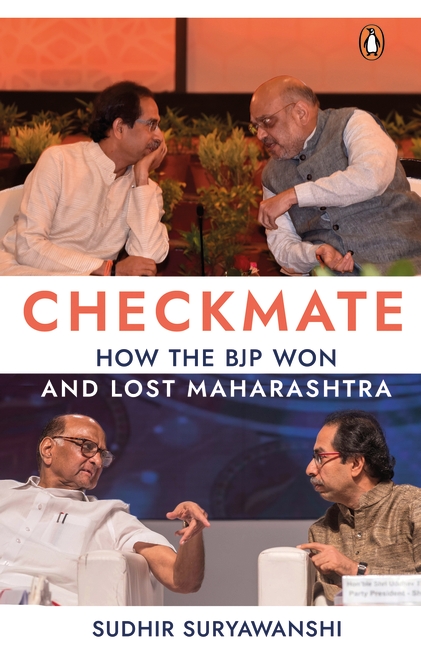
On 28 November 2019, Uddhav Thackeray, the Shiv Sena chief, was sworn in as the eighteenth chief minister of Maharashtra. This event marked the culmination of a high-voltage political drama that had the entire nation glued to their television sets for days on end. With no party being able to claim a majority in the assembly, President’s Rule was imposed in the state. This book takes its readers through the twists and turns of the dramatic political crisis that unfolded as Maharashtra waited for its chief minister.
What really went on behind the scenes?
With access to inside sources and private conversations, this book reveals the hitherto untold story of this political drama, with a comprehensive overview of the state’s politics in the last few decades.
The Indian Citizen and Its Nation

It is truly a wonder how India, with all its vastness and diversity, manages to function as a country. In fact, before India could be governed as a free country, one of the biggest challenges faced by its future government was constituting its citizens. In a country driven by religion, language and caste, this challenge was anything but easy.
As the Constitution came together, it grandly embraced a transcendental ideal of citizenship that was free from particular identities. It was Jawaharlal Nehru, the first Prime Minister, who laid the foundation, and politically policed this difficult relationship between the citizen and the nation.
‘The Indian Citizen and Its Nation’ is a collection of Nehru’s letters that talk about the importance of nurturing this relationship, adding new dimensions to the conversation about what it really means to be a citizen of a nation like India.
Loving Your Country
A.P.J. Abdul Kalam was one of India’s most beloved presidents and youth icons. His radical ideas combined with his vision for the nation moved generations.
Every speech, every piece of writing that came from Kalam’s desk had one common thread: an undying, unconditional love for his country. No one can evoke better the deep sense of national pride and enthusiasm, be it in children or adults, than Kalam could.
‘Loving Your Country’ is a collection of some of Kalam’s most enthralling speeches about India. Read on.
Verrier Elwin
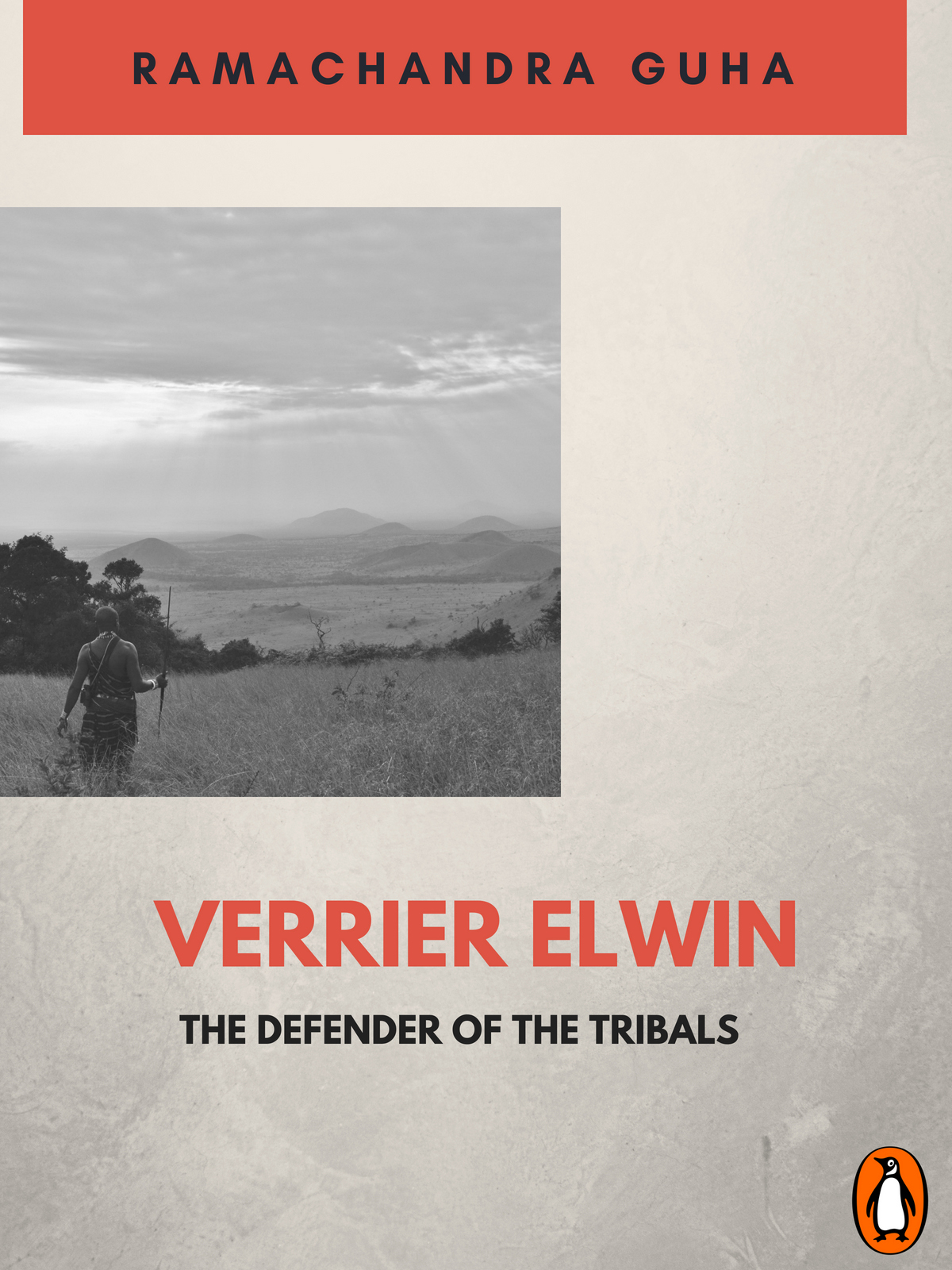
A remarkable Englishman-turned-Indian, Verrier Elwin was an Oxford scholar who somehow became the foremost spokesman for India’s tribal people.
Despite constituting almost 8 per cent of the nation’s population, the tribals of India had been (and continue to be) ignored by the national freedom movement. It was Elwin, an esteemed—if not controversial—public figure in his adopted homeland, who decided to champion their cause.
The people he influenced are at the epicentre of the Maoist rebellion in the country today. It is absolutely imperative that we familiarize ourselves with Elwin’s thoughts and ideas. Read on as Ramachandra Guha sheds light on his most influential writing in the chapter titled ‘Verrier Elwin: The Defender of the Tribals’.