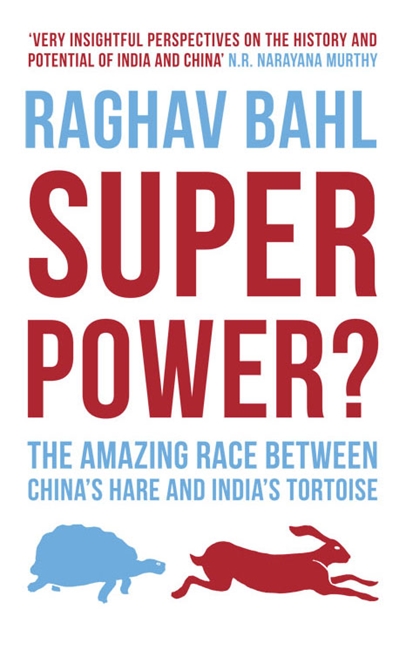
In his career as a journalist and one of India’s top entrepreneurs, Raghav Bahl has often faced a barrage of questions from visiting businesspeople bewildered by India: Why are Indian regulations so weak and confusing? Why is your foreign investment policy so restrictive? How is it that you speak such good English? Inevitably, the questions are followed by the observation: But, you know, that’s not the way it is in China.
Indeed, even as the two economies are together projected to dominate the world, there is a palpable difference in the way China and India work on the ground. China is spectacularly effective in building infrastructure and is currently investing almost half its GDP. Meanwhile, India is a ‘promising’ economy: more than half its GDP is consumed by its billionplus population; half its population is younger than twenty-five, giving it a unique demographic advantage; 350 million Indians understand English, making it the largest English-using country in the world
In the race to superpower status, who is likely to breast the tape-China’s hare or India’s tortoise? For anyone looking to understand China and India and the ways in which these two nations are about to change the history of the world, this is the book to read.

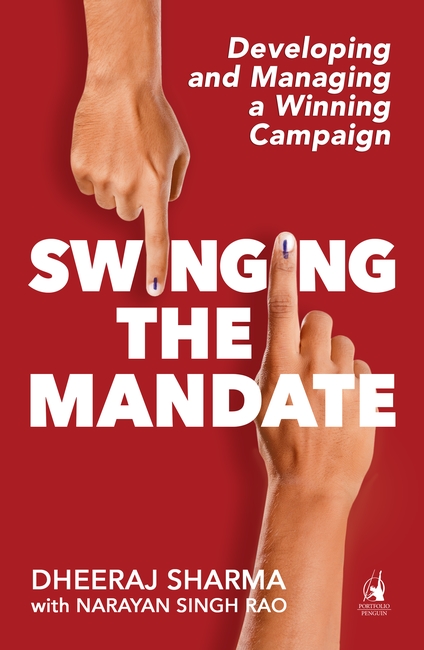
Swinging the Mandate is a first-of-its-kind book on political campaign management in India. Prof. Dheeraj Sharma, chair of marketing at IIM Ahmedabad, and Narayan Singh Rao discuss how sophisticated campaign management strategies have been utilized in recent elections in India. The book offers excellent case studies from the historic general elections of 2014 and the landslide victory of AAP in the 2015 Delhi elections. It also gives examples of some hard-fought elections in Europe and North America to demonstrate increasing use of principles of marketing and management in campaign management. Armed with comprehensive research and interesting case studies, this accessible book reveals how star campaigners are built, what the marketing mix for a political party looks like, and how elections are won in India

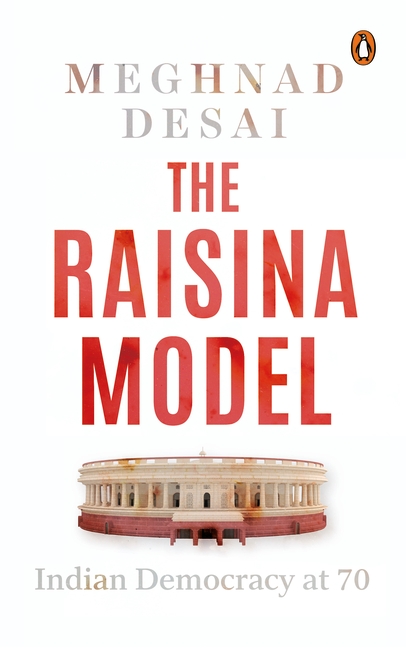
Meghnad Desai reflects on Indian democracy as it completes seventy years of colourful, eventful and energetic parliamentary existence. Pulling no punches, Desai looks at the history and evolution of Indian democratic institutions, pinpointing their achievements, but also their repeated failure to live up to the standards envisaged by the nation’s founders. Drawing on his own career as a Labour peer in Britain’s House of Lords, Desai has the rare understanding and familiarity with the process of politics, and is able therefore to identify its universal features and zoom in on its uniquely Indian aspects. This is a candid, reflective and unsparing view of the precepts and practice of Indian politics. It traces at the evolution and growth of identity politics, coalition governments and single-party rule and the differing political narratives of the north and the south. The Raisina Model is a critical and frequently uncomfortable meditation on India’s contemporary political culture.
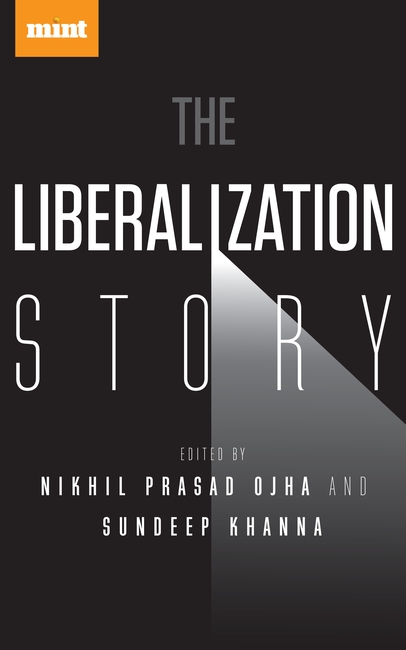
Why was liberalization important for India? What was its effect on sectors like IT, banking, telecom, etc.? How did it help Indian entrepreneurs build international businesses? And where do we go from here?
The Liberalization Story is a selection of essays which explain the most important financial event in modern Indian history and its impact. The book contains candid interviews with decision-makers like Montek Singh Ahluwalia and entrepreneurs like Sunil Bharti Mittal and Uday Kotak, who give a ringside view into the changing Indian economy.
How did we reach here? The book also explains the present in the context of our past. It tackles some important questions which explain the overall Indian economy today: what led to the rise of private equity; how did dynamics of family businesses change; how did MNCs conquer the Indian market; how did the Indian middle class change; what led to the digital wave; what led to India leapfrogging to innovation, among many others. A highly readable book which shares a holistic view of the twenty-five years of Indian liberalization.

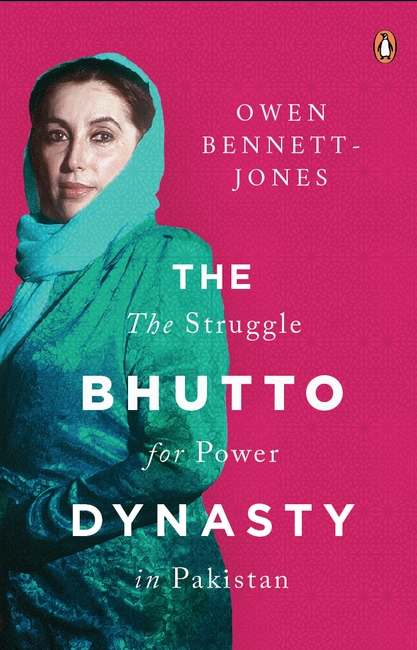
The Bhutto family has long been one of the most ambitious and powerful in Pakistan. But politics has cost the Bhuttos dear. Zulfikar Ali Bhutto, widely regarded as the most astute politician in the country’s history, was removed from power in 1977 and executed two years later, at the age of fifty-one. Of his four children, three met unnatural deaths: Shahnawaz was poisoned in 1985 at the age of twenty-seven; Murtaza was shot by the police outside his home in 1996, aged forty-two; and Benazir Bhutto, who led the Pakistan Peoples Party and became Prime Minister twice, was killed by a suicide bomber in Rawalpindi in 2007, aged fifty-four.
Drawing on original research and unpublished documents gathered over twenty years, Owen Bennett-Jones explores the turbulent existence of this extraordinary family, including their volatile relationship with British colonialists, the Pakistani armed forces and the United States.

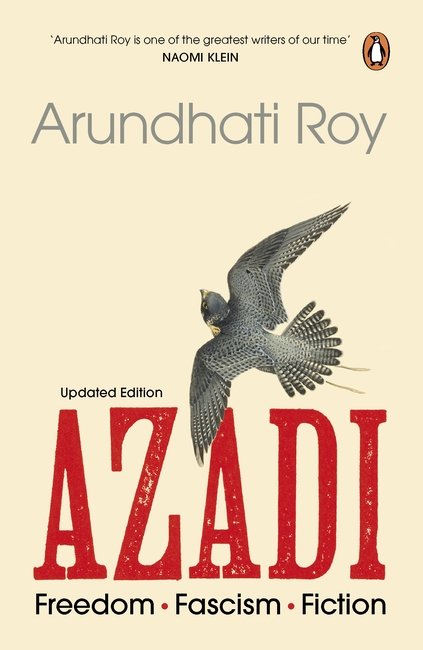
The chant of ‘Azadi!’ – Urdu for ‘Freedom’-is the slogan of the freedom struggle in Kashmir against what the Kashmiris see as the Indian Occupation. Ironically, it also became the chant of millions on the streets of India against the project of Hindu nationalism.
Even as Arundhati Roy began to ask what lay between these two calls for freedom-a chasm or a bridge?-the streets fell silent. Not only in India but all over the world. Covid-19 brought with it another, more terrible, understanding of Azadi, making a nonsense of international borders, incarcerating whole populations, and bringing the modern world to a halt like nothing else ever could.
In this series of electrifying essays, Arundhati Roy challenges us to reflect on the meaning of freedom in a world of growing authoritarianism.
The essays include meditations on language, public as well as private, and on the role of fiction and alternative imaginations in these disturbing times. The pandemic, Roy says, is a portal between one world and another. For all the illness and devastation it has left in its wake, it is an invitation to the human race, an opportunity, to imagine another world.

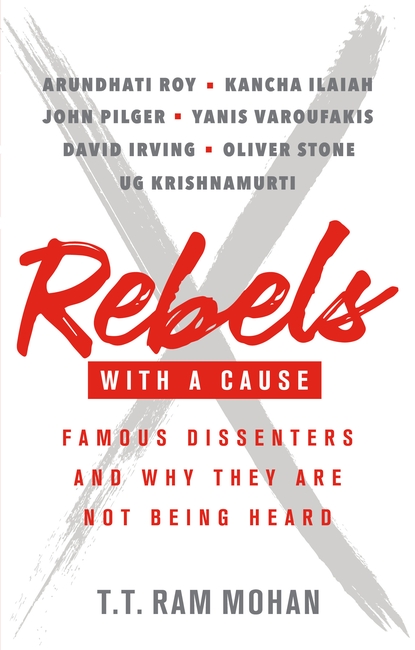
Democratic societies take pride in the freedom of expression. Indeed, the right to dissent and tolerance of diverse viewpoints distinguish a democratic society from a dictatorship. In his new book, Prof. T.T. Ram Mohan profiles well-known dissenters Arundhati Roy, Oliver Stone, Kancha Ilaiah, David Irving, Yanis Varoufakis, U.G. Krishnamurti and John Pilger to illustrate how, in practice, dissent tends to be severely circumscribed. It is only the celebrity status of these dissenters that has kept them from being actively harmed. Through an exploration of the lives and ideas of these personalities, the author argues that, while one may not agree with their positions on various issues, their views merit discussion and debate. Engaging with them and responding to their analyses holds out the prospect for substantive reform within the system. Yet, the dominant elites prefer not to do so, instead marginalizing and even ostracizing dissenters precisely because they find change of any sort threatening.
Rebels with a Cause is a book that asks hard questions to challenge the way we view, and live in, the world-an important book for anyone who refuses to accept the status quo.

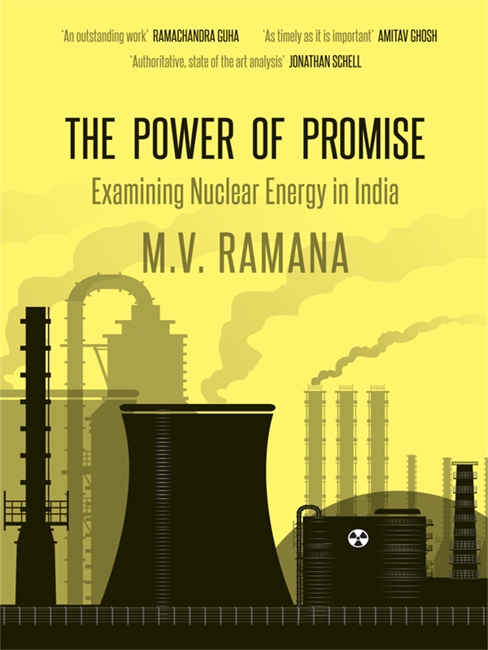
Nuclear power has been held out as possibly the most important source of energy for India. And the dream of a nuclear-powered India has been supported by huge financial budgets and high-level political commitment for over six decades. Nuclear power has also been presented as safe, environmentally benign and cheap.
Physicist and writer M.V. Ramana offers a detailed narrative of the evolution of India’s nuclear energy programme, examining different aspects of it and the claims of success made on its behalf. In The Power of Promise he makes a historically nuanced and compelling argument as to why the nuclear energy programme has failed in the past and why its future is dubious.
Ramana shows that nuclear power has been more expensive than conventional forms of electricity generation, that the ever-present risk of catastrophic accidents is heightened by observed organizational inadequacies at nuclear facilities, and that existing nuclear fuel cycle facilities have been correlated with impacts on public health and the environment. He offers detailed information and analysis that should serve to deepen the debate on whether India should indeed embark on a massive nuclear programme.

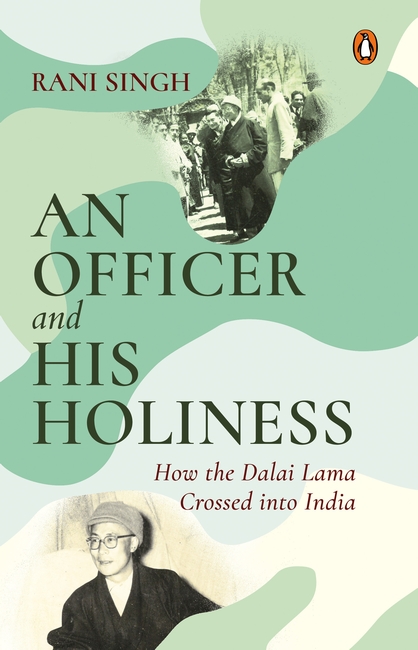
In 1959, the Dalai Lama escaped from Tibet into India, where he was granted refuge. Few know about the carefully calibrated operation to escort him safely from the Indian border. An Officer and His Holiness narrates how political officer Har Mander Singh successfully managed this assignment in the North East Frontier Agency (NEFA) with limited resources, and despite a treacherous terrain and external threats.
Har Mander Singh kept careful diary entries of the period, which have been reproduced for the first time in this book. His niece and renowned journalist, Rani Singh, painstakingly documents the journey through extensive research, travel and interviews with the Dalai Lama, his youngest brother, Tenzin Choegyal, and Har Mander Singh.
Her own experience of retracing her uncle’s journey also provides a comprehensive overview of the situation today. Rare pictures and valuable input from experts bring alive this thrilling operation that forever changed relations between India, China and Tibet.

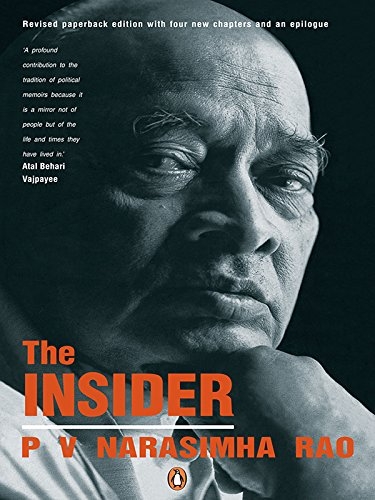
In the story, the author talks about the shocking but true political happenings in the country that he witnessed during his tenure. The plot centers around a character called Anand, a young man who gives up a lucrative career in the hopes of bringing about political reformation. He begins his political career by contesting against the oppressive ruling party. Next, he reaches a spot where he has to choose between the current Chief Minister and his rival. His rival soon wins the post of CM, and he is made to serve under him. Anand then moves to Delhi, at a time when Indira Gandhi takes over the reigns of power. Under her governance, the tables turn, for Anand now replaces his rival Chaudhary and becomes the Chief Minister of Afrozabad. He then has to run the political show under her regime. The book discusses the state of events and the political scenario in India under the leadership of Indira Gandhi, delving into areas like her rise to power, second coming, assassination, followed by her son Rajiv Gandhi’s entry into the world of politics. The Insider reveals to the reader the state of affairs in a political scenario, narrated by a man who has had first-hand experience of it all. The 2nd revised edition of the book was published by Penguin India in the year 2000, and is available in paperback.