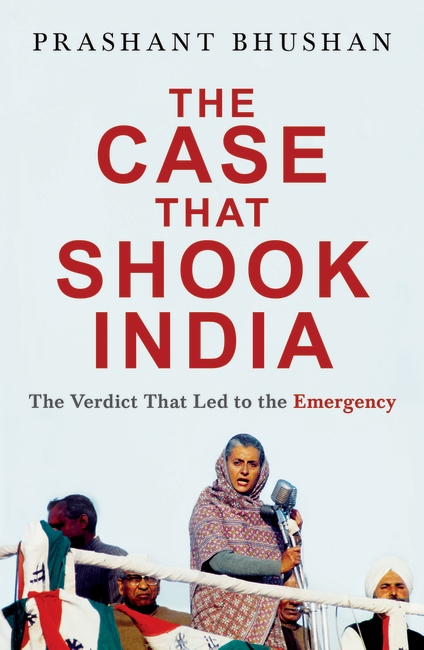
On 12 June 1975, for the first time in independent India’s history, the election of a Prime Minister was set aside by a High Court judgment. The watershed case, Indira Gandhi v. Raj Narain, acted as the catalyst for the imposition of the Emergency. Based on detailed notes of the court proceedings, The Case That Shook India is both a legal and a historical document of a case that decisively shaped India’s political destiny.
The author, advocate Prashant Bhushan, sets out to reveal the goings-on inside the court as well as the manoeuvrings outside it, including threats, bribes and deceit. Providing a blow-by-blow account, he vividly recreates courtroom scenes. As the case goes to the Supreme Court, we see how a ruling government can misuse legislative power to save the PM’s election.
Through his forceful and gripping narrative, Bhushan offers the reader a front-row seat to watch one of India’s most important legal dramas unfold.
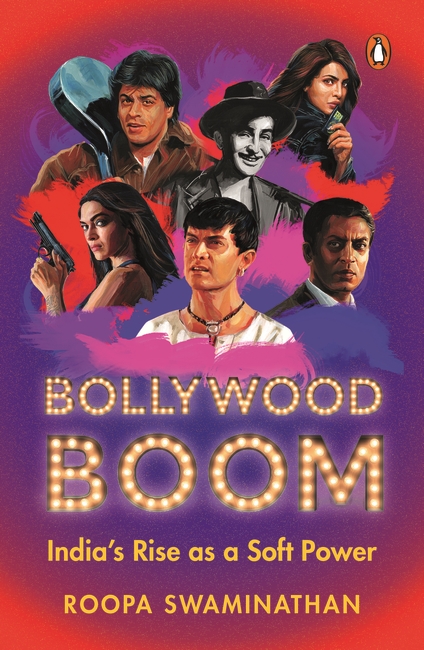
The world is feeling the impact of Bollywood like never before. From the Oscar-nominated Lagaan to Bajrangi Bhaijaan to Ae Dil Hai Mushkil, Bollywood has come a long way since the watershed Dilwale Dulhaniya Le Jayenge and the UK Top Ten debut of Kuch Kuch Hota Hai. Where earlier it was in Russia, East Europe and Africa where Raj Kapoor and Amitabh Bachchan enjoyed a devoted fan base, today the entire world is as entertained by the three
Khans as by the international stars Irrfan, Priyanka and Deepika.
In Bollywood Boom, National Award-winner Roopa Swaminathan opens a window to the spectacular success of Bollywood in the twenty-first century and its direct contribution to India’s rising soft power and influence. Using extensive research, a compelling argument and fun anecdotes, Roopa shows how Bollywood not only brings to the country real income through trade and tourism, but also enhances its global standing.

From tracing the possible first arrival of man in India to writing about love, sex, money, parenting and values in Indian society and discussing nationalism, religion and democracy, Miniya Chatterji presents an accessible yet brilliant intellectual treatise about issues that affect Indians the most. Indian Instincts is a seminal and deeply philosophical work, presented tactfully with entertaining and memorable instances. It is a must-read for anyone who wants to know what makes an Indian. The vivid and insightful examples make us reflect: Are we willingly entrapped in the institutions of our own making? Have these institutions-the government, corporations, religion-become sources of the problem in India, increasing economic inequality?
This book, a collection of fifteen powerful essays that argue for greater equality and opportunity in contemporary India, holds up a mirror to what we Indians have become.
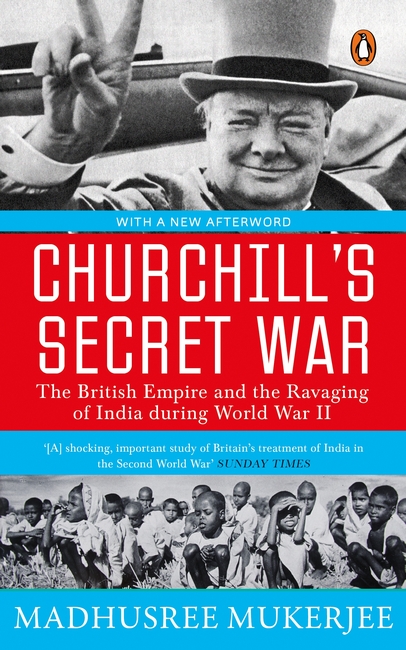
WITH A NEW AFTERWORD
Winston Churchill has been venerated as a resolute statesman and one of the great political minds of the last century. But, as Madhusree Mukerjee reveals in this groundbreaking historical investigation, his deep-seated bias against Indians precipitated one of the world’s greatest man-made disasters — the Bengal Famine of 1943 — resulting in the deaths of over four million Indians. Combining meticulous research with a vivid narrative, Churchill’s Secret War places this overlooked tragedy into the larger context of World War II, India’s freedom struggle and Churchill’s legacy.

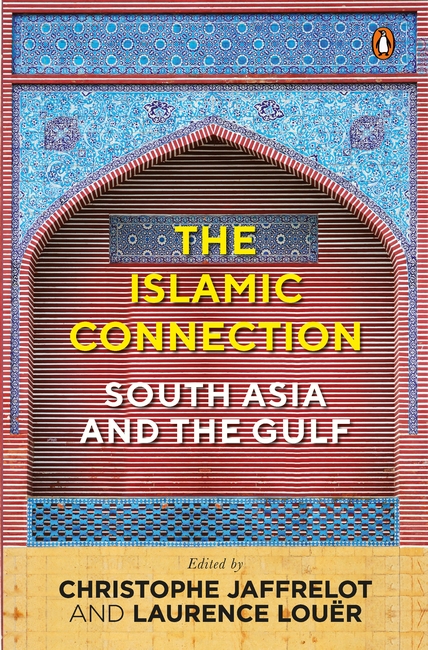
The region inhabited by the largest number of Muslims-roughly 500 million-today is South Asia. In the course of the Islamization process that began in the eighth century, the region developed a distinct Indo-Islamic civilization that culminated in the Mughal Empire. In the Gulf, while paying lip service to the power centres, including Mecca and Medina, this civilization cultivated its own variety of Islam, which was based on Sufism.
Over the last fifty years, pan-Islamic ties have intensified between these two regions. Gathering together some of the best specialists on the subject, this volume explores these ideological, educational and spiritual networks, which have gained momentum due to political strategies, migration flows and increased communications. At stake are both the resilience of the civilization that imbued South Asia with a specific identity and the relations between Sunnis and Shias in a region where Saudi Arabia and Iran are fighting a cultural proxy war. The Islamic Connection investigates the nature and implications of the cultural, spiritual and socio-economic rapprochement between these two Islams.

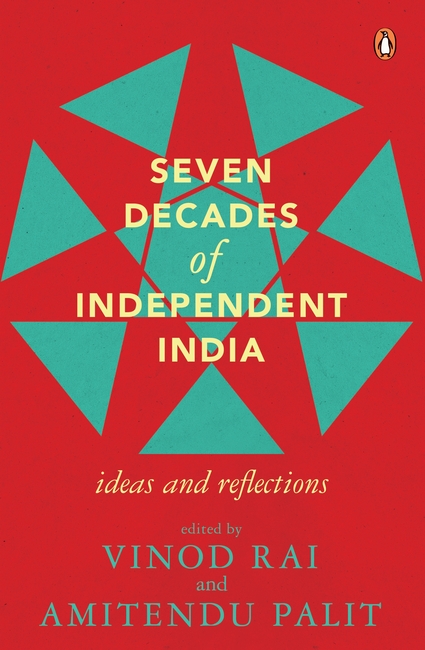
Has democracy in India fulfilled the aspirations of its people? Have institutions delivered? Have public policies succeeded in making substantial differences to living standards? Is the country secure on its external borders? Would the country become an economic powerhouse? And can India be a leading power in the years ahead?
All these and many more questions loom large as India completes seven decades of independence. Major challenges persist on the economic front and in providing adequate and quality healthcare, education, food, sanitation and drinking water. Regulatory preoccupations persist as policymakers continue to search for optimal solutions. The task is made harder by a socio-political environment shaped by various complexities. These include an expanding young workforce, a demanding citizenry, intense social media campaigns and a difficult neighbourhood.
Seven Decades of Independent India, edited by Vinod Rai and Amitendu Palit, reflects on the India of yesterday, today, and tomorrow, by gathering rare and candid insights from some of the most distinguished experts, practitioners and scholars on India. These include D. Subbarao, ex-governor of RBI; Rajiv Kumar, vice-chairman of NITI Aayog; S.Y. Quraishi, former chief election commissioner; Shivshankar Menon, former national security adviser; Ashok Gulati, professor ICRIER and former chairman of Commission for Agricultural Costs and Prices; Sumit Ganguly, professor of political science, Indiana University; A.K. Shiva Kumar, director, International Centre for Human Development; Poonam Muttreja, executive director, Population Foundation of India; Tan Tai Yong, president and professor (humanities) Yale-NUS College, Singapore; Dipankar Gupta, sociologist and former professor, JNU; Pronab Sen, former chief statistician of India and many others.

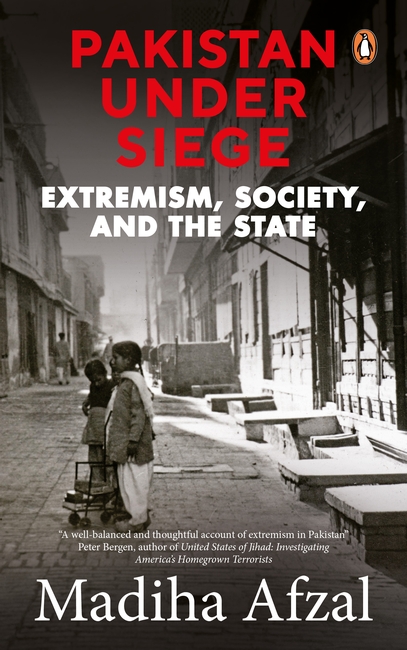
Much of the current work on extremism in Pakistan tends to study extremist trends in the country from a detached position-a top-down security perspective that renders a one-dimensional picture of what is at its heart a complex, richly textured country of 200 million people. In this book, using rigorous analysis of survey data, in-depth interviews in schools and universities in Pakistan, historical narrative reporting, and her own intuitive understanding of the country, Madiha Afzal gives the full picture of Pakistan’s relationship with extremism. The author lays out Pakistanis’ own views-on terrorist groups, jihad, religious minorities and non-Muslims, America, and their place in the world. The views are not radical at first glance, but are riddled with conspiracy theories. Afzal explains how the two pillars that define the Pakistani state-Islam and a paranoia about India-have led to a regressive form of Islamization in Pakistan’s narratives, laws, and curricula. These, in turn, have shaped its citizens’ attitudes.
Afzal traces this outlook to Pakistan’s unique and tortured birth. She examines the rhetoric and the strategic actions of three actors in Pakistani politics-the military, the civilian governments, and the Islamist parties-and their relationships with militant groups. She shows how regressive Pakistani laws instituted in the 1980s worsened citizen attitudes and led to vigilante and mob violence. The author also explains that the educational regime has become a vital element in shaping citizens’ thinking. How many years one attends school, whether the school is public, private, or a madrassa, and what curricula are followed, all affect Pakistanis’ attitudes toward terrorism and the rest of the world.
In the end, Afzal suggests how this beleaguered nation-one with seemingly insurmountable problems in governance and education-can change course.

A journalist accused of hacking the inbox of a billionaire
A company which fought back when its data was stolen
An entrepreneur who fought an international battle to end piracy
A hacker who decided to take a start-up hostage by stealing its data
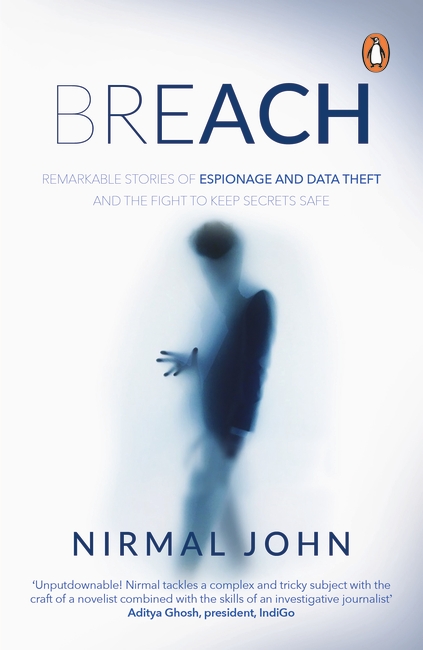
Full of riveting stories of hackers, police and corporates, Breach reads like a thriller. The book brings to light several incidents which till now were brushed under the carpet. It has instances of piracy, data theft, phishing, among many others.
Even though he focuses on India, Nirmal John takes great pains to show links between underground international networks working to undermine data security.
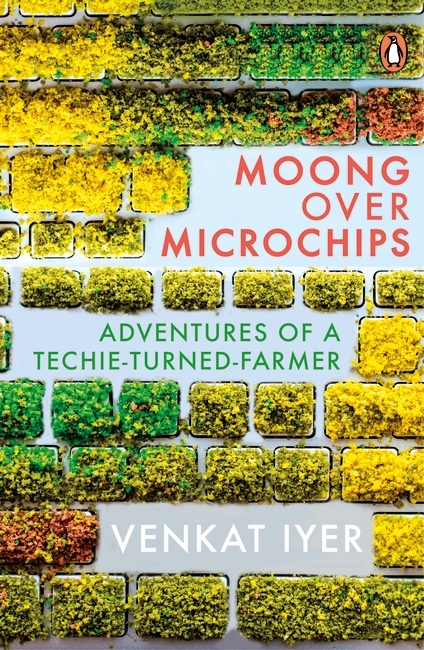
Venkat Iyer was living a fast-paced life in the IT world in Mumbai when he decided to stop and take a long, hard look at where he was headed. Disheartened by his stressful existence in the city, he decided to give it all up and take up organic farming in a small village near Mumbai. But it wasn’t easy. With no experience in agriculture, his journey was fraught with uncertainty. He soon went from negotiating tough clients, strict deadlines and traffic to looking forward to his first bumper crop of moong. As he battled erratic weather conditions and stubborn farm animals, he discovered a world with fresh air and organic food, one where he could lead a more wholesome existence. At times hilarious, and other times profound, this book follows his extraordinary story.
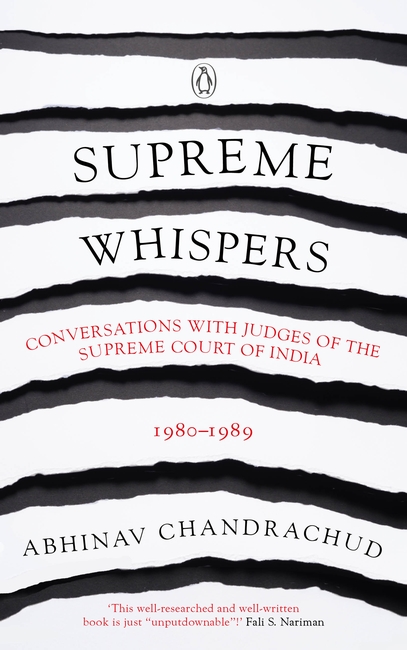
In 1980, a brilliant young American scholar, George H. Gadbois, Jr., met five judges of the Supreme Court of India. The judges gave him astonishing details: about what they actually thought of their colleagues, about the inner workings and politics of the court, their interactions with the government and the judicial appointments process, among many other things. This was only the beginning. Over the course of that decade, Gadbois visited India on two more occasions and conducted over 116 interviews with more than sixty-six judges of the Supreme Court of India (nineteen of whom held the post of chief justice of India),
and others such as senior lawyers, politicians, relatives of deceased judges, and court staff. During each meeting, Gadbois diligently took down handwritten notes, which he later typed up on his typewriter, recording nearly every detail of what the judges had told him, sometimes to a fault.
Relying on these typewritten interviews, Abhinav Chandrachud sheds light on a decade of politics, decision-making and legal culture in the Supreme Court of India. This book yields a fascinating glimpse into the secluded world of the judges of the Supreme Court in the 1980s and earlier.