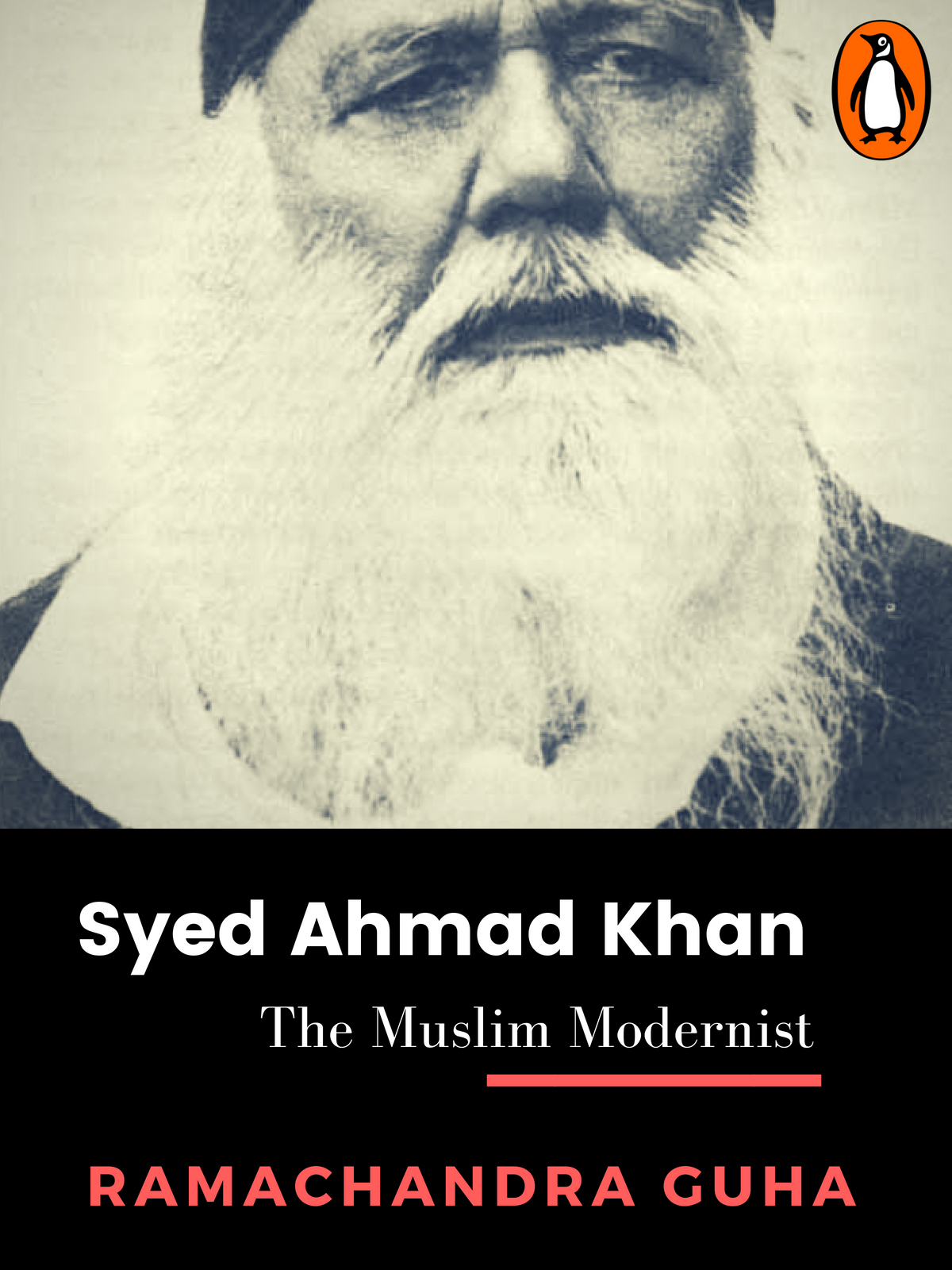
Syed Ahmad Khan was no ordinary man. His unorthodox upbringing led to his prolific writing in many languages interspersed with radical thoughts.
He gave importance to Western education and promoted the need for communal harmony. Like writings of other Indian thinkers of the nineteenth and early twentieth centuries, his thoughts and ideas continue to remain relevant.
In ‘Syed Ahmad Khan: The Muslim Modernist’, Ramachandra Guha captures the flavour of Khan’s intellectual and political legacy.
Raja Rammohan Roy is well-known for abolishing the regressive practice of Sati, fighting for other social reforms, and founding a new religious order within the Indian society. His contributions to building a liberal mindset are many.
Roy was perhaps the first Indian thinker who engaged with the challenges posed by both colonial rule and Indian conservatism. Roy was a liberal, quite ahead of his times, who fought for the freedom of press and promoted modern education. His writing set the tone for reformers and activists.
‘Rammohan Roy: The First Liberal of India’ by Ramachandra Guha is a glimpse into the thoughts and ideas of Raja Rammohan Roy.

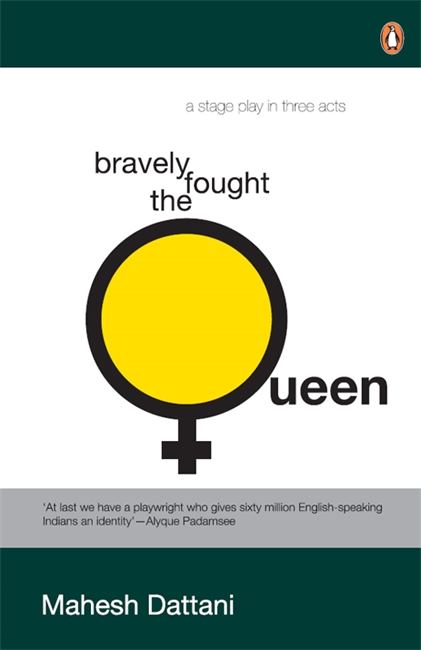
First staged in Mumbai in 1991, Bravely Fought the Queen juggles between two spaces-center stage where an empirical drama removes the mask of hypocrisy from a seemingly ‘normal’ urban household; and a small, rear backdrop from where emerges the raison d’être of each protagonist. The family in focus is that of two brothers, Jiten and Nitin, who run an advertising agency and are married to sisters: Dolly and Alka. Their mother, Baa, moves between the two households, attached more to her memories of the past than to any present reality. Marital friction, sibling rivalry, the traditional tension between mother-in-law and daughters-in-law, the darker moments of business and personal dealings, the play takes us through the entire gamut of emotional experience as it winds to a climactic finish. With its relentless pace, crisp idiom and unflinching insight into the urban milieu, this is a play that confirms Mahesh Dattani’s reputation as India’s most influential playwright.

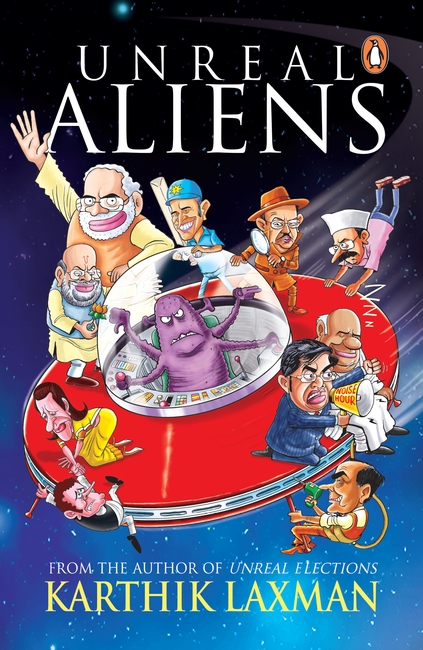
For the first time in human history, a nation is playing host to an alien delegation. And it is Modi-led India that has this high honour. Prime Minister Modi rolls out the red carpet for the aliens. He receives them at the airport, shows them the sights in Delhi and convinces them to invest in the Make in India campaign. The leader of the alien delegation even holds a broom to promote Swachh Bharat. But what is the real reason the aliens have come to India? Are they friends? Or will they turn foes? Read this hilarious, rib-tickling novel from the authors of Unreal Elections to find out.

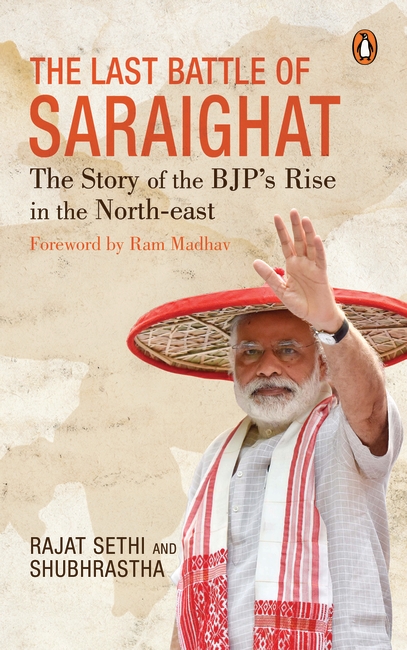
The first-ever account of the BJP’s landslide victory in the 2016 Assam legislative assembly elections, the battle of Saraighat was fought in 1671 between the Ahoms of Assam and the Mughal invaders. In 2016, the BJP centred its strategy for the legislative assembly elections on this historic battle, focusing on issues of illegal migration, constantly invoked in the party’s rallies, posters and communication to appeal to the voting public. The historic elections saw the BJP win an overwhelming majority of assembly seats in Assam, where the Congress had been in power for decades. It was a watershed moment that opened the door for the party to the political corridors of the north-east. In this book, Rajat Sethi and Shubhrastha, political campaigners for the BJP in the north-east of India, take you behind the scenes of the high-octane electoral drama. They outline the political history of the region, provide details of election strategies employed by the party and explain why they resonated with the local people so strongly. The Last Battle of Saraighat looks at Assam as a case study to explain the rise of the BJP in the north-east and throws light on the key political issues of the region.

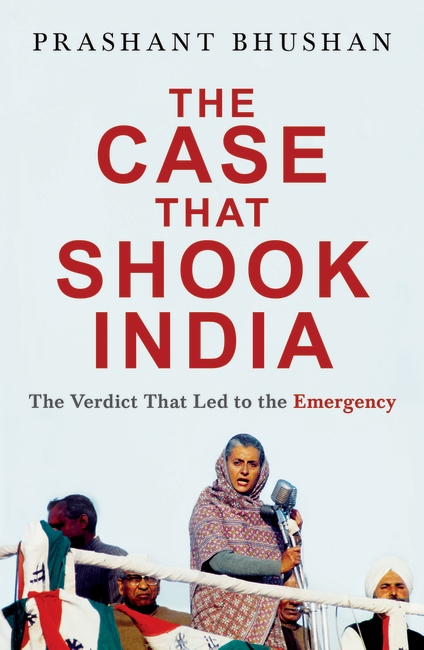
On 12 June 1975, for the first time in independent India’s history, the election of a Prime Minister was set aside by a High Court judgment. The watershed case, Indira Gandhi v. Raj Narain, acted as the catalyst for the imposition of the Emergency. Based on detailed notes of the court proceedings, The Case That Shook India is both a legal and a historical document of a case that decisively shaped India’s political destiny.
The author, advocate Prashant Bhushan, sets out to reveal the goings-on inside the court as well as the manoeuvrings outside it, including threats, bribes and deceit. Providing a blow-by-blow account, he vividly recreates courtroom scenes. As the case goes to the Supreme Court, we see how a ruling government can misuse legislative power to save the PM’s election.
Through his forceful and gripping narrative, Bhushan offers the reader a front-row seat to watch one of India’s most important legal dramas unfold.
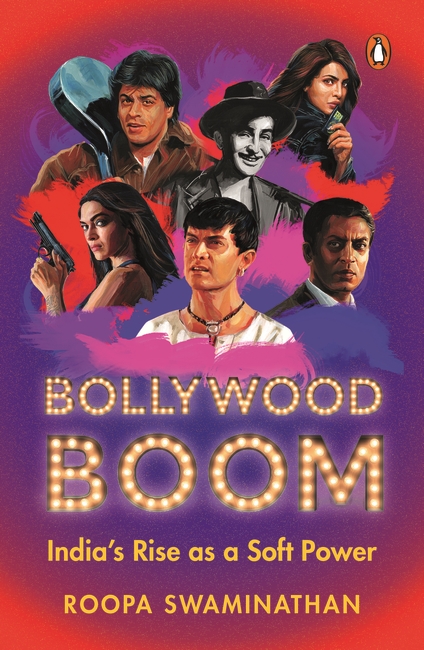
The world is feeling the impact of Bollywood like never before. From the Oscar-nominated Lagaan to Bajrangi Bhaijaan to Ae Dil Hai Mushkil, Bollywood has come a long way since the watershed Dilwale Dulhaniya Le Jayenge and the UK Top Ten debut of Kuch Kuch Hota Hai. Where earlier it was in Russia, East Europe and Africa where Raj Kapoor and Amitabh Bachchan enjoyed a devoted fan base, today the entire world is as entertained by the three
Khans as by the international stars Irrfan, Priyanka and Deepika.
In Bollywood Boom, National Award-winner Roopa Swaminathan opens a window to the spectacular success of Bollywood in the twenty-first century and its direct contribution to India’s rising soft power and influence. Using extensive research, a compelling argument and fun anecdotes, Roopa shows how Bollywood not only brings to the country real income through trade and tourism, but also enhances its global standing.

From tracing the possible first arrival of man in India to writing about love, sex, money, parenting and values in Indian society and discussing nationalism, religion and democracy, Miniya Chatterji presents an accessible yet brilliant intellectual treatise about issues that affect Indians the most. Indian Instincts is a seminal and deeply philosophical work, presented tactfully with entertaining and memorable instances. It is a must-read for anyone who wants to know what makes an Indian. The vivid and insightful examples make us reflect: Are we willingly entrapped in the institutions of our own making? Have these institutions-the government, corporations, religion-become sources of the problem in India, increasing economic inequality?
This book, a collection of fifteen powerful essays that argue for greater equality and opportunity in contemporary India, holds up a mirror to what we Indians have become.
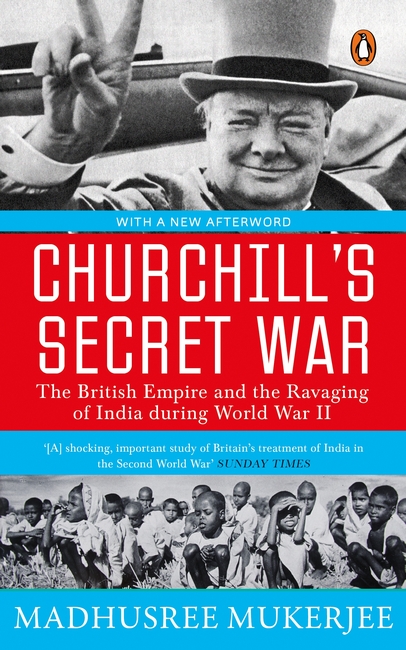
WITH A NEW AFTERWORD
Winston Churchill has been venerated as a resolute statesman and one of the great political minds of the last century. But, as Madhusree Mukerjee reveals in this groundbreaking historical investigation, his deep-seated bias against Indians precipitated one of the world’s greatest man-made disasters — the Bengal Famine of 1943 — resulting in the deaths of over four million Indians. Combining meticulous research with a vivid narrative, Churchill’s Secret War places this overlooked tragedy into the larger context of World War II, India’s freedom struggle and Churchill’s legacy.

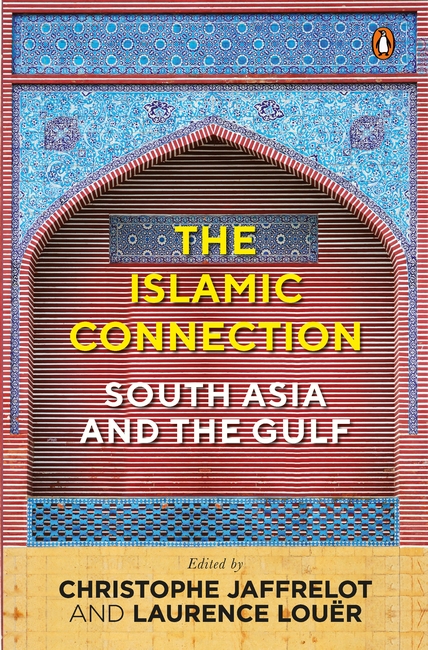
The region inhabited by the largest number of Muslims-roughly 500 million-today is South Asia. In the course of the Islamization process that began in the eighth century, the region developed a distinct Indo-Islamic civilization that culminated in the Mughal Empire. In the Gulf, while paying lip service to the power centres, including Mecca and Medina, this civilization cultivated its own variety of Islam, which was based on Sufism.
Over the last fifty years, pan-Islamic ties have intensified between these two regions. Gathering together some of the best specialists on the subject, this volume explores these ideological, educational and spiritual networks, which have gained momentum due to political strategies, migration flows and increased communications. At stake are both the resilience of the civilization that imbued South Asia with a specific identity and the relations between Sunnis and Shias in a region where Saudi Arabia and Iran are fighting a cultural proxy war. The Islamic Connection investigates the nature and implications of the cultural, spiritual and socio-economic rapprochement between these two Islams.