One thousand years ago, India was at the height of its power, influencing the world with its ideas and trade. Now, ten centuries later, India’s recent economic performance is once again attracting world attention as the country re-awakens not just as an economy but as a civilization.
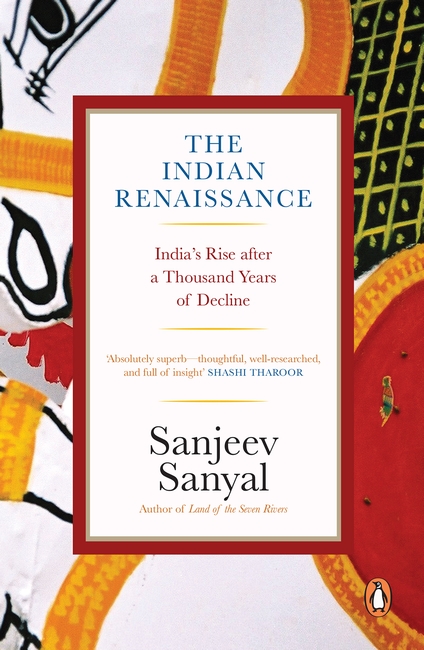
In The Indian Renaissance: India’s Rise after a Thousand Years of Decline, Sanjeev Sanyal looks at the processes that led to ten centuries of decline. He also examines the powerful economic and social forces that are working together to transform India beyond recognition. These range from demographic shifts to rising literacy levels and, the most important revolution, the opening of minds and changed attitude towards innovation and risk-fundamental, if India is to take advantage of the twenty-first century.

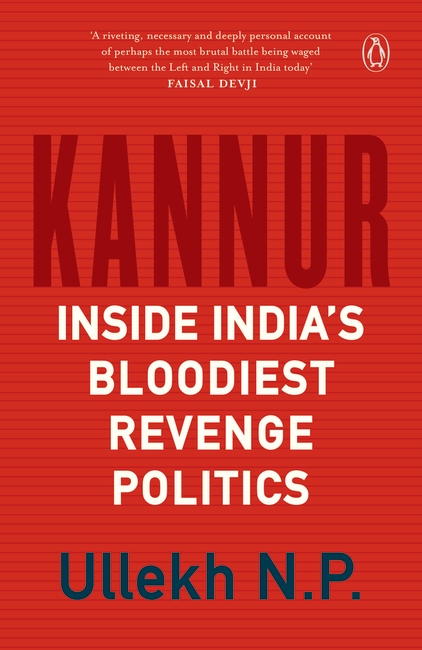
Kannur, a sleepy coastal district in the scenic south Indian state of Kerala, has metamorphosed into a hotbed of political bloodshed in the past few decades. Even as India heaves into the age of technology and economic growth, the town has been making it to the national news for horrific crimes and brutal murders with sickening regularity.
What makes this region so susceptible to vendetta politics and such deadly violence? How is it an anomaly in Kerala, the state with the highest social development parameters in India? Born in Kannur and brought up amidst some of the tallest political leaders of the state, author Ullekh N.P. delves into his personal experiences while drawing a modern-day graph that charts out the reasons, motivations and the local lore behind the turmoil. He analyses the numbers that lay bare the truth behind the hype, studies the area’s political and cultural heritage, and speaks to the main protagonists and victims. With his journalistic skills and years of on-the-field reporting, he paints a gripping narrative of the ongoing bloodbath and the perceptions around it.
Ullekh’s investigations and interviews reveal a bigger game at work involving players who will stop at nothing to win.

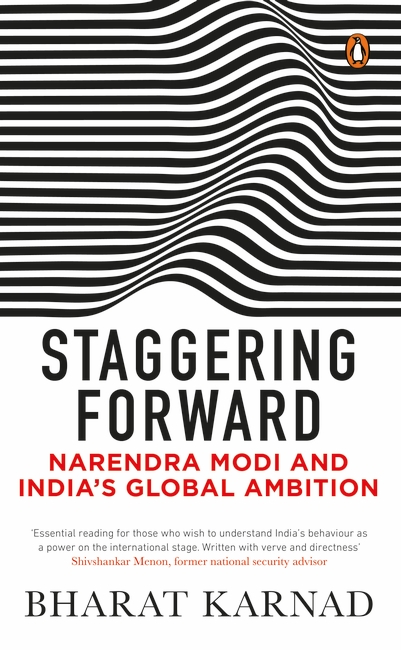
There is a paradigm shift in India’s politics. With his clean reputation, proven track record as chief minister of Gujarat and formidable leadership qualities on display, Narendra Modi seemed the right fit for the prime minister’s job, and just the man to turn the country around after the decade-long UPA rule by the modest and tongue-tied Manmohan Singh.
Prime Minister Modi’s first term, however, raises troubling questions. How has his strongman persona and social background impacted policymaking? Has Modi delivered on the high expectations to advance India’s national interest and security? Has the country’s role in the region, in Asia and the world changed, become more meaningful? What has been the effect of Modi’s India First foreign policy on neighbours, and with respect to raising India’s stock in the world and showing the Indian military has teeth? Especially with regard to the UUS, Russia and China.
Analysing Prime Minister Modi’s foreign and military policies in the context of India’s evolving socio-political and economic milieu, this book offers a critical perspective that helps explain why India has not progressed much towards becoming a consequential power. Argumentative and thought-provoking, Staggering Forward is a must-read to understand India’s foreign and national security policies since 2014.

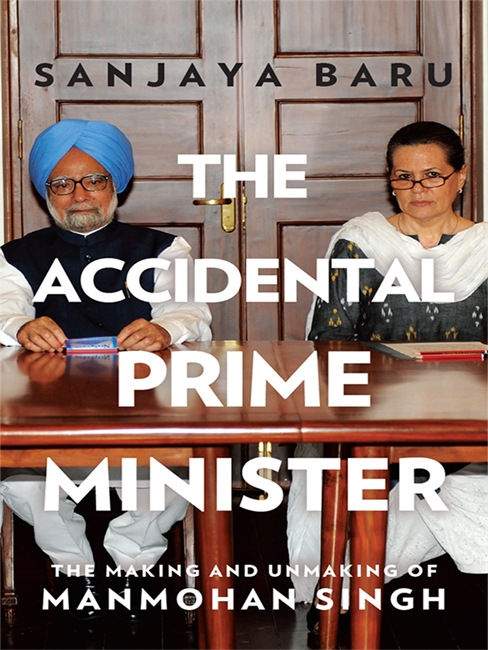
When The Accidental Prime Minister was published in 2014, it created a storm and became the publishing sensation of the year. The Prime Minister’s Office called the book a work of ‘fiction’, the press hailed it as a revelatory account of Prime Minister Manmohan Singh’s first term in the UPA. Written by Singh’s media adviser and trusted aide, the book describes Singh’s often troubled relations with his ministers, his cautious equation with Sonia Gandhi and how he handled the big crises from managing the Left to pushing through the nuclear deal. Insightful, acute and packed with political anecdotes, The Accidental Prime Minister is one of the great insider accounts of Indian political life.

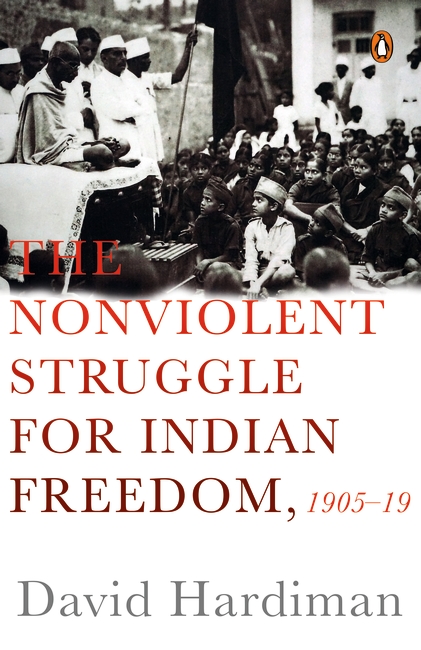
In recent years, there has been a surge of writing on the technique and practice of non-violent forms of resistance. Much of this has focused on movements that occurred after the end of the Second World War, many of which have been extremely successful. Although the fact that such a method of resistance was developed in its modern form by India is acknowledged, there has not until now been an authoritative history available to show exactly how this occurred.
This book provides such a study. Although non-violence is associated above all with the towering figure of M.K. Gandhi, David Hardiman shows that civil forms of resistance were already being practiced by nationalists in British-ruled India under the rubric of ‘passive resistance’. In this, there was no principled commitment to non-violence as such.
It was Gandhi, first in South Africa and then in India, who both evolved a technique that he called ‘satyagraha’ that he characterised in terms of its ‘non-violence’. In this, ‘non-violence’ was forged as both a new word in the English language, and as a new political concept.
The Non-violent Struggle for Freedom brings out in graphic detail exactly what this entailed, and the formidable difficulties that the pioneers of such resistance encountered in the years 1905-19.

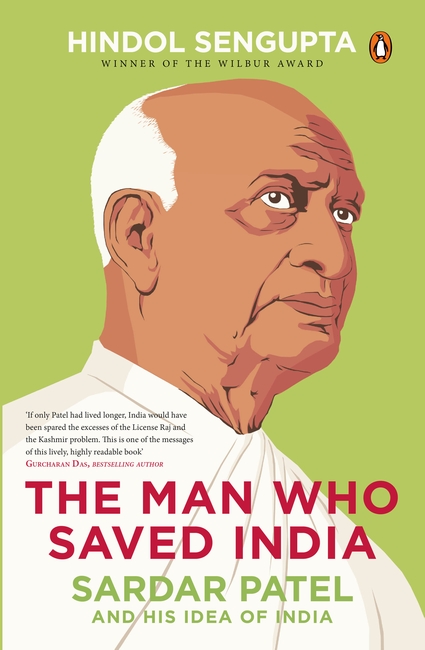
There is perhaps no political figure in modern history who did more to secure and protect the Indian nation than Sardar Vallabhbhai Patel. But, ironically, seventy years after Patel brought together piece by piece the map of India by fusing the princely states with British India to create a new democratic, independent nation, little is understood or appreciated about Patel’s enormous contribution to the making of India. Caricatured in political debate, all the nuances of Patel’s difficult life and the daring choices he made are often lost, or worse, used as mere polemic. If Mahatma Gandhi was the spiritual core of India’s freedom struggle and Jawaharlal Nehru its romantic idealism, it was Sardar Patel who brought in the vital pragmatism which held together the national movement and the first ideas of independent India. A naturally stoic man, Patel, unlike Gandhi or Nehru, wrote no personal history. He famously argued that its was better to create history than write it. This is why even his deepest misgivings and quarrels have been easily buried. But every warning that Patel left for India – from the dangers of allowing groups to create private militias to his thoughtful criticism on India’s approach to Kashmir, Pakistan and China – are all dangerously relevant today. It is impossible to read about Patel, who died in 1950, and not feel that had he lived on, India might have been a different country. It is also impossible to ignore Patel and understand not only what the idea of India is but also what it could have been, and might be in the future.
The Man Who Saved India is a sweeping, magisterial retelling of Sardar Patel’s story. With fiercely detailed and pugnacious anecdotes, multiple award-winning, best-selling writer Hindol Sengupta brings alive Patel’s determined life of struggle and his furious commitment to keep India safe. This book brings alive all the arguments, quarrels and clashes between some of the most determined people in Indian history and their battle to carve out an independent nation. Through ravages of a failing body broken by decades of abuse in and outside prison, Patel stands out in this book as the man who, even on his death bed, worked to save India. Hindol Sengupta’s The Man Who Saved India is destined to define Patel’s legacy for future generations.

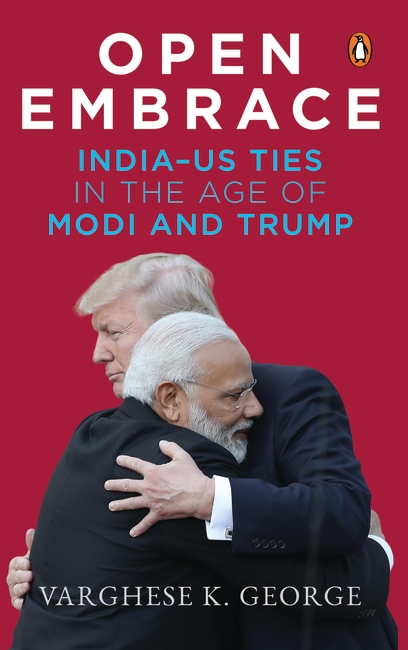
President Donald Trump and Prime Minister Narendra Modi have built their politics on the promise of making their countries ‘great again’. Placing India and the US as leaders on the world stage is the stated objective of their respective foreign policies, based as they are on the assumption that both inherited a mess from their predecessors. Both are trying to re-litigate the notions of self, enemy and allies in their respective countries.
Varghese K. George, in Open Embrace, provides an overview of the changes occurring in America’s relations with the world under the Trump presidency and what it means for India. While Presidents Barack Obama and George W. Bush emphasized that the US’s relations with India would shape the twenty-first century, Trump’s ‘America First’ politics is a repudiation of the nation’s strategic culture. Trump’s alignment with Modi’s world view-what George calls the Hindutva Strategic Doctrine-and the US’s changing relationships with India’s neighbours, Pakistan and China, form a crucial part of this narrative.

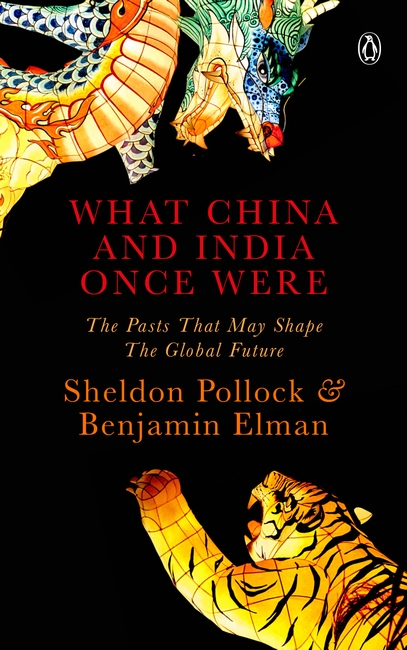
In the early years of the 21st century, China and India have emerged as world powers. In many respects, this is a return to the historical norm for both countries. For much of the early modern period, China and India were global leaders in a variety of ways. In this book, prominent scholars seek to understand modern China and India through an unprecedented comparative analysis of their long histories.
Using new sources, making new connections, and re-examining old assumptions, noted scholars of China and India pair up in each chapter to tackle major questions by combining their expertise. What China and India Once Were details how these two cultural giants arrived at their present state, considers their commonalities and divergences, assesses what is at stake in their comparison and, more widely, questions whether European modernity provides useful contrasts. In jointly composed chapters, contributors explore ecology, polity, gender relations, religion, literature, science and technology, and more, to provide the richest comparative account ever offered of China and India before the modern era. What China and India Once Were establishes innovative frameworks for understanding the historical and cultural roots of East and South Asia in the global context, drawing on the variety of Asian pasts to offer new ways of thinking about Asian presents.
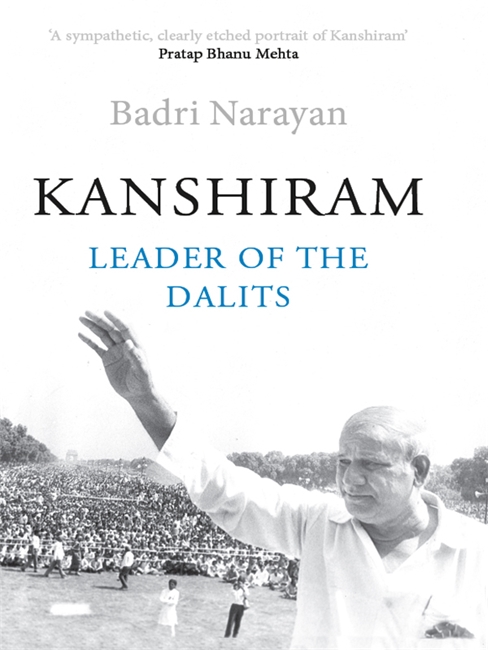
Venerated as a dalit icon, Kanshiram (1934–2006) is regarded as being next only to Ambedkar today. This book illuminates his journey, from the early years in rural Punjab and with Ambedkarites in Pune, to his launching BAMCEF, an umbrella organization uniting backward castes, scheduled tribes, dalits and minorities, and eventually the Bahujan Samaj Party in 1984.
Drawing on myriad oral and written sources, Badri Narayan shows how Kanshiram mobilized dalits with his homespun idiom, cycle rallies and, uniquely, the use of local folk heroes and myths, rousing their self-respect, and how he struck opportunistic alliances with higher-caste parties to seize power for dalits. Evocatively described is his extraordinary relationship with Mayawati, right until his death, and the role she has played in fulfilling his vision, during and after his lifetime.
Contrasting the approach of the two men, Narayan highlights the turn Kanshiram gave to Ambedkar’s ideas. Unlike Ambedkar, who sought its annihilation, he saw caste as a basis for forging a dalit identity and a source of political empowerment.
Authoritative and insightful, this is a rare portrait of the man who changed the face of dalit society and, indeed, of Indian politics.

It’s an airpocalypse. What can we do?
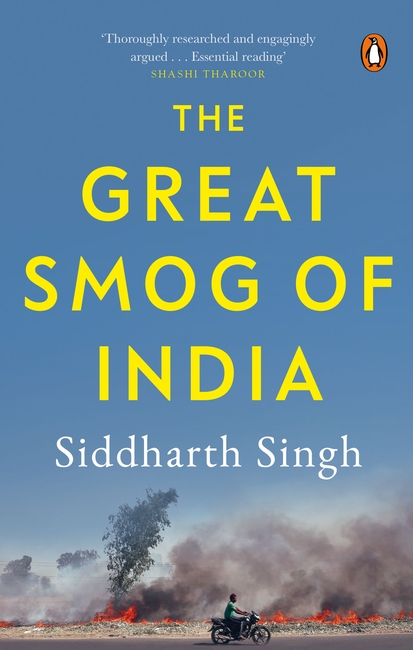
Air pollution kills over a million Indians every year, albeit silently. Families are thrown into a spiralling cycle of hospital visits, critically poor health and financial trouble impacting their productivity and ability to participate in the economy. Children born in regions of high air pollution are shown to have irreversibly reduced lung function and cognitive abilities that affects their incomes for years to come. They all suffer, silently.
The issue is exacerbated every winter, when the Great Smog of India descends and envelops much of northern India. In this period, the health impact from mere breathing is akin to smoking a pack of cigarettes a day. The crisis is so grave that it warrants emergency health advisories forbidding people from stepping out. And yet, for most of us, life is business as usual.
It isn’t that the scientific community and policymakers don’t know what causes air pollution, or what it will take to tackle the problem. It is that the problem is social and political as much as it is technological, and human problems are often harder to overcome than scientific ones. Each sector of the economy that needs reform has its underlying political, economic and social dynamics that need to be addressed to make a credible impact on emissions.
With clarity and compelling arguments, and with a dash of irony, Siddharth Singh demystifies the issue: where we are, how we got here, and what we can do now. He discusses not only developments in sectors like transport, industry and energy production that silently contribute to air pollution, but also the ‘agricultural shock’ to air quality triggered by crop burning in northern India every winter. He places the air pollution crisis in the context of India’s meteorological conditions and also climate change. Above all, and most alarmingly, he makes clear what the repercussions will be if we remain apathetic.