




In the dead of night on November 26, 2008, ten men slipped silently into Mumbai by sea. Over the next 60 hours, they unleashed a storm of violence that brought India’s financial capital to its knees and shocked the world. The true story of this attack, the most audacious terror plot since 9/11, begins decades earlier, spans multiple continents, and enmeshes a diverse array of characters with varying motivations.
This is a story that has never been told in full. Until now.
Perfect Storm peels back the layers of this conspiracy, taking readers on a riveting journey that extends from the blood-soaked birth of Pakistan in 1947 to the treacherous geopolitical landscape of the post 9/11 world. Based on meticulous research and drawing on Prabhakar Aloka’s decades-long experience in counter-terrorism in the Intelligence Bureau, and co-author Nikhil Ravi’s expertise as a screenwriter and filmmaker documenting Indo-Pak geopolitical flashpoints, the book pieces together the spider’s web behind 26/11, spanning worlds as disparate as dusty training camps in rural Pakistan and neon-lit hacker dens in South-East Asia, casting an unprecedented look into the anatomy of a state-sponsored terror attack.
Catagory: Politics
Sewa Hi Sankalp Rashtra Pratham Hi Prerna : Narendra Modi / सेवा ही संकल्प राष्ट्र प्रथम ही प्रेरणा : नरेन्द्र मोदी
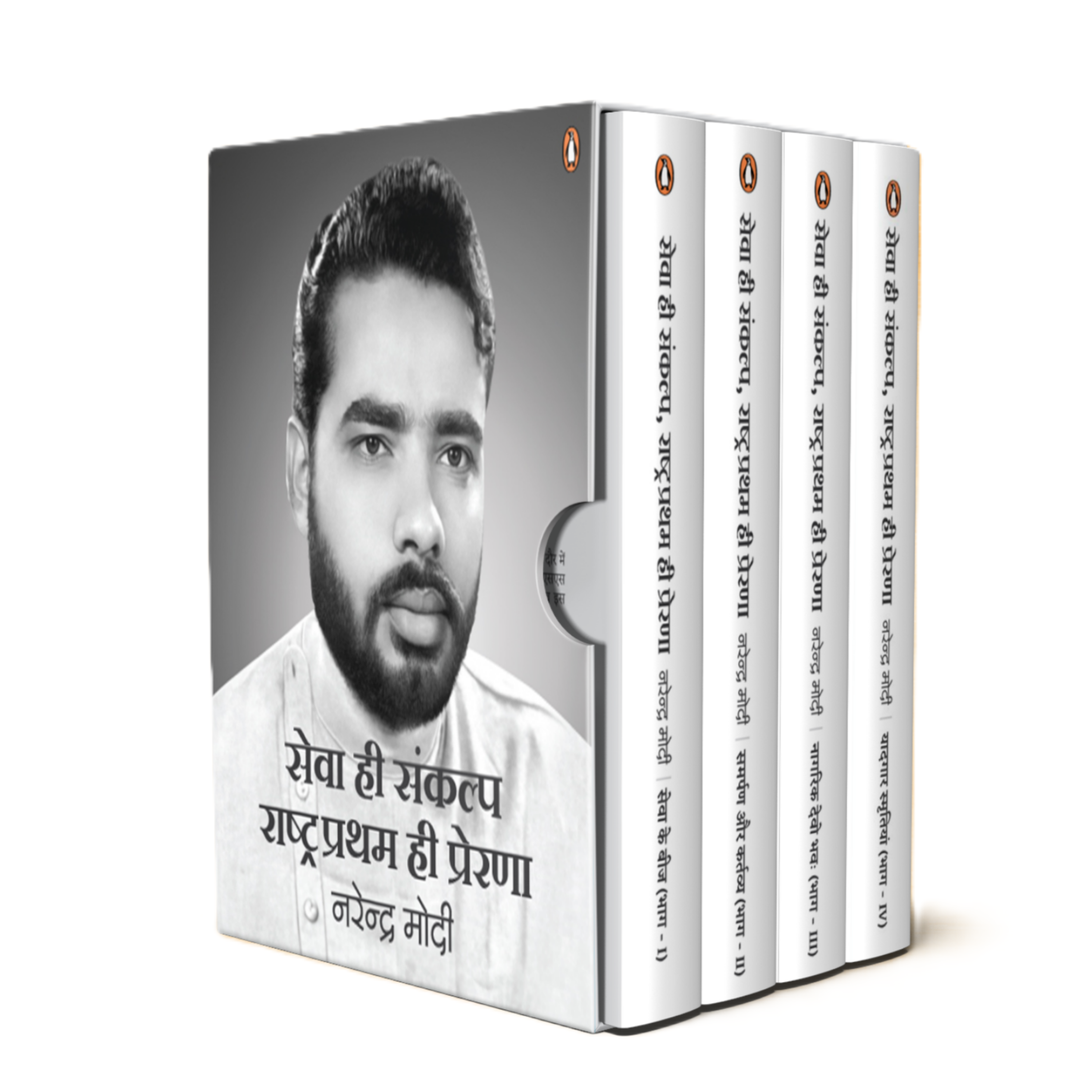
सीमित संसाधनों में पला-बढ़ा एक बालक, जो आगे चलकर भारत का प्रधानमंत्री बना और पूरे वैश्विक पटल पर अपनी एक अमिट छाप छोड़ दी।
ये कैसे हुआ, प्रेरणाएं कहां से मिलीं। इस असाधारण उपलब्धि के पीछे कौन सी सोच काम कर रही थी, वो कौन से अनुभव थे जिन्होंने एक बालक को असाधारण बना दिया, इन्ही जिज्ञासाओं से इस पुस्तक संग्रह (बॉक्स सेट) ‘सेवा ही संकल्प, राष्ट्र प्रथम ही प्रेरणा — नरेन्द्र मोदी’ का जन्म हुआ है।
दुर्लभ फ़ोटोग्राफ़्स और अनसुनी घटनाओं से सजी यह पुस्तक संग्रह प्रधानमंत्री नरेन्द्र मोदी के जीवन की अनदेखी झांकी है। चार पुस्तकों और तीन भागों में विभाजित, यह नरेन्द्र दामोदरदास मोदी की कहानी है। ये गुजरात के वडनगर में जन्मे और पले-बढ़े एक कौतूहल से भरे युवा की यात्रा है, जो अपने जन्म-प्रदेश का मुख्यमंत्री बना। लाखों लोगों को प्रभावित करने वाली ये यात्रा, भविष्य में करोड़ों-अरबों लोगों के जीवन में संभावनाओं का सूर्य बनकर चमकने वाली थी।
इस संग्रह की पहली पुस्तक ‘Seeds of Service – सेवा के बीज’ आपको युवा नरेन्द्र मोदी के प्रारंभिक वर्षों, शुरुआती अनुभवों और उनके जीवन पर पड़ने वाले प्रभावों में गहराई तक ले जाएगी और उनके संवेदनशील बचपन, युवावस्था, स्वयंसेवक के रूप में यात्रा जैसे विविध पहलुओं से जोड़ेगी।
दूसरी पुस्तक ‘Dedication and Duty – समर्पण और कर्तव्य’ में आपको उनके भारतीय जनता पार्टी में अभूतपूर्व उत्थान, सांगठनिक पुर्नगठन, तबाह हो चुकी मातृभूमि में एक मुसाफिर बेटे की वापसी जैसे कई विषयों की जानकारी होगी। भारतीय जनता पार्टी के सबसे सफल रणनीतिकारों में से एक के रूप में यह उनकी वो यात्रा है, जिसने पार्टी, प्रदेश और देश का युग परिभाषित कर दिया।
इस संग्रह की तीसरी पुस्तक ‘Nagrik Devo Bhava – नागरिक देवो भवः’ एक मुख्यमंत्री के तौर नरेन्द्र मोदी द्वारा गुजरात में बदलाव और प्रगति की एक अद्वितीय गाथा है। लगातार चार कार्यकालों में व्यापक बहुक्षेत्रीय और बहुआयामी परिवर्तनों की ये कथा अपने आप में प्रेरणा का ज्योति पुंज है।
संग्रह की चौथी व अंतिम पुस्तक ‘यादगार स्मृतियां – Memorable Glimpses’ उनके जन्म से लेकर गुजरात के मुख्यमंत्री बनने तक के विविध क्षणों को चित्रों के माध्यम से सामने लाती है।
इस पुस्तक संग्रह में जनमानस के उन अनुभवों को समाहित किया गया है, जिन्होंने मिलकर 140 करोड़ भारतीयों के लोकतांत्रिक रूप से निर्वाचित नेता को गढ़ा है। यह पुस्तक संग्रह उस ऐतिहासिक मोड़ पर समाप्त होता है, जब नरेन्द्र मोदी, 1947 के बाद पैदा हुए पहले प्रधानमंत्री के रूप में, बतौर सरकार के मुखिया, दुनिया के सबसे बड़े लोकतंत्र के मंदिर, भारतीय संसद की सीढ़ियों पर झुके थे।
Operation SINDOOR
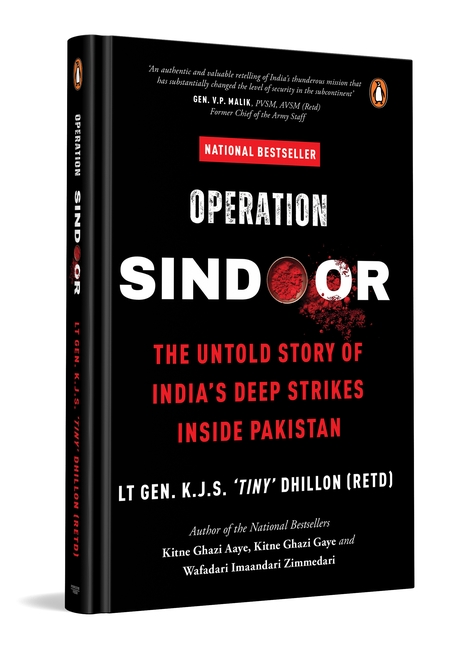
A definitive account of India’s decisive military response to Pakistan-backed terrorism — told by Lt Gen K.J.S. Dhillon, one of India’s most respected Army commanders.
On 22 April 2025, the Baisaran Valley in Pahalgam, south Kashmir, witnessed a horrifying attack when heavily armed terrorists from the Resistance Front, a proxy of Lashkar-e-Taiba (LeT), fully sponsored by the Pakistan Army and Inter-Services Intelligence (ISI), shattered its serenity with gunfire, killing twenty-six innocent individuals and injuring several others. The victims included newlyweds, elderly parents and solo trekkers. A Hindu professor narrowly escaped death by reciting the kalma, a Christian sacrificed his life to save his family and a local Muslim was killed while saving others. This was an attempt to rupture India’s religious harmony and create widespread outrage in the country.
India chose to respond to this incident, which shook not just the nation but the world, with Operation SINDOOR, showcasing its military modernization and might. The mission targeted terror camps, including the ones in Bahawalpur and Muridke, linked to Jaish-e-Mohammed and LeT, respectively, and terrorist launch pads in Pakistan-occupied Jammu and Kashmir. India’s response demonstrated military professionalism, technological maturity and diplomatic sagacity, ensuring regional stability while delivering a powerful message against Pakistan and its terror factory. This book carries minute details and a blow-by-blow account of the ‘Four-Day War’ between two hostile nuclear powers. The author underscores the intelligent use of media and social media in the battle of narratives, discusses the ‘new normal’ and emerging rules of engagement, and suggests a way forward.
Offering hitherto unrevealed information, Lt Gen. ‘Tiny’ Dhillon (Retd) opens a window to Operation SINDOOR, a testament to the strength of the Indian military and the unity of India when confronted with an adverse situation. With visuals from the destroyed target areas, this book is a powerful reminder of the impact of terrorism and the enduring hope for peace and justice.
Operation SINDOOR is a must-read for everyone.
Why the Constitution Matters
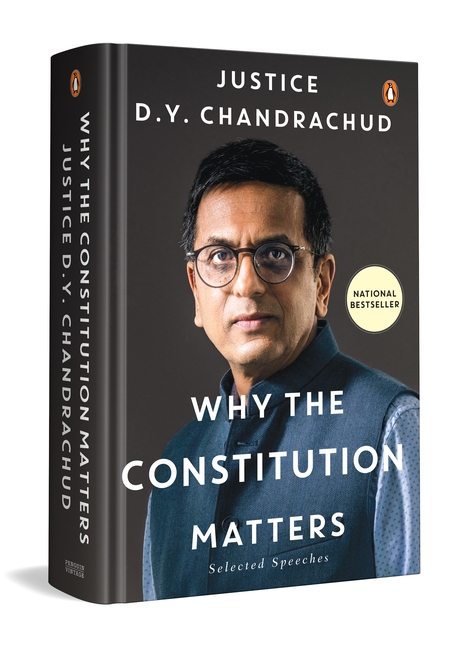
In Why the Constitution Matters Justice D.Y. Chandrachud delves into the profound significance of the Constitution in shaping the nation’s identity and governance. This insightful book offers readers a nuanced understanding of the Constitution’s role in protecting fundamental rights, ensuring justice and maintaining the rule of law. The author brings to the forefront his experience of nearly twenty-five years as a judge, making complex constitutional principles accessible to both legal professionals and common citizens. Through engaging narratives and real-life examples, he illustrates how the Constitution impacts everyday life and why it remains a cornerstone of democracy. The book covers themes such as democracy, free speech, pluralism, gender, environmental governance, dissent and landmark judgments that have shaped modern India.
Why the Constitution Matters is not just a book for legal scholars; it is a must-read for anyone who values democracy, justice and the rule of law. Discover why the Constitution is more than just a document; it is the foundation of a just and equitable society.
Assembling India’s Constitution
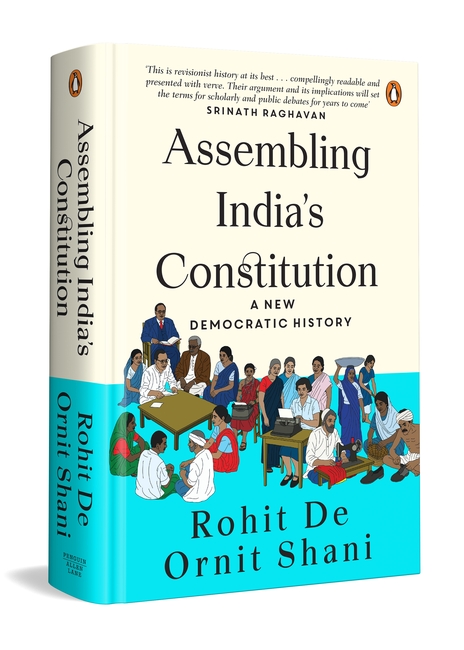
In this paradigm-shifting history, two leading historians of India re-examine the making of the Indian constitution from the perspective of the country’s people. In a departure from dominant approaches that foreground the framing of the text within the Constituent Assembly, Ornit Shani and Rohit De instead demonstrate how it was shaped by diverse publics across India and beyond. They reveal multiple, parallel constitution-making processes underway across the subcontinent, highlighting how individuals and groups transformed constitutionalism into a medium of struggle and a tool for transformation. De and Shani argue that the deep sense of ownership the public assumed over the constitution became pivotal to the formation, legitimacy and endurance of India’s democracy against arduous challenges and many odds. In highlighting the Indian case as a model for thinking through constitution making in plural societies, this is a vital contribution to constitutional and democratic history.
Nepal 2043
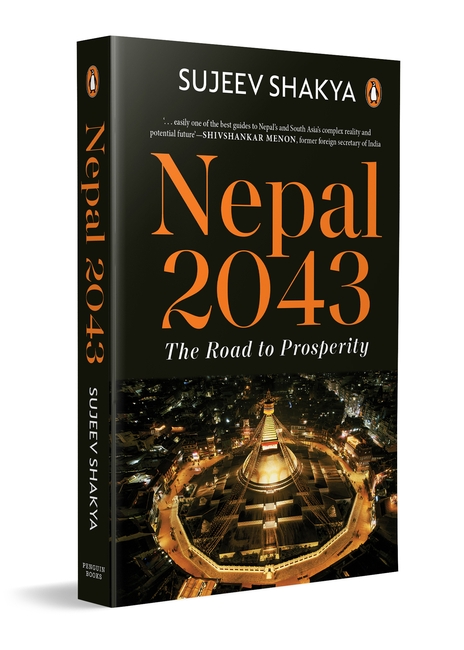
Nepal is poised as never before to embark on an incredible future. The past two decades has seen unprecedented economic growth despite the challenges propped up by frequent changes in government, tumultuous political transitions, earthquakes, floods, blockades and to top it all, the pandemic. There is little written about this change as negative narratives cloud contemporary writings on Nepal.
Moreover, there’s something uniquely exciting about where Nepal can go from here on. Drawing from practical experiences and academic insights, this book presents a compelling vision for Nepal’s future, exploring key areas such as hydropower, agriculture, tourism, migration and digital transformation. It argues that with a sixfold increase in GDP over two decades, Nepal is actually poised to scale even greater heights in the years to come. Positioned strategically between China and India, and supported by a robust diaspora, this not-so-small country has the potential to transform into a high-income country by 2043. There is change brewing among its youth who are ready to play a more active role in transforming the country’s politics and economy. It is, therefore, only a matter of time before all this untapped potential is leveraged. While this book is about Nepal’s potential, it is also a playbook for emerging economies.
Come, join the journey to reimagine and reintroduce Nepal to the global stage.
370: Undoing the Unjust

The most definitive account of how Article 370 was abrogated.
The inside story of how Prime Minister Narendra Modi turned the seemingly impossible into a reality.
An eye-opening read on the damage Article 370 inflicted on Jammu and Kashmir.
A book that will interest diverse readers, including students, scholars and historians.
Introduced in October 1949, Article 370 turned out to be a long-standing ‘permanent’ temporary provision till 5 August 2019, when it was abrogated by the Parliament of India. The article has been subjected to intense debate and much discussion over the years. Those who supported it cited Jammu and Kashmir’s unique situation in 1947, while those who opposed it questioned how one nation could have two constitutions, two flags and two sets of rules. The naysayers also questioned its reductive aspects—the denial of basic rights to the poor, scheduled caste and scheduled tribe communities, and women.
But whichever side one stood on, the conventional belief for sixty-five years since Independence was that Article 370 can never be repealed. But then came 5 August 2019, when the supposedly impossible became a reality.
370: Undoing the Unjust, A New Future for J&K takes the reader through the minute and meticulous planning that ensured seamless execution of the decision. Removing Article 370 not only needed strategic planning and political will but also mammoth logistical preparations. Every single aspect would have to be addressed, or else the region, especially the Kashmir valley, would plunge into chaos.
The book offers a glimpse of Prime Minister Narendra Modi’s thought process, insights into his leadership and, most importantly, his vision for Jammu and Kashmir. By ensuring that Article 370 is repealed, Prime Minister Modi altered the course of history. But, along with that he also fulfilled the decades-old commitment of the Bharatiya Janata Party.
Deeply researched, anecdotal and unputdownable, this book fills the gaps on scholarship around an iconic moment of Indian history.
Hindutva and Hind Swaraj: History’s Forgotton Doubles | The Battle of Ideas in Indian History and Politics | Hindu Identity, Nationalism, and Democracy
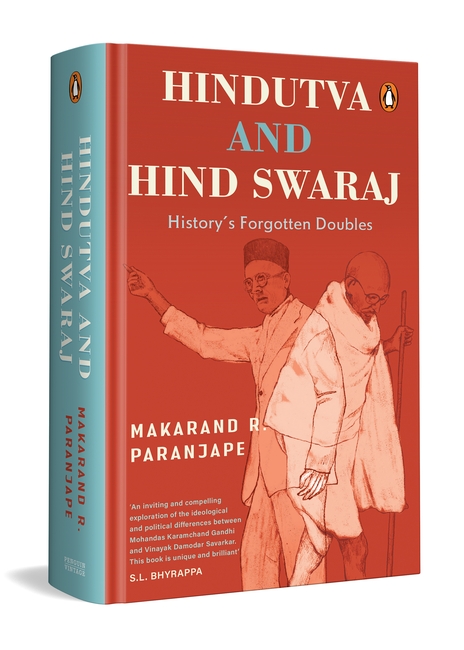
A close reading of the persistent antagonisms in Indian history, Hindutva and Hind Swaraj focuses on the ideological clash between Mohandas Karamchand Gandhi and Vinayak Damodar Savarkar, representing the broader ideological, political, and cultural factions within Hindu and Indian society. The central argument is that this antagonism continues to influence national life, both politically and personally, reflecting two contrasting ideologies: Hindutva and Hind Swaraj.
Divided into three parts, the first part addresses the lack of historical records in ancient India and the importance of creating a national history to reclaim India’s past. In the part second part, the author examines the discovery of India’s cultural and historical identity, the impact of colonialism, and the need for a balanced discourse that acknowledges the complexity and diversity of Indian society. While the third looks at the e contemporary political landscape, the rise of Hindutva, and the ongoing struggle between Gandhi’s vision of non-violent resistance and Savarkar’s advocacy of armed rebellion. It highlights the unresolved tensions between these two ideologies and their implications for India’s future.
The book emphasizes the need for a new approach to understanding and reconciling these differences, suggesting that a balanced discourse and a deeper inquiry into the nature of nationalism, democracy, and Indian society are essential for creating a new India.
Comrades and Comebacks
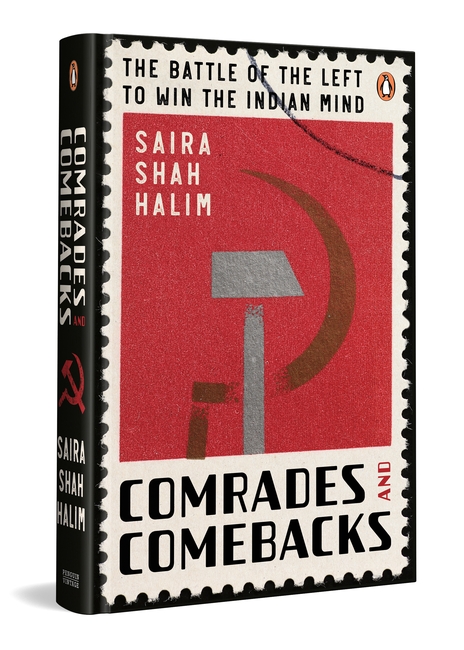
The history of Left politics in India runs deep into the very heart of the freedom struggle. It can hardly be denied that both the freedom struggle and the political landscape of free India was, for the longest time, hued in various shades of red. Peculiarly, Leftism in India has developed in close ties with the culture in which it was rooted. A movement consisting of diverse forces—-with moderate socialists at one end of the spectrum and extremist or revolutionary communists at the other—-The Indian Left has had a complex and evolving role in Indian politics. While historically it has played a pertinent role, primarily in states such as West Bengal and Kerala, its influence and relevance, both have waned in recent years. It has been struggling to adapt itself to dynamic electoral politics and, therefore, finding it hard to regain its lost ground.
This book is about an ideology that is under threat or, as many say, almost extinct, at least in India. It tries to sketch a rich historical narrative that foregrounds left politics in world history, locate its relevance in India and chart a future of its revival.
Trial by Water
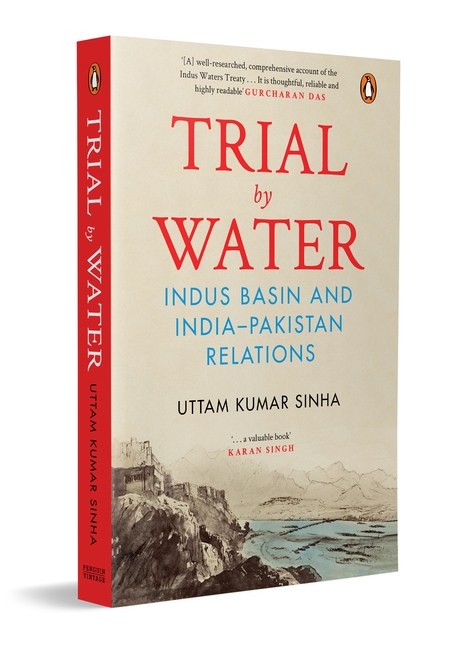
In 1947, the Indian subcontinent was partitioned, and Pakistan was born. A shared heritage, a composite culture and centuries-old bonds between people, all seemed to vanish overnight. Nowhere was this rupture more profound than in the Indus Basin—once a unified lifeline of the region, now fragmented by sovereign borders, its rivers flowing through two nations immediately at odds with each other.
The Indus Waters Treaty was signed in 1960, proving that even bitter adversaries could cooperate over shared resources. Yet, it never brought lasting peace. The treaty was suspended by India in April 2025 as a punitive measure in the wake of the Pahalgam terror attack, and its future remains shrouded in uncertainty. Can it still endure and adapt? Perhaps the time has come for a new arrangement—one that is not just inevitable but essential.
This book traces the turbulent history of the Indus Basin and examines how the Indus Waters Treaty has been shaped by the region’s ever-evolving political dynamics. It explores the role of key leaders on both sides, as well as external pressures, in shaping and reshaping one of the world’s most critical transboundary water agreements.
The Indus Basin has been a witness to conflict, compromise and survival. And if you seek to understand the true nature of India–Pakistan relations, start with the rivers that bind them. Trial by Water leads us in that direction.