Looking out of my corner fourth-floor office with a full-frontal view, across First Avenue of the headquarters of the United Nations with the flags of the 193 member states fluttering majestically, I was reminded ever so often of what Bertrand Russell said: ‘The trouble with the world is that the stupid are cocksure and the
intelligent are full of doubt.’
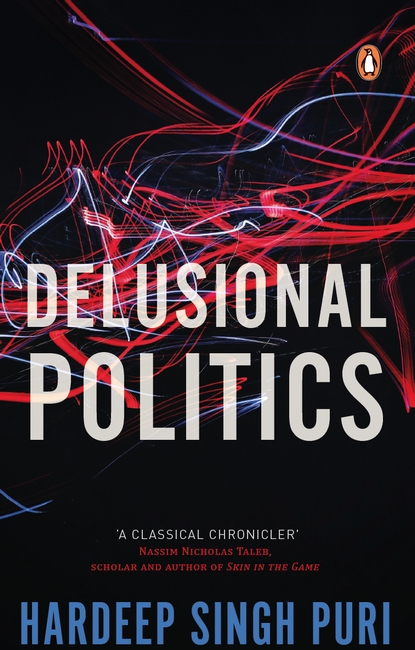
Many democratically elected leaders of the twenty-first century have displayed streaks of recklessness, megalomania, bizarre self-obsession and political views that are difficult to characterize. This book studies the actions of these contemporary political leaders and covers Brexit, the election of Donald Trump, the rise of the BJP under Prime Minister Narendra Modi and decision-making with respect to global governance, terrorism
and trade. It brings to light the fact that at the heart of delusional politics is perhaps the delusional politician.

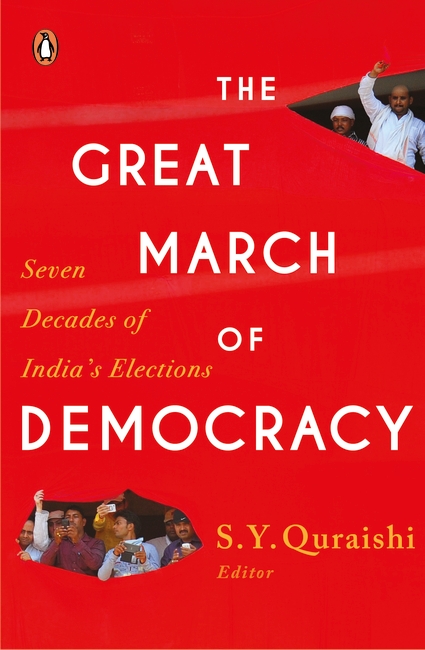
As India gears for its seventeenth Lok Sabha elections in 2019, the Election Commission of India, guardian of the world’s grandest electoral experiment, marks the beginning of its seventieth year. This book celebrates seven decades of India’s vibrant democracy and the Election Commission’s excellence and rigour, with a remarkable collection of essays written by those who have studied India’s unique experiment in electoral democracy, as well as analysts, politicians, social workers, activists, businesspersons and public servants.
The essays in this book cover a range of subjects, from the evolution of the Election Commission, the exciting story of the first electoral roll, election laws, the deepening of democratic institutions over the decades to the participation revolution ushered in by the Election Commission’s untiring and targeted efforts at voter education. Contemporary issues, such as the corrupting influence of money and the creeping criminalization in politics, have been addressed, as have been the electoral reforms proposed by experts on these subjects. There is a peek into how India’s experience with elections has inspired its neighbours Nepal and Bhutan and impacted observers who have had a chance to witness, first-hand, the mammoth exercise held in the largest democracy on the planet.
The diversity of perspectives from keen observers of India’s democracy makes this volume an enthralling read.

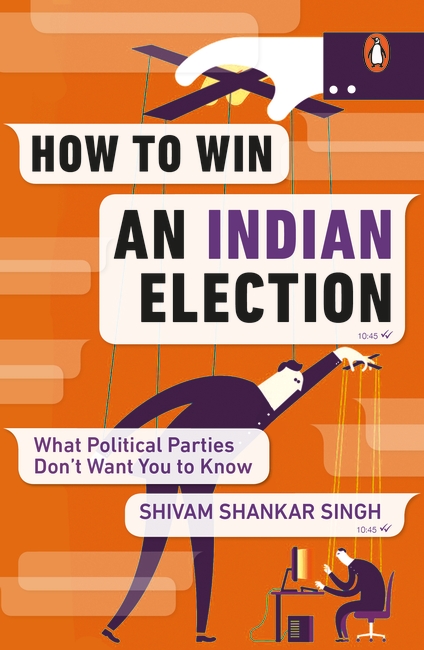
What role do political consultants play in election campaigns? How are political parties using technological tools such as data analytics, surveys and alternative media to construct effective, micro-targeted campaigns? How does the use of money impact election results? What aids in the en masse dissemination of divisive propaganda and fake news? What does it take to win an election in India today? What is the future of politics in the country?
Written by a former election campaign consultant for a major political party, How to Win an Indian Election takes readers into the forbidden world of election war-rooms and gives them a glimpse of how strategy is formulated, what works with voters on the ground and what doesn’t. Based on research, interviews and the author’s own experiences, this book is invaluable for its insight into the inner workings of politics, political parties and what really makes for a winning election campaign.

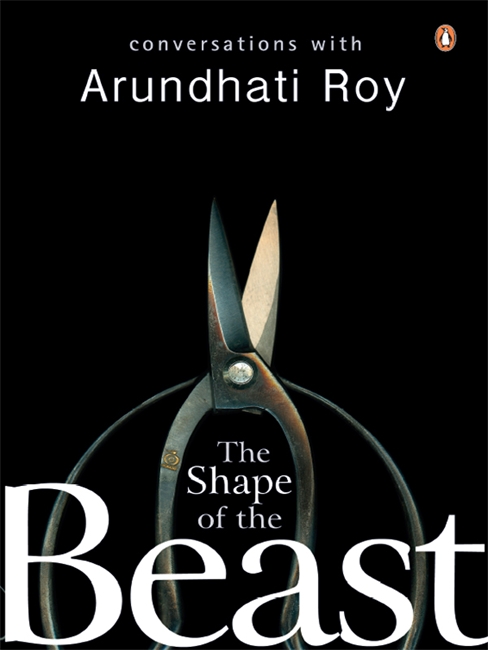
The Shape of the Beast is our world laid bare, with great courage, passion and eloquence, by a mind that has engaged unhesitatingly with its changing realities, often anticipating the way things have moved in the last decade. In the fourteen interviews collected here, conducted between January 2001 and March 2008, Arundhati Roy examines the nature of state and corporate power as it has emerged during this period, and the shape that resistance movements are taking. As she speaks, among other things, about people displaced by dams and industry, the genocide in Gujarat, Maoist rebels, the war in Kashmir and the global War on Terror, she raises fundamental questions about democracy, justice and non-violent protest. Unabashedly political, this is also a deeply personal collection. Through the conversations, Arundhati talks about the necessity of taking a stand, as also the dilemma of guarding the private space necessary for writing in a world that demands urgent, unequivocal intervention. And in the final interview, she discusses with uncommon candour her ambiguous feelings about success and both the pressures and the freedom that come with it.

‘The terse, typewritten note slipped under my door in a sealed envelope confirmed my appointment with “India’s single biggest internal security challenge”. I’d been waiting for months to hear from them…’ In early 2010, Arundhati Roy travelled into the forests of Central India, homeland to millions of indigenous people, dreamland to some of the world’s biggest mining corporations. The result is this powerful and unprecedented report from the heart of an unfolding revolution.

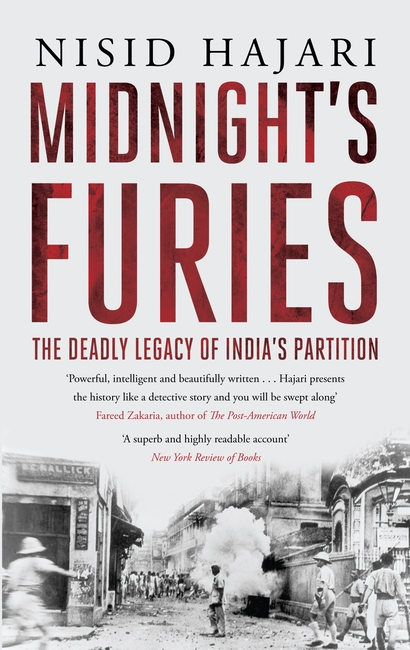
From nuclear proliferation to Jihadi terrorism, the Partition of India continues to cast a long shadow even today
Nobody expected the liberation of India and the birth of Pakistan to be so bloody. But in 1946, a full year before Independence, a terrible cycle of riots began, starting with Calcutta and going on to engulf many parts of the country. As the British rushed to leave, thousands of Hindus, Muslims and Sikhs were brutally killed in communal violence. This book vividly recreates that tragic period through personal stories and eyewitness accounts, and recounts the complex relationships between Nehru, Patel, Jinnah and Mountbatten. It shows how Partition, which has created such a wide gulf between two countries whose people have so much in common, has given birth to global terrorism and dangerous nuclear proliferation today.

To best understand and address the inequality in India today, Arundhati Roy insists we must examine both the political development and influence of M.K. Gandhi and why B.R. Ambedkar’s brilliant challenge to his near-divine status was suppressed by India’s elite. In Roy’s analysis, we see that Ambedkar’s fight for justice was systematically sidelined in favor of policies that reinforced caste, resulting in the current nation of India: independent of British rule, globally powerful, and marked to this day by the caste system.
This book situates Ambedkar’s arguments in their vital historical context-namely, as an extended public political debate with Mohandas Gandhi. ‘For more than half a century-throughout his adult life-[Gandhi’s] pronouncements on the inherent qualities of black Africans, untouchables and the laboring classes remained consistently insulting,’ writes Roy. ‘His refusal to allow working-class people and untouchables to create their own political organizations and elect their own representatives remained consistent too.’
In The Doctor and the Saint, Roy exposes some uncomfortable, controversial, and even surprising truths about the political thought and career of India’s most famous and most revered figure. In doing so she makes the case for why Ambedkar’s revolutionary intellectual achievements must be resurrected, not only in India but throughout the world.
There was one partition of the land in 1947. Harsh Mander believes that another partition is underway in our hearts and minds.
How much of this culpability lies with ordinary people? What are the responsibilities of a secular government, of a civil society, and of a progressive majority? In Partitions of the Heart: Unmaking the Idea of India, human rights and peace worker Harsh Mander takes stock of whether the republic has upheld the values it set out to achieve and offers painful, unsparing insight into the contours of hate violence. Through vivid stories from his own work, Mander shows that hate speech, communal propaganda and vigilante violence are mounting a fearsome climate of dread, that targeted crime is systematically fracturing our community, and that the damage to the country’s social fabric may be irreparable. At the same time, he argues that hate can indeed be fought, but only with solidarity, reconciliation and love, and when all of these are founded on fairness.
Ultimately, this meticulously researched social critique is a rallying cry for public compassion, conscience and justice, and a paean to the resilience of humanity.

The RSS is the most influential cultural organization in India today, with affiliates in fields as varied as politics, education and trade. This book fundamentally addresses three key questions: Why has the Rashtriya Swayamsevak Sangh (RSS) and its affiliates expanded so rapidly over the past twenty-five years? How have they evolved in response to India’s new socio-economic milieu? How does their rapid growth impact the country’s politics and policy?
With unprecedented access, Walter K. Andersen and Shridhar D. Damle lift the curtains to help us understand the inner workings of the Sangh.
Backed by deep research and case studies, this book explores the evolution of the Sangh into its present form, its relationship with the ruling party, the BJP, their overseas affiliates and so much more.
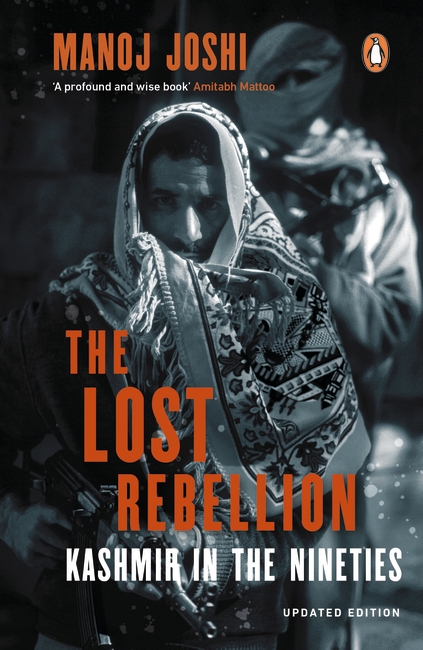
The Lost Rebellion is an acclaimed classic on the rise of Kashmir militancy, which chronicles how a simple call for azadi by bands of disgruntled youth was transformed within a year into a full-scale jihad against India. It dwells at length on Pakistan’s proxy war against India, exposes the US position on Kashmir and unsparingly critiques the political bungling and bureaucratic ineptitude that hamstrung the fight against insurgency.
This updated edition includes an insightful foreword by Amitabh Mattoo, a new introduction and a detailed aftermath chapter on what has transpired in the new millennium. Manoj Joshi reveals that although violence has come down drastically, there has been no closure to the nearly three-decade-old conflict. The alienation of the Kashmiris has, if anything, grown and is now manifesting itself in violent civil protest.
Raw, compelling and meticulously researched, The Lost Rebellion is a riveting account of the human drama that lies at the heart of the crisis that is Kashmir.
‘In its sheer wealth of detail it far surpasses anything that has been written so far’-Prem Shankar Jha
‘A compelling and breathtaking account’-Sumit Ganguly
‘The best book on the Kashmir militancy’-Ashok Banker