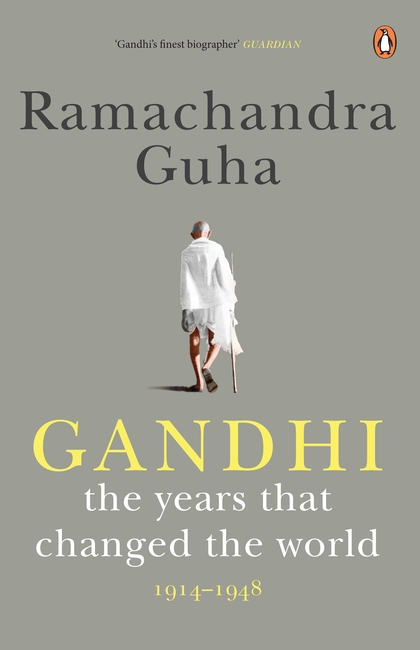
Gandhi lived one of the great 20th-century lives. He inspired and enraged, challenged and delighted millions of men and women around the world. He lived almost entirely in the shadow of the British Raj, which for much of his life seemed a permanent fact, but which he did more than anyone else to bring down. In a world defined by violence and warfare and by fascist and communist dictatorships, he was armed with nothing more than his arguments and example. While fighting for national freedom, he also attacked caste and gender hierarchies, and fought (and died) for inter-religious harmony.
This magnificent book tells the story of Gandhi’s life from his departure from South Africa to his dramatic assassination in 1948. It has a Tolstoyan sweep, showing us Gandhi as he was understood by his contemporaries, with new readings of his arguments with (among others) Ambedkar, Jinnah, and Churchill, and new insights on our freedom movement and its many strands. Drawing on never-before-seen sources and animated by its author’s wonderful sense of drama and politics, Gandhi: The Years That Changed the World is the most ambitious book on the father of the nation.

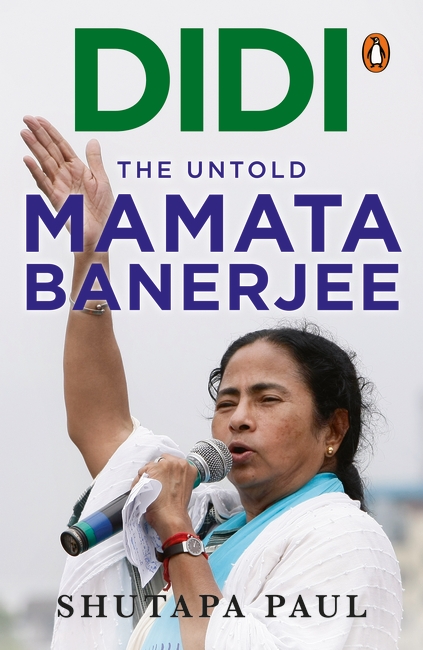
Mamata Banerjee, with her unique style of politics, was able to defeat the formidable three-decade-old Left Front Government in 2011. Exploring her struggles and achievements, Didi opens a window to the life and times of one of the most dynamic politicians of our country.
‘The general elections of 2019 can see [Mamata Banerjee] play kingmaker . . . She is the only regional leader who can claim to have that kind of clout. Jayalalithaa is no more and Nitish Kumar has changed over to the NDA. The year 2018 also witnessed the demise of another pedagogue of Dravidian politics, K. Karunanidhi. With the Congress showing signs of resurgence, and regional parties agreeing to forge a Federal Front, Mamata is more than aware that if she gets her electoral mathematics right, she could play a decisive role in the next Lok Sabha polls-maybe even stand a chance at prime ministership.’
Mamata Banerjee, with her unique style of politics, was able to defeat the formidable three-decade-old Left Front Government in 2011. Exploring her struggles and achievements, Didi opens a window to the life and times of one of the most dynamic politicians of our country.
‘The general elections of 2019 can see [Mamata Banerjee] play kingmaker . . . She is the only regional leader who can claim to have that kind of clout. Jayalalithaa is no more and Nitish Kumar has changed over to the NDA. The year 2018 also witnessed the demise of another pedagogue of Dravidian politics, K. Karunanidhi. With the Congress showing signs of resurgence, and regional parties agreeing to forge.

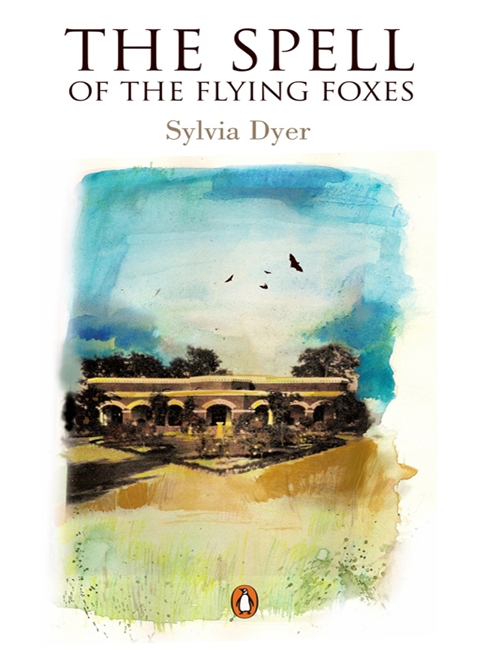
Champaran, 1845. Drawn to the rich, fertile land to farm Blue Gold, indigo, Alfred Augustus Tripe settles by the river Baghmati. A whole village of workers emerges nearby as Tripe starts a family with an Indian heiress. Nearly a century later, Tripe’s sprawling home and most of his family are destroyed in the devastating Bihar earthquake of 1934. Now his only granddaughter, Gladys, must find a way to stop her unscrupulous cousin Harry from usurping her entire inheritance and turning her young children destitute. A formidable dacoit leader miraculously comes to her rescue, India gains independence, and the flying foxes, the bearers of good fortune, disappear.
In sparkling, lyrical prose, Sylvia Dyer, Gladys’s daughter, brings to life a world of picturesque beauty, love and hope intertwined with social ills, and a time when the passionate freedom struggle threatened the very existence of Anglo-Indians in India.

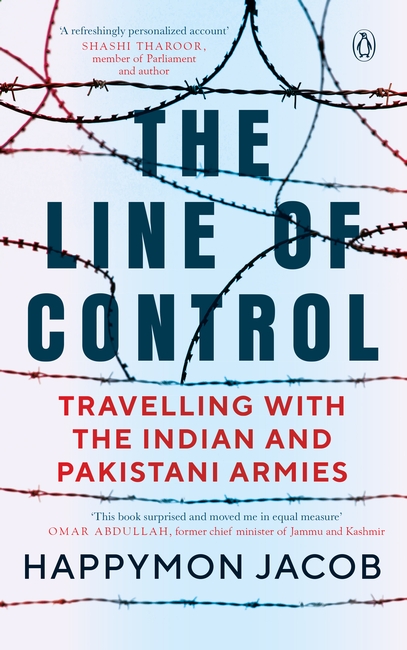
Happymon Jacob was given the unique opportunity to see the border between India and Pakistan from both sides. He travelled with the armies of both countries and could study what is effectively the ground zero-the location where entrenched animosities as well as sudden surges of comradeship are enacted. This is one of the most fortified places on the planet.
Jacob writes, ‘I was keen on getting into their world, the world of men in uniform, fighting each other and yet respecting each other. It was a curious world. It had breath-taking adventure, mind blowing stories and unforgettable heroism. I loved it, and I was welcome.’
This vividly told, fast paced narrative brings the border area to life. Jacob was given unprecedented access by the Indian and Pakistani armies and he explores how the border is seen-both in the popular imagination and by those who exist in its shadow. He chronicles the lives of civilians and soldiers, their courage and resilience in the face of constant danger and the extraordinary similarities between the two sides.

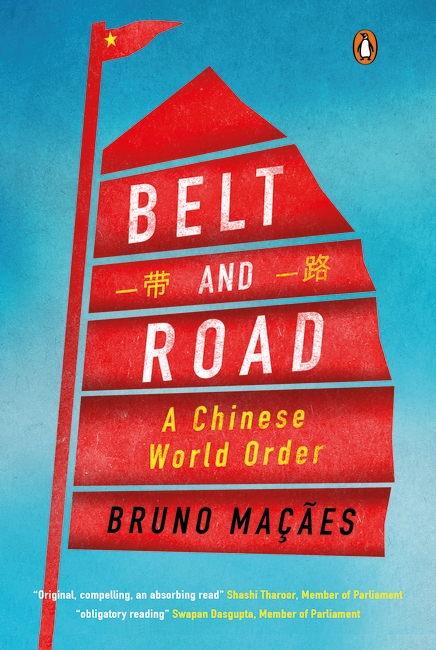
China’s Belt and Road strategy is acknowledged to be the most ambitious geopolitical initiative of the age. Covering almost seventy countries by land and sea, it will affect every element of global society from shipping to agriculture, digital economy to tourism and politics to culture. Most importantly, it symbolizes a new phase in China’s ambitions as a superpower: to remake the world economy and crown Beijing as the new centre of capitalism and globalization.
Bruno Macaes traces this extraordinary initiative’s history, highlighting its achievements to date and its staggering complexity. He asks whether Belt and Road is about more than power projection and profit. Will it herald a new set of universal political values, to rival those of the West? Is it, in fact, the story of the century?

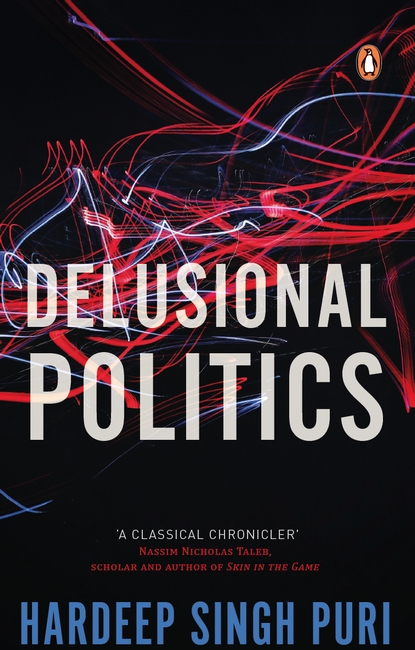
Looking out of my corner fourth-floor office with a full-frontal view, across First Avenue of the headquarters of the United Nations with the flags of the 193 member states fluttering majestically, I was reminded ever so often of what Bertrand Russell said: ‘The trouble with the world is that the stupid are cocksure and the
intelligent are full of doubt.’
Many democratically elected leaders of the twenty-first century have displayed streaks of recklessness, megalomania, bizarre self-obsession and political views that are difficult to characterize. This book studies the actions of these contemporary political leaders and covers Brexit, the election of Donald Trump, the rise of the BJP under Prime Minister Narendra Modi and decision-making with respect to global governance, terrorism
and trade. It brings to light the fact that at the heart of delusional politics is perhaps the delusional politician.

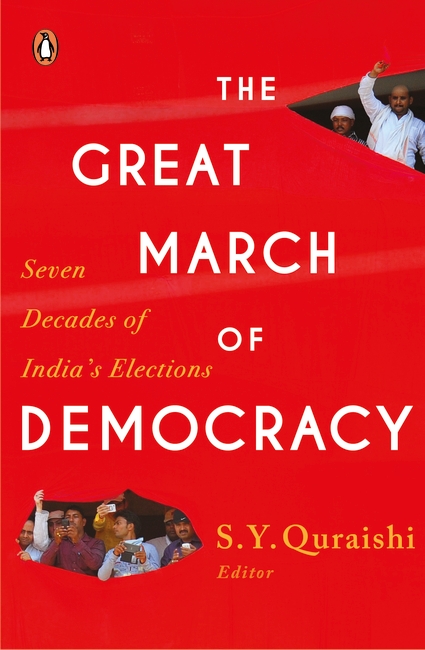
As India gears for its seventeenth Lok Sabha elections in 2019, the Election Commission of India, guardian of the world’s grandest electoral experiment, marks the beginning of its seventieth year. This book celebrates seven decades of India’s vibrant democracy and the Election Commission’s excellence and rigour, with a remarkable collection of essays written by those who have studied India’s unique experiment in electoral democracy, as well as analysts, politicians, social workers, activists, businesspersons and public servants.
The essays in this book cover a range of subjects, from the evolution of the Election Commission, the exciting story of the first electoral roll, election laws, the deepening of democratic institutions over the decades to the participation revolution ushered in by the Election Commission’s untiring and targeted efforts at voter education. Contemporary issues, such as the corrupting influence of money and the creeping criminalization in politics, have been addressed, as have been the electoral reforms proposed by experts on these subjects. There is a peek into how India’s experience with elections has inspired its neighbours Nepal and Bhutan and impacted observers who have had a chance to witness, first-hand, the mammoth exercise held in the largest democracy on the planet.
The diversity of perspectives from keen observers of India’s democracy makes this volume an enthralling read.

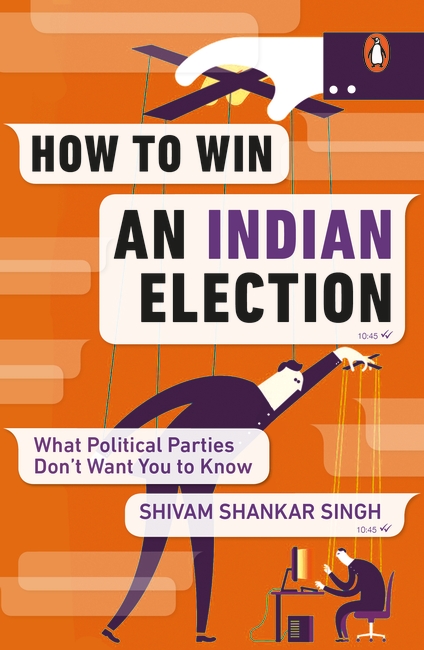
What role do political consultants play in election campaigns? How are political parties using technological tools such as data analytics, surveys and alternative media to construct effective, micro-targeted campaigns? How does the use of money impact election results? What aids in the en masse dissemination of divisive propaganda and fake news? What does it take to win an election in India today? What is the future of politics in the country?
Written by a former election campaign consultant for a major political party, How to Win an Indian Election takes readers into the forbidden world of election war-rooms and gives them a glimpse of how strategy is formulated, what works with voters on the ground and what doesn’t. Based on research, interviews and the author’s own experiences, this book is invaluable for its insight into the inner workings of politics, political parties and what really makes for a winning election campaign.
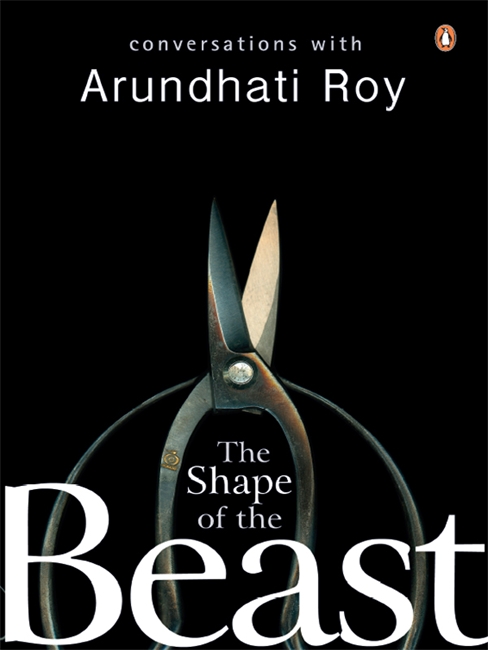
The Shape of the Beast is our world laid bare, with great courage, passion and eloquence, by a mind that has engaged unhesitatingly with its changing realities, often anticipating the way things have moved in the last decade. In the fourteen interviews collected here, conducted between January 2001 and March 2008, Arundhati Roy examines the nature of state and corporate power as it has emerged during this period, and the shape that resistance movements are taking. As she speaks, among other things, about people displaced by dams and industry, the genocide in Gujarat, Maoist rebels, the war in Kashmir and the global War on Terror, she raises fundamental questions about democracy, justice and non-violent protest. Unabashedly political, this is also a deeply personal collection. Through the conversations, Arundhati talks about the necessity of taking a stand, as also the dilemma of guarding the private space necessary for writing in a world that demands urgent, unequivocal intervention. And in the final interview, she discusses with uncommon candour her ambiguous feelings about success and both the pressures and the freedom that come with it.

‘The terse, typewritten note slipped under my door in a sealed envelope confirmed my appointment with “India’s single biggest internal security challenge”. I’d been waiting for months to hear from them…’ In early 2010, Arundhati Roy travelled into the forests of Central India, homeland to millions of indigenous people, dreamland to some of the world’s biggest mining corporations. The result is this powerful and unprecedented report from the heart of an unfolding revolution.