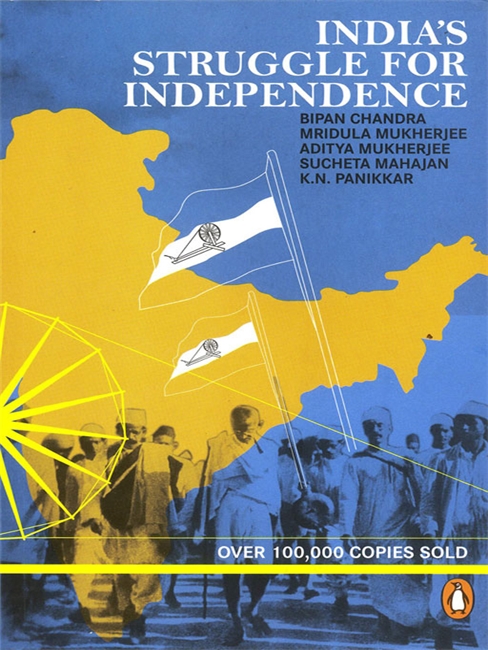
The definitive book on the Indian struggle for freedom by some of the most authoritative historians of modern India by best-selling author Bipin Chandra. Over 3,50,000 copies sold.
“Indispensable for students and for all those who want to know our past in order to understand the present” – Indian Express
India’s Struggle for Independence is the first and most reliable study of India’s epic struggle for freedom. This classic work begins with the abortive revolt against the British in 1857 and culminates in Indian Independence in 1947. Based on years of research as well as personal interviews with hundreds of freedom fighters, it presents a lucid and enduring view of the history of the period.

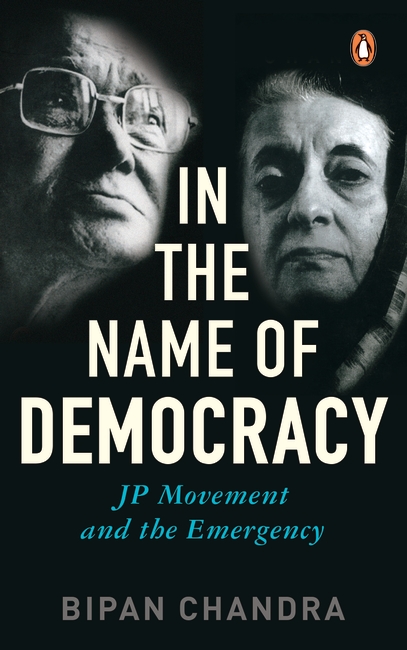
An unusual and insightful perspective of Indian democracy’s dark hour
‘When Jayaprakash Narayan, the leader of the JP movement in north India, pressed for the resignation of Prime Minister Indira Gandhi, it prompted her to impose internal Emergency. In this fascinating account, Bipan Chandra traces the events that led up to this moment and makes some startling revelations. He finds that there was a real danger of the JP movement turning fascist, given the fuzzy ideology of Total Revolution, its confused leadership and dependence on the RSS for its organization. At the same time, despite the authoritarianism inherent in the Emergency, particularly with the rising power of Sanjay Gandhi and his Youth Congress brigade, Indira Gandhi did end it and call for elections.
Finely argued, incisive and original, this book offers significant insight into those turbulent years and joins the ever-relevant debate on the acceptable limits of popular protest in a democracy.

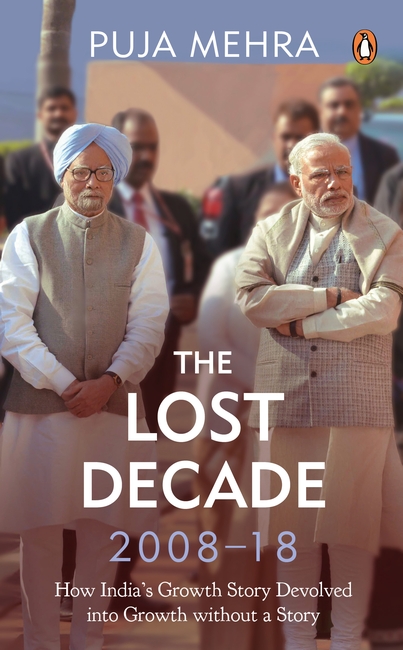
Before the global financial meltdown of 2008, India’s economy was thriving and its
GDP growth was cruising at an impressive 8.8 per cent. The economic boom impacted
a large section of Indians, even if unequally. With sustained high growth over an extended
period, India could have achieved what economists call a ‘take-off’ (rapid and
self-sustained GDP growth). The global financial meltdown disrupted this
momentum in 2008.
In the decade that followed, each time the country’s economy came close to returning
to that growth trajectory, political events knocked it off course.
In 2019, India’s GDP is growing at the rate of 7 per cent, making it the fastest-growing
major economy in the world, but little on the ground suggests that Indians are actually
better off. Economic discontent and insecurity are on the rise, farmers are restive and
land-owning classes are demanding quotas in government jobs. The middle
class is palpably disaffected, the informal economy is struggling and big businesses
are no longer expanding aggressively.
India is not the star it was in 2008 and in effect, the ‘India growth story’ has devolved
into ‘growth without a story’. The Lost Decade tells the story of the slide
and examines the political context in which the Indian economy failed to recover
lost momentum.

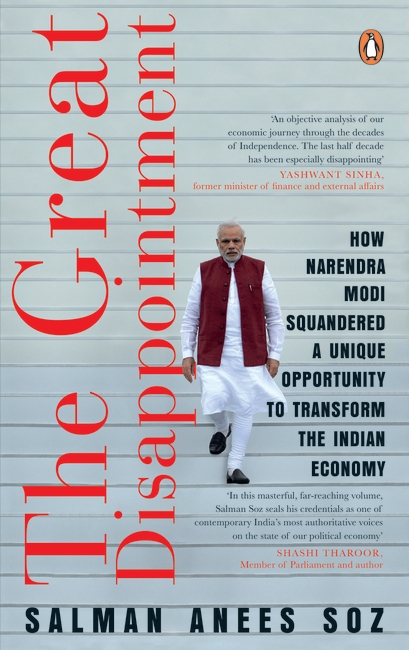
As the National Democratic Alliance (NDA) government completes its current term ahead of the General Elections 2019, it is time to evaluate its performance, specifically in terms of its management of the economy. This book is a critical assessment of five years of the brand of economics Prime Minister Narendra Modi has championed, often referred to as ‘Modinomics’.
Brought into power with the biggest political mandate in almost three decades, did the NDA government succeed in gainfully transforming India’s economic trajectory or did it squander a once-in-a-generation opportunity? The book conjectures it is the latter, and analyses why the Modi government’s stewardship of the economy is a ‘great disappointment’.

‘The civil servant who spoke truth to power’-Ramachandra Guha
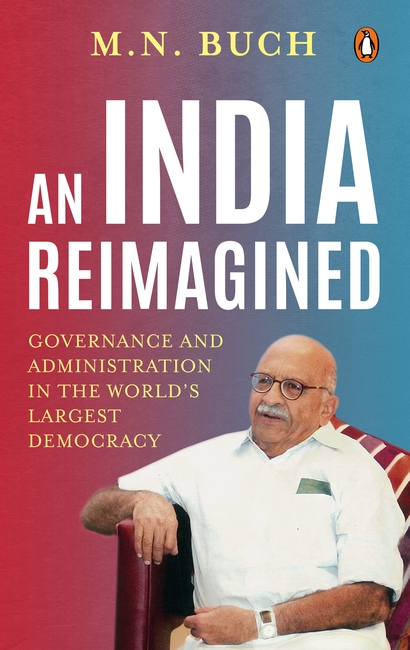
M.N. Buch, known as the architect of Bhopal, was awarded the Padma Bhushan in 2011. He studied economics at Cambridge University before joining the Indian Administrative Service (IAS) in 1957. He famously wrote five letters to former Prime Minister Manmohan Singh-ranging from the deterioration of the Indian Institutes of Technology (IITs) to Indo-American relations and how India must not be deferential to the US, and to assert the country’s right to help rebuild Afghanistan.
This book is a collection of twenty articles that have been divided into six major themes, namely the IAS, reforms (police, judiciary and electoral system), economics, social challenges (health, corruption and reservation), and governance and environment. Original and thought-provoking, this is a must-read for those concerned with the idea of India and how change can be brought.

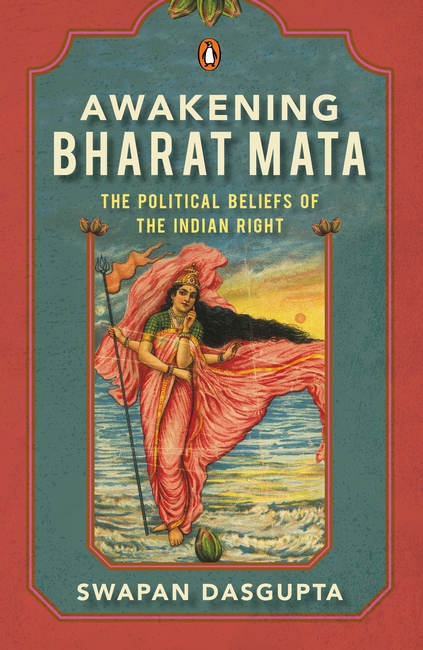
The rise of the Bharatiya Janata Party (BJP) was much more than an ordinary electoral phenomenon: it brought to the fore two contrasting views of nationhood: between those who saw modern India in terms of secular republicanism and on the other hand were those who sought to blend technological modernity with the country’s Hindu inheritance. The Right’s ascendancy and the debates that accompanied it, anticipated many of the concerns that find reflection today in the United States and Europe.
The phenomenon of Hindu nationalism was also a profound intellectual challenge to the loose Left-liberal consensus that had prevailed in India since Jawaharlal Nehru became Prime Minister in 1947. The idea of Hindutva and the political character of the BJP have been closely scrutinised by scholars, and the impulse has been to view India’s Right-wing politics as either a variant of fascism or merely a collection of sectarian prejudices.
In fact, the inspiration for the Right in India has come from multiple and often contradictory sources, including the influence of individuals such as Sarvarkar, Bankim Chandra Chatterjee, Swami Vivekananda and Sri Aurobindo, not to mention the Arya Samaj movement.
This collection is an attempt to showcase the phenomenon of Hindu nationalism in terms of how it perceives itself. Many of the concerns that drive the Indian Right are located in the country’s nationalist culture. In trying to locate some of the ideas, attitudes and beliefs that define the Indian Right, Awakening Bharat Mata also seeks to identify the nature of Indian conservatism and identify its similarities and differences with political thought in the West.
This book is not about Hindu nationalism in power but as a social and political movement and its aim is to encourage a more informed understanding of an idea that will remain relevant in Indian life far beyond victories and defeats in elections.

What are the key factors that win or lose elections in India? What does, or does not, make India’s democracy tick? Is this the end of anti-incumbency? Are opinion polls and exit polls reliable? How pervasive is the ‘fear factor’? Does the Indian woman’s vote matter? Does the selection of candidates impact results? Are elections becoming more democratic or less so? Can electronic voting machines (EVMs) be fiddled with? Can Indian elections be called ‘a jugaad system’?
Published on the eve of India’s next general elections, The Verdict uses rigorous psephology, original research and as-yet-undisclosed facts to talk about the entire span of India’s electoral history from the first elections in 1952. Crucially, for 2019, it provides pointers to look out for, to see if the incumbent government will win or lose.
Written by Prannoy Roy, renowned for his knack of demystifying electoral politics, and Dorab R. Sopariwala, this book is compulsory reading for anyone interested in politics and elections in India.

The 2014 Lok Sabha elections saw the involvement of India’s youth like never before. They were debating inside classrooms, sitting for dharnas on the street, having conversations in offices and on social media. The election in 2014 saw 150 million young voters—and the highest number of first-time voters in India.
And yet, the average age of our parliamentarians is sixty-three. Our leaders are almost four decades older than the average twenty-five-year-old.
In The Young and the Restless, Gurmehar Kaur, student activist and author of Small Acts of Freedom, follows the journeys of eight youth leaders, their aspirations for the country’s youth, their aspirations for themselves and, most importantly, their aspirations for the nation. She explores whether their politics only mimics that of the older party leaders or if they have the ideas, passion and motivation of the demographic they represent.

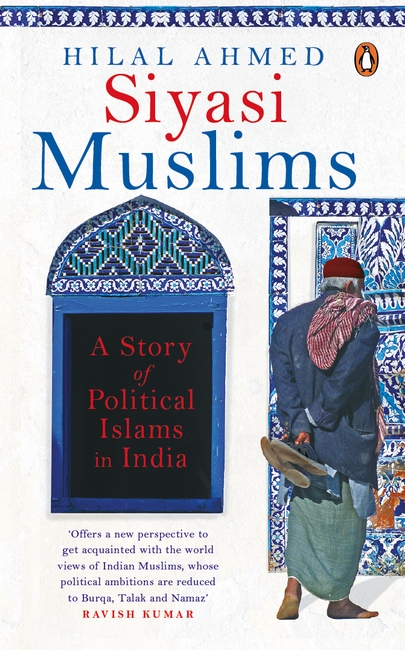
How do we make sense of the Muslims of India?
Do they form a political community?
Does the imagined conflict between Islam and modernity affect the Muslims’ political behaviour in this country?
Are Muslim religious institutions-mosques and madrasas-directly involved in politics?
Do they instruct the community to vote strategically in all elections?
What are ‘Muslim issues’?
Is it only about triple talaq?
Are Muslims truly nationalists? Or do they continue to remain just an ‘other’ in India?
While these questions intrigue us, we seldom debate to find pragmatic answers to these queries. Examining the everydayness of Muslims in contemporary India, Hilal Ahmed offers an evocative story of politics and Islam in India, which goes beyond the given narratives of Muslim victimhood and Islamic separation.
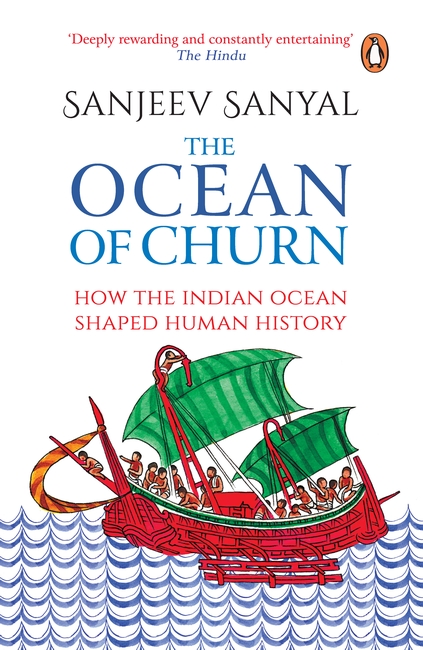
In this ambitious book, bestselling author Sanjeev Sanyal chronicles the grand sweep of history from East Africa to Australia, conjuring the great cities of Angkor and Vijayanagar, medieval Arab empires and Chinese ‘treasure fleets’ in rich, vivid detail. He explores remote archaeological sites, maritime trading networks and half-forgotten oral tales to challenge established historical narratives with fresh evidence. Shining new light on medieval geopolitics and long-lost cities, The Ocean of Churn is a mesmerizing journey into the heart of a vibrant civilization.