



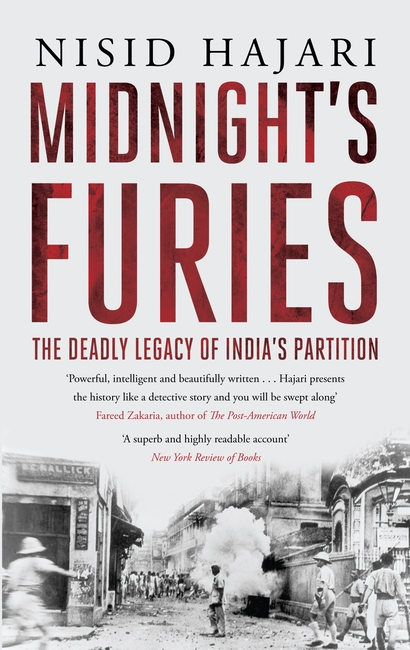
From nuclear proliferation to Jihadi terrorism, the Partition of India continues to cast a long shadow even today
Nobody expected the liberation of India and the birth of Pakistan to be so bloody. But in 1946, a full year before Independence, a terrible cycle of riots began, starting with Calcutta and going on to engulf many parts of the country. As the British rushed to leave, thousands of Hindus, Muslims and Sikhs were brutally killed in communal violence. This book vividly recreates that tragic period through personal stories and eyewitness accounts, and recounts the complex relationships between Nehru, Patel, Jinnah and Mountbatten. It shows how Partition, which has created such a wide gulf between two countries whose people have so much in common, has given birth to global terrorism and dangerous nuclear proliferation today.
Catagory: Politics
The Doctor and the Saint
To best understand and address the inequality in India today, Arundhati Roy insists we must examine both the political development and influence of M.K. Gandhi and why B.R. Ambedkar’s brilliant challenge to his near-divine status was suppressed by India’s elite. In Roy’s analysis, we see that Ambedkar’s fight for justice was systematically sidelined in favor of policies that reinforced caste, resulting in the current nation of India: independent of British rule, globally powerful, and marked to this day by the caste system.
This book situates Ambedkar’s arguments in their vital historical context-namely, as an extended public political debate with Mohandas Gandhi. ‘For more than half a century-throughout his adult life-[Gandhi’s] pronouncements on the inherent qualities of black Africans, untouchables and the laboring classes remained consistently insulting,’ writes Roy. ‘His refusal to allow working-class people and untouchables to create their own political organizations and elect their own representatives remained consistent too.’
In The Doctor and the Saint, Roy exposes some uncomfortable, controversial, and even surprising truths about the political thought and career of India’s most famous and most revered figure. In doing so she makes the case for why Ambedkar’s revolutionary intellectual achievements must be resurrected, not only in India but throughout the world.
Partitions of the Heart
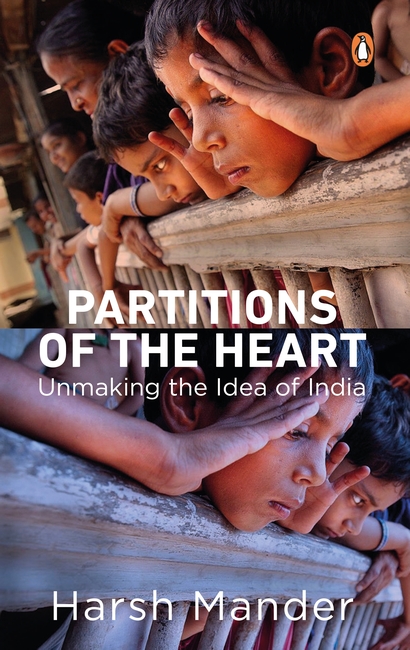
There was one partition of the land in 1947. Harsh Mander believes that another partition is underway in our hearts and minds.
How much of this culpability lies with ordinary people? What are the responsibilities of a secular government, of a civil society, and of a progressive majority? In Partitions of the Heart: Unmaking the Idea of India, human rights and peace worker Harsh Mander takes stock of whether the republic has upheld the values it set out to achieve and offers painful, unsparing insight into the contours of hate violence. Through vivid stories from his own work, Mander shows that hate speech, communal propaganda and vigilante violence are mounting a fearsome climate of dread, that targeted crime is systematically fracturing our community, and that the damage to the country’s social fabric may be irreparable. At the same time, he argues that hate can indeed be fought, but only with solidarity, reconciliation and love, and when all of these are founded on fairness.
Ultimately, this meticulously researched social critique is a rallying cry for public compassion, conscience and justice, and a paean to the resilience of humanity.
RSS

The RSS is the most influential cultural organization in India today, with affiliates in fields as varied as politics, education and trade. This book fundamentally addresses three key questions: Why has the Rashtriya Swayamsevak Sangh (RSS) and its affiliates expanded so rapidly over the past twenty-five years? How have they evolved in response to India’s new socio-economic milieu? How does their rapid growth impact the country’s politics and policy?
With unprecedented access, Walter K. Andersen and Shridhar D. Damle lift the curtains to help us understand the inner workings of the Sangh.
Backed by deep research and case studies, this book explores the evolution of the Sangh into its present form, its relationship with the ruling party, the BJP, their overseas affiliates and so much more.
The Lost Rebellion
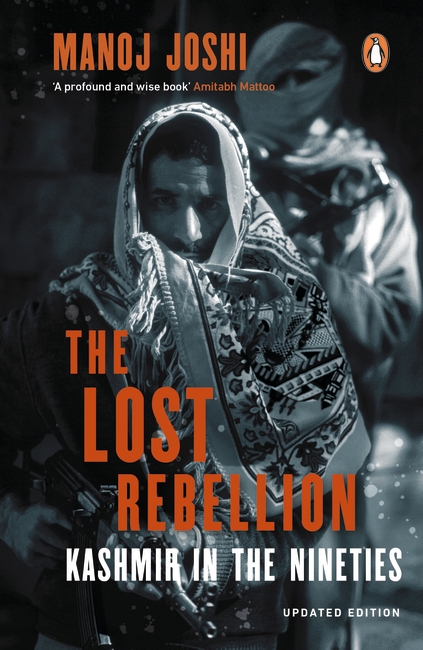
The Lost Rebellion is an acclaimed classic on the rise of Kashmir militancy, which chronicles how a simple call for azadi by bands of disgruntled youth was transformed within a year into a full-scale jihad against India. It dwells at length on Pakistan’s proxy war against India, exposes the US position on Kashmir and unsparingly critiques the political bungling and bureaucratic ineptitude that hamstrung the fight against insurgency.
This updated edition includes an insightful foreword by Amitabh Mattoo, a new introduction and a detailed aftermath chapter on what has transpired in the new millennium. Manoj Joshi reveals that although violence has come down drastically, there has been no closure to the nearly three-decade-old conflict. The alienation of the Kashmiris has, if anything, grown and is now manifesting itself in violent civil protest.
Raw, compelling and meticulously researched, The Lost Rebellion is a riveting account of the human drama that lies at the heart of the crisis that is Kashmir.
‘In its sheer wealth of detail it far surpasses anything that has been written so far’-Prem Shankar Jha
‘A compelling and breathtaking account’-Sumit Ganguly
‘The best book on the Kashmir militancy’-Ashok Banker
India’s Struggle For Independence
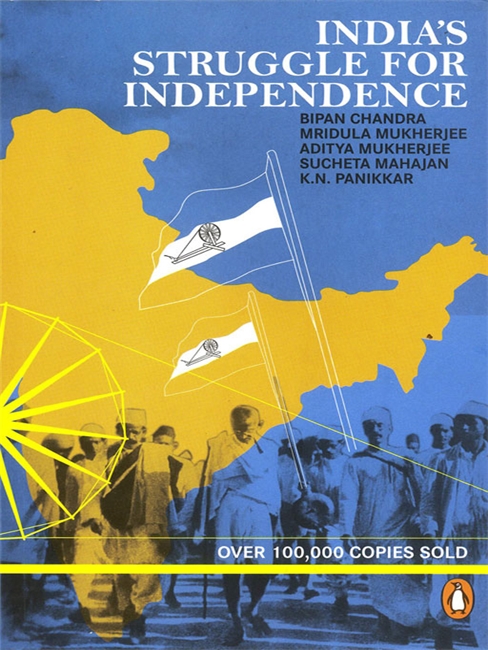
The definitive book on the Indian struggle for freedom by some of the most authoritative historians of modern India by best-selling author Bipin Chandra. Over 3,50,000 copies sold.
“Indispensable for students and for all those who want to know our past in order to understand the present” – Indian Express
India’s Struggle for Independence is the first and most reliable study of India’s epic struggle for freedom. This classic work begins with the abortive revolt against the British in 1857 and culminates in Indian Independence in 1947. Based on years of research as well as personal interviews with hundreds of freedom fighters, it presents a lucid and enduring view of the history of the period.
In The Name Of Democracy
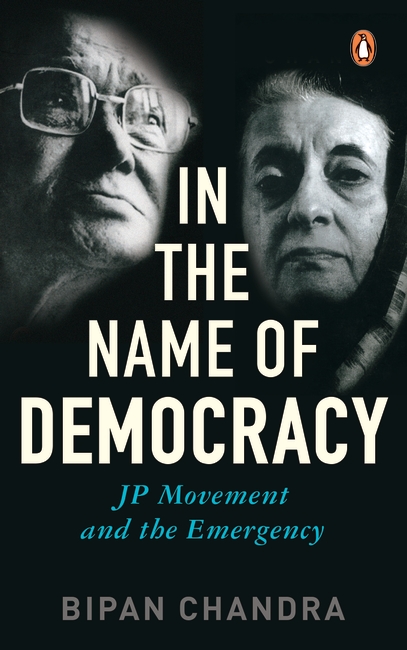
An unusual and insightful perspective of Indian democracy’s dark hour
‘When Jayaprakash Narayan, the leader of the JP movement in north India, pressed for the resignation of Prime Minister Indira Gandhi, it prompted her to impose internal Emergency. In this fascinating account, Bipan Chandra traces the events that led up to this moment and makes some startling revelations. He finds that there was a real danger of the JP movement turning fascist, given the fuzzy ideology of Total Revolution, its confused leadership and dependence on the RSS for its organization. At the same time, despite the authoritarianism inherent in the Emergency, particularly with the rising power of Sanjay Gandhi and his Youth Congress brigade, Indira Gandhi did end it and call for elections.
Finely argued, incisive and original, this book offers significant insight into those turbulent years and joins the ever-relevant debate on the acceptable limits of popular protest in a democracy.
The Lost Decade (2008-18)
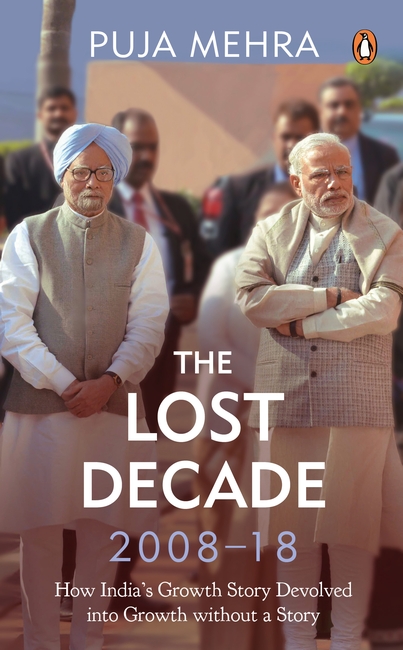
Before the global financial meltdown of 2008, India’s economy was thriving and its
GDP growth was cruising at an impressive 8.8 per cent. The economic boom impacted
a large section of Indians, even if unequally. With sustained high growth over an extended
period, India could have achieved what economists call a ‘take-off’ (rapid and
self-sustained GDP growth). The global financial meltdown disrupted this
momentum in 2008.
In the decade that followed, each time the country’s economy came close to returning
to that growth trajectory, political events knocked it off course.
In 2019, India’s GDP is growing at the rate of 7 per cent, making it the fastest-growing
major economy in the world, but little on the ground suggests that Indians are actually
better off. Economic discontent and insecurity are on the rise, farmers are restive and
land-owning classes are demanding quotas in government jobs. The middle
class is palpably disaffected, the informal economy is struggling and big businesses
are no longer expanding aggressively.
India is not the star it was in 2008 and in effect, the ‘India growth story’ has devolved
into ‘growth without a story’. The Lost Decade tells the story of the slide
and examines the political context in which the Indian economy failed to recover
lost momentum.
The Great Disappointment
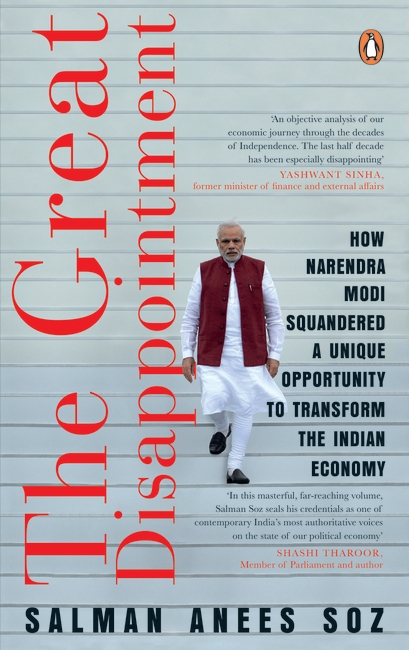
As the National Democratic Alliance (NDA) government completes its current term ahead of the General Elections 2019, it is time to evaluate its performance, specifically in terms of its management of the economy. This book is a critical assessment of five years of the brand of economics Prime Minister Narendra Modi has championed, often referred to as ‘Modinomics’.
Brought into power with the biggest political mandate in almost three decades, did the NDA government succeed in gainfully transforming India’s economic trajectory or did it squander a once-in-a-generation opportunity? The book conjectures it is the latter, and analyses why the Modi government’s stewardship of the economy is a ‘great disappointment’.
An India Reimagined
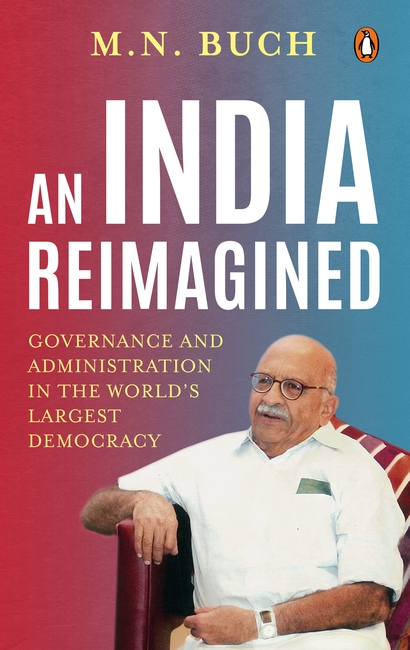
‘The civil servant who spoke truth to power’-Ramachandra Guha
M.N. Buch, known as the architect of Bhopal, was awarded the Padma Bhushan in 2011. He studied economics at Cambridge University before joining the Indian Administrative Service (IAS) in 1957. He famously wrote five letters to former Prime Minister Manmohan Singh-ranging from the deterioration of the Indian Institutes of Technology (IITs) to Indo-American relations and how India must not be deferential to the US, and to assert the country’s right to help rebuild Afghanistan.
This book is a collection of twenty articles that have been divided into six major themes, namely the IAS, reforms (police, judiciary and electoral system), economics, social challenges (health, corruption and reservation), and governance and environment. Original and thought-provoking, this is a must-read for those concerned with the idea of India and how change can be brought.