Twenty years, a thousand pages, and now a single beautiful edition of Arundhati Roy’s complete non-fiction.
My Seditious Heart collects the work of a two-decade period when Arundhati Roy devoted herself to the political essay as a way of opening up space for justice, rights and freedoms in an increasingly hostile environment. Taken together, these essays trace her twenty year journey from the Booker Prize-winning The God of Small Things to the extraordinary The Ministry of Utmost Happiness: a journey marked by compassion, clarity and courage. Radical and readable, they speak always in defence of the collective, of the individual and of the land, in the face of the destructive logic of financial, social, religious, military and governmental elites.
In constant conversation with the themes and settings of her novels, the essays form a near-unbroken memoir of Arundhati Roy’s journey as both a writer and a citizen, of both India and the world, from ‘The End of Imagination’, which begins this book, to ‘My Seditious Heart’, with which it ends.

What can best illustrate India’s journey in the last seven decades? Disruptions.
Almost every decade of India’s history since Independence has been marked by major disruptions.
India became independent through an act of disruption-Partition-that killed millions in communal violence and turned many more into refugees. The turn towards a model of state-led economic development delivered as big a shock to the economy as did the food crisis or the spike in crude oil price. If the Emergency in 1975 shook the foundations of India’s democracy, the unprecedented balance-of-payments crisis of 1990 turned India towards a path of economic reforms. Just as the reservation of jobs for backward castes changed the idiom of India’s politics, the movement for building a temple for Ram drove India closer to becoming a majoritarian state. No less disruptive have been the telecom revolution, the banking crisis, demonetization and the launch of the goods and services tax.
How did these disruptions impact India? How did they influence the rise of this Goliath?
This is the story of twelve disruptions that changed India. The book also provides a peek into the kind of disruptions India could face in the coming years.

Contributors draw on a wide array of new material, from recently opened archival sources to literature and film, and meld approaches from diplomatic history to development studies to explain the choices India made and to frame the decisions by its policymakers. Together, the essays demonstrate how India became a powerful symbol of decolonization and an advocate of non-alignment, disarmament and global governance as it stood between the United States and the Soviet Union, actively fostering dialogue and attempting to forge friendships without entering into formal alliances. Sweeping in its scope yet nuanced in its analysis, this is the authoritative account of India and the Cold War.

A motley array of sailors and stowaways, coolies and convicts is sailing down the Hooghly aboard the Ibis on its way to Mauritius. As they journey across the Indian Ocean old family ties are washed away, and they begin to view themselves as jahaj-bhais or ship brothers who will build new lives for themselves in the remote islands where they are
being taken. A stunningly vibrant and intensely human work, Sea of Poppies, the first book in the Ibis trilogy, confirms Amitav Ghosh’s reputation as a master storyteller.

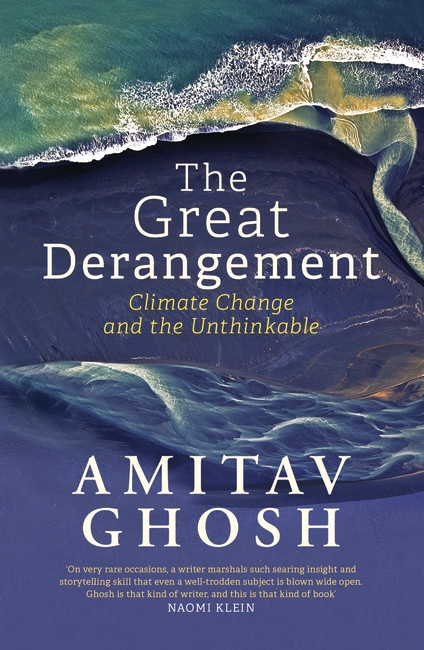
ARE WE DERANGED?
One of India’s greatest writers, Amitav Ghosh, argues that future generations may well think so. How else can we explain our imaginative failure in the face of global warming? In this groundbreaking return to non-fiction, Ghosh examines our inability-at the level of literature, history and politics-to grasp the scale and violence of climate change. The climate crisis asks us to imagine other forms of human existence-a task to which fiction, Ghosh argues, is the best suited of all forms. The Great Derangement serves as a brilliant writer’s summons to confront the most urgent task of our time.
‘An absorbing narrative on the subject, the impact of which is getting closer with each passing day’ HINDUSTAN TIMES
‘[A] broad-ranging and consistently stimulating indictment of our era . . . a bracing reminder that there is no more vital task for writers and artists than to clear the intellectual dead wood of a vulgarly boosterish age and create space for apocalyptic thinking-which may at least delay, if not avert, the catastrophes ahead’ GUARDIAN
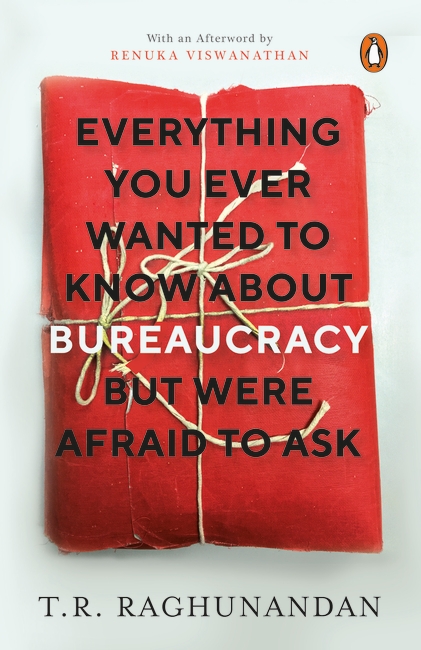
Whatever its faults, the Indian bureaucracy cannot be accused of bias when it comes to confounding those who have to deal with it. Veteran insiders who return to it with their petitions after retirement are as clueless about how it functions as freshly minted supplicants. Outsiders in any case have little knowledge of who is responsible for what and why or how to navigate that critical proposal through the treacherous shoals of the secretariat.
At the top of the heap is the fast-tracked elite civil servant, who belongs to a group of generalist and specialized services selected through a competitive examination. The aura of the Indian Administrative Service has remained intact over the years.
Lack of awe, bordering on civilized disrespect, is a most effective learning tool. In this humorous, practical book, T.R. Raghunandan aims to deconstruct the structure of the bureaucracy and how it functions, for the understanding of the common person and replaces the anxiety that people feel when they step into a government office with a healthy dollop of irreverence.

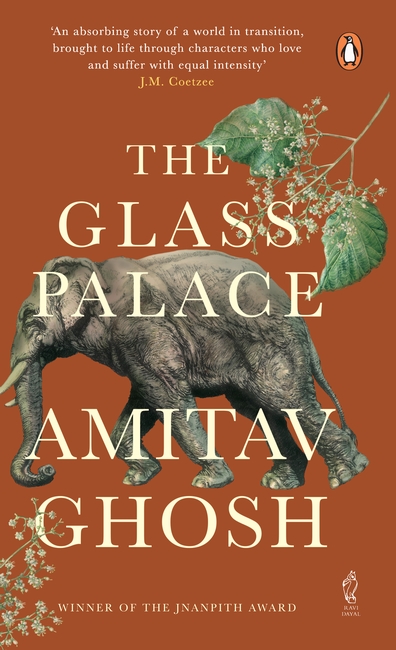
Set in Burma during the British invasion of 1885, this masterly novel tells the story of Rajkumar, a poor boy lifted on the tides of political and social chaos, who goes on to create an empire in the Burmese teak forest. When soldiers force the royal family out of the Glass Palace and into exile, Rajkumar befriends Dolly, a young woman in the court of the Burmese queen, whose love will shape his life. He cannot forget her, and years later, as a rich man, he goes in search of her. Through this brilliant and impassioned story of love and war, Amitav Ghosh presents a ruthless appraisal of the horrors of colonialism and capitalist exploitation.

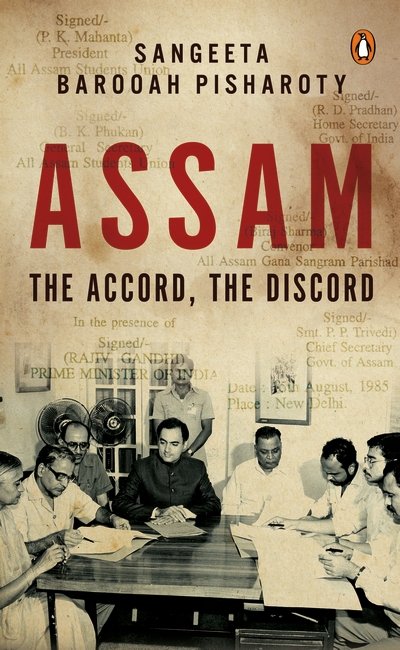
The Assam Accord, which sought to end a six-year-long agitation against illegal immigrants in Assam, was signed between members of the All Assam Students Union (AASU), and state and central governments just a few hours before Rajiv Gandhi was to deliver the Independence Day address in 1985. Immediately afterwards, the student leaders were catapulted from their hostel rooms into the corridors of power. Their party, the Asom Gana Parishad (AGP), was voted to power the same year, with Prafulla Kumar Mahanta becoming the youngest ever chief minister of an Indian state.
Key clauses of the Assam Accord remained unimplemented during Mahanta’s often controversial tenures (1985-1990, 1996-2001), and through three terms of Congress rule, which ended with the BJP’s victory in the state in 2016. Central to the Accord was deportation of those who could not prove their roots in India prior to 24 March 1971. In 2015, the process of updating the National Register of Citizens (NRC) based on the 1971 cut-off of the Accord began. The first list was released in December 2017, and did not include 14 million names.
Assam: The Accord, The Discord looks at the making of the Assam Accord and its long shadow on the state, through political gamesmanship between principle players, periods of ULFA and Bodo militancies, and right-wing propaganda that has split the state along communal lines.
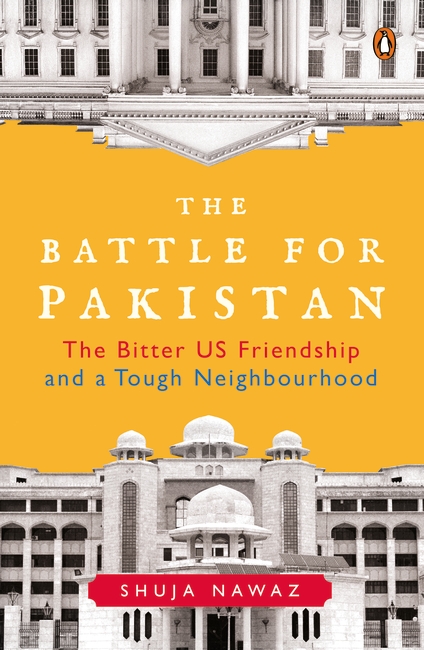
The Battle for Pakistan showcases a marriage of convenience between unequal partners. The relationship between Pakistan and the United States since the early 1950s has been nothing less than a whiplash-inducing rollercoaster ride. Today, surrounded by hostile neighbours, with Afghanistan increasingly under Indian influence, Pakistan does not wish to break ties with the US. Nor does it want to become a vassal of China and get caught in the vice of a US-China rivalry, or the Arab-Iran conflict.
Internally, massive economic and demographic challenges as well as the existential threat of armed militancy pose huge obstacles to Pakistan’s development and growth. Could its short-run political miscalculations in the Obama years prove too costly? Can the Trump administration help salvage this relationship?
Based on extensive travel in the region, frequent policy interactions and many on-the-record interviews with key leaders, The Battle for Pakistan untangles the complex US relationship in the past decade. Shuja Nawaz identifies the path forward, provided US and Pakistani leaders make the right choices for the longer term.

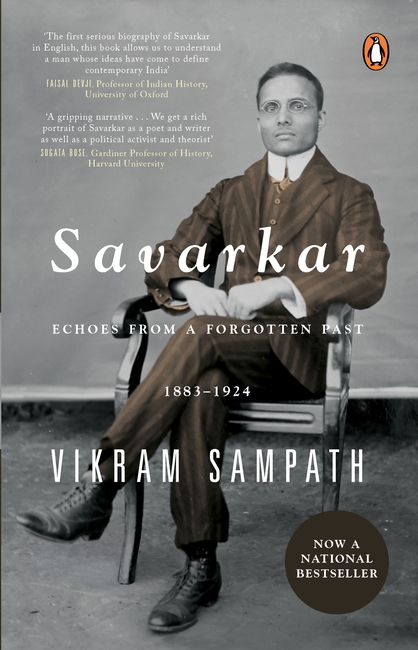
As the intellectual fountainhead of the ideology of Hindutva, which is in political ascendancy in India today, Vinayak Damodar Savarkar is undoubtedly one of the most contentious political thinkers and leaders of the twentieth century. Accounts of his eventful and stormy life have oscillated from eulogizing hagiographies to disparaging demonization. The truth, as always, lies somewhere in between and has unfortunately never been brought to light. Savarkar and his ideology stood as one of the strongest and most virulent opponents of Gandhi, his pacifist philosophy and the Indian National Congress.
An alleged atheist and a staunch rationalist who opposed orthodox Hindu beliefs, encouraged inter-caste marriage and dining, and dismissed cow worship as mere superstition, Savarkar was, arguably, the most vocal political voice for the Hindu community through the entire course of India’s freedom struggle. From the heady days of revolution and generating international support for the cause of India’s freedom as a law student in London, Savarkar found himself arrested, unfairly tried for sedition, transported and incarcerated at the Cellular Jail, in the Andamans, for over a decade, where he underwent unimaginable torture.
From being an optimistic advocate of Hindu-Muslim unity in his treatise on the 1857 War of Independence, what was it that transformed him in the Cellular Jail to a proponent of ‘Hindutva’, which viewed Muslims with suspicion?
Drawing from a vast range of original archival documents across India and abroad, this biography in two parts-the first focusing on the years leading up to his incarceration and eventual release from the Kalapani-puts Savarkar, his life and philosophy in a new perspective and looks at the man with all his achievements and failings.