The rise of the Bharatiya Janata Party (BJP) was much more than an ordinary electoral phenomenon: it brought to the fore two contrasting views of nationhood: between those who saw modern India in terms of secular republicanism and on the other hand were those who sought to blend technological modernity with the country’s Hindu inheritance. The Right’s ascendancy and the debates that accompanied it, anticipated many of the concerns that find reflection today in the United States and Europe.
The phenomenon of Hindu nationalism was also a profound intellectual challenge to the loose Left-liberal consensus that had prevailed in India since Jawaharlal Nehru became Prime Minister in 1947. The idea of Hindutva and the political character of the BJP have been closely scrutinised by scholars, and the impulse has been to view India’s Right-wing politics as either a variant of fascism or merely a collection of sectarian prejudices.
In fact, the inspiration for the Right in India has come from multiple and often contradictory sources, including the influence of individuals such as Sarvarkar, Bankim Chandra Chatterjee, Swami Vivekananda and Sri Aurobindo, not to mention the Arya Samaj movement.
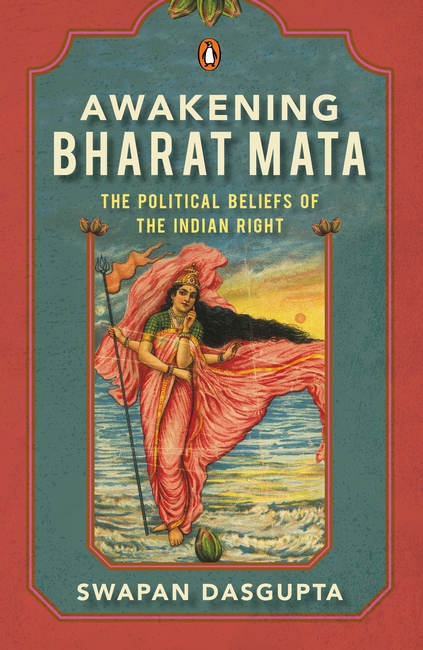
This collection is an attempt to showcase the phenomenon of Hindu nationalism in terms of how it perceives itself. Many of the concerns that drive the Indian Right are located in the country’s nationalist culture. In trying to locate some of the ideas, attitudes and beliefs that define the Indian Right, Awakening Bharat Mata also seeks to identify the nature of Indian conservatism and identify its similarities and differences with political thought in the West.
This book is not about Hindu nationalism in power but as a social and political movement and its aim is to encourage a more informed understanding of an idea that will remain relevant in Indian life far beyond victories and defeats in elections.

What are the key factors that win or lose elections in India? What does, or does not, make India’s democracy tick? Is this the end of anti-incumbency? Are opinion polls and exit polls reliable? How pervasive is the ‘fear factor’? Does the Indian woman’s vote matter? Does the selection of candidates impact results? Are elections becoming more democratic or less so? Can electronic voting machines (EVMs) be fiddled with? Can Indian elections be called ‘a jugaad system’?
Published on the eve of India’s next general elections, The Verdict uses rigorous psephology, original research and as-yet-undisclosed facts to talk about the entire span of India’s electoral history from the first elections in 1952. Crucially, for 2019, it provides pointers to look out for, to see if the incumbent government will win or lose.
Written by Prannoy Roy, renowned for his knack of demystifying electoral politics, and Dorab R. Sopariwala, this book is compulsory reading for anyone interested in politics and elections in India.

The 2014 Lok Sabha elections saw the involvement of India’s youth like never before. They were debating inside classrooms, sitting for dharnas on the street, having conversations in offices and on social media. The election in 2014 saw 150 million young voters—and the highest number of first-time voters in India.
And yet, the average age of our parliamentarians is sixty-three. Our leaders are almost four decades older than the average twenty-five-year-old.
In The Young and the Restless, Gurmehar Kaur, student activist and author of Small Acts of Freedom, follows the journeys of eight youth leaders, their aspirations for the country’s youth, their aspirations for themselves and, most importantly, their aspirations for the nation. She explores whether their politics only mimics that of the older party leaders or if they have the ideas, passion and motivation of the demographic they represent.

How do we make sense of the Muslims of India?
Do they form a political community?
Does the imagined conflict between Islam and modernity affect the Muslims’ political behaviour in this country?
Are Muslim religious institutions-mosques and madrasas-directly involved in politics?
Do they instruct the community to vote strategically in all elections?
What are ‘Muslim issues’?
Is it only about triple talaq?
Are Muslims truly nationalists? Or do they continue to remain just an ‘other’ in India?
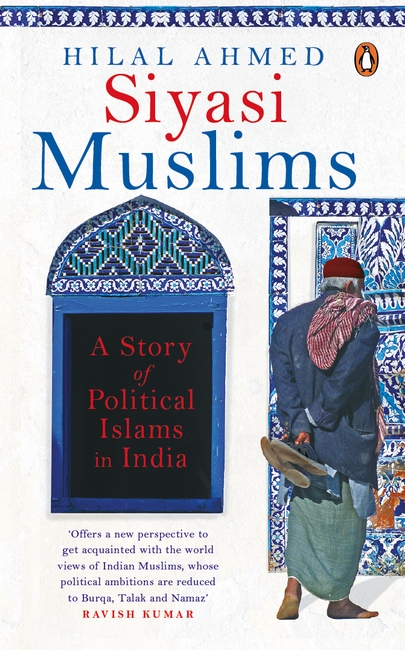
While these questions intrigue us, we seldom debate to find pragmatic answers to these queries. Examining the everydayness of Muslims in contemporary India, Hilal Ahmed offers an evocative story of politics and Islam in India, which goes beyond the given narratives of Muslim victimhood and Islamic separation.
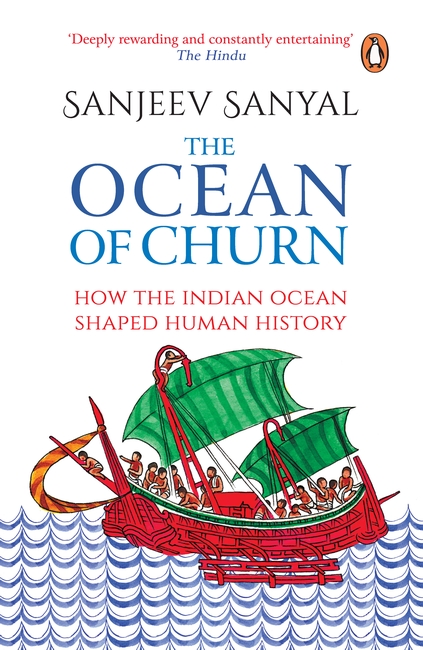
In this ambitious book, bestselling author Sanjeev Sanyal chronicles the grand sweep of history from East Africa to Australia, conjuring the great cities of Angkor and Vijayanagar, medieval Arab empires and Chinese ‘treasure fleets’ in rich, vivid detail. He explores remote archaeological sites, maritime trading networks and half-forgotten oral tales to challenge established historical narratives with fresh evidence. Shining new light on medieval geopolitics and long-lost cities, The Ocean of Churn is a mesmerizing journey into the heart of a vibrant civilization.

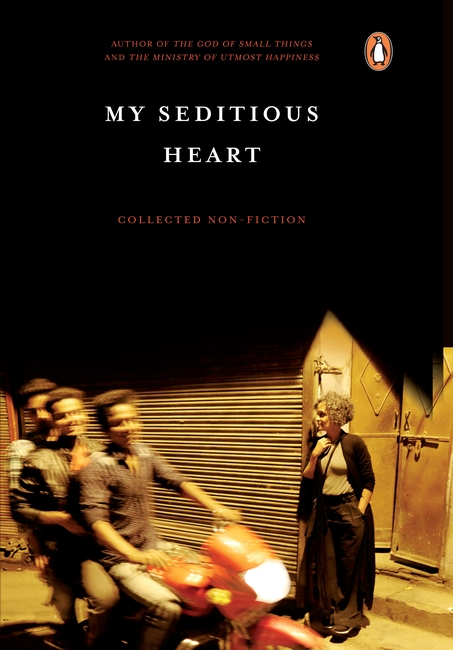
Twenty years, a thousand pages, and now a single beautiful edition of Arundhati Roy’s complete non-fiction.
My Seditious Heart collects the work of a two-decade period when Arundhati Roy devoted herself to the political essay as a way of opening up space for justice, rights and freedoms in an increasingly hostile environment. Taken together, these essays trace her twenty year journey from the Booker Prize-winning The God of Small Things to the extraordinary The Ministry of Utmost Happiness: a journey marked by compassion, clarity and courage. Radical and readable, they speak always in defence of the collective, of the individual and of the land, in the face of the destructive logic of financial, social, religious, military and governmental elites.
In constant conversation with the themes and settings of her novels, the essays form a near-unbroken memoir of Arundhati Roy’s journey as both a writer and a citizen, of both India and the world, from ‘The End of Imagination’, which begins this book, to ‘My Seditious Heart’, with which it ends.

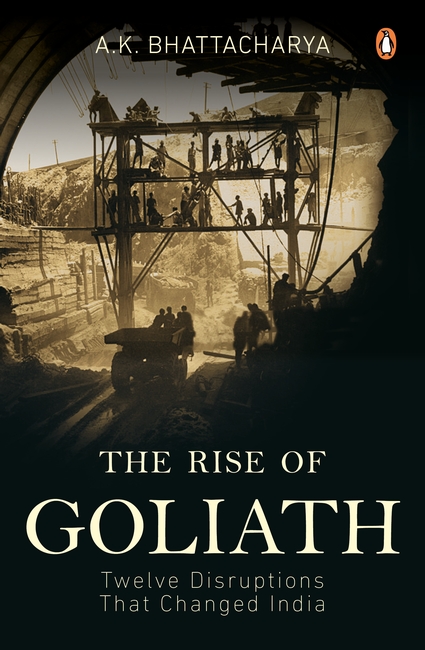
What can best illustrate India’s journey in the last seven decades? Disruptions.
Almost every decade of India’s history since Independence has been marked by major disruptions.
India became independent through an act of disruption-Partition-that killed millions in communal violence and turned many more into refugees. The turn towards a model of state-led economic development delivered as big a shock to the economy as did the food crisis or the spike in crude oil price. If the Emergency in 1975 shook the foundations of India’s democracy, the unprecedented balance-of-payments crisis of 1990 turned India towards a path of economic reforms. Just as the reservation of jobs for backward castes changed the idiom of India’s politics, the movement for building a temple for Ram drove India closer to becoming a majoritarian state. No less disruptive have been the telecom revolution, the banking crisis, demonetization and the launch of the goods and services tax.
How did these disruptions impact India? How did they influence the rise of this Goliath?
This is the story of twelve disruptions that changed India. The book also provides a peek into the kind of disruptions India could face in the coming years.

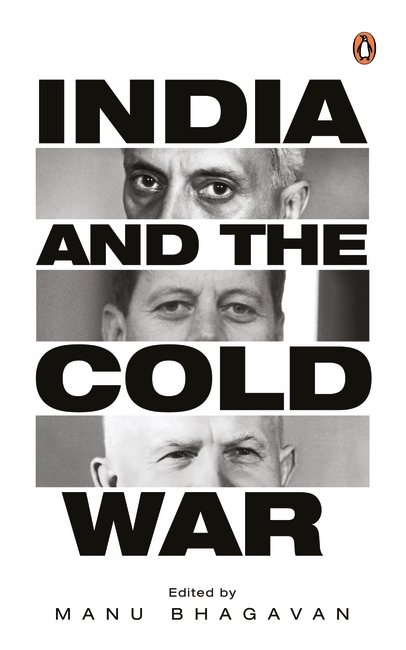
Contributors draw on a wide array of new material, from recently opened archival sources to literature and film, and meld approaches from diplomatic history to development studies to explain the choices India made and to frame the decisions by its policymakers. Together, the essays demonstrate how India became a powerful symbol of decolonization and an advocate of non-alignment, disarmament and global governance as it stood between the United States and the Soviet Union, actively fostering dialogue and attempting to forge friendships without entering into formal alliances. Sweeping in its scope yet nuanced in its analysis, this is the authoritative account of India and the Cold War.

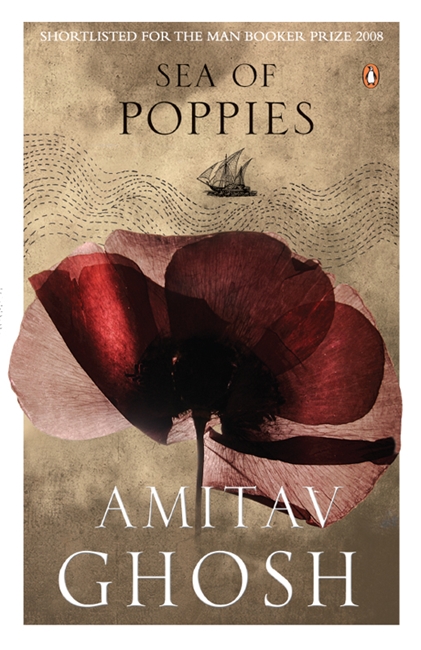
A motley array of sailors and stowaways, coolies and convicts is sailing down the Hooghly aboard the Ibis on its way to Mauritius. As they journey across the Indian Ocean old family ties are washed away, and they begin to view themselves as jahaj-bhais or ship brothers who will build new lives for themselves in the remote islands where they are
being taken. A stunningly vibrant and intensely human work, Sea of Poppies, the first book in the Ibis trilogy, confirms Amitav Ghosh’s reputation as a master storyteller.
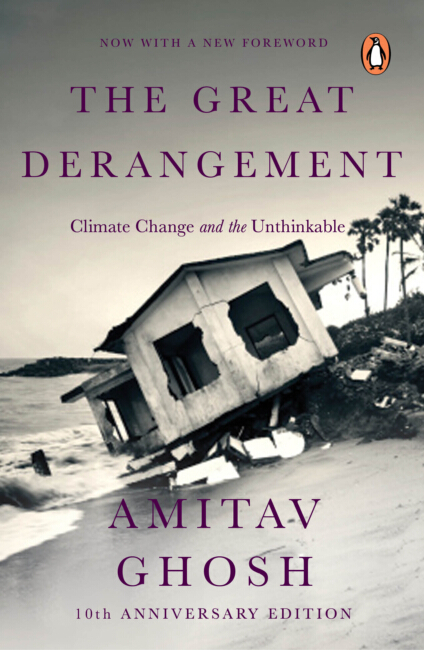
ARE WE DERANGED?
One of India’s greatest writers, Amitav Ghosh, argues that future generations may well think so. How else can we explain our imaginative failure in the face of global warming? In this groundbreaking return to non-fiction, Ghosh examines our inability-at the level of literature, history and politics-to grasp the scale and violence of climate change. The climate crisis asks us to imagine other forms of human existence-a task to which fiction, Ghosh argues, is the best suited of all forms. The Great Derangement serves as a brilliant writer’s summons to confront the most urgent task of our time.
‘An absorbing narrative on the subject, the impact of which is getting closer with each passing day’ HINDUSTAN TIMES
‘[A] broad-ranging and consistently stimulating indictment of our era . . . a bracing reminder that there is no more vital task for writers and artists than to clear the intellectual dead wood of a vulgarly boosterish age and create space for apocalyptic thinking-which may at least delay, if not avert, the catastrophes ahead’ GUARDIAN