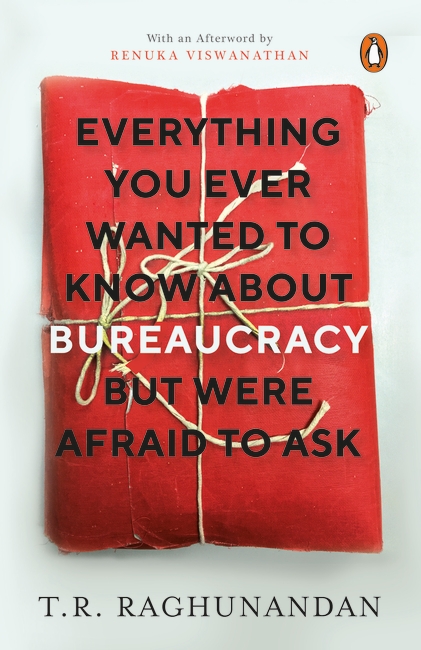
Whatever its faults, the Indian bureaucracy cannot be accused of bias when it comes to confounding those who have to deal with it. Veteran insiders who return to it with their petitions after retirement are as clueless about how it functions as freshly minted supplicants. Outsiders in any case have little knowledge of who is responsible for what and why or how to navigate that critical proposal through the treacherous shoals of the secretariat.
At the top of the heap is the fast-tracked elite civil servant, who belongs to a group of generalist and specialized services selected through a competitive examination. The aura of the Indian Administrative Service has remained intact over the years.
Lack of awe, bordering on civilized disrespect, is a most effective learning tool. In this humorous, practical book, T.R. Raghunandan aims to deconstruct the structure of the bureaucracy and how it functions, for the understanding of the common person and replaces the anxiety that people feel when they step into a government office with a healthy dollop of irreverence.

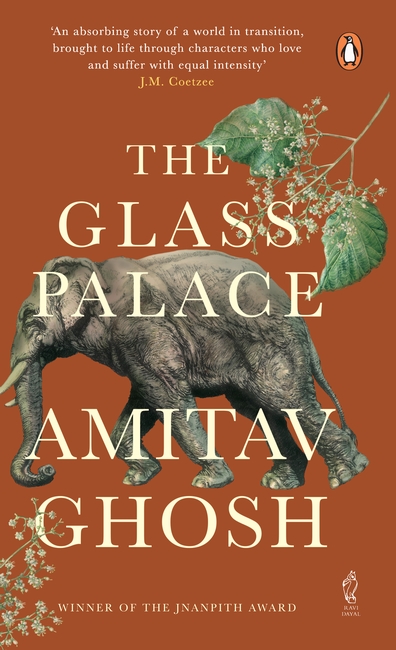
Set in Burma during the British invasion of 1885, this masterly novel tells the story of Rajkumar, a poor boy lifted on the tides of political and social chaos, who goes on to create an empire in the Burmese teak forest. When soldiers force the royal family out of the Glass Palace and into exile, Rajkumar befriends Dolly, a young woman in the court of the Burmese queen, whose love will shape his life. He cannot forget her, and years later, as a rich man, he goes in search of her. Through this brilliant and impassioned story of love and war, Amitav Ghosh presents a ruthless appraisal of the horrors of colonialism and capitalist exploitation.

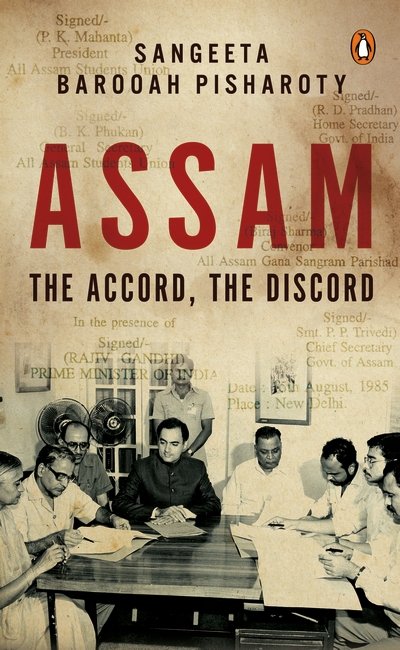
The Assam Accord, which sought to end a six-year-long agitation against illegal immigrants in Assam, was signed between members of the All Assam Students Union (AASU), and state and central governments just a few hours before Rajiv Gandhi was to deliver the Independence Day address in 1985. Immediately afterwards, the student leaders were catapulted from their hostel rooms into the corridors of power. Their party, the Asom Gana Parishad (AGP), was voted to power the same year, with Prafulla Kumar Mahanta becoming the youngest ever chief minister of an Indian state.
Key clauses of the Assam Accord remained unimplemented during Mahanta’s often controversial tenures (1985-1990, 1996-2001), and through three terms of Congress rule, which ended with the BJP’s victory in the state in 2016. Central to the Accord was deportation of those who could not prove their roots in India prior to 24 March 1971. In 2015, the process of updating the National Register of Citizens (NRC) based on the 1971 cut-off of the Accord began. The first list was released in December 2017, and did not include 14 million names.
Assam: The Accord, The Discord looks at the making of the Assam Accord and its long shadow on the state, through political gamesmanship between principle players, periods of ULFA and Bodo militancies, and right-wing propaganda that has split the state along communal lines.

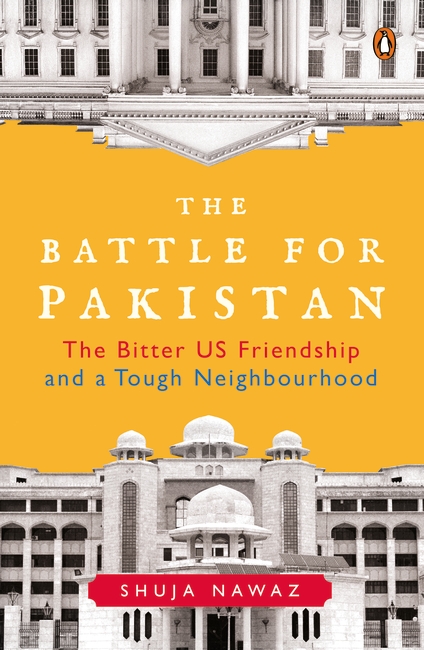
The Battle for Pakistan showcases a marriage of convenience between unequal partners. The relationship between Pakistan and the United States since the early 1950s has been nothing less than a whiplash-inducing rollercoaster ride. Today, surrounded by hostile neighbours, with Afghanistan increasingly under Indian influence, Pakistan does not wish to break ties with the US. Nor does it want to become a vassal of China and get caught in the vice of a US-China rivalry, or the Arab-Iran conflict.
Internally, massive economic and demographic challenges as well as the existential threat of armed militancy pose huge obstacles to Pakistan’s development and growth. Could its short-run political miscalculations in the Obama years prove too costly? Can the Trump administration help salvage this relationship?
Based on extensive travel in the region, frequent policy interactions and many on-the-record interviews with key leaders, The Battle for Pakistan untangles the complex US relationship in the past decade. Shuja Nawaz identifies the path forward, provided US and Pakistani leaders make the right choices for the longer term.

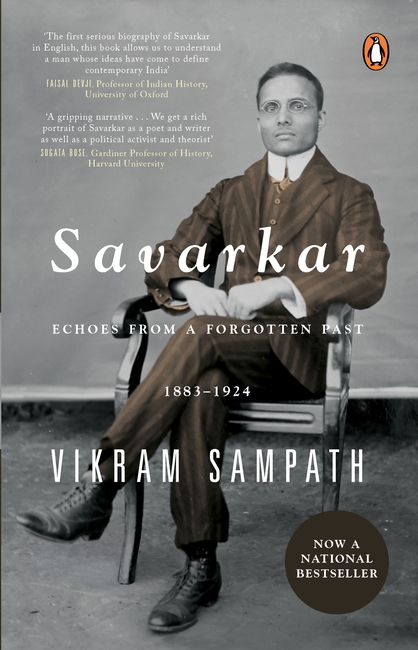
As the intellectual fountainhead of the ideology of Hindutva, which is in political ascendancy in India today, Vinayak Damodar Savarkar is undoubtedly one of the most contentious political thinkers and leaders of the twentieth century. Accounts of his eventful and stormy life have oscillated from eulogizing hagiographies to disparaging demonization. The truth, as always, lies somewhere in between and has unfortunately never been brought to light. Savarkar and his ideology stood as one of the strongest and most virulent opponents of Gandhi, his pacifist philosophy and the Indian National Congress.
An alleged atheist and a staunch rationalist who opposed orthodox Hindu beliefs, encouraged inter-caste marriage and dining, and dismissed cow worship as mere superstition, Savarkar was, arguably, the most vocal political voice for the Hindu community through the entire course of India’s freedom struggle. From the heady days of revolution and generating international support for the cause of India’s freedom as a law student in London, Savarkar found himself arrested, unfairly tried for sedition, transported and incarcerated at the Cellular Jail, in the Andamans, for over a decade, where he underwent unimaginable torture.
From being an optimistic advocate of Hindu-Muslim unity in his treatise on the 1857 War of Independence, what was it that transformed him in the Cellular Jail to a proponent of ‘Hindutva’, which viewed Muslims with suspicion?
Drawing from a vast range of original archival documents across India and abroad, this biography in two parts-the first focusing on the years leading up to his incarceration and eventual release from the Kalapani-puts Savarkar, his life and philosophy in a new perspective and looks at the man with all his achievements and failings.

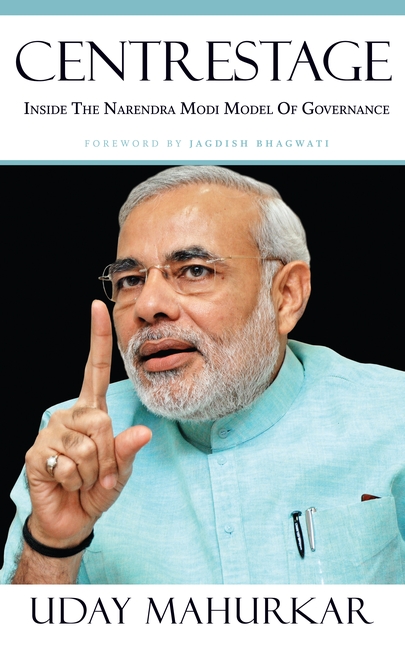
Is Narendra Modi’s government innovative and free of vote-bank politics? How did Narendra Modi bring 24-hour, three-phase domestic power supply to 18,000 villages in Gujarat? How did Modi turn the forlorn Kutch into a top tourist destination?
One of the most hotly debated topics in the general elections has been the development and governance of Narendra Modi’s government in Gujarat. In Centrestage, Uday Mahurkar tries to present a balanced assessment of Narendra Modi’s government by uncovering and analysing the Modi mantra of governance. With chapters on energy, technology, agriculture, finance and innovation, to name a few, Mahurkar aims at understanding and revealing the ground reality through facts and research beyond the media hype. Has Gujarat really made progress under Narendra Modi? Is Narendra Modi really a visionary and a good administrator? Read Centrestage to find out and get an insider’s view of Narendra Modi’s governance from a man who has followed him closely for the past three decades.
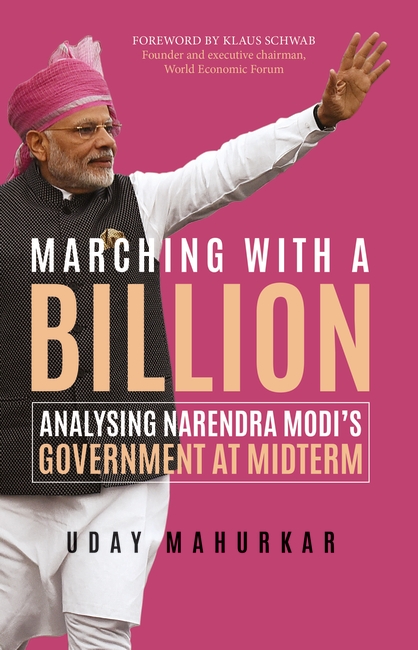
Will Modi pass the litmus test of governance? Does his performance match his promises?
In Marching with a Billion, Uday Mahurkar analyses the Modi government’s three years in power against the backdrop of years of policy paralysis and corruption before he came to power, leaving him with a stiff salvaging job. Focusing on key areas of governance like infrastructure, foreign affairs, power, the social sector, finance, digital technology and agriculture, the author showcases the work of the present government and the monumental changes the prime minister has brought about, including digital innovation and the uprooting of middlemen, which has resulted in an unprecedented level of transparency, and a resolute assault on poverty. He also points out some of the shortfalls of Modi’s government, subjecting it to critical evaluation. Will Modi become a great institution builder, a prerequisite to becoming a nation builder? What will be the long-term impact of demonetization on the economy? This book has the answers.

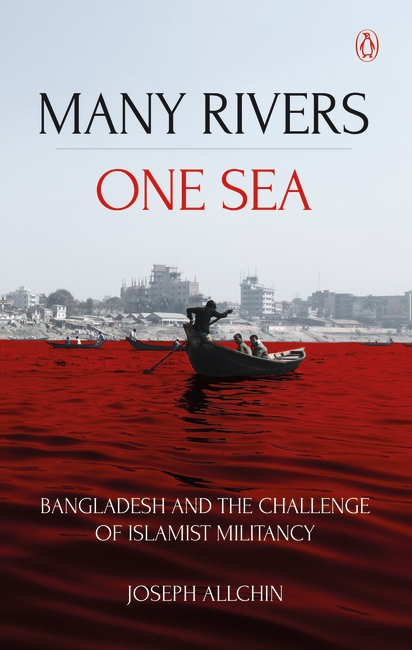
In July 2016, the world’s attention fell upon a café in a leafy Dhaka neighbourhood, as the barbarity of a distant ‘Caliphate’ was visited on this corner of South Asia. Twenty-nine died in the assault on the Holey Bakery, affixing an unbidden nightmare to the image of a supposedly tolerant Muslim nation.
Joseph Allchin dives into this burgeoning Muslim nation’s travails with extremism and politics in this penetrating work. Examining Bangladesh’s recent and not-so-recent past, Allchin explores a recent rise in Islamist politics, as well as violent terrorism. With a compelling blend of history, narrative journalism and political analysis, Allchin demonstrates how Bangladesh’s society and politics are starkly contemporary and relevant to our inter-connected world.
Delving into the local and global differences between political actors, he exposes the continued influence of the country’s independence struggle and global geopolitics on today’s tumultuous body politic. Scrutinizing the careers and dissensions of the country’s political rivals: current prime minister Sheikh Hasina, and her predecessor Khaleda Zia.
This deep-dive investigation examines the multitude of relationships between radical Islam and politics in India’s neighbourhood, laying bare the forces that seek to shape Bangladesh’s present and its destiny.

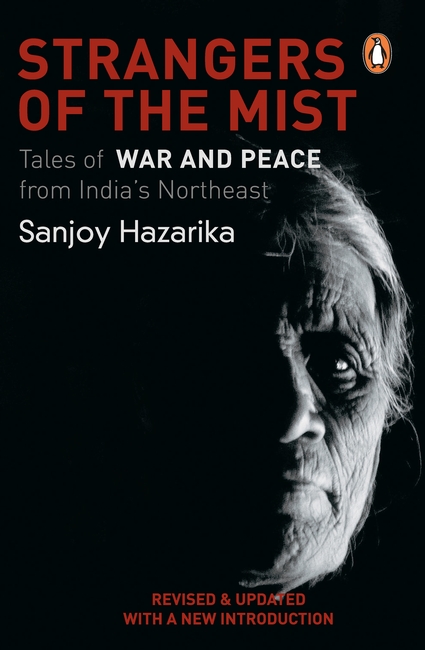
A classic on the festering issues in the North-east
In this insightful book, Hazarika systematically presents the developments in Assam and the neighbouring regions, from post-Independence onwards to the present day. He sheds light on possible causes and factors behind ethnic clashes, separatist outbreaks and political unrest, that this region has come to be known for. He candidly discusses the issue of migrating refugees from nearby countries to the north-eastern states, which has caused tension between the many ethnicities in these states. With a balanced and clear-eyed view, Hazarika urges the reader to take heed of the urgent situation in the region. Strangers of the Mist is considered a classic on the issues facing the North-east.

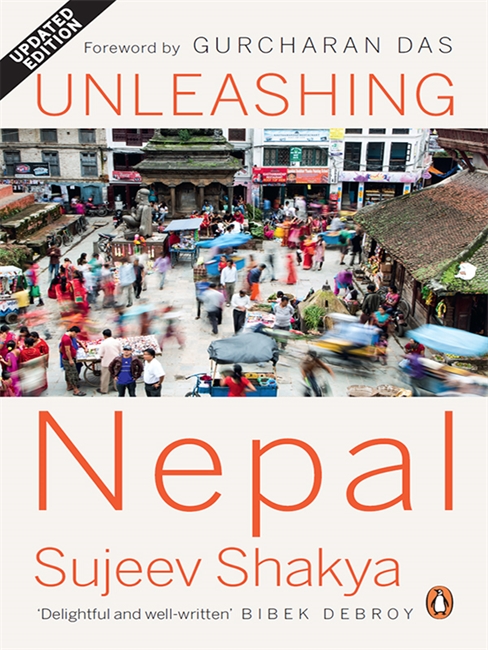
Unleashing Nepal tells the story of Nepal’s changing economy, from the time of unification to a remittance economy driven by the labour of Nepal’s diaspora. Acclaimed columnist and business leader Sujeev Shakya examines not only the squandered opportunities of the past but also what Nepali citizens need to do to escape from a feudal history of dependence and powerlessness. Here is a Nepal that could be an Asian Tiger. Here are resourceful village communities who manage their own electricity, aspirational Nepali youth, energetic migrant workers, and driven foreign-aid workers, who can make this dream a reality. Compelling and eminently readable, this updated and enriched version brings the country alive with its acute business understanding, humour and local colour.