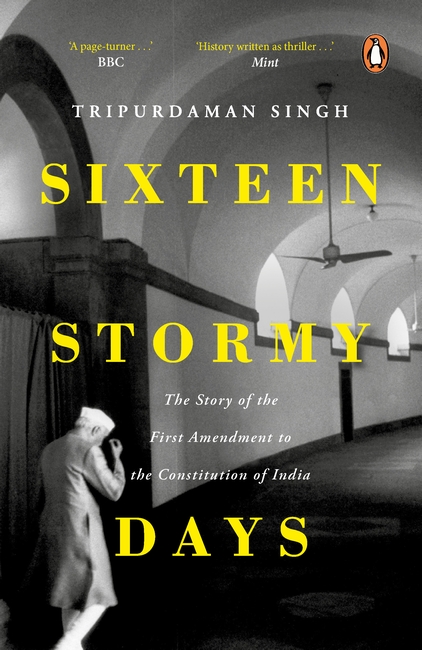
Sixteen Stormy Days narrates the riveting story of the First Amendment to the Constitution of India-one of the pivotal events in Indian political and constitutional history, and its first great battle of ideas. Passed in June 1951 in the face of tremendous opposition within and outside Parliament, the subject of some of independent India’s fiercest parliamentary debates, the First Amendment drastically curbed freedom of speech; enabled caste-based reservation by restricting freedom against discrimination; circumscribed the right to property and validated abolition of the zamindari system; and fashioned a special schedule of unconstitutional laws immune to judicial challenge. Enacted months before India’s inaugural election, the amendment represents the most profound changes that the Constitution has ever seen. Faced with an expansively liberal Constitution that stood in the way of nearly every major socio-economic plan in the Congress party’s manifesto, a judiciary vigorously upholding civil liberties, and a press fiercely resisting his attempt to control public discourse, Prime Minister Jawaharlal Nehru reasserted executive supremacy, creating the constitutional architecture for repression and coercion.
What extraordinary set of events led the prime minister-who had championed the Constitution when it was passed in 1950 after three years of deliberation-to radically amend it after a mere sixteen days of debate in 1951?
Drawing on parliamentary debates, press reports, judicial pronouncements, official correspondence and existing scholarship, Sixteen Stormy Days challenges conventional wisdom on iconic figures such as Jawaharlal Nehru, B.R. Ambedkar, Rajendra Prasad, Sardar Patel and Shyama Prasad Mookerji, and lays bare the vast gulf between the liberal promise of India’s Constitution and the authoritarian impulses of her first government.

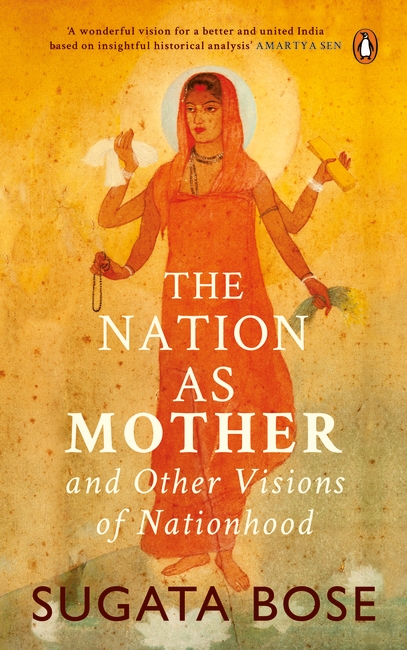
‘History matters in contemporary debates on nationalism,’ Sugata Bose contends in The Nation as Mother. In this interconnected set of deeply researched and powerfully argued essays and speeches Bose explores the relationship between nation, reason and religion in Indian political thought and practice. Offering a subtle interpretation of the ways of imagining the nation as mother, the book illuminates different visions of India as a free and flexible federal union that have acquired renewed salience today.
Breaking out of the false dichotomy between secular nationalism and religious communalism, the author provides incisive analyses of the political legacies of Tagore and Gandhi, Nehru and Bose, Aurobindo and Jinnah, and a range of other thinkers and leaders of the anti-colonial movement. The essays question assumptions about any necessary contradiction between cosmopolitanism and patriotism and the tendency among religious majoritarians and secularists alike to confuse uniformity with unity. The speeches in Parliament draw on a rich historical repertoire to offer valuable lessons in political ethics.
In arguing against the dangers of an intolerant religious majoritarianism, this book makes a case for concepts of layered and shared sovereignty that might enable an overarching sense of Indian nationhood to coexist with multiple identities of the country’s diverse populace. The Nation as Mother delves into history on the occasion of the seventieth anniversary of freedom to evoke an alternative future of a new India based on cultural intimacy among its different communities.

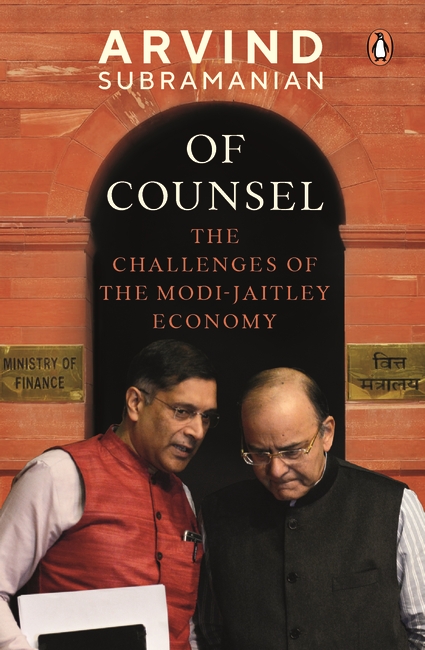
For nearly four years, Arvind Subramanian stood at the centre of economic policymaking in India. Through the communication of big ideas and the publication of accessible Economic Surveys, he gained a reputation as an innovator. Through honest pronouncements that avoided spin, he became a figure of public trust. What does it entail to serve at the helm of the world’s fastest-growing economy, where decision-making affects a population of more than a billion people?
In Of Counsel: The Challenges of the Modi-Jaitley Economy, Arvind Subramanian provides an inside account of his rollercoaster journey as the chief economic advisor to the Government of India from 2014-18, succeeding Raghuram Rajan as captain of the ship. With an illustrious cast of characters, Subramanian’s part-memoir, part-analytical writings candidly reveal the numerous triumphs and challenges of policymaking at the zenith, while appraising India’s economic potential, health and future through comprehensive research and original hypotheses.
Charged with the task to restructure an insecure and fragile economy, Subramanian’s trusteeship has seen the country through one of the most hotly contested and turbulent periods of economic governance and policymaking in recent decades-from the controversial recall of 85 per cent of circulated currency during demonetization to a complete overhaul in taxation with the introduction of the GST. Subramanian also addresses the overleveraging of public-sector banks, the fraught links between the state and private sector (‘stigmatized capitalism’), the changing relationship between the state and the individual, and the ever-pervasive, life-threatening issues surrounding climate change.
Recognized as one of the Top 100 Global Thinkers according to Foreign Policy magazine, Arvind Subramanian’s Of Counsel: The Challenges of the Modi-Jaitley Economy is a deep-dive into the man, the moments, the measures and the means.

In this explosive book, Suraj Yengde, a first-generation Dalit scholar educated across continents, challenges deep-seated beliefs about caste and unpacks its many layers. He describes his gut-wrenching experiences of growing up in a Dalit basti, the multiple humiliations suffered by Dalits on a daily basis, and their incredible resilience enabled by love and humour. As he brings to light the immovable glass ceiling that exists for Dalits even in politics, bureaucracy and judiciary, Yengde provides an unflinchingly honest account of divisions within the Dalit community itself-from their internal caste divisions to the conduct of elite Dalits and their tokenized forms of modern-day untouchability-all operating under the inescapable influences of Brahminical doctrines.
This path-breaking book reveals how caste crushes human creativity and is disturbingly similar to other forms of oppression, such as race, class and gender. At once a reflection on inequality and a call to arms, Caste Matters argues that until Dalits lay claim to power and Brahmins join hands against Brahminism to effect real transformation, caste will continue to matter.

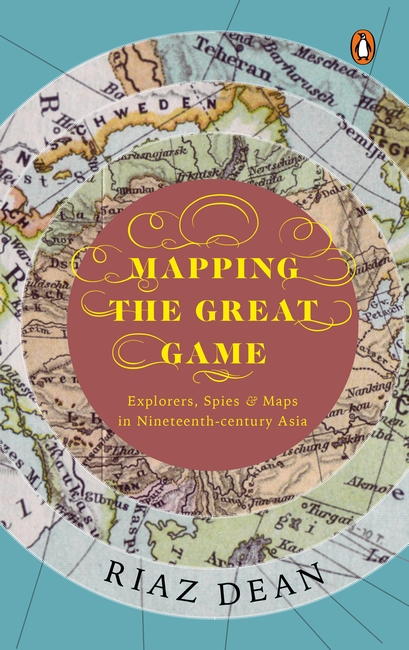
The Great Game raged through the wilds of Central Asia during the nineteenth century, as Imperial Russia and Great Britain jostled for power. Tsarist armies gobbled up large tracts of Turkestan, advancing inexorably towards their ultimate prize, India. These rivals understood well that the first need of an army in a strange land is a reliable map, prompting desperate efforts to explore and chart out uncharted regions. Two distinct groups would rise to this challenge: a band of army officers, who would become the classic Great Game players; and an obscure group of natives employed by the Survey of India, known as the Pundits.
While ‘the game’ played out, a self-educated cartographer named William Lambton began mapping the Great Arc, attempting to measure the actual shape of the Indian subcontinent. It was completed four decades later by a fellow officer working for the Survey of India, George Everest, who would have a special mountain named in his honour. The Great Arc would then lauded as ‘one of the most stupendous works in the whole history of science’. Meanwhile, the Pundits, travelling entirely on foot and with meagre resources, would be among the first to enter Tibet and reveal the mysteries of its forbidden capital, Lhasa.
Featuring forgotten, enthralling episodes of derring-do combined, and of the most sincere efforts to map India’s boundaries, Mapping the Great Game is the thrilling story of espionage and cartography which shrouded the Great Game and helped map a large part of Asia as we know it today.

The world has erupted in a groundswell of protests in the last few decades: against authoritarian rule, the stranglehold of global capitalism and rising injustice. Some of these have led to regime or policy change, others to war and mass displacement. Protesters have turned time and again to poetry for it is words alone that can spread the spirit of resistance and offer release from the grip of tyranny.
This specially curated volume brings together some of the best known poetry to have been written against different kinds of oppression from around the globe. Featuring voices as diverse as Anna Akhmatova from the erstwhile USSR to Rabindranath Tagore in India, Pablo Neruda in Chile to Mahmoud Darwish in Palestine, Maya Angelou in the US to Bei Dao in China, Poetry of Protest celebrates the innate tenacity of human beings to defend freedom, equality and dignity.

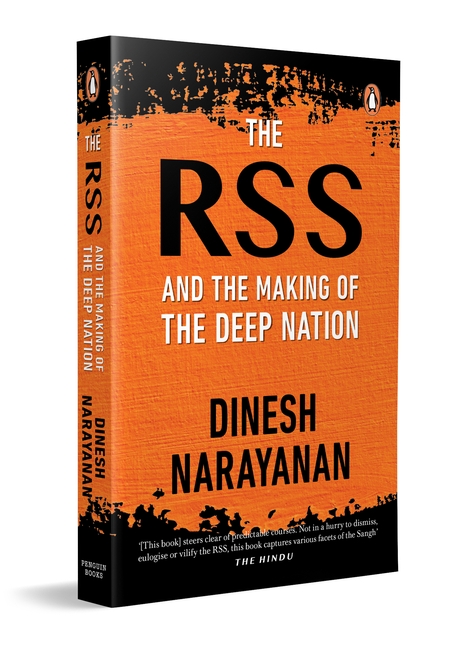
Since its inception in 1925, the RSS has perplexed observers with its organizational skills, military discipline and single-minded quest for influence in all walks of Indian life. Often seen as insidious and banned thrice, the pace of its growth and ideological dominance of the political landscape in the second decade of the millennium have been remarkable. It believes that Hindus have exclusive ownership of the Indian nation or Bharat, as it prefers to call it, and that hitherto, forces inimical to the interests of Hindus were deciding the socio-political and economic agenda in India. With political power firmly in favour, it is now going all out to embed its ideology deep in India’s genetic code. The abrogation of Article 370 in Kashmir, the big push to construct a Ram Temple in Ayodhya and moves to amend personal laws are the first symbolic steps in establishing the primacy of Hindus in the affairs of the country.
Relying on original research, interviews with insiders and analysis of current events, The RSS and the Making of the Deep Nation traces the RSS’s roots and nearly century-long operations in the relentless pursuit for ideological dominance in a nation known for its rich diversity of thought, custom and ritual.
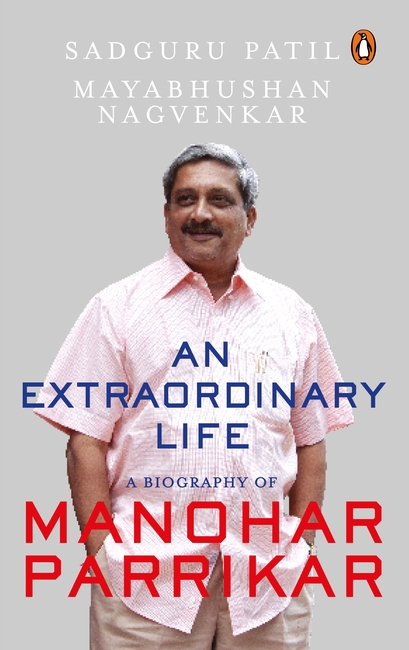
Over the last two decades, the exploits of one man, an IIT-Bombay alumnus, changed the way mainstream India looked at Goa and the political goings-on in the country’s smallest state. An Extraordinary Life traces the life and times of Manohar Parrikar through the informed voices of his relatives, friends, foes, bureaucrats and IIT contemporaries. The daily battles of a gifted individual are brought to the fore as he encounters love and vices. But more importantly, it showcases his rise in politics from the son of a grocery store owner in a nondescript town, a sanghachalak in Mapusa town, an Opposition MLA and leader, to a chief minister (on multiple occasions) and, finally, to a defence minister.

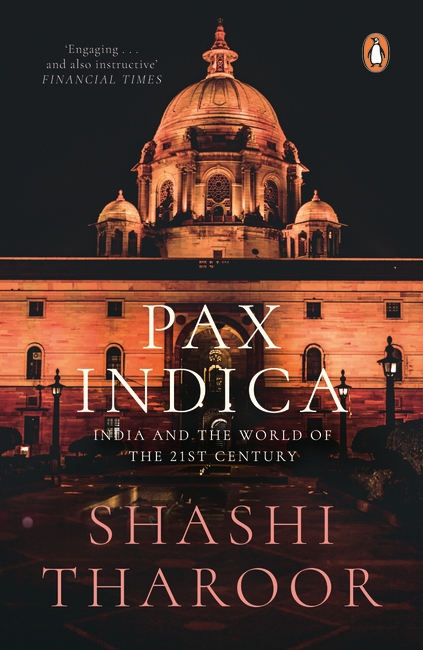
In this lively, informative and insightful book, Shashi Tharoor brilliantly demonstrates how Indian diplomacy has come of age and forecasts where it will need to focus in the new millennium. He surveys India’s major international relationships in detail, evokes the country’s soft power and offers his thoughts on a new ‘grand strategy’ for the nation, arguing that India must move beyond non-alignment to multi-alignment. Stimulating, reflective, elegantly written and passionately engaged, Pax Indica is another substantial achievement from one of the finest Indian authors of our times.

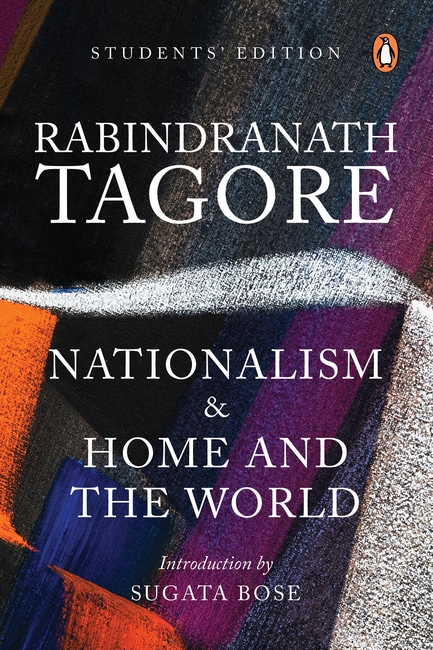
Combining two classic texts by Rabindranath Tagore, this special edition features a new Introduction by eminent scholar Sugata Bose. Nationalism is based on Tagore’s lectures, warning the world of the disasters of narrow sectarianism and xenophobia. Home and the World is a classic novel, exploring the ever-relevant themes of nationalism, violent revolution and women’s emancipation.