Publish with Us

Follow Penguin

Follow Penguinsters

Follow Penguin Swadesh

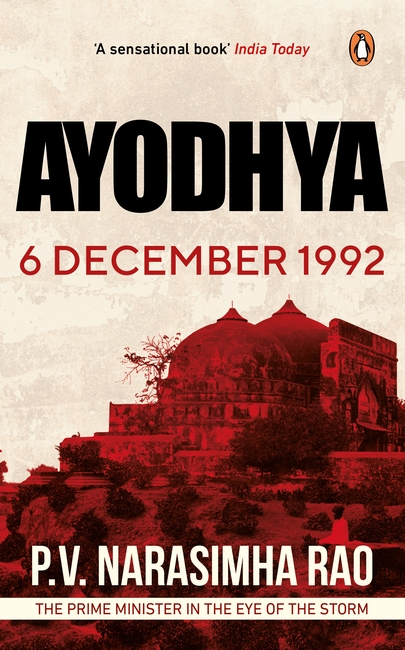
Ayodhya

‘A sensational book’ India Today

A shocking exposé of the event that changed Indian politics forever

P.V. Narasimha Rao was the prime minister of India when, on 6 December 1992, thousands of kar sevaks stormed into the site of the Babri Masjid in Ayodhya. The nation watched in horror as the centuries-old mosque was razed to the ground, in the presence of paramilitary forces and senior political leaders, marking a turning point in post-Independence Indian history.

Many hold Rao responsible for not preventing the demolition, while others accuse him of being a co-conspirator. In this tell-all account, Rao reveals what really transpired in the run-up to that fateful day. Drawing on the Supreme Court order, parliamentary proceedings, eyewitness reports and his own insights, he presents a comprehensive view of the machinations that led to the demolition of the Babri Masjid.

Nearly three decades after the event, Ayodhya: 6 December 1992 remains a valuable resource to understanding the political manoeuvres behind the Ram Mandir issue and the dangers of exploiting religious sentiments for narrow electoral gains.
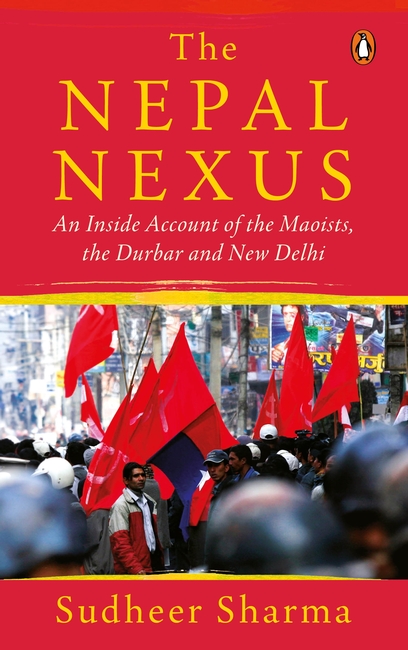
Nepal Nexus, The

This fast-paced and comprehensive account of Nepal today traces the recent past and the present of Nepali politics and geopolitics from the vantage point of an insider who had a ringside view of the developments of the last two decades. This was a turbulent, eventful era which had a transformative impact on the country. In this short span, Nepal experienced the Maoist revolt, the palace massacre, the state of emergency, the royal coup, the people’s movement, the republic, the Madhes uprising, the Constituent Assembly, federalism and the new Constitution.

Looking back at these developments, Sudheer Sharma argues that poverty, unemployment and oppression drove the Maoist revolt, and despite its ultimate failure, it played a decisive role in the socio-political transformation of Nepal. Furthermore, the relationship between the Maoists, the monarchy (Durbar) and the Indian establishment (Delhi) is absolutely critical to the understanding of the trajectory of the changes. The Nepal Nexus examines the impact of each of these three strands and tracks the complex interplay between them.

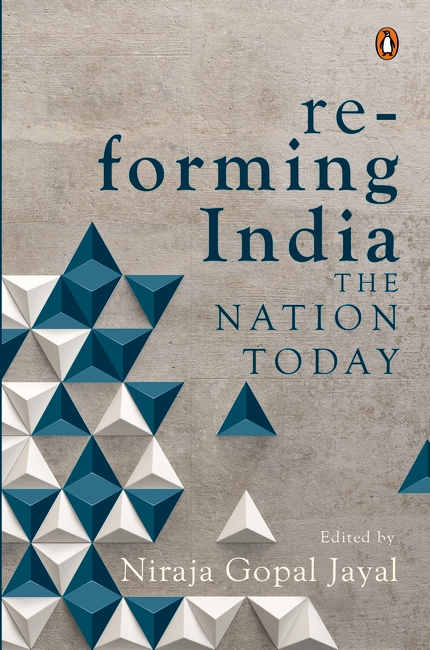
Re-forming India

India’s social and political landscape has, in recent times, witnessed many significant transformations. This book offers a wide-ranging review of how India has, over the last few years, fared on the most critical dimensions of our collective life-politics, economy, governance, development, culture and society.
The project of change entailed processes of both reform and re-formation: if reform was about correcting or improving what was considered unsatisfactory, re-formation was a bolder project that aimed to construct anew, anchored in a fundamental re-visioning of India in social, cultural and even moral terms. In many ways, the programme of re-forming India may have outpaced that of reforming India and even exceeded its own expectations.
This volume provides an overview of the prevailing political imaginary of nationalism and of the current trends of public discourse in Indian democracy; it seeks to identify and interpret the transformations in state institutions and the public sphere and evaluate their implications for the future.
Re-Forming India brings together reflections, from leading commentators in their fields, on some of these transformations-from the promise of economic revival and demonetization to the impact on gender relations, higher education and the media. Has the country been transformed in ways that were promised? Or indeed in other ways that had not been anticipated?

With essays from Smita Gupta, Ashok K. Lahiri, C. Rammanohar Reddy, Indira Rajaraman, Radhicka Kapoor, Prem Shankar Jha, Harish Damodaran, A. K. Bhattacharya, Paranjoy Guha Thakurta, Yamini Aiyar, Yogendra Yadav, Diane Coffey, Anirudh Krishna, Navroz K. Dubash, Shibani Ghosh, Madhav Khosla, Ramachandra Guha, Srinath Raghavan, Ashutosh Varshney, Suhas Palshikar, Anand Teltumbde, Pratiksha Baxi, Amitabh Behar, Sanjay Srivastava, Surinder S. Jodhka, Ravindra Karnena, Niraja Gopal Jayal, Gautam Bhatia (lawyer), Ravish Kumar, Taberez Ahmed Neyazi, Neera Chandhoke, Apoorvanand, Gautam Bhatia (architect), Siddhartha Chatterjee and Chandrika Grover Ralleigh.

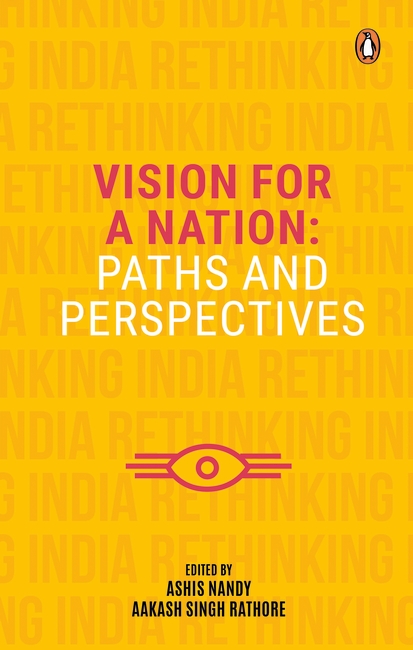
Vision for a Nation

What is the nation? What is the idea of India? Whose India is it, anyway?
This inaugural volume in the series titled Rethinking India aims to kickstart a national dialogue on the key questions of our times. It brings together India’s foremost intellectuals, academics, activists, technocrats, professionals and policymakers to offer an in-depth exploration of these issues, deriving from their long-standing work, experience and unflinching commitment to the collective idea of India, of who we can and ought to be. Vision for a Nation: Paths and Perspectives champions a plural, inclusive, just, equitable and prosperous India, committed to individual dignity as the foundation of the unity and vibrancy of the nation.
In order to further disseminate these ideas-the vision for the nation as aspirationally reflected in the Constitution-this book provides a positive counter-narrative to reclaim the centrality of a progressive, deeply plural and forward-looking and inclusive India. It serves as a fresh reminder of our shared and shareable overlapping values and principles, and collective heritage and resources. The essays in the book are meaningful to anyone with an interest in contemporary Indian politics, South Asian studies, modern Indian history, law, sociology, media and journalism.

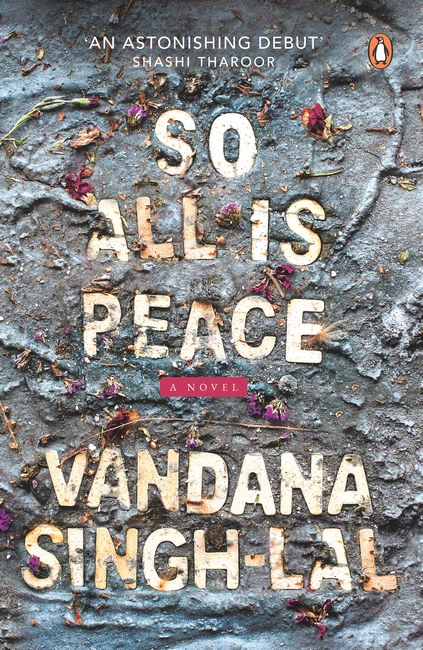
So All Is Peace

But sit down, breathe deep, and ask a woman. Any woman. They are there.
When twin sisters Layla and Tanya are found starving in their upmarket apartment, there is frenzy in the media. How often does one find two striking, twenty-something women, one half-dead, the other not speaking, living in a state of disrepair and chaos, for no apparent reason? Theories about them are rampant, but disillusioned journalist Raman is loath to follow the story. That is, until Tanya begins to talk to him, and the darker truth behind the sisters’ lives starts to unravel.
A richly atmospheric, deeply claustrophobic story with a stunning denouement, of two women confronting the everyday realities of their city and country, So all is Peace provides an unflinching insight into love, lust, fear, grief, and the decisions we make, through a cast of sharply drawn characters brought together by an unspoken wrong.

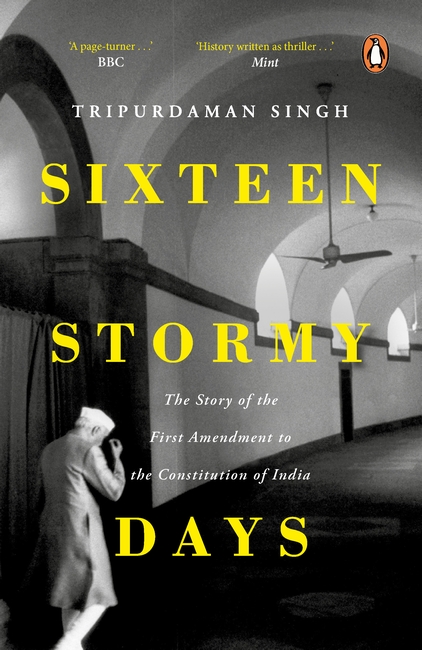
Sixteen Stormy Days

Sixteen Stormy Days narrates the riveting story of the First Amendment to the Constitution of India-one of the pivotal events in Indian political and constitutional history, and its first great battle of ideas. Passed in June 1951 in the face of tremendous opposition within and outside Parliament, the subject of some of independent India’s fiercest parliamentary debates, the First Amendment drastically curbed freedom of speech; enabled caste-based reservation by restricting freedom against discrimination; circumscribed the right to property and validated abolition of the zamindari system; and fashioned a special schedule of unconstitutional laws immune to judicial challenge. Enacted months before India’s inaugural election, the amendment represents the most profound changes that the Constitution has ever seen. Faced with an expansively liberal Constitution that stood in the way of nearly every major socio-economic plan in the Congress party’s manifesto, a judiciary vigorously upholding civil liberties, and a press fiercely resisting his attempt to control public discourse, Prime Minister Jawaharlal Nehru reasserted executive supremacy, creating the constitutional architecture for repression and coercion.

What extraordinary set of events led the prime minister-who had championed the Constitution when it was passed in 1950 after three years of deliberation-to radically amend it after a mere sixteen days of debate in 1951?
Drawing on parliamentary debates, press reports, judicial pronouncements, official correspondence and existing scholarship, Sixteen Stormy Days challenges conventional wisdom on iconic figures such as Jawaharlal Nehru, B.R. Ambedkar, Rajendra Prasad, Sardar Patel and Shyama Prasad Mookerji, and lays bare the vast gulf between the liberal promise of India’s Constitution and the authoritarian impulses of her first government.

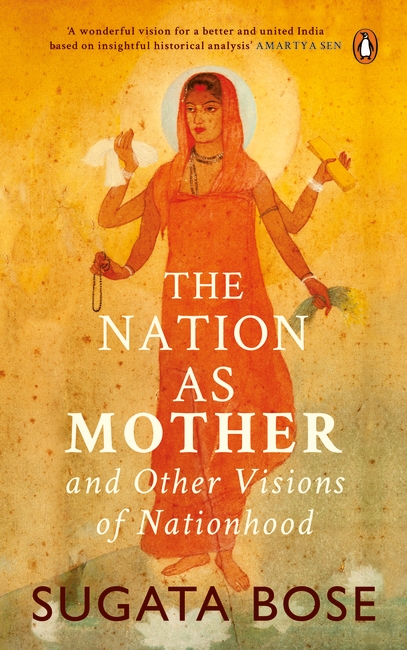
The Nation As Mother

‘History matters in contemporary debates on nationalism,’ Sugata Bose contends in The Nation as Mother. In this interconnected set of deeply researched and powerfully argued essays and speeches Bose explores the relationship between nation, reason and religion in Indian political thought and practice. Offering a subtle interpretation of the ways of imagining the nation as mother, the book illuminates different visions of India as a free and flexible federal union that have acquired renewed salience today.
Breaking out of the false dichotomy between secular nationalism and religious communalism, the author provides incisive analyses of the political legacies of Tagore and Gandhi, Nehru and Bose, Aurobindo and Jinnah, and a range of other thinkers and leaders of the anti-colonial movement. The essays question assumptions about any necessary contradiction between cosmopolitanism and patriotism and the tendency among religious majoritarians and secularists alike to confuse uniformity with unity. The speeches in Parliament draw on a rich historical repertoire to offer valuable lessons in political ethics.
In arguing against the dangers of an intolerant religious majoritarianism, this book makes a case for concepts of layered and shared sovereignty that might enable an overarching sense of Indian nationhood to coexist with multiple identities of the country’s diverse populace. The Nation as Mother delves into history on the occasion of the seventieth anniversary of freedom to evoke an alternative future of a new India based on cultural intimacy among its different communities.

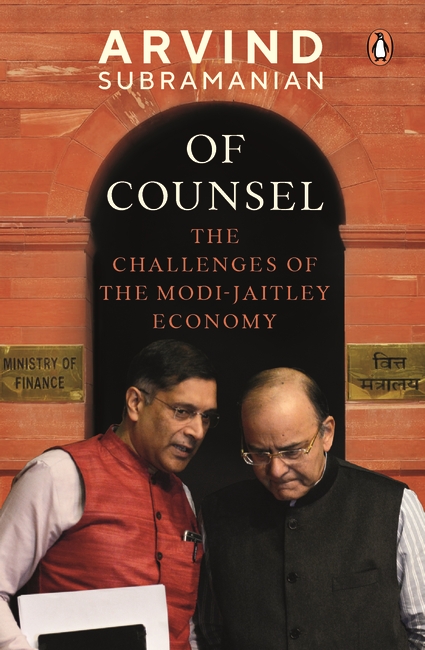
Of Counsel

For nearly four years, Arvind Subramanian stood at the centre of economic policymaking in India. Through the communication of big ideas and the publication of accessible Economic Surveys, he gained a reputation as an innovator. Through honest pronouncements that avoided spin, he became a figure of public trust. What does it entail to serve at the helm of the world’s fastest-growing economy, where decision-making affects a population of more than a billion people?

In Of Counsel: The Challenges of the Modi-Jaitley Economy, Arvind Subramanian provides an inside account of his rollercoaster journey as the chief economic advisor to the Government of India from 2014-18, succeeding Raghuram Rajan as captain of the ship. With an illustrious cast of characters, Subramanian’s part-memoir, part-analytical writings candidly reveal the numerous triumphs and challenges of policymaking at the zenith, while appraising India’s economic potential, health and future through comprehensive research and original hypotheses.

Charged with the task to restructure an insecure and fragile economy, Subramanian’s trusteeship has seen the country through one of the most hotly contested and turbulent periods of economic governance and policymaking in recent decades-from the controversial recall of 85 per cent of circulated currency during demonetization to a complete overhaul in taxation with the introduction of the GST. Subramanian also addresses the overleveraging of public-sector banks, the fraught links between the state and private sector (‘stigmatized capitalism’), the changing relationship between the state and the individual, and the ever-pervasive, life-threatening issues surrounding climate change.

Recognized as one of the Top 100 Global Thinkers according to Foreign Policy magazine, Arvind Subramanian’s Of Counsel: The Challenges of the Modi-Jaitley Economy is a deep-dive into the man, the moments, the measures and the means.

Caste Matters

In this explosive book, Suraj Yengde, a first-generation Dalit scholar educated across continents, challenges deep-seated beliefs about caste and unpacks its many layers. He describes his gut-wrenching experiences of growing up in a Dalit basti, the multiple humiliations suffered by Dalits on a daily basis, and their incredible resilience enabled by love and humour. As he brings to light the immovable glass ceiling that exists for Dalits even in politics, bureaucracy and judiciary, Yengde provides an unflinchingly honest account of divisions within the Dalit community itself-from their internal caste divisions to the conduct of elite Dalits and their tokenized forms of modern-day untouchability-all operating under the inescapable influences of Brahminical doctrines.
This path-breaking book reveals how caste crushes human creativity and is disturbingly similar to other forms of oppression, such as race, class and gender. At once a reflection on inequality and a call to arms, Caste Matters argues that until Dalits lay claim to power and Brahmins join hands against Brahminism to effect real transformation, caste will continue to matter.

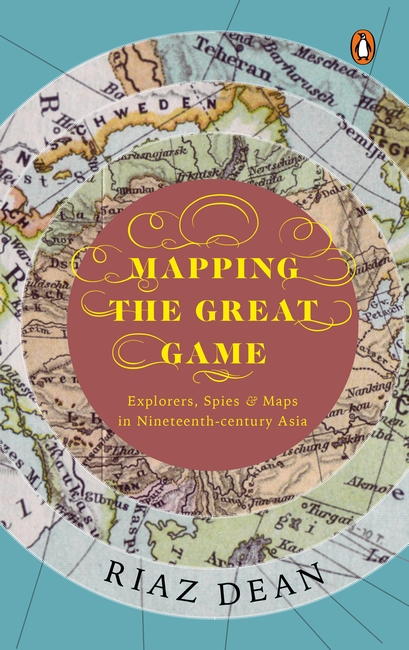
Mapping the Great Game

The Great Game raged through the wilds of Central Asia during the nineteenth century, as Imperial Russia and Great Britain jostled for power. Tsarist armies gobbled up large tracts of Turkestan, advancing inexorably towards their ultimate prize, India. These rivals understood well that the first need of an army in a strange land is a reliable map, prompting desperate efforts to explore and chart out uncharted regions. Two distinct groups would rise to this challenge: a band of army officers, who would become the classic Great Game players; and an obscure group of natives employed by the Survey of India, known as the Pundits.
While ‘the game’ played out, a self-educated cartographer named William Lambton began mapping the Great Arc, attempting to measure the actual shape of the Indian subcontinent. It was completed four decades later by a fellow officer working for the Survey of India, George Everest, who would have a special mountain named in his honour. The Great Arc would then lauded as ‘one of the most stupendous works in the whole history of science’. Meanwhile, the Pundits, travelling entirely on foot and with meagre resources, would be among the first to enter Tibet and reveal the mysteries of its forbidden capital, Lhasa.
Featuring forgotten, enthralling episodes of derring-do combined, and of the most sincere efforts to map India’s boundaries, Mapping the Great Game is the thrilling story of espionage and cartography which shrouded the Great Game and helped map a large part of Asia as we know it today.

error: Content is protected !!