



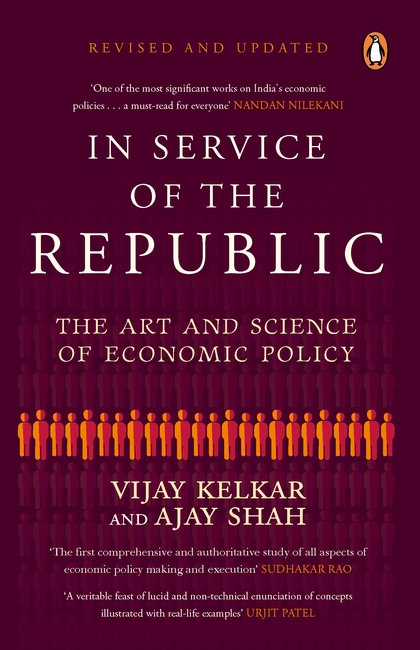
As a $3-trillion economy, India is on her way to becoming an economic superpower. Between 1991 and 2011, the period of our best growth, there was also a substantial decline in the number of people below the poverty line. Since 2011, however, there has been a marked retreat in the high growth performance of the previous two decades.What happened to the promise? Where have we faltered? How do we change course? How do we overcome the ever-present dangers of the middle-income trap, and get rich before we grow old? And one question above all else: What do we need to do to make our tryst with destiny? As professional economists as well as former civil servants, Vijay Kelkar and Ajay Shah have spent most of their lives thinking about and working on these questions. The result: In Service of the Republic, a meticulously researched work that stands at the intersection of economics, political philosophy and public administration. This highly readable book lays out the art and the science of the policymaking that we need, from the high ideas to the gritty practicalities that go into building the Republic.
Catagory: Politics
The Verdict

What are the key factors that win or lose elections in India? What does, or does not, make India’s democracy tick? Is this the end of anti-incumbency? Are opinion polls and exit polls reliable? How pervasive is the ‘fear factor’? Does the Indian woman’s vote matter? Does the selection of candidates impact results? Are elections becoming more democratic or less so? Can electronic voting machines (EVMs) be fiddled with? Can Indian
elections be called ‘a jugaad system’?
Published on the eve of India’s next general elections, The Verdict uses rigorous psephology, original research and as-yet-undisclosed facts to talk about the entire span of India’s electoral history from the first elections in 1952. Crucially, for 2019, it provides pointers to look out for, to see if the incumbent government will win or lose.
Written by Prannoy Roy, renowned for his knack of demystifying electoral politics, and Dorab R. Sopariwala, this book is compulsory reading for anyone interested in politics and elections in India.
Black Friday
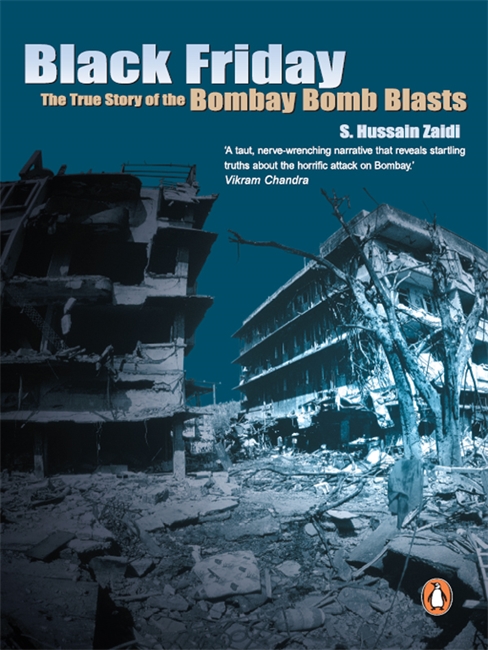
On the afternoon of 12 March 1993, a series of explosions cut a swathe of terror and destruction through Bombay. The toll: 257 killed or missing, 713 injured, and a city in a shambles.
In Black Friday, S. Hussain Zaidi takes us into the heart of the conspiracy which spanned several countries, and the massive investigation that ensued. A product of four years of meticulous research, the book gives chilling insights into the criminal mind, through interviews with close associates of Dawood Ibrahim and Tiger Memon, among others. The characters we meet are compelling: the terrorists, the corrupt law enforcement agents who abetted the plot, the investigators who would stop at nothing, and, above all, the people of Bombay of whose resilient spirit this book is a celebration.
Kargil

Why is fighter pilot Raghu Nambiar handpicked for the bombing of Tiger Hill?
Why does Manoj Pandey always carry a twenty-one-year-old Rs 2 wooden flute in his black fauji trunk?
‘Congratulations Mrs Batra. We are now man and wife.’ When does Vikram Batra say this to Dimple?
Why do a group of stranded paratroopers call for Bofors’ fire upon their own position?
Why is an old man in Palampur fighting for justice for his dead soldier son?
Interviewing war survivors and martyrs’ families, Rachna Bisht Rawat tells stories of extraordinary human courage, of not just men in uniform but also those who loved them the most. Kargil is a tribute to the 527 young braves who gave up their lives for us and many others who were ready to do it too.
Nehru And Bose
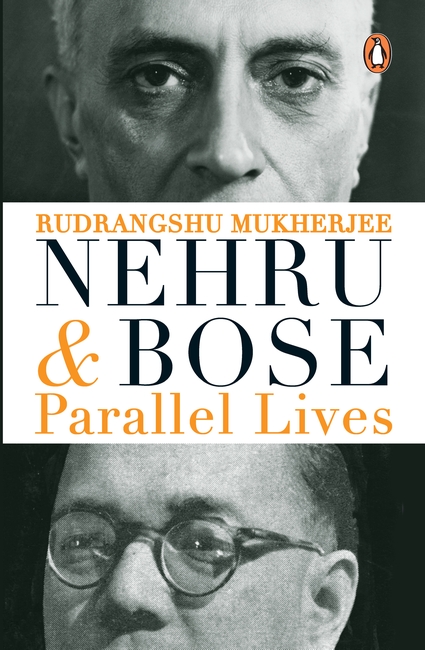
Had relations between the two great nationalist leaders soured to the extent that Bose had begun to view Nehru as his enemy? But then, why did he name one of the regiments of the Indian National Army after Jawaharlal? And what prompted Nehru to weep when he heard of Bose’s untimely death in 1945, and to recount soon after, ‘I used to treat him as my younger brother’? Rudrangshu Mukherjee’s fascinating book traces the contours of a friendship that did not quite blossom as political ideologies diverged, and delineates the shadow that fell between them-for, Gandhi saw Nehru as his chosen heir and Bose as a prodigal son.
The Promise of India
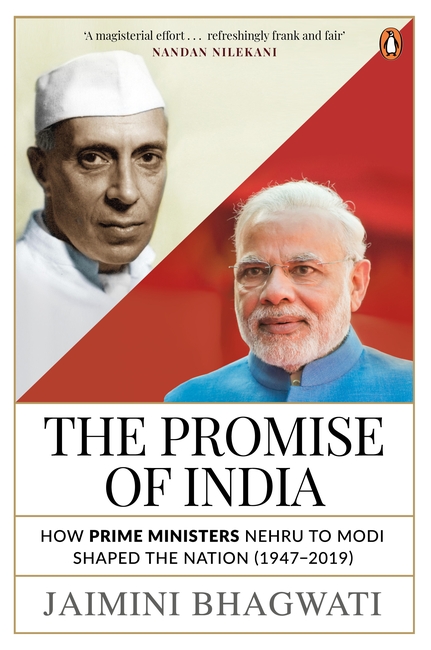
On 15 August 1947, most Indians had stars in their eyes as they looked ahead to a glorious future as a free country. In this first-of-its-kind book, Jaimini Bhagwati analyses the key political, foreign policy and economic decisions of all the premiers from Jawaharlal Nehru to Narendra Modi, to understand how well they steered the nation on the path of progress and development.
With his long experience in the corridors of power, Bhagwati reveals fascinating behind-the-scenes events and offers fresh insights into each PM’s governance. For instance, Nehru, considered a ‘socialist’ by some, in fact acted according to the prevailing wisdom of highly regarded economists; why P.V. Narasimha Rao has not received adequate credit for heralding economic reforms; how Atal Bihari Vajpayee followed in the footsteps of Nehru and Rao; and how and why Modi focused on the delivery of basics to the poor. Using a novel framework, Bhagwati also assesses the PMs on the values of Character, Competence and Charisma, to measure their impact on India’s story.
Grand in sweep and thoroughly researched, this deeply engaging book sheds new light on independent India’s history. As it critically examines whether our leaders always put the country first, The Promise of India provides an incisive overview of India’s political culture and what keeps its democracy ticking.
The Unending Game
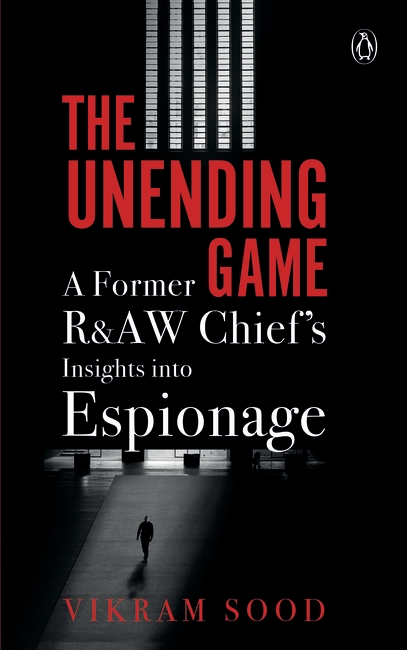
In God we trust, the rest we monitor . . .
A former chief of India’s external intelligence agency, the Research and Analysis Wing, deconstructs the shadowy world of spies, from the Cold War era to the age of global jihad, from surveillance states to psy-war and cyberwarfare, from gathering information to turning it into credible intelligence. Vikram Sood provides a panoramic view of the rarely understood profession of spying to serve a country’s strategic and security interests.
As a country’s stature and reach grow, so do its intelligence needs. This is especially true for one like India that has ambitions of being a global player even as it remains embattled in its own neighbourhood. The Unending Game tackles these questions while providing a national and international perspective on gathering external intelligence, its relevance in securing and advancing national interests, and why intelligence is the first playground in the game of nations.
Reviving Jobs
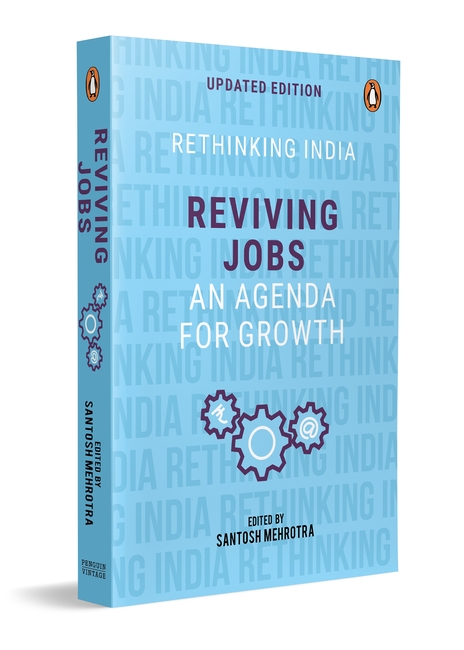
Every country in the world experiences the benefits of its demographic dividend, a period that comes but once in the life of a nation-when the share of the working-age population is larger than the non-working-age share. It has the potential to make a country progress towards higher incomes and development. But it can also become a nightmare if there aren’t enough jobs.
India entered this period in 1980, and by the time it ends in 2040, ours will be an ageing society. As more and more youth reach working age, an increasing number of workers are moving from agriculture towards industry and services, sectors which have higher productivity and incomes. Higher incomes generate increased savings, which, when invested, convert into GDP growth, leading to development.
Since 2012, the number of youth entrants into the labour force has increased at an accelerating pace, while the number of jobs created has decreased. This situation might become graver between 2020 and 2030 as the labour force swells further. Reviving Jobs, the third volume in the Rethinking India series, offers suggestions on how India can make the best use of the remaining period of its demographic dividend-any failure to do so will cause millions to suffer in poverty for decades to come.