The most definitive account of how Article 370 was abrogated.
The inside story of how Prime Minister Narendra Modi turned the seemingly impossible into a reality.
An eye-opening read on the damage Article 370 inflicted on Jammu and Kashmir.
A book that will interest diverse readers, including students, scholars and historians.
Introduced in October 1949, Article 370 turned out to be a long-standing ‘permanent’ temporary provision till 5 August 2019, when it was abrogated by the Parliament of India. The article has been subjected to intense debate and much discussion over the years. Those who supported it cited Jammu and Kashmir’s unique situation in 1947, while those who opposed it questioned how one nation could have two constitutions, two flags and two sets of rules. The naysayers also questioned its reductive aspects—the denial of basic rights to the poor, scheduled caste and scheduled tribe communities, and women.
But whichever side one stood on, the conventional belief for sixty-five years since Independence was that Article 370 can never be repealed. But then came 5 August 2019, when the supposedly impossible became a reality.
370: Undoing the Unjust, A New Future for J&K takes the reader through the minute and meticulous planning that ensured seamless execution of the decision. Removing Article 370 not only needed strategic planning and political will but also mammoth logistical preparations. Every single aspect would have to be addressed, or else the region, especially the Kashmir valley, would plunge into chaos.
The book offers a glimpse of Prime Minister Narendra Modi’s thought process, insights into his leadership and, most importantly, his vision for Jammu and Kashmir. By ensuring that Article 370 is repealed, Prime Minister Modi altered the course of history. But, along with that he also fulfilled the decades-old commitment of the Bharatiya Janata Party.
Deeply researched, anecdotal and unputdownable, this book fills the gaps on scholarship around an iconic moment of Indian history.
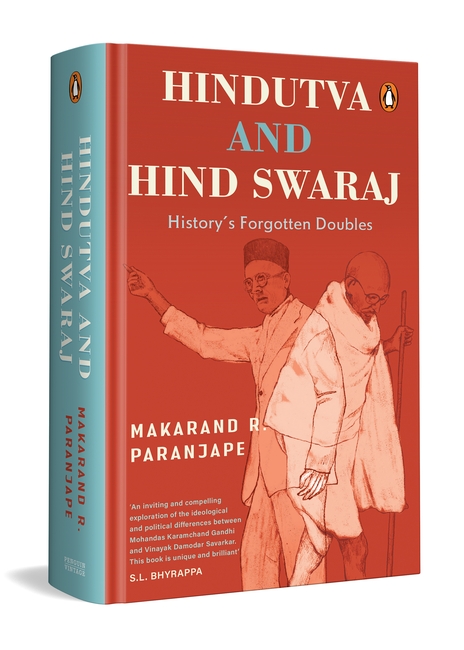
A close reading of the persistent antagonisms in Indian history, Hindutva and Hind Swaraj focuses on the ideological clash between Mohandas Karamchand Gandhi and Vinayak Damodar Savarkar, representing the broader ideological, political, and cultural factions within Hindu and Indian society. The central argument is that this antagonism continues to influence national life, both politically and personally, reflecting two contrasting ideologies: Hindutva and Hind Swaraj.
Divided into three parts, the first part addresses the lack of historical records in ancient India and the importance of creating a national history to reclaim India’s past. In the part second part, the author examines the discovery of India’s cultural and historical identity, the impact of colonialism, and the need for a balanced discourse that acknowledges the complexity and diversity of Indian society. While the third looks at the e contemporary political landscape, the rise of Hindutva, and the ongoing struggle between Gandhi’s vision of non-violent resistance and Savarkar’s advocacy of armed rebellion. It highlights the unresolved tensions between these two ideologies and their implications for India’s future.
The book emphasizes the need for a new approach to understanding and reconciling these differences, suggesting that a balanced discourse and a deeper inquiry into the nature of nationalism, democracy, and Indian society are essential for creating a new India.
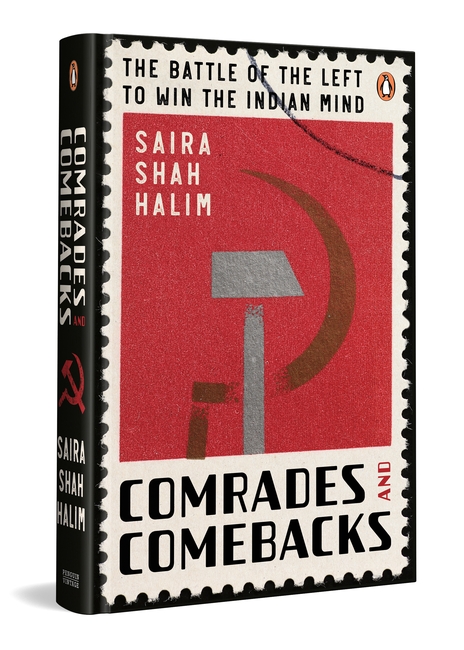
The history of Left politics in India runs deep into the very heart of the freedom struggle. It can hardly be denied that both the freedom struggle and the political landscape of free India was, for the longest time, hued in various shades of red. Peculiarly, Leftism in India has developed in close ties with the culture in which it was rooted. A movement consisting of diverse forces—-with moderate socialists at one end of the spectrum and extremist or revolutionary communists at the other—-The Indian Left has had a complex and evolving role in Indian politics. While historically it has played a pertinent role, primarily in states such as West Bengal and Kerala, its influence and relevance, both have waned in recent years. It has been struggling to adapt itself to dynamic electoral politics and, therefore, finding it hard to regain its lost ground.
This book is about an ideology that is under threat or, as many say, almost extinct, at least in India. It tries to sketch a rich historical narrative that foregrounds left politics in world history, locate its relevance in India and chart a future of its revival.
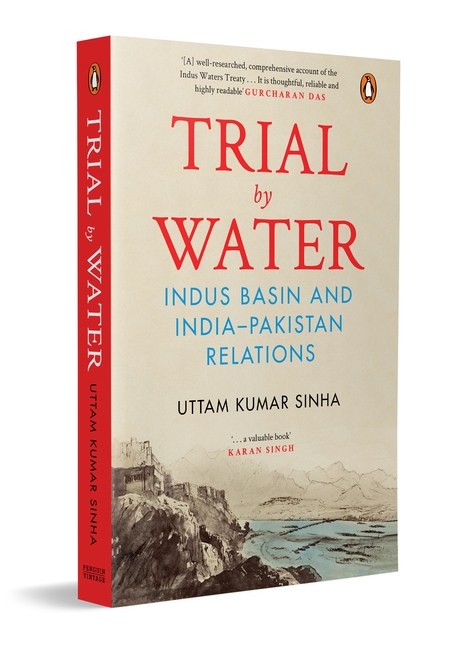
In 1947, the Indian subcontinent was partitioned, and Pakistan was born. A shared heritage, a composite culture and centuries-old bonds between people, all seemed to vanish overnight. Nowhere was this rupture more profound than in the Indus Basin—once a unified lifeline of the region, now fragmented by sovereign borders, its rivers flowing through two nations immediately at odds with each other.
The Indus Waters Treaty was signed in 1960, proving that even bitter adversaries could cooperate over shared resources. Yet, it never brought lasting peace. The treaty was suspended by India in April 2025 as a punitive measure in the wake of the Pahalgam terror attack, and its future remains shrouded in uncertainty. Can it still endure and adapt? Perhaps the time has come for a new arrangement—one that is not just inevitable but essential.
This book traces the turbulent history of the Indus Basin and examines how the Indus Waters Treaty has been shaped by the region’s ever-evolving political dynamics. It explores the role of key leaders on both sides, as well as external pressures, in shaping and reshaping one of the world’s most critical transboundary water agreements.
The Indus Basin has been a witness to conflict, compromise and survival. And if you seek to understand the true nature of India–Pakistan relations, start with the rivers that bind them. Trial by Water leads us in that direction.
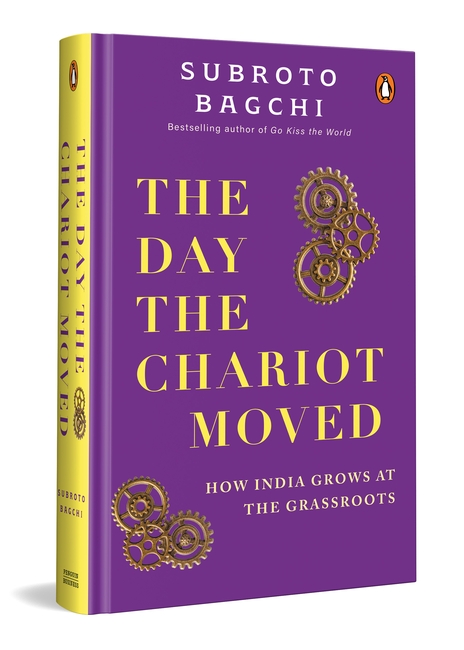
Subroto Bagchi uses his crossover experience from being an acknowledged leader of the Indian information technology (IT) industry to working full-time with the Government of Odisha in the rank of a cabinet minister, on a mission mode, to set up one of the stellar success stories of skill development in India. A bestselling author of several books, Bagchi uses his keen observation and experience to present stories of how the government works, of leadership at the bottom of the pyramid and the nature of transformational change in established systems. Along the way, he shows you the many facets of India that you have perhaps never seen before.
The Day the Chariot Moved is a tribute to people who make permanent change happen in one lifetime. A unique book on the imperatives for institutional leadership that is relevant across sectors, it humanizes the development agenda for policymakers in the government. It makes change agents from the social sector rethink their conventional approach and makes corporate leaders understand the complexities of making large-scale change. The stories in this book, told in a language that grips you, will help you understand the many notions of development.
The Day the Chariot Moved will move you and help you understand the how lives can be transformed at the grassroots.
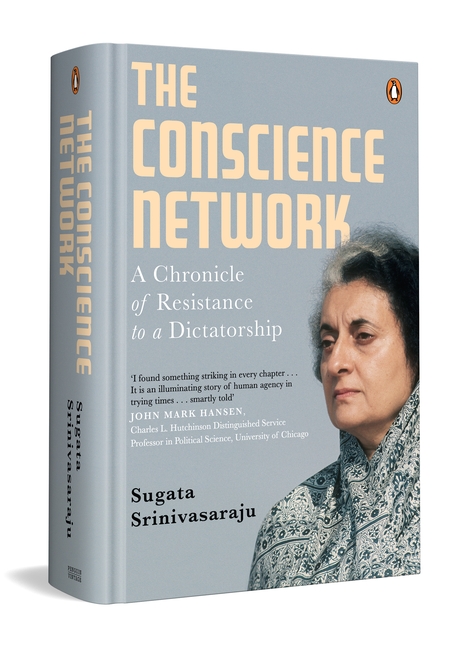
This is a parallel history of resistance to Indira Gandhi’s dictatorial rule between 1975 and 1977, when an internal emergency was proclaimed in India. The events here unfold entirely in the United States of America surrounded by the echoes of emergency action in India. The book has an intimate historiographic style and is narrated through the lives, actions and world views of chosen protagonists, who with perseverance and principle constructed a classic Gandhian movement.
The book not only tracks political developments, ideological debates and sociocultural contexts of the time but also records how American pacifists, Quakers, civil rights activists, academics, authors, senators and Congressmen came together in solidarity to form a network of conscience to save India’s democracy. Amid this, a quiet thread in the book is the story of the Indian diaspora in the US that had just about begun staring at a horizon of influence.
It is widely believed that one of the factors that pushed Indira Gandhi to end the Emergency in 1977 and call for a general election was international pressure. Being Jawaharlal Nehru’s daughter, it is said that she was sensitive to how she was being perceived overseas, and after a point, thought it was counterproductive to play dictator. However, this book does not get into such conjectures or presumptions but endeavours to paint a true and complex picture of the time.
The narrative here is fused with a diligent study of personal papers and archival material in India and overseas that had neither been accessed or assessed till now. This is yet another offering from an author whose books have been applauded for their uncommon insights, intellectual bandwidth and a fine literary style.
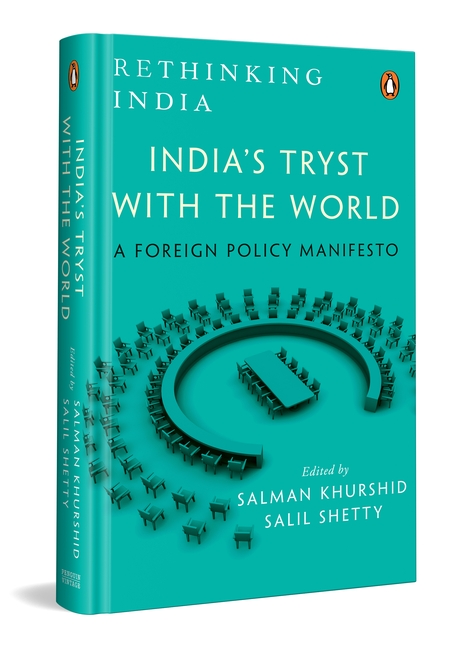
As technology, trade and affordable travel make our planet a much more interconnected place, and India’s importance on the world stage grows, India’s foreign policy attracts greater interest and scrutiny than ever before, both within and outside the country.
How do we understand the evolution of India’s foreign policy from the early years after Independence to the present day? How should India position itself as it moves towards 100 years of independence in 2047? These are among the big questions India’s Tryst with the World seeks to address.
Recognizing that India’s foreign policy is ultimately driven by the strength of its people (not just the privileged few) and its economy as a whole, this book prises open the discussion on India’s place in the world, taking it far beyond traditional foreign policy mandarins.
A thoughtful mix of essays by some of India’s most respected diplomats, opinion makers and political leaders—including the late Manmohan Singh, Shashi Tharoor, Shivshankar Menon, Suhasini Haider and Kishore Mahbubani—this new volume in the acclaimed Rethinking India series could not be coming out at a more opportune time in history, with all the uncertainty wrought by wars on several fronts and political disruption caused by the rise of the Right the world over.
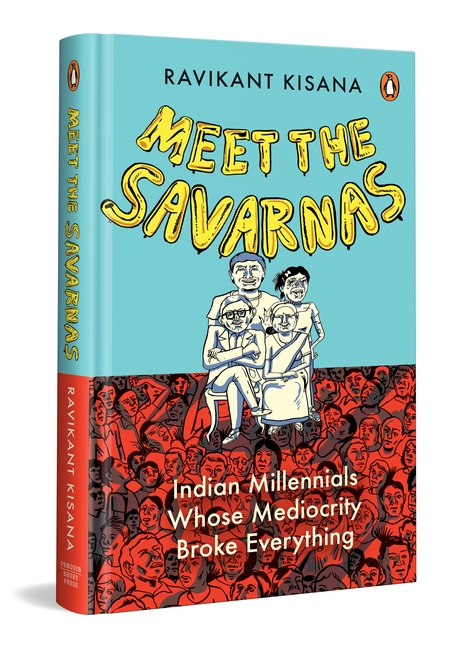
In the early 2000s, India was expected to ‘shine’ and emerge as a rising superpower. It was the post-1990s golden generation— professionals fresh out of B-schools and engineering programmes —who were supposed to take us there. The Great Indian Dream was ready to lift-off. Except we never left the ground.
No one could really explain what went wrong. Some blamed politicians, some corruption, some capitalism and some communal polarization. Most people missed the giant elephant in the room—caste.
Caste in India is mostly researched and reported from the experience of the oppressed. Caste as a privilege is not understood well. How do caste elites respond to modernity? How do they understand culture, intimacy, love and tradition? Were their ideas, institutions and imaginations ever even capable of delivering upon the Great Indian Dream?
In Meet the Savarnas, Ravikant Kisana goes where few authors have dared: to document the lives, the concerns and crises of India’s urban elites, to frame the savarnas as a distinct social cohort, one that operates within itself and yet is oblivious of its own social rules, privileges and systems.

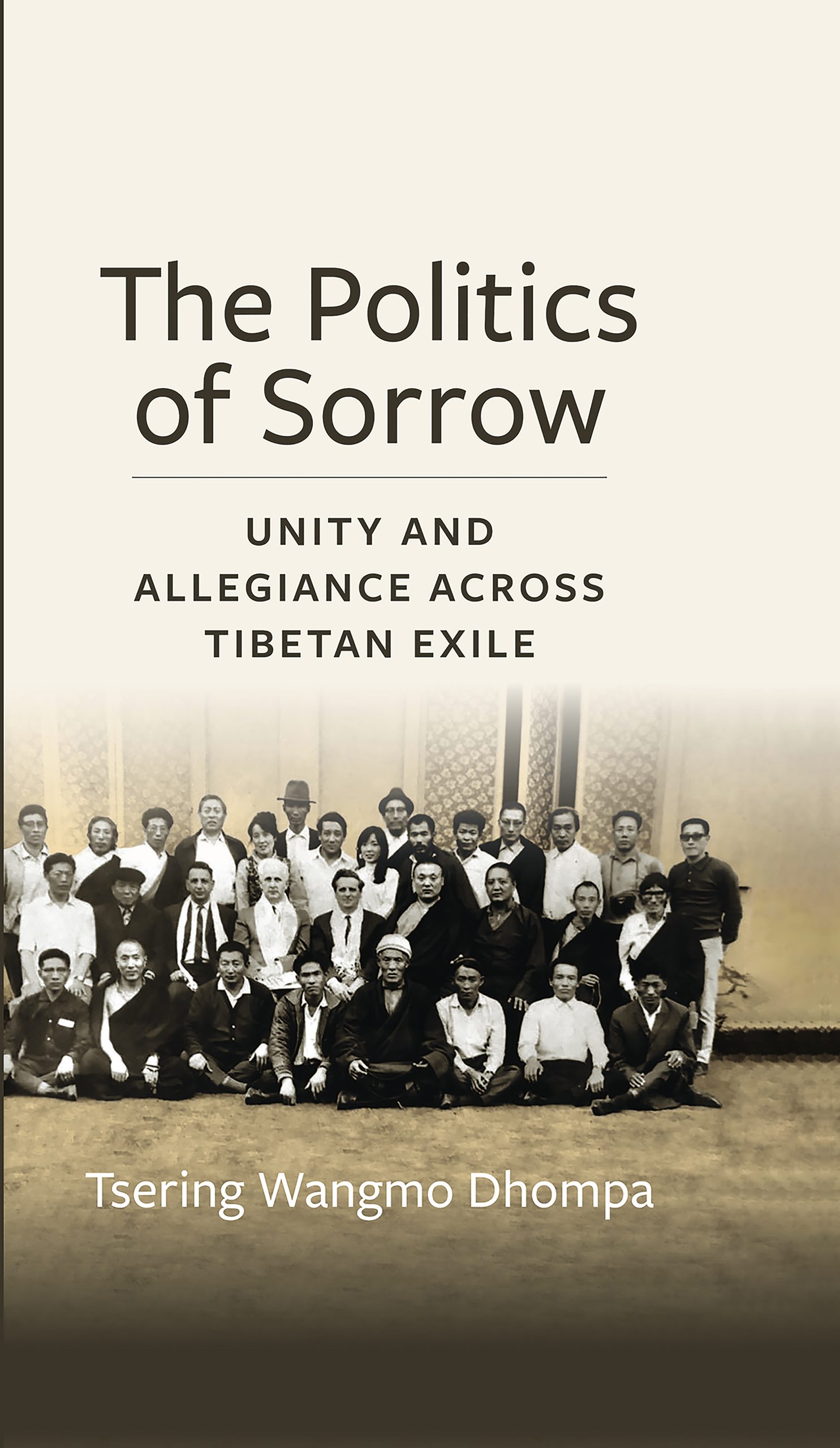
The Dalai Lama escaped from Tibet in 1959 after its occupation by China and established a government in exile in India. There, Tibetan leaders aimed to bring together displaced people from varied religious traditions and local loyalties under the banner of unity. To contest Chinese colonization and stand up for self-determination, Tibetan refugees were asked to shed regional allegiances and embrace a vision of a shared national identity.
The Politics of Sorrow tells the story of the Group of Thirteen, a collective of chieftains and lamas from the regions of Kham and Amdo, who sought to preserve Tibet’s cultural diversity in exile. They established settlements in India in the mid-1960s with the goal of protecting their regional and religious traditions, setting them apart from the majority of Tibetan refugees, who saw a common tradition as the basis for unifying the Tibetan people. Tsering Wangmo Dhompa traces these different visions for Tibetan governance and identity, juxtaposing the Tibetan government in exile’s external struggle for international recognition with its lesser-known internal struggle to command loyalty within the diaspora. She argues that although unity was necessary for democracy and independence, it also drew painful boundaries between those who belonged and those who didn’t. Drawing on insightful interviews with Tibetan elders and an exceptional archive of Tibetan exile texts, The Politics of Sorrow is a compelling narrative of a tumultuous time that reveals the complexities of Tibetan identities then and now.
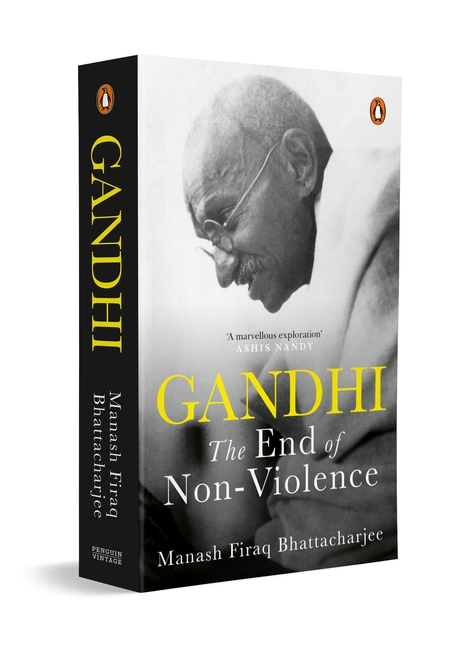
Gandhi was 20th century’s most acclaimed political thinker-practioner of nonviolence. His method of nonviolence, however, was under trial during the ferocity of Partition. Why was it so? Gandhi: The End of Nonviolence explores this crisis in depth.
Putting Gandhi center stage in significant political events ranging from the Khilafat Movement (1919-1922) to Partition (1946-1947), Manash Firaq Bhattacharjee critically engages with some of the key figures who had a stake on the Hindu-Muslim question: Maulana Mohamad Ali, Muhammad Iqbal, the Arya Samajists, B.R. Ambedkar, Swami Vivekananda, Sri Aurobindo and Vinayak Damodar Savarkar.
The tragic repercussions of Jinnah’s declaration of ‘Direct Action Day’ on 16th August 1946 leads Manash to ask probing questions on the persistent malady in our political history: How does communal politics descend into genocide? What is the psychology of communal violence? Attentively reading the exceptional witness accounts of Pyarelal, Nirmal Kumar Bose and Manu Gandhi, Manash throws light on the many shades of Gandhi’s epic peace mission as he walks (often barefoot) through the devastated neighbourhoods of Noakhali, Bihar, Calcutta and Delhi, offering courage and healing wounds.
Combining poetic flair, diligent research and argumentative rigour, this one-of-a-kind book reminds us why Gandhi is part of our ethical conscience and transforms our understanding of the human condition.