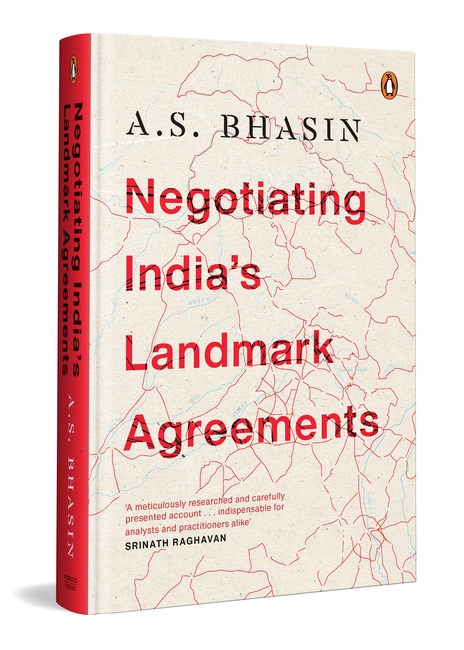
Negotiating India’s Landmark Agreements is a rigorous examination of the historical significance and diplomatic intricacies of five pivotal agreements signed by India since Independence. It walks readers through the India–China Agreement on Tibet (1954), the Indo–Soviet Treaty of Peace, Friendship and Cooperation (1971), the Simla Agreement (1972), the India–Sri Lanka Accord (1987), and the India–United States Civil Nuclear Energy Agreement (2008).
By dissecting the prevailing political, economic, and social dimensions that underpinned these accords, it provides readers a profound understanding of the long-term impact of these crucial negotiations and documents often ignored in other histories. Through meticulous research and in-depth analysis, author AS Bhasin narrates the gripping story of how these treaties shaped India’s international relations and contributed to the broader contours of global diplomacy. His book not only illuminates India’s evolving role on the world stage but also offers a novel perspective on the complexities of international affairs and statecraft.
Negotiating India’s Landmark Agreements is an indispensable guide to deciphering the strategic decisions that have defined Indian foreign policy, while also serving as a valuable resource for academics, researchers, and practitioners in the field of international relations. It is a critical addition to the study of diplomacy, offering insights that are both compelling and essential for a deeper comprehension of global affairs.
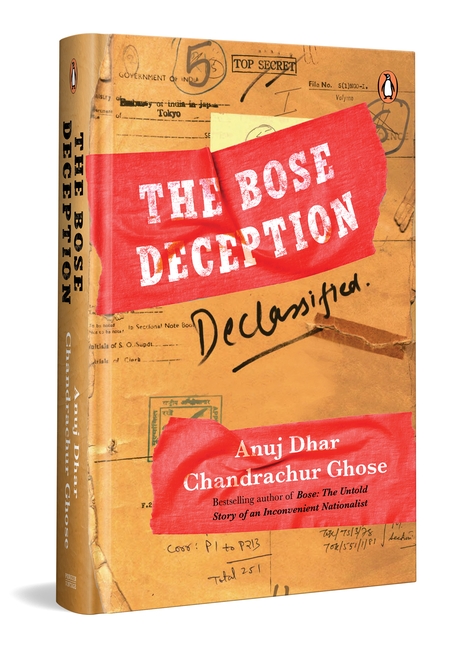
What exactly is this controversy about Netaji’s ‘disappearance’?
Efforts by the authors led to the declassification of more than 1,300 secret files on Bose.
Does new material offer new evidence on Bose’s reported death in 1945?
The Bose Deception: Declassified opens a window to this and much more.
In January 2016, the Government of India began declassifying classified PMO, MEA, MHA and Cabinet Secretariat files related to the mysterious ‘disappearance’ of Subhas Chandra Bose at the end of the Second World War. No one could have imagined that even seventy years after Bose’s disappearance, the government had been holding hundreds of files related to him in utmost secrecy.
The official view that Bose died in a plane crash in Taiwan never found public acceptance, leading to multiple inquiries. Claims, counter-claims and conspiracy theories continued to complicate the mystery for nearly seventy-five years, primarily because of keeping information hidden from public view.
In this fascinating investigative work, Dhar and Ghose have rummaged through more than two thousand files declassified in India, and in the UK, USA and Taiwan to unentangle the complex web of a deception plan, that has kept the whole country on tenterhooks for decades. They unravel the plot layer by layer to tell a story that is bound to shock the readers.

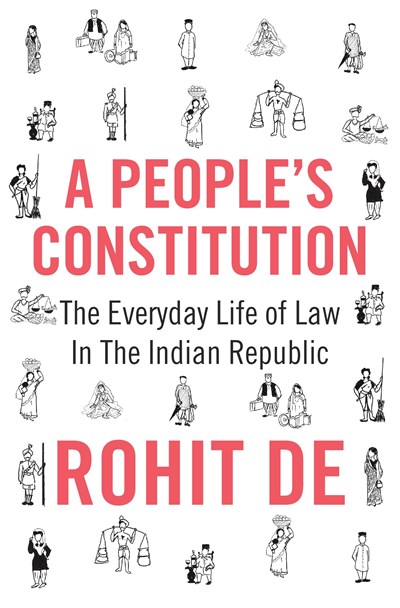
It has long been contended that the Indian Constitution of 1950, a document in English created by elite consensus, has had little influence on India’s greater population. Drawing upon the previously unexplored records of the Supreme Court of India, A People’s Constitution upends this narrative and shows how the Constitution actually transformed the daily lives of citizens in profound and lasting ways. This remarkable legal process was led by individuals on the margins of society, and Rohit De looks at how drinkers, smugglers, petty vendors, butchers, and prostitutes—all despised minorities—shaped the constitutional culture.
The Constitution came alive in the popular imagination so much that ordinary people attributed meaning to its existence, took recourse to it, and argued with it. Focusing on the use of constitutional remedies by citizens against new state regulations seeking to reshape the society and economy, De illustrates how laws and policies were frequently undone or renegotiated from below using the state’s own procedures. De examines four important cases that set legal precedents: a Parsi journalist’s contestation of new alcohol prohibition laws, Marwari petty traders’ challenge to the system of commodity control, Muslim butchers’ petition against cow protection laws, and sex workers’ battle to protect their right to practice prostitution.
Exploring how the Indian Constitution of 1950 enfranchised the largest population in the world, A People’s Constitution considers the ways that ordinary citizens produced, through litigation, alternative ethical models of citizenship.
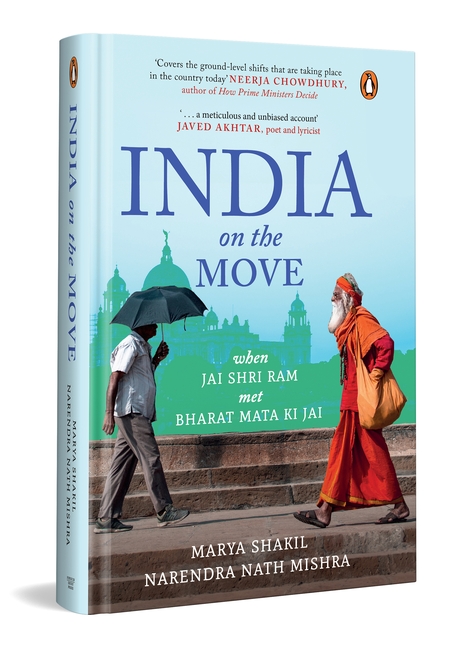
Things start to heat up in the national capital when protests erupt in the campus of JNU against the protestors of the judicial hanging of Afsal Guru and Maqbool Bhat. Very soon the students would go from being research scholars to ‘jihadis’, ‘violent communists’ and ‘anti-nationals’ resulting in the larger questions of a true nationalist.
Slogans like Bharat mata ki jai and Jai Shri Ram, which were traditionally used to express reverence to the nation and a salutation to Lord Rama respectively, have been appropriated as political slogans. Whilst until now, Bharat Mata ki Jai and Jai Shree Ram ran parallel in the country’s political discourse, today they lead the same way. On one hand, there are those who view patriotism and nationalism as synonymous with blind obedience and conformity. On the other, those who believe in a more inclusive and diverse India, where dissent and criticism are essential components of a thriving and functioning democracy. This book attempts to view events following the JNU event, the farmers’ protest, Balakot strikes and the subsequent unravelling of deep fissures within us.
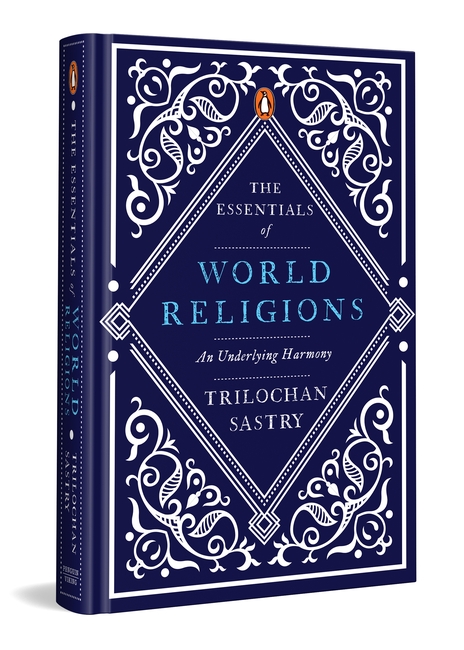
It may be the twenty-first century but religious tensions and conflicts continue all across the world. Even today, religion continues to play an unparalleled role in the lives of individuals and nations with people and leaders pitting one religious identity against another. But the question that needs to be asked is this: are all religions fundamentally different from each other?
What if we go back to the source texts of all great religions of the world? What will we find?
Will we find a mountain of differences or a sea of harmony? This book addresses this question and is sure to surprise you with its findings.
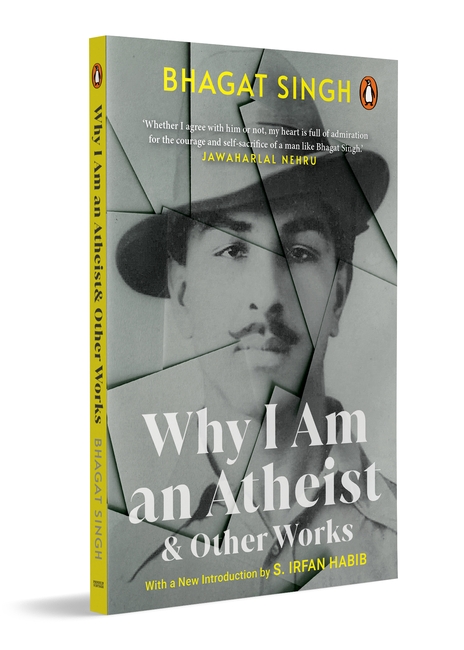
Bhagat Singh, a name that echoes through the annals of India’s struggle for independence, was not only a revolutionary freedom fighter, but also a profound thinker. ‘Why I Am An Atheist and Other Works’ encapsulates his fearless spirit and reveals his intellectual depth through a collection of essays, letters, and speeches. Singh’s writings include his statements regarding his involvement in the Central Legislative Assembly bombing to his introspective essays penned in prison, such as his renowned ‘Why I Am An Atheist’. This compilation immortalizes Singh’s unwavering dedication to the cause, showcasing his courage, defiance, and vision that continue to inspire generations. With an introduction by esteemed historian and expert on Bhagat Singh, Dr. S. Irfan Habib, this is a chance to experience the mind of a martyr whose legacy transcends time and ignites the flame of patriotism and revolution.

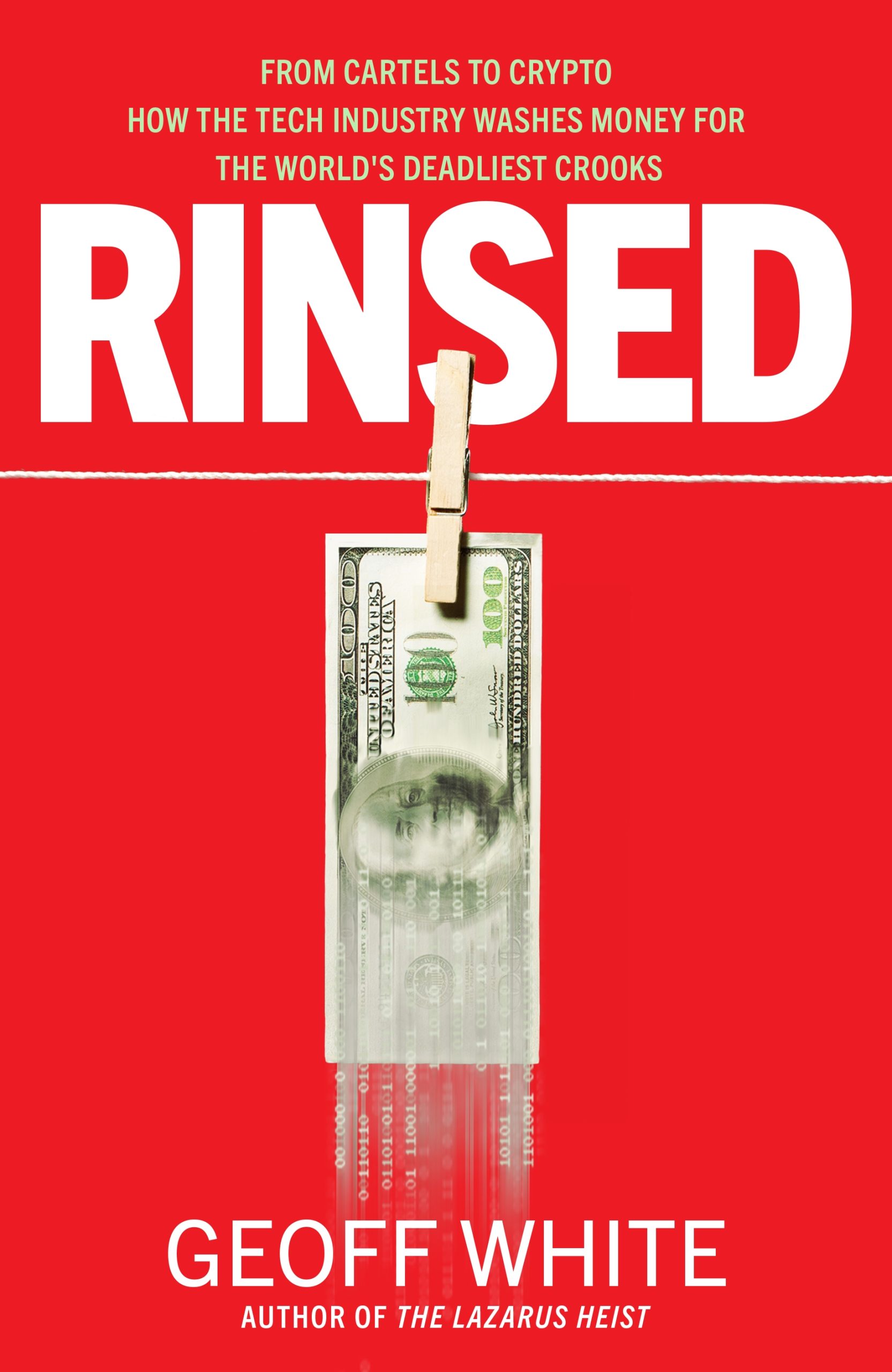
‘Rinsed is a triumph. If you want to understand how the chaotic world around us really works, read this book!’ MILES JOHNSON, AUTHOR OF CHASING SHADOWS
‘A riveting look at not only the nuts and bolds of cons and crimes but the techniques detectives use to stalk cyber criminals’ FINANCIAL TIMES
For as long as people have been stealing money, there has been an industry ready to wash it. But what happened when our economy went digital? How does the global underworld wash its dirty money in the Internet age?
Rinsed reveals how organized crooks have joined forces with the world’s most sophisticated cybercriminals. The result: a vast virtual money-laundering machine too intelligent for most authorities to crack. Through a series of jaw-dropping cases and interviews with insiders at all levels of the system, Geoff White shows how thieves are uniting to successfully get away with the most atrocious crimes on an unprecedented scale.
The book follows money from the outrageous luxury of Dubai hotels to sleepy backwaters of coastal Ireland, from the backstreets of Nigeria to the secretive zones of North Korea, to investigate this new cyber supercartel. Through first-hand accounts from the victims of their devastating crimes, White uncovers the extraordinary true story of hi-tech laundering – and exposes its terrible human cost.
‘Rinsed is as twisty, colourful and terrifyingly eye-opening as the people White investigates. You’ll never look at wealth, technology and crime in the same way’ CARA MCGOOGAN, AUTHOR OF THE POISON LINE
‘A gripping look at the battle between cops and criminals on the new frontier of financial crime’ BRADLEY HOPE, CO-AUTHOR OF BILLION DOLLAR WHALE

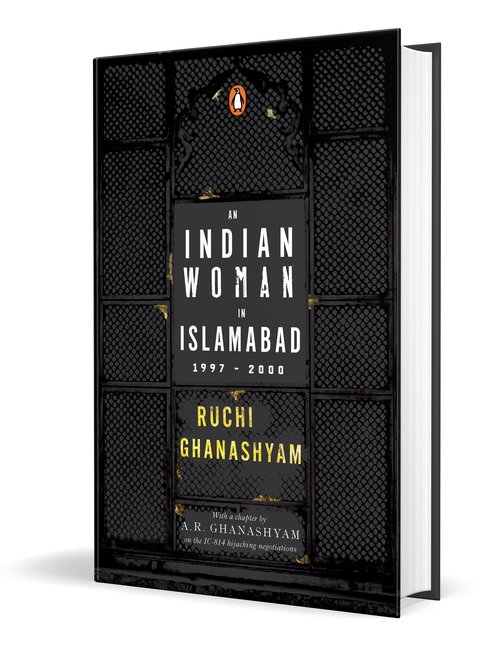
As the first Indian woman diplomat stationed in Islamabad, Ruchi Ghanashyam unveils the intricacies of cross-border relationships and the relentless drumbeat of history as witnessed through the prism of political upheavals. From 1997 to 2000, Ghanashyam and her husband traversed the labyrinthine corridors of Islamabad, bearing witness to seismic events that shook the region to its core. From the thunderous echoes of the India-Pakistan nuclear tests to the harrowing shadows of the Kargil conflict, their tale unfolds against the backdrop of geopolitical upheaval. In a riveting twist, A.R. Ghanashyam, the author’s husband, unveils his first-hand account of the tense moments preceding the Indian Airlines flight IC 814 hijacking, offering a gripping glimpse into the heart of crisis management.
Yet, amidst the tumult, Ambassador Ghanashyam’s narrative delves deeper, unravelling gender dynamics in a society steeped in tradition and inviting us to contemplate not just the challenges facing Pakistan but also the boundless potential for change and understanding. Through her discerning analysis, she exposes the layers of tradition that shape societal norms, offering a compelling examination of the challenges and opportunities inherent in the region’s sociopolitical landscape.?
This timely and compelling work stands as a testament to the enduring power of diplomacy in navigating the currents of global affairs.

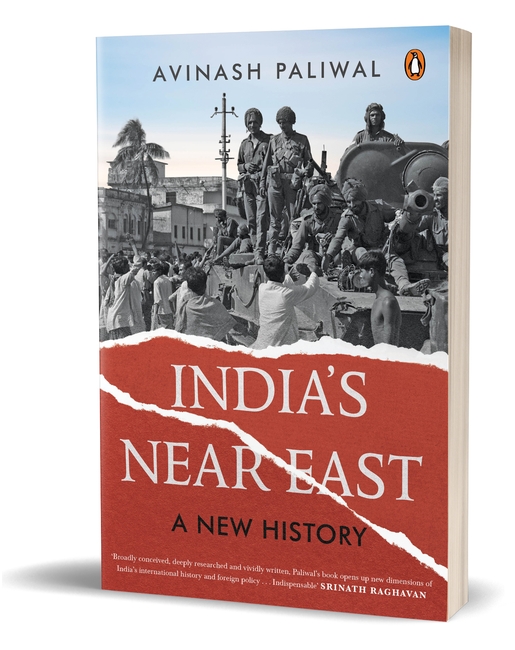
Celebrated as a theatre of geo-economic connectivity typified by the ‘Act East’ policy, India’s near east is key not only to its great-power rivalry with China, which first boiled over in the 1962 war, but to the idea(s) of India itself. It is also one of the most intricately partitioned lands anywhere on Earth. Rent by communal and class violence, the region has birthed extreme forms of religious and ethnic nationalisms and communist movements. The Indian state’s survival instinct and pursuit of regional hegemony have only accentuated such extremes.
This book scripts a new history of India’s eastward-looking diplomacy and statecraft. Narrated against the backdrop of separatist resistance within India’s own northeastern states, as well as rivalry with Beijing and Islamabad in Myanmar and Bangladesh, it offers a simple but compelling argument. The aspirations of ‘Act East’ mask an uncomfortable truth: India privileges political stability over economic opportunity in this region. In his chronicle of a state’s struggle to overcome war, displacement and interventionism, Avinash Paliwal lays bare the limits of independent India’s influence in its near east.
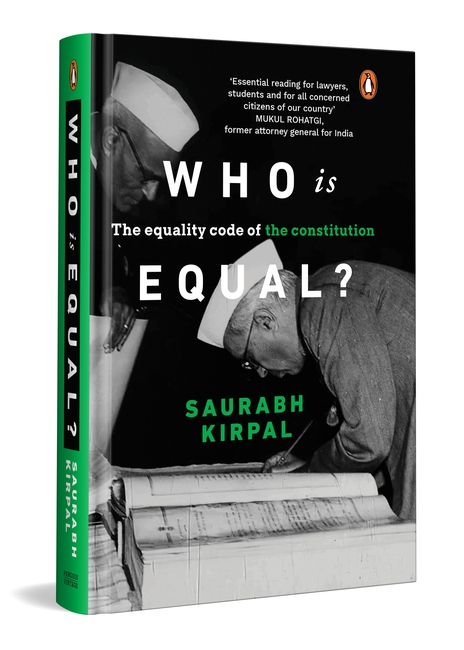
In 1950, we, the people of India, gave ourselves a constitution that promised justice, liberty and equality to all its citizens. Decades later, as a nation, we still struggle with inequality in various forms—religion, sex, caste, gender. As we forge ahead, it is imperative to ask, ‘who is equal?’, and ‘is the idea of equality elusive to achieve?’
In his new book, Saurabh Kirpal, a senior Supreme Court lawyer, seeks to untangle the philosophical and practical tangents of inequality prevalent in our country. He presents to the readers the explanation and understanding of the existing laws and discusses theories that allow a close inspection of concerns over a spectrum. Well-researched, insightful and drawn from experience, Who is Equal?, positions India at the intersection of equality and inequality, and delivers a perspective that is retrospective and contemporary.