Seventy-five years after Independence, India has much to be proud of. We are both the world’s biggest democracy and the fastest-growing large economy. Yet, we also face profound challenges that hinder both individual well-being and aggregate growth, including education and skills, health and nutrition, public safety, justice, social protection, and jobs.
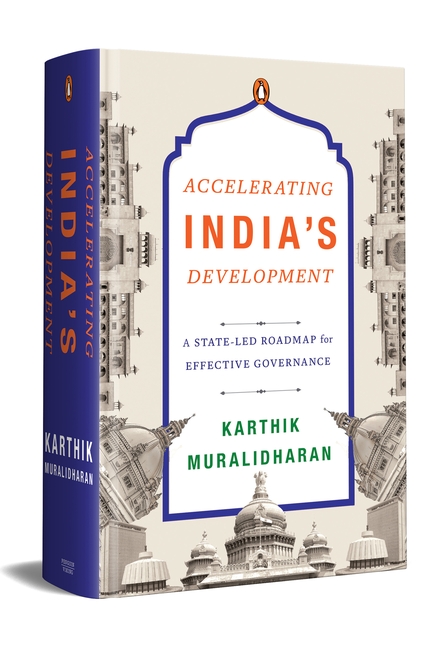
This seminal book systematically analyses India’s governance challenges, especially in delivering essential public services, and highlights how these are limiting India’s development. Drawing on a wealth of research and practical insights, it provides actionable, evidence-based strategies, emphasizing state-level reforms as critical for India’s advancement.
Accelerating India’s Development is addressed to all Indians—leaders, officials, entrepreneurs, teachers, students, citizens, and civil society—and provides an urgent call to action. It argues that building a more effective state is the great unfinished task of Indian democracy, because quality public services are key to translating the political equality of ‘one person, one vote’ into greater equality of opportunity for all Indians.
Every chapter showcases the author’s dedication to bridging the gap between scholarly research, public understanding, and actionable governance. This book is a testament to cautious optimism and the belief that with the right public systems in place, India’s next twenty-five years can be a period of unprecedented growth and societal enrichment.

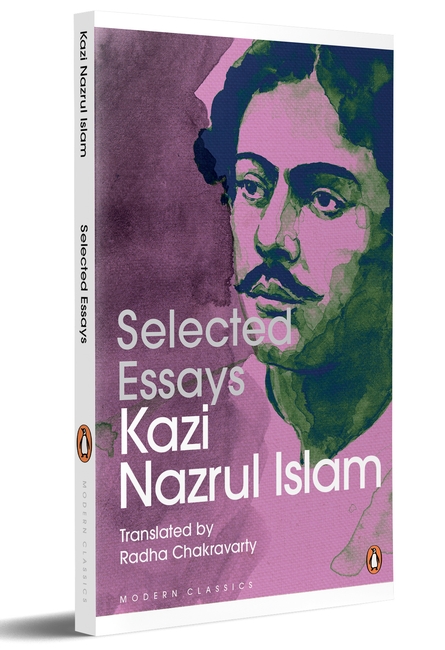
Kazi Nazrul Islam (1899-1976) is widely remembered as the fiery iconoclast who fought against the structures of oppression and orthodoxy. The iconic ‘rebel poet’ of Bengal, Nazrul continues to be loved for his songs and poetry. But what of his prose, his journalism, and his politics?
Selected Essays reveals to us the extraordinary versatility of Nazrul as an essayist. Addressing subjects as diverse as social reform, politics, communal harmony, environmental concerns, education, aesthetics, ethics, and philosophy, this rich collection showcases Nazrul’s dynamic vision and unique use of language as an instrument of change. The essays chart his evolving consciousness as a thinker, writer and activist, offering vivid glimpses of the ethos of his times, his relationships with leading figures such as Tagore and Gandhi, and his active engagement with social, political and cultural processes. These new translations bring Nazrul’s powerful voice to life, all its vibrant immediacy.

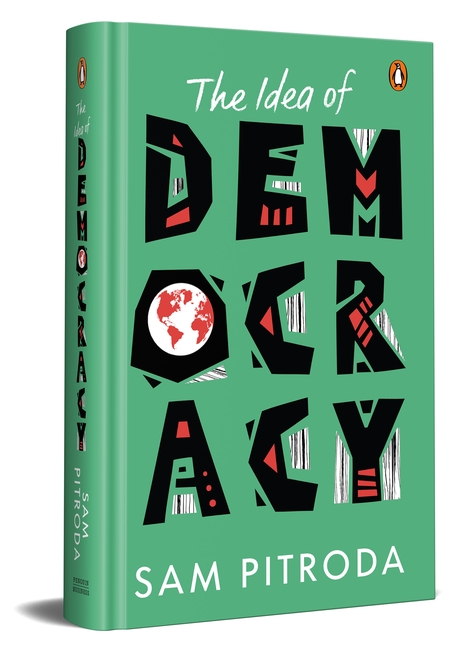
Today global democracy is at a crossroads because of the rise in polarized politics, authoritarian regimes and the use of social media to manipulate and amplify lies, hate and misinformation.
While electoral democracy continues to be the most prevalent form of government, a series of indicators measuring political and civic freedom reveal that the institution of democracy is in deep distress. With the liberal foundations of democracy shakier than ever before, confidence in institutions has plummeted. This book looks at this paradox of so-called democratic success coupled with its liberal decline. It provides a detailed analysis of the essence of democracy, its workings, the kind of values it needs to encapsulate, forces and safeguards which work in liberal democracy’s favour and how they can be preserved.
This book is meant to stimulate conversation, particularly among the youth on what the idea of democracy means to them and the role that they can play in helping democracy survive—and thrive—in the coming era.

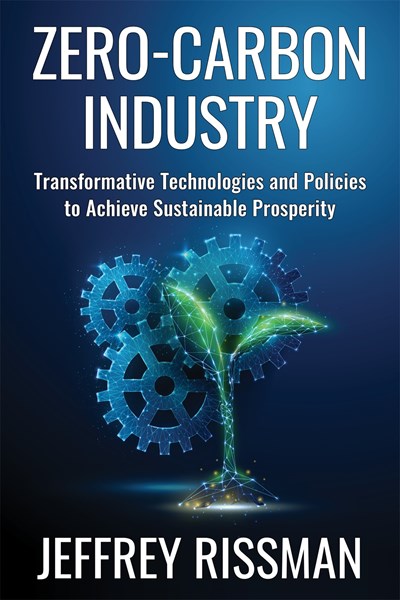
The power sector and transportation tend to dominate conversations about climate change, but there’s an under-the-radar source of climate pollution that must be addressed: industry.
Globally, industrial activity is responsible for one-third of human-caused greenhouse gas emissions. Though industry is a major emitter, it is essential for producing the tools we need to fight climate change—like wind turbines, solar panels, and electric vehicles—and for meeting our everyday needs. How can industry eliminate its climate pollution while supplying transformational technologies?
This book delivers a first-of-its-kind roadmap for the zero-carbon industrial transition, spotlighting the breakthrough innovations transforming the manufacturing sector and the policies that can accelerate this global shift. Jeffrey Rissman illustrates the scope of the challenge, diving into the workings of heavy polluters like steel, chemicals, plastics, cement, and concrete. He examines ways to affordably decarbonize manufacturing, such as electrifying industrial processes, using hydrogen, deploying carbon capture and storage, and growing material efficiency with lightweighting and 3D printing. But technologies are only part of the picture. Enacting the right policies—including financial incentives, research and development support, well-designed carbon pricing, efficiency and emissions standards, and green public procurement—can spur investment and hasten emissions reductions. Rissman provides a framework to ensure that the transition to clean industry enhances equity, health, and prosperity for communities worldwide.
Engaging and comprehensive, Zero-Carbon Industry is the definitive guide to decarbonizing the vast—yet often overlooked—global industrial sector.

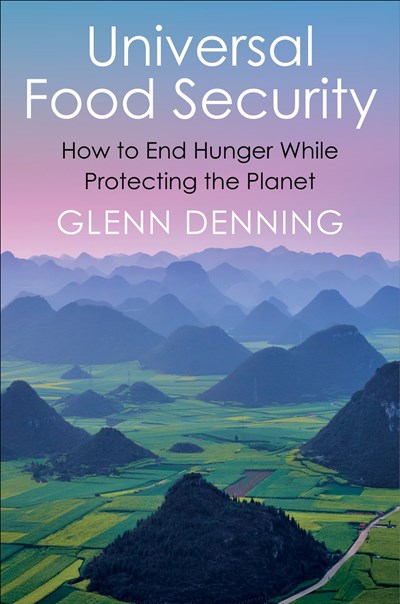
What would it take to achieve a genuinely food-secure world—one without hunger or malnutrition, where everyone gets to consume the right quantity and quality of food to live a healthy, active, and productive life?
Bringing about such a future requires transforming how our food is grown, managed, and distributed. From production to consumption, food systems must be sustainable, halting environmental degradation and even repairing the damage we have previously done.
This book provides an accessible guide to making healthy diets from sustainable food systems available to all. Glenn Denning bridges the divisive worlds of science, policy, and practice. He synthesizes the most relevant literature and shares personal perspectives and insights gained over four decades working in more than fifty countries, coupled with the real-world experience of hundreds of leading experts. Universal Food Security lays out key priorities—sustainable intensification, market infrastructure, postharvest stewardship, healthy diets, and social protection—and presents how to achieve food systems transformation.
Denning identifies the education and development of practitioner-leaders as the critical trigger of change. Universal Food Security informs and inspires those leaders—acting on their own and with others through institutions—to achieve a food-secure world. This book is an ideal handbook for students and practitioners looking to transform our food systems at all levels.

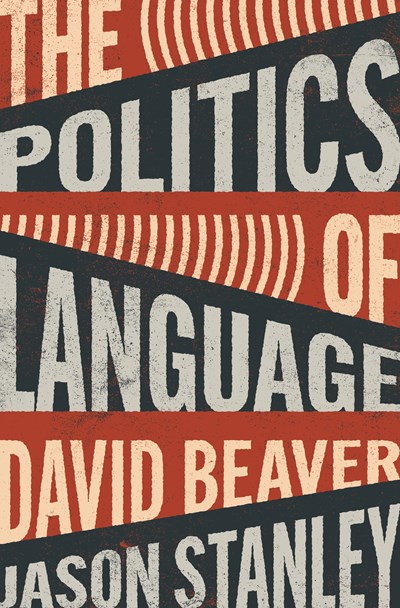
A provocative case for the inherently political nature of language.
In The Politics of Language, David Beaver and Jason Stanley present a radical new approach to the theory of meaning, offering an account of communication in which political and social identity, affect, and shared practices play as important a role as information. This new view of language, they argue, has dramatic consequences for free speech, democracy, and a range of other areas in which speech plays a central role.
Drawing on a wealth of disciplines, The Politics of Language argues that the function of speech―whether in dialogue, larger group interactions, or mass communication―is to attune people to something, be it a shared reality, emotion, or identity. Reconceptualizing the central ideas of pragmatics and semantics, Beaver and Stanley apply their account to a range of phenomena that defy standard frameworks in linguistics and philosophy of language―from dog whistles and covert persuasion to echo chambers and genocidal speech. The authors use their framework to show that speech is inevitably political because all communication is imbued with the resonances of particular ideologies and their normative perspectives on reality.
At a time when democracy is under attack, authoritarianism is on the rise, and diversity and equality are being demanded, The Politics of Language offers a powerful new vision of the language of politics, ideology, and protest.

… the powerful play goes on, and you may contribute a verse.
— Walt Whitman
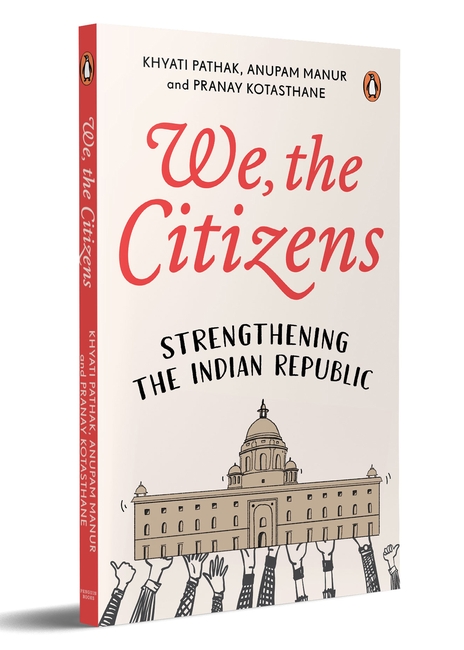
What is a republic? How do markets work? What is the role of society in bringing about change? These may be abstract questions, but they have a concrete impact on all of us.
We, the citizens, live at the intersection of the Indian state, market and society. Yet, many of us are unaware of what these entities stand for, how they interact with each other, and how they touch our lives.
We, The Citizens, by Khyati Pathak, Anupam Manur and Pranay Kotasthane, decodes public policy in the Indian context in a graphical narrative format relatable to readers of all ages. If you want to be an engaged citizen, aspire to be a positive change-maker, or wish to understand our sociopolitical environment, this book is for you.
The idea of India was an audacious dream. The fulfilment of this dream lies upon We, the citizens.
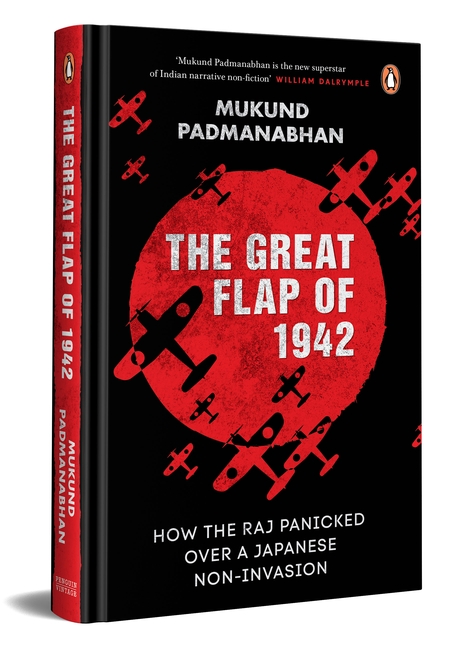
The Great Flap of 1942 is a narrative history of a neglected and scarcely known period—between December 1941 and mid-1942—when all of India was caught in a state of panic. This was largely a result of the British administration’s mistaken belief that Japan was on the verge of launching a full-fledged invasion. It was a time when the Raj became unduly alarmed, when the tongue of rumour wagged wildly about Japanese prowess and British weakness and when there was a huge and largely unmapped exodus (of Indians and Europeans) from both sides of the coastline to ‘safer’ inland regions. This book demonstrates, quite astonishingly, that the Raj cynically encouraged the exodus and contributed to the repeated cycles of rumour, panic and flight. It also reveals how the shadow of the Japanese threat influenced the course of nationalist politics, altered British attitudes towards India and charted the course towards Independence.
The Great Flap of 1942—the title refers to an expression used by British bureaucrats in India—traces a broad narrative arc, starting with the Japanese attacks in South-East Asia. The assault on Malaya, the conquest of Singapore, the bombing and eventual occupation of Burma, and the Japanese Navy’s foray into the Indian Ocean are examined in the light of the tremendous impact they had on India.

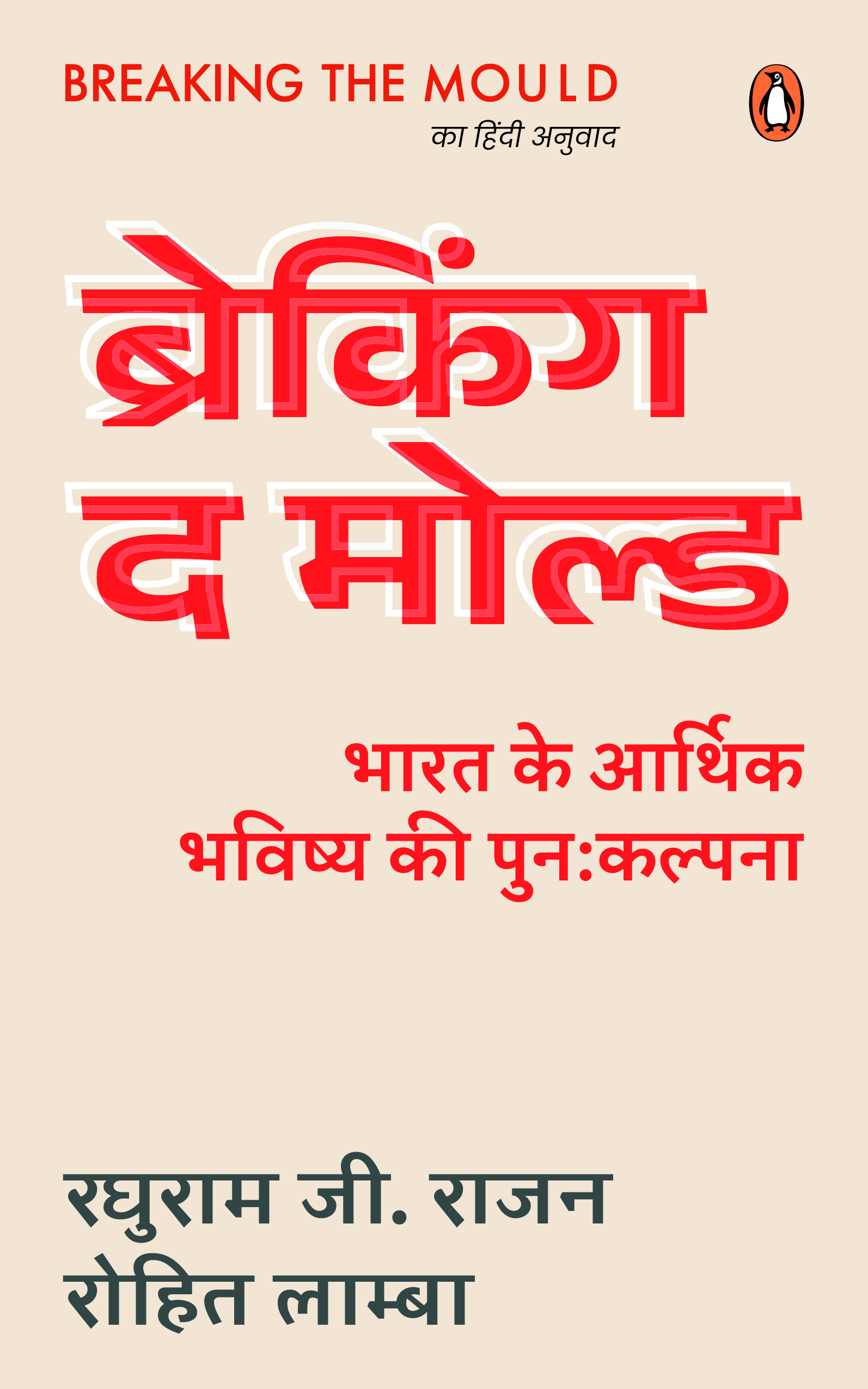
आज का भारत किधर जा रहा है? क्या यह इंग्लैंड को पाँचवे पायदान से पछाड़कर आगे वाकई विकास की राह पर है या अपने लाखों-करोड़ों युवाओं को रोजगार देने में नाकामयाब हो रहा है? भारत आज चौराहे पर है। गलाकाट प्रतियोगिता और ऑटोमेशन इसके विनिर्माण क्षेत्र के लिए खतरा बन गए हैं। इस किताब में लेखकद्वय कह रहे हैं कि हम कैसे अपने मानव संसाधन पर ध्यान देकर और अपने मैनुफैक्चरिक सेक्टर को बढ़ाकर देश को तरक्की की राह पर ला सकते हैं। इसके लिए आर्थिक सुधार, संस्थाओं का लोकतांत्रिकरण और विकेंद्रीकरण पर ध्यान देना होगा।

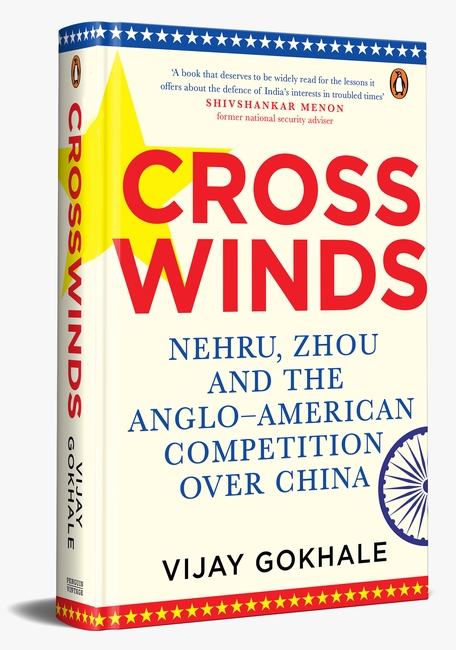
From the author of the Ramnath Goenka Award-winning book, The Long Game: How the Chinese Negotiate with India
The establishment of a communist regime in China upended Western plans for the post-WWII Asian order. As the United States of America and Great Britain grappled with the implications of this new China in terms of their strategic and economic interests in the western Pacific, significant divergences also emerged. A newly independent India seeking to define its place and role in the region under conditions of Cold War was hoping to enlist China as partner.
This book, based on archival material, outlines India’s efforts to craft a foreign policy in the context of the Anglo–American competition in the Far East. The roles played by the towering personalities of that era—Jawaharlal Nehru, Zhou Enlai, Harry S. Truman, Dwight D. Eisenhower, John Foster Dulles, Winston Churchill, Anthony Eden and Krishna Menon—and the personal chemistry between them are woven into the narrative to paint a picture of the nuts and bolts of Indian diplomacy during the early years of the nation.