



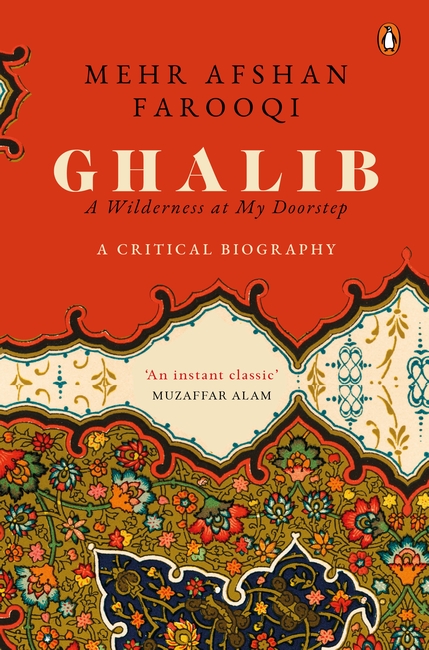
Mirza Asadullah Khan Ghalib was born in Agra in the closing years of the eighteenth century. A precocious child, he began composing verses at an early age and gained recognition while he was still very young. He wrote in both Urdu and Persian and was also a great prose stylist. He was a careful, even strict, editor of his work who took to publishing long before his peers. His predilection for writing difficult, obscure poetry peppered with complex metaphors produced a unique commentarial tradition that did not extend beyond his work. Commentaries on his current Urdu divan have produced a field of critical writing that eventually lead to the crafting of a critical lens with which to view the classical ghazal.
The nineteenth century was the height of European colonialism. British colonialism in India produced definitive changes in the ways literature was produced, circulated and consumed. Ghalib responded to the cultural challenge with a far-sightedness that was commendable. His imagination sought engagement with a wider community of readers. His deliberate switch to composing in Persian shows that he wanted his works to reach beyond political boundaries and linguistic barriers.
Ghalib’s poetic trajectory begins from Urdu, then moves to composing almost entirely in Persian and finally swings back to Urdu. It is nearly as complex as his poetry. However, his poetic output in Persian is far more than what he wrote in Urdu. More important is that he gave precedence to Persian over Urdu. Ghalib’s voice presents us with a double bind, a linguistic paradox. Exploring his life, works and philosophy, this authoritative critical biography of Ghalib opens a window to many shades of India and the subcontinent’s cultural and literary tradition.
Catagory: Reference
50 Toughest Questions of Life
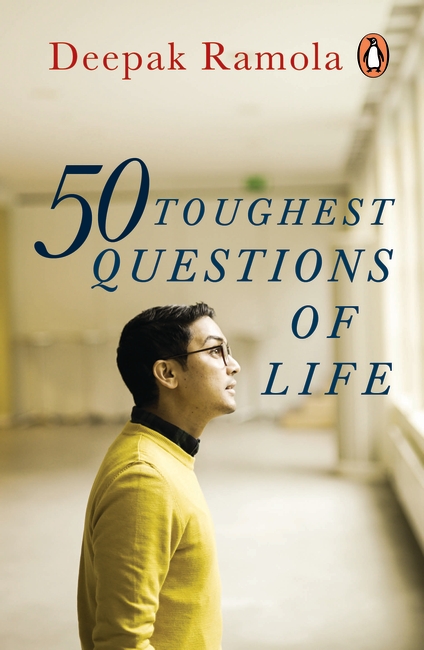
50 Toughest Questions of Life invites people to have a conversation about themselves with themselves. Deepak Ramola’s quest began after he was inspired by the life lesson of a young girl who said, ‘Life is not about giving easy answers, but answering tough questions.’ Over the years, Ramola has amassed life lessons from inspirational sources across the world: from the women of the Maasai tribe to young girls in Afghanistan and sex workers in Kamathipura; from the lessons of earthquake survivors in Nepal to Syrian refugees in Europe, among many more.
This book is a collection of fifty such questions that made him pause, along with a bouquet of answers, anecdotes, stories and notes from his journey of teaching human wisdom for a decade. Strikingly fresh, tender, yet searing, these questions will make you reflect and inspire you to push beyond your boundaries.
Somanatha
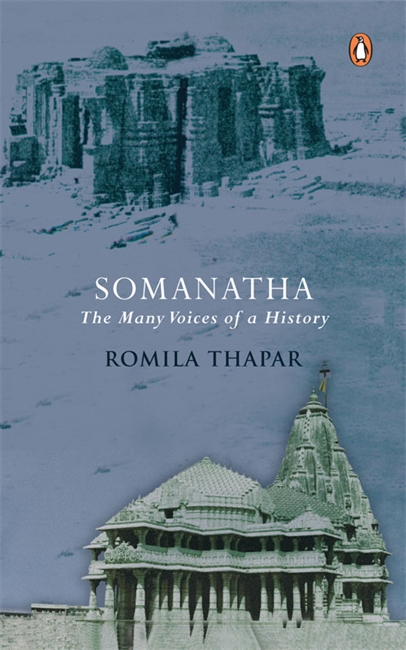
It was first depicted as a trauma for the Hindu population not in India, but in the House of Commons. The triumphalist accounts of the event in Turko-Persian chronicles became the main source for most eighteenth-century historians. It suited everyone and helped the British to divide and rule a multi-millioned subcontinent. In her new book, Romila Thapar, the doyenne of Indian historians, reconstructs what took place by studying other sources, including local Sanskrit inscriptions, biographies of kings and merchants of the period, court epics and popular narratives that have survived. The result is astounding and undermines the traditional version of what took place. What makes her findings explosive is the fact that the current Hindu nationalist regime in India constantly utilizes a particular version of history
The Professional Companion
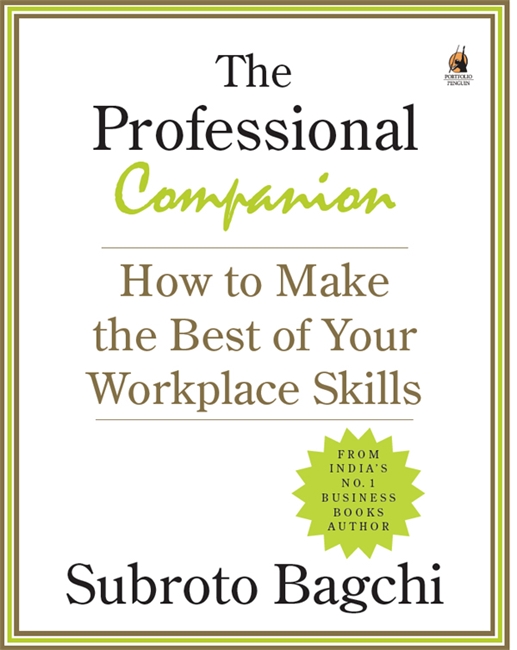
Are you a true professional? Would you like to become one? In The Professional, Subroto Bagchi showed how one can behave professionally-or otherwise-in diverse situations, and asked the key question: What does it mean to be a professional? Inspired by that game-changing book, many aspiring professionals wanted to test their mettle using Bagchi’s tools. The Professional Companion fulfils that need. In this do-it-yourself workbook that is meant as a companion volume to The Professional, Bagchi takes you through simple exercises that allow you to understand how professional your approach is in a given context, and helps you develop a wider skill set and a more committed outlook.The Professional Companion is your very own personalized guide to excelling in today’s world.
Bliss
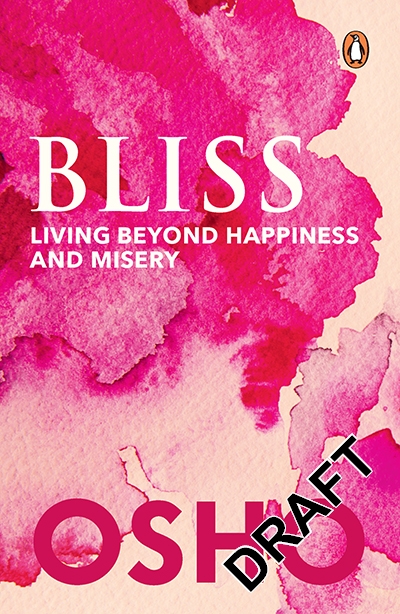
Everyone is searching for happiness, but they are looking in the wrong place-outside. Real happiness, bliss, can only be found by going inside. Commenting on the ancient wisdom of the Shiva Sutras, Osho shows how to avoid the outside traps of desire and attachment. If you can learn the knack of dis-identifying with the mind, you will find that bliss is hidden within all of everyday experience. Being human happens when you get out of the vicious circle called mind.
Biryani
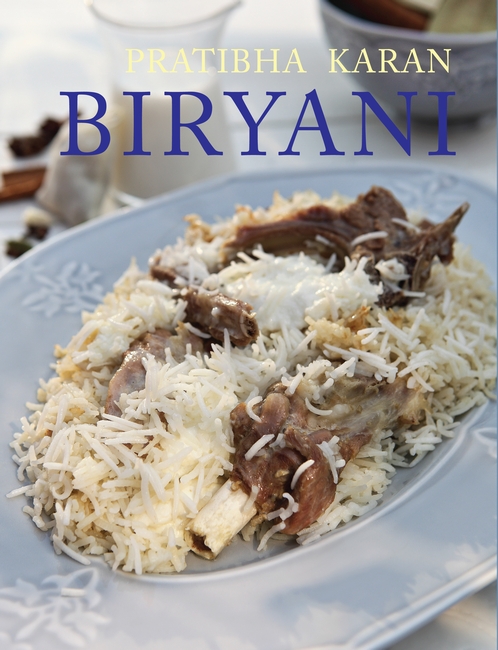
The biryani is India’s most beloved dish-one that has spread to all the four corners
of the country and assumed many forms.
It originated in the Mughal courts, flowering in the jagirs of Awadh, and it is in Lucknow, Delhi and
the small Muslim principalities of north India that one finds the classic versions, subtle, refined and
delicately flavoured. Pratibha Karan gives us not just the definitive recipes from these regions but
unearths rare and old dishes such as a biryani made with oranges, Rose Biryani and Kebab Biryani.
In the south, the biryani has an equally distinguished lineage, if not more so. There are the blue-blooded
biryanis of Hyderabad which include gems such as the Doodh ki Biryani, Keeme ki biryani
and Bater ki biryani. Away from the royal courts, the biryani has adapted itself into a spicy local
delicacy in Tamil Nadu, with many towns like Salem, Aambur, Dindigul boasting of their own
signature version of the dish. Kerala too is home to many-a prawn biryani spiced with curry leaves
and aniseed, a mutton one laced with star anise.
There are as many stunning variations in the east and west-Goan biryanis using vinegar and
olives; unusual dishes from the Parsi and Sindhi communities; Bengali adaptations using fish and
mustard seeds, even a dish from Assam!
Immaculately researched, full of extraordinary recipes, and beautifully designed and photographed,
Biryani is the ultimate book on this princely dish.
The Gene
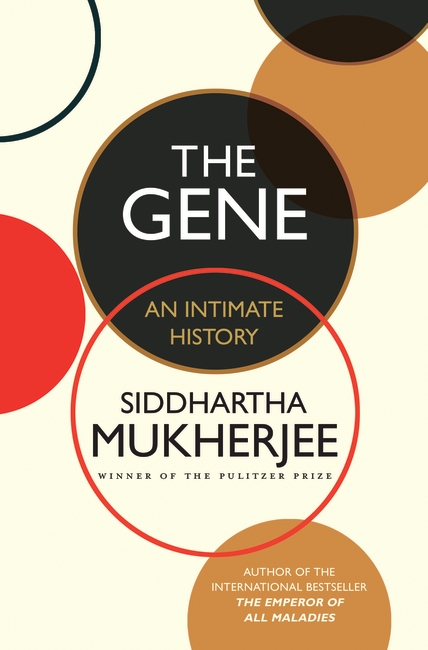
Spanning the globe and several centuries, The Gene is the story of the quest to decipher the master-code that makes and defines humans, that governs our form and function.
The story of the gene begins in an obscure Augustinian abbey in Moravia in 1856, where a monk stumbles on the idea of a ‘unit of heredity’. It intersects with Darwin’s theory of evolution, and collides with the horrors of Nazi eugenics in the 1940s. The gene transforms post-war biology. It reorganizes our understanding of sexuality, temperament, choice and free will. Above all, this is a story driven by human ingenuity and obsessive minds-from Charles Darwin and Gregor Mendel to Francis Crick, James Watson and Rosalind Franklin, and the thousands of scientists still working to understand the code of codes.
This is an epic, moving history of a scientific idea being brought to life, by the author of The Emperor of All Maladies. But woven through The Gene, like a red line, is also an intimate history-the story of Mukherjee’s own family and its recurring pattern of mental illness, reminding us that genetics is vitally relevant to everyday lives. These concerns reverberate even more urgently today as we learn to ‘read’ and ‘write’ the human genome-unleashing the potential to change the fates and identities of our children.
Majestic in its ambition, and unflinching in its honesty, The Gene gives us a definitive account of the fundamental unit of heredity-and a vision of both humanity’s past and future.
The Big Book of Malice

‘Good people can be crashing bores. Evil men who combine evil-doing with drunkenness, debauchery and making illicit money make more interesting characters because they pack their lives with action. They do what most of us would like to do but do not have the guts to.’-Khushwant Singh
Malice. The word is synonymous with Khushwant Singh; his pen has spared no one. For over four decades as India’s most widely read columnist, he has commented on just about everything: religion, politics, our future, our past, prohibition, impotency, presidents, politicians, cricket, dog-haters, astrologers, the banning of books, the secret of 1ongevity … the list is endless.
Candid to the point of being outrageous, Khushwant Singh makes both his reader and subject wince. He writes unabashedly on nose picking, wife bashing, bribing journalists, gender wars and the desires of an octogenarian; on Nehru and Edwina, Lalu, Bal Thackeray, Chandraswami and Sonia Gandhi, among host of others.
Khushwant Singh’s Big Book of Malice brings together some of his nastiest and most irreverent pieces. Witty, sharp and brutally honest, this collection is certain to delight and provoke readers of all ages.
How to Read Amartya Sen
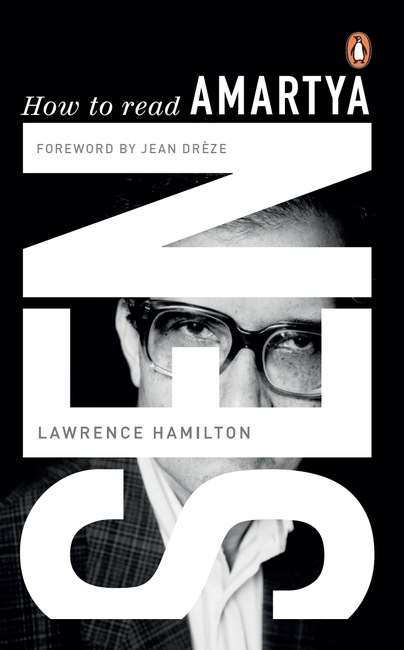
Nobel Laureate Amartya Sen is one of the world’s best-known voices for the poor and the downtrodden, and an inspiration for the proponents of justice across the globe. He has contributed almost without peer to the study of economics, philosophy and politics, transforming social choice theory, development economics, ethics, political philosophy and Indian political economy, to list but a few.
This book offers a much-needed introduction to Amartya Sen’s extraordinary variety of ideas. Lawrence Hamilton provides an excellent, accessible guide to the full range of Sen’s writings, contextualizing his ideas and summarizing the associated debates. In elegant prose, Hamilton reconstructs Sen’s critiques of the major philosophies of his time, assesses his now famous concern for capabilities as an alternative for thinking about poverty, inequality, gender discrimination, development, democracy and justice, and unearths some overlooked gems. Throughout, these major theoretical and philosophical achievements are subjected to rigorous scrutiny.
How to Read Amartya Sen is a major work on one of the most influential economists and philosophers of the last few centuries. It will be illuminating for readers keen to understand the breadth of Sen’s vision, and an invaluable resource for scholars, policy makers and global activists.
An Idea Whose Time Has Come
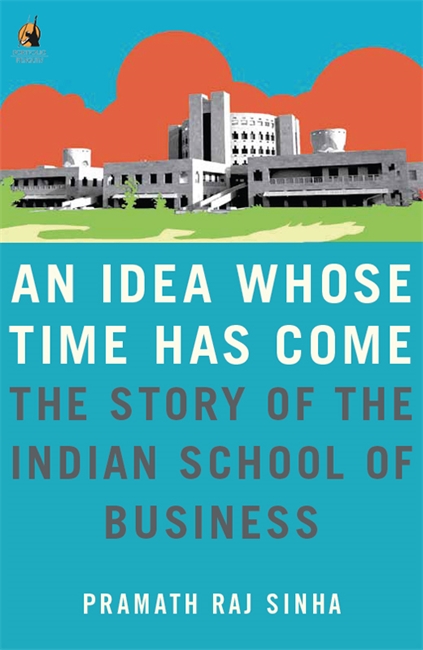
Ten years ago, the founders of the Indian School of Business, Hyderabad articulated a vision that was as daunting to execute as it was simple to state: to build a world-class business school in India.
The rest is history: within a decade the ISB grew from a start-up venture to globally top-ranked business school, named among the top twenty business schools in the world three years in a row, with the distinction of being the youngest business school ever to enter the world top twenty rankings.
An Idea Whose Time Has Come traces the ISB’s eventful history and also examines the reasons that account for the institute’s success. What emerges is a tale of perseverance and dedication, of challenges met and rewards reaped, and of an unshakeable idea that was painstakingly transformed into an invincible institution. It is no wonder that the ISB continues to attract thousands of confident, purposeful men and women every year and moulds them into talented professionals.