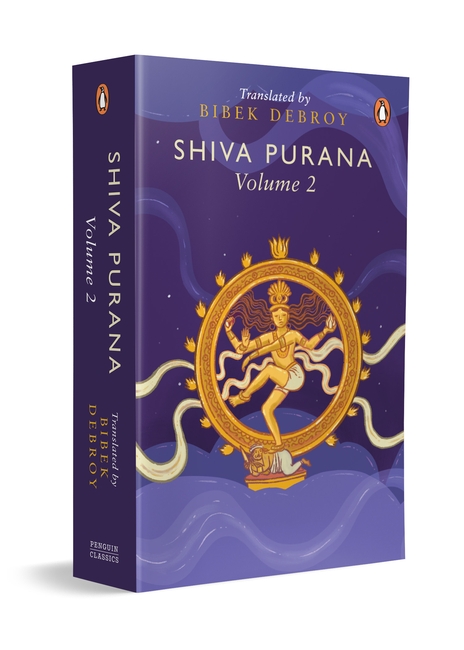
The Shiva Purana is the fifth book in an eighteen-part series on the sacred Hindu texts known collectively as the Puranas. Translated with great rigor and precision, Bibek Debroy recounts the tales of creation and the many myths that surround Lord Shiva in twenty-four thousand shlokas and an introduction that simplifies the myth and history of the Puranas.
Brimming with insight and clarity, this translation presents readers with an opportunity to truly understand classical Indian texts. Previous translations by Bibek Debroy include the Bhagavata Purana, the Markandeya Purana, the Brahma Purana, and the Vishnu Purana.
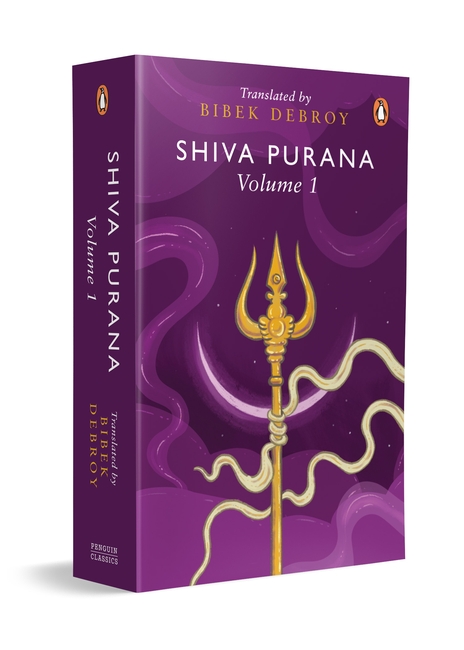
The Shiva Purana is the fifth book in an eighteen-part series on the sacred Hindu texts known collectively as the Puranas. Translated with great rigor and precision, Bibek Debroy recounts the tales of creation and the many myths that surround Lord Shiva in twenty-four thousand shlokas and an introduction that simplifies the myth and history of the Puranas.
Brimming with insight and clarity, this translation presents readers with an opportunity to truly understand classical Indian texts. Previous translations by Bibek Debroy include the Bhagavata Purana, the Markandeya Purana, the Brahma Purana, and the Vishnu Purana.

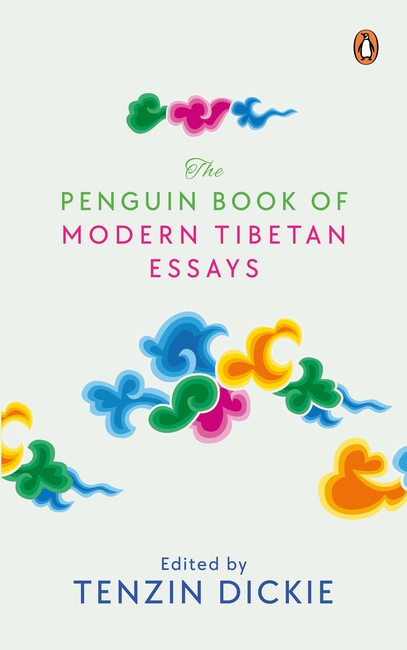
The Penguin Book of Modern Tibetan Essays is a groundbreaking anthology of modern Tibetan non-fiction. This unprecedented collection celebrates the art of the modern Tibetan essay and comprises some of the best Tibetan writers working today in Tibetan, English and Chinese.
There are essays on lost friends, stolen inheritances, prison notes and secret journeys from-and to-Tibet, but there are also essays on food, the Dalai Lama’s Gar dancer, love letters, lotteries and the Prince of Tibet. The collection offers a profound commentary not just on the Tibetan nation and Tibetan exile, but also on the romance, comedy and tragedy of modern Tibetan life.
For this anthology, editor and translator Tenzin Dickie has commissioned and collected 28 essays from 22 Tibetan writers, including Woeser, Jamyang Norbu, Tsering Wangmo Dhompa, Pema Bhum and Lhashamgyal.
This book of personal essays by Tibetan writers is a landmark addition to contemporary Tibetan letters as well as a significant contribution to global literature.
Also available in a paperback edition outside the Indian subcontinent. To order online, visit https://www.amazon.com/Penguin-Book-Modern-Tibetan-Essays/dp/0143462326/ref=tmm_pap_swatch_0?_encoding=UTF8&qid=1685626767&sr=8-2

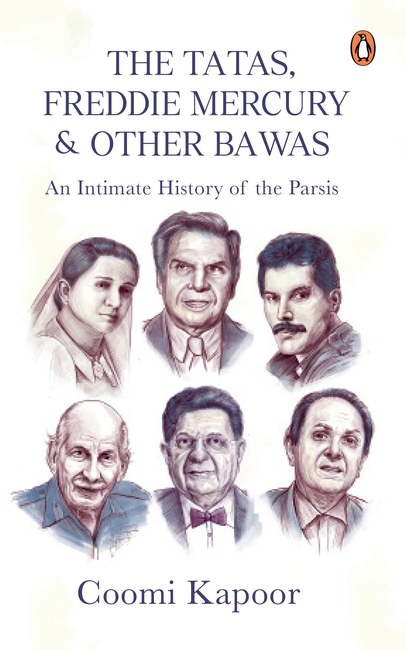
The Parsis are fast disappearing. There are now only around 50,000 members of the community in all of India. But since their arrival here from Central Asia, somewhere between the eighth and tenth centuries, the Parsis’ contribution to their adopted home has been extraordinary. The history of India over the last century or so is filigreed with such contributions in every field, from nuclear physics to rock and roll, by names such as Dadabhai Naoroji, Dinshaw Petit, Homi Bhabha, Sam Manekshaw, Jamsetji Tata, Ardeshir Godrej, Cyrus Poonawalla, Zubin Mehta and Farrokh Bulsara (aka Freddie Mercury). This is a revised and updated new edition – engaging and accessible – making it as the most intimate history of the Parsis by senior journalist and columnist Coomi Kapoor, herself a Parsi. The book pores through the names, stories, achievements and the continuing success of this tiny but extraordinary minority. She delves deep into both the question of what it means to be Parsi in India, as well as how the community’s contributions-from tanchoi silk to chikoos-became integral to what it meant to be Indian. In Kapoor’s hands, the story of the Parsis becomes a rip-roaring, incident-filled adventure: from dominating the trade with China to being synonymous with Bombay, once, arguably, a city defined by its Parsis; from the business success of the Tatas, the Mistrys, the Godrejs and the Wadias, to such current contributions as the manufacturing of COVID-19 vaccines by the Parsi-founded Serum Institute of India.

‘Call upon me
I will answer you’
Qur’an 40:60
The Secrets of Divine Love Journal is based on the award-winning book Secrets of Divine Love: A Spiritual Journey into the Heart of Islam. Through heart-centered reflections, insightful prompts, and thought-provoking questions, Secrets of Divine Love Journal can help you foster a deeper relationship with Allah by connecting you with the heart of your faith in a more intimate and inspiring way.

In Love, At Ease is a heartfelt, intimate reflection on the life of Pramukh Swami Maharaj who personified the eternal spiritual values of selfless love and service, humility, inclusiveness and stability. The book presents a roadmap to inner happiness and success based on the interactions of a spiritual master who guided people from different faiths and backgrounds through the journey of life

e is Eka-vachani, a king who always keeps his word; Eka-bani, an archer who strikes his target with the first arrow; and Eka-patni, a husband who is eternally and absolutely devoted to a single wife. He is maryada purushottam Ram, the supreme upholder of social values, the scion of the Raghu clan, jewel of the solar dynasty, the seventh avatar of Vishnu, God who establishes order in worldly life. Hindus believe that in stressful and tumultuous times chanting Ram’s name and hearing his tale, the Ramayan, brings stability, hope, peace and prosperity. Reviled by feminists, appropriated by politicians, Ram remains serene in his majesty, the only Hindu deity to be worshipped as a king.
What if, one day, you find yourself in a Himalayan cave, far away from the world? For Jeet, this is a choice he made after leaving city life behind.
One evening, a strange man called Adi, who does mysterious things, makes his way into Jeet’s cave. The two develop a friendship that will help Jeet unravel the secrets of the wild. In his pursuit to grow, Jeet travels to a mountain village that has been untouched by time and then up a sacred mountain, meeting some fascinating characters along his journey. On this quest from the surreal to the supernatural, Jeet untangles some of the most complex mysteries of the world, which often kept him awake at night in the city.
Intriguing, adventurous and containing the pearls of forgotten ancient Indian myths and legends, Caveman’s Secret Sauce has the right ingredients that are missing in society today.
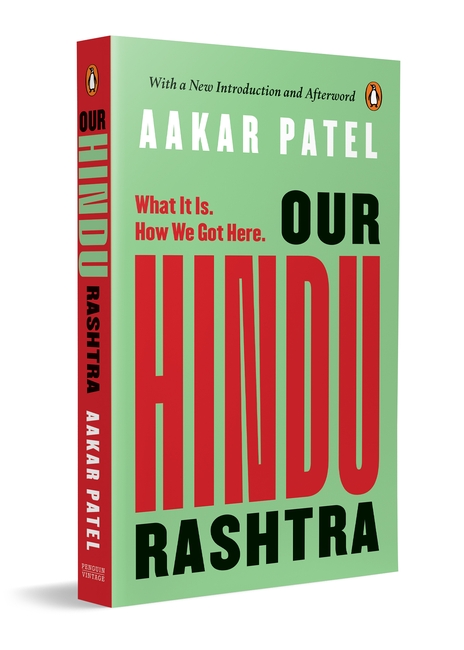
India has taken so sharp a turn in recent years that the very centre has shifted considerably. What led to this swing? Is it possible to trace the path to this point? Is there a way back to the just, secular, inclusive vision of our Constitution-makers?
This country has long been an outlier in its South Asian neighbourhood, with its inclusive Constitution and functioning democracy. The growth of Hindutva, in some sense, brings India in line with the other polities here. In Our Hindu Rashtra, writer and activist Aakar Patel peels back layer after layer of cause and effect through independent India’s history to understand how Hindutva came to gain such a hold on the country. He examines what it means for India that its laws and judiciary have been permeated by prejudice and bigotry, what the breach of fundamental rights portends in these circumstances, and what the all-round institutional collapse signifies for the future of Indians.
Most importantly, Patel asks and answers that most important of questions: What possibilities exist for a return? Thought-provoking and pulling no punches, this book is an essential read for anyone who wishes to understand the nature of politics in India and, indeed, South Asia.

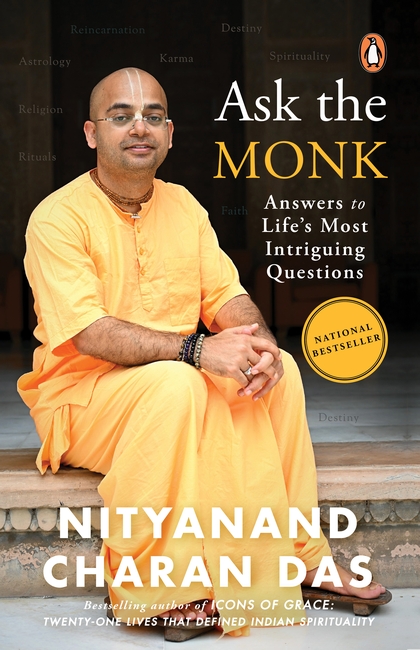
Asking questions is an important part of learning as it provides a unique framework for thinking and opens doors to unexpected revelations for us. Digging into how or why things are the way they are, paves the way for enlightenment.
On the contrary, keeping the doubts to ourselves can keep us from truth, thus depriving us from valuable opportunities life has to offer. As human beings, we must enquire and keep doing so. But what kind of enquiries are we supposed to make?
In Ask the Monk, celebrated monk Nityanand Charan Das lucidly answers over seventy frequently asked questions-by young and the old alike-on topics such as karma, religion versus spirituality, mind, God, destiny, purpose of life, suffering, rituals, religion, wars and so on. These answers that are extremely crucial to help you, the reader, embark on the journey of self-discovery and self-realization.