



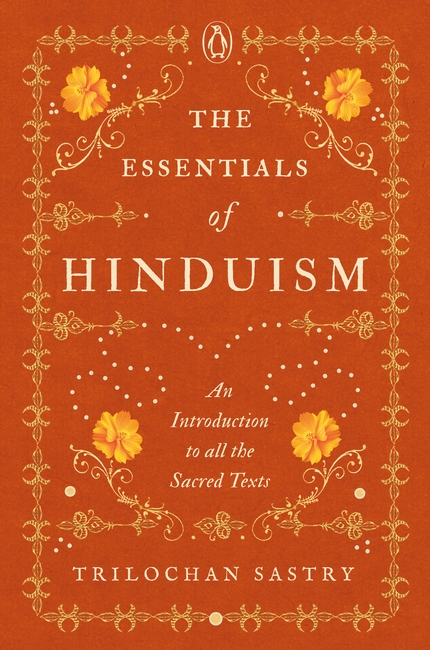
Hinduism is an ancient religion, philosophy and way of life. Unlike other great religions that are based on a small set of books, there are hundreds of texts in Hinduism, most of which are very voluminous. They span not merely centuries, but millennia. And most importantly, these ancient scriptures are all in Sanskrit which many do not know. Therefore for a beginner with an interest in Hinduism it is a daunting task as you don’t know where to start such a study.
In The Essentials of Hinduism, Trilochan Sastry unpacks all the ancient texts from the Vedas to the epics covering the entire range of scriptures and everything you need to know about them in an easy-to-read and accessible way making it of special interest to Hindus and those from other religions and nations, and even those who are agnostic or atheistic.
Catagory: Religion
The Cave
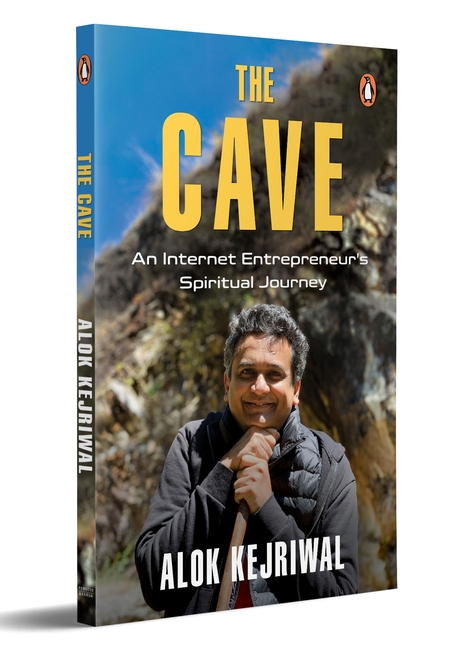
By the time he was thirteen, Alok Kejriwal had begun to have profound spiritual experiences. Separated from his parents at birth, he was raised under the loving care of his Nana and Nani. During the course of these life-altering events, Alok realized that his life was not going to be a usual one.
Over the next few years, Alok met unusual and blessed holy men who uplifted him. He visited temples and sacred places where he had transformative experiences. In November 2011, Alok visited a remote cave near Ranikhet in Uttarakhand that changed him forever.
The Cave is an insightful, honest and deeply personal account of Alok’s spiritual journey. With characteristic candour, he shares intimate aspects of his life that bring meaning and balance to his journey as a successful digital entrepreneur.
A playbook of the principles of success that Alok has acquired over the years, The Cave details the amazing opportunities that are available to us all, if only we follow our heart as much as we follow our mind.
Challenges to A Liberal Polity

Challenges to a Liberal Polity, amazingly relevant and thought provoking for our times-by Hamid Ansari, former Vice President of India-brings to light some of the most critical issues, which influence our thoughts every day.
From Nehru’s vision for India as a major world power to the issues of citizenship, religion, democracy, the idea of plurality and Muslim identity in Indian society, inclusion/exclusion of Indian Muslims, the ‘mainstream’ decision making process in India, the role of women in order to build a compassionate society, implication for dissent, Muslims’ role and contribution to Indian culture, civilization and nation-building in the post-Independent India, among others, the book thrashes some of the burning issues of Indian polity and society.
Comprehensive, argumentative and evocative, this title will not only interest a wide spectrum of readers but also politicians, policymakers and students and scholars of Indian politics, history and sociology.
Temple Lamp
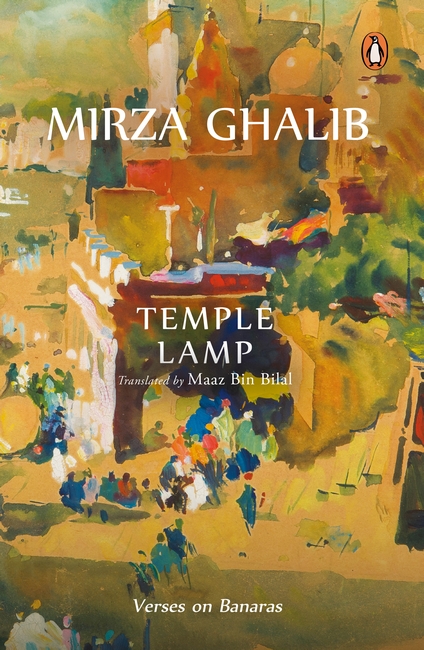
The poem ‘Chirag-e-Dair’ or Temple Lamp is an eloquent and vibrant Persian masnavi by Mirza Ghalib. While we quote liberally from his Urdu poetry, we know little of his writings in Persian, and while we read of his love for the city of Delhi, we discover in temple Lamp, his rapture over the spiritual and sensual city of Banaras.
Chiragh-e-dair is being translated directly from Persian into English in its entirety for the first time, with a critical Introduction by Maaz Bin Bilal. It is Mirza Ghalib’s pean to Kashi, which he calls Kaaba-e-Hindostan or the Mecca of India.
Our Moon Has Blood Clots
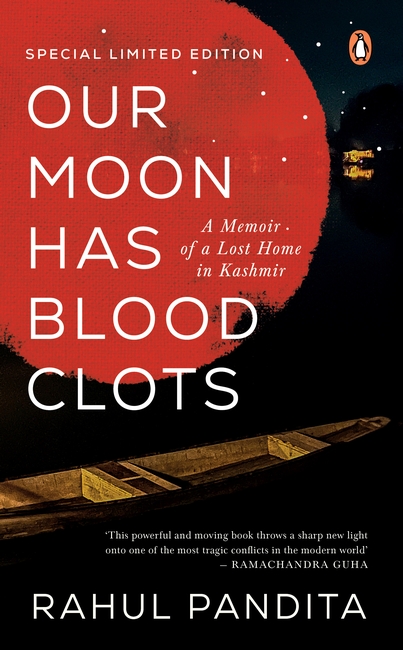
Rahul Pandita was fourteen years old when he was forced to leave his home in Srinagar along with his family. They were Kashmiri Pandits-the Hindu minority within a Muslim-majority Kashmir, which was by 1990 becoming increasingly agitated with the cries of Azaadi from India. Our Moon Has Blood Clots is the story of the Kashmir, in which hundreds of thousands of Kashmiri Pandits were tortured, killed and forced to leave their homes by Islamist militants and made to spend the rest of their lives in exile in their own country. Rahul Pandita has written a deeply personal, powerful and unforgettable story of history, home and loss.
The Best of Indian Mythology Box Set
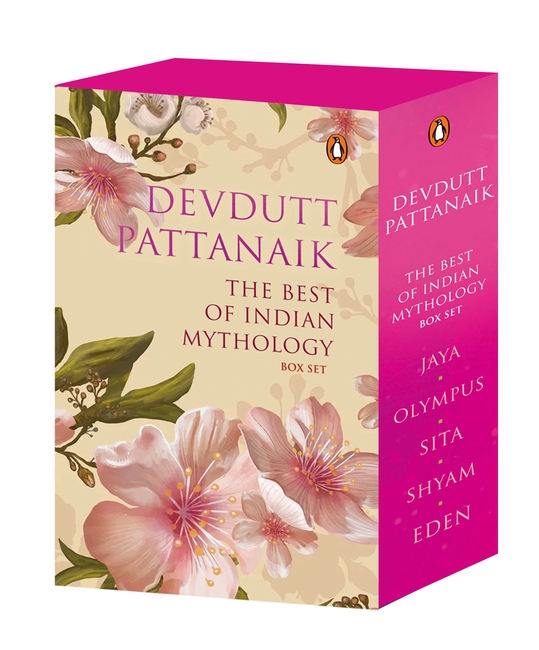
Shyam: The wisdom of the Bhagavata for the modern reader
Sita: An unheard voice from the Ramayana
Jaya: Folklore from the epic Mahabharata
Olympus: Indian parallels for classic Greek myths
Eden: A unique take on Abrahamic lore
For curious first-time readers of Indian mythology, this new collection of Devdutt Pattanaik’s five best-selling books is the perfect gift.
Take an epic voyage with Devdutt through ancient and mythological worlds. This captivating, richly illustrated narrative will regale readers with the many legends and parables that make our collective cultural heritage. Through decades of research, Devdutt decodes ancient epic tales and presents them with a blend of simplicity, candidness, and elegance. This box-set is sure to ring in the festive spirit this holiday season.
Icons of Grace

The path to spiritual understanding can be a confusing one. The manic pace of the present age has loosened the threads that tied our ancestors to prayer and faith. But role models could still help us find our way back. In Icons of Grace, respected ISKCON monk Nityanand Charan Das introduces readers to the lives of twenty-one extraordinary people who served as spiritual guides, through their teachings and through personal example.
At one level, the lives of these great souls-from Mirabai and Ramanujacharya to Sant Tukaram and Adi Shankaracharya-are a practical demonstration of the most essential spiritual principles. In relating them, though, Nityanand Charan Das aims not just to record the richness of their cultural and spiritual legacies but also to convey to readers the lessons one can learn through one’s daily actions and choices. Icons of Grace is inspiring. It also offers hope: however imperfect our journey has been thus far, spiritual redemption is accessible to us all.
Sri Siddhi Ma
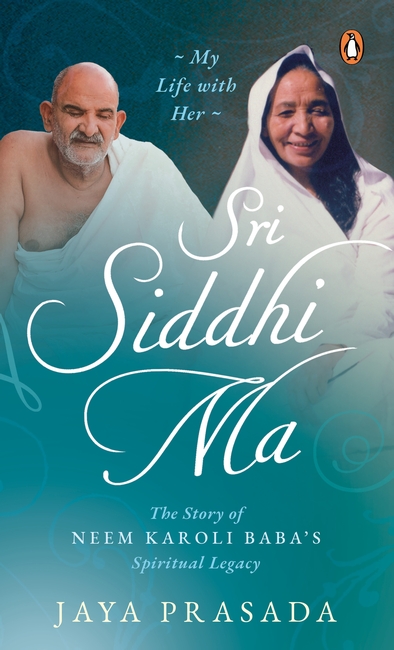
Revered the world over, Baba Neem Karoli Maharaj, known as Maharaj ji, emphasized ‘manav seva hi madhav seva hai.’ ‘Service to humanity is service to god.’ His simple boundless love and compassion drew deep devotion from the east and the west.
The beacon of light taking forward Maharaj ji’s spiritual legacy was his chosen disciple Sri Siddhi Ma, the silent saint of Kainchi. Living by the highest precepts of renunciation and devotion to the guru, Ma remained the eternal disciple to the eternal guru, Maharaj ji.
This perceptive account by Jaya Prasada reflects her journey with Sri Siddhi Ma. Prasada, though not a strong believer in her early days, was eventually blessed with a life with Sri Siddhi Ma, and imbibed through Ma the divine essence of Maharaj ji.
Filled with anecdotes of her time with Ma and Maharaj, and accounts of the godly and supernatural events Prasada saw with her own eyes in the company of such strong, spiritually charged figures, she recounts their journey as well as her own with such sensitivity, conviction, wit and charm that it is enough to turn any non-believer into a believer.
Vishnu Purana
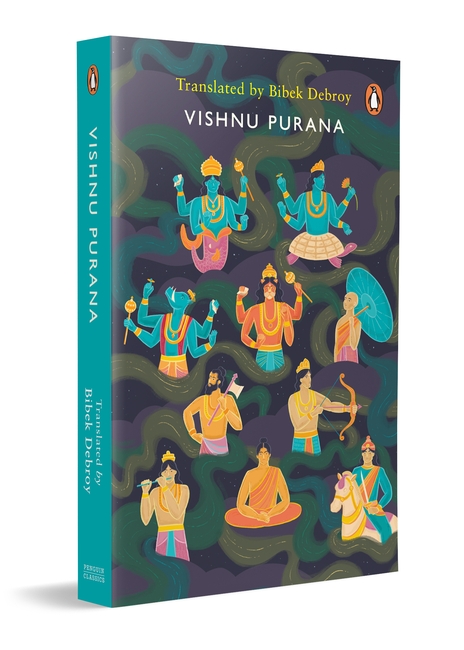
LORD VISHNU AND THE CREATION
The Vishnu Purana is part of a series of eighteen sacred Hindu texts known collectively as the Puranas. It occupies a prominent position among the ancient Vaishnava Puranas which recount tales of creation and the many incarnations of Lord Vishnu. It describes the four classes of society, the four stages of life, and key astronomical concepts related to Hinduism.
Brimming with insight and told with clarity, this translation of the Vishnu Purana by Bibek Debroy presents readers with an opportunity to truly understand the classical Indian mythic texts. Debroy has previously translated the Bhagavata Purana, the Markandeya Purana, and the Brahma Purana.
The Whispering Chinar
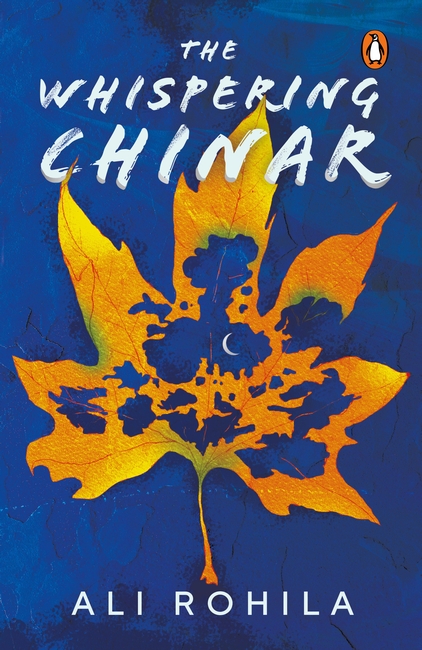
In Charbagh, Khyber-Pakhtunkhwa, a short detour from the Grand Trunk Road that leads towards Afghanistan, stands a chinar tree in the garden of Khan Mohammad Usman Khan. Legend has it that it was planted by a saint known to the grandfather of the Khan, who had told him that the family would prosper till this tree survived. The tree has stood for generations, a silent witness to the many stories of Charbagh, its grounds held sacred until the day a bullet fired by the oldest son of the Khan hit one of its branches.
In this debut collection of interlinked stories, the banker author recounts the stories as seen by the chinar tree. In Charbagh, a village where modernity slowly creeps in, there are tales of unrequited love, of family honour and religious persecution, of patriarchy and breaking its shackles, and of what it means to belong to Charbagh in tumultuous times.
Here, Fahad Khan falls in love with Saad Bibi, but it is a dangerous affair that threatens to uproot social norms. An imam competes with another for devotees, and an air-crash survivor-turned-teacher is charged with the crime of blasphemy. In Charbagh, Nazo learns why she has been sent away from her family, and Ali finds out how far friendship and trust can go. A banker struggles to make sense of his misfortunes, while Farid Khan must acquaint himself with a woman’s rejection.
Beginning from the 1970s, when the Indus was dammed near Charbagh, these stories chronicle a time and a place of belonging, of nostalgia, and of relationships and friendships. The Whispering Chinar is an extraordinary debut collection that tells stories from an unknown part of our world.