



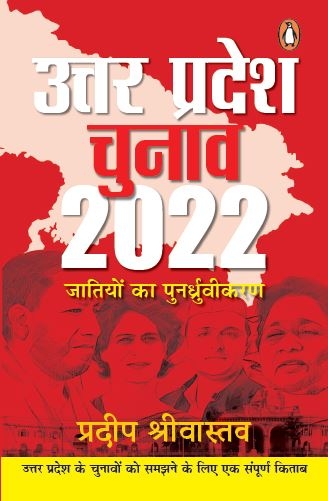
It is said that road to India’s power corridor runs through Uttar Pradesh, the most populous state of the country which sends eighty MPs to the lower house of the Parliament. Till date, most of the Prime Ministers of India belonged to this state and an electoral win in the state assembly paves the way for the formation of a central government.
The question is, do we have a barometer to guess the political pulse of the people? What are the political trends in the state? Which are the political, social, and economic factors that affect those trends?
Would extreme backward castes (EBCs) be successful in getting direct share in the power structure, which has been a dream so far for them?
This book written by veteran journalist Pradeep Srivastava tries to find out answers to these questions with in-depth analysis and in an easy to understand language.
Catagory: Religion
The Art of Focus
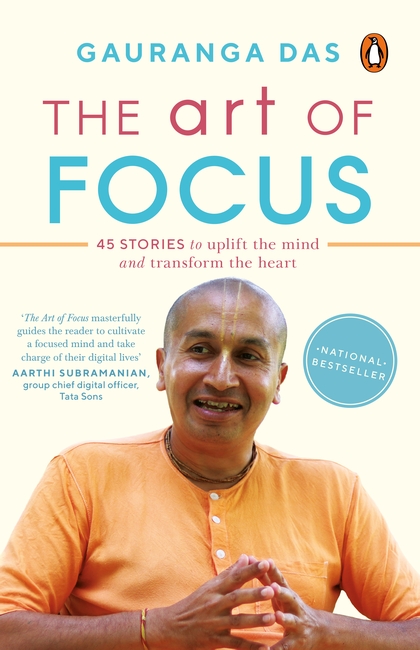
The COVID-19 pandemic has transformed the world we live in, more so than all the recent events put together. The pandemic has made humans question certain assumptions, relook at priorities and adjust life according to the new normal in the twenty-first century. As we take stock of life ahead, beyond this cusp of change, focus emerges as the fulcrum to help ease this transformation.
The Art of Focus, the second book in this three-part series, presents forty-five simple stories filled with revelations to enthral readers with learnings from the experiences of the protagonists and the dynamics of the situations that manifested in their lives.
The first book in the series, The Art of Resilience, presented ingredients to the readers to help them develop resilience in challenging situations that manifested at the start of the COVID-19 pandemic. The Art of Focus builds on the first book and inspires the resilient heart to develop a focused mind. This collective presentation will better equip the readers to take charge of their lives and adapt to the new normal effectively.
Soli Sorabjee
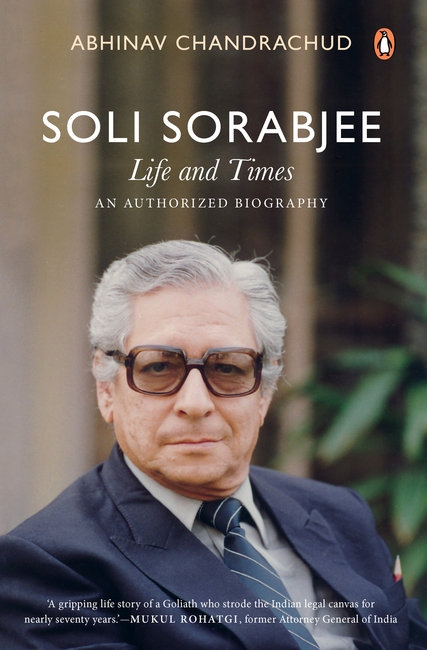
The first authorized biography of Soli Sorabjee
‘A gripping life story of a Goliath who strode the Indian legal canvass for nearly seventy years.’ – Mukul Rohatgi, former Attorney General of India
‘Superbly researched, this book by Abhinav Chandrachud is a must read. ‘ – Madhavi Goradia Divan, Additional Solicitor General in the Supreme Court of India
How does a Parsi lawyer, deeply influenced by the principles of Roman Catholicism, fall in love with a Bahá’í and go on to become the Attorney General of India for a Hindu nationalist BJP government? How does a boy with a broken leg, who studied in a Gujarati-medium school, and lost his father at the age of nineteen, go on to mount a heroic defense of the Janata government’s decision to dissolve Congress state legislatures (in 1977) in the Supreme Court? How does a newspaper columnist who admires Nehru, who criticizes the BJP for being ‘obsessed’ with ‘demolishing mosques’ and advises them to replace ‘Hindutva’ with ‘Bharatva’ or ‘Indianness’, get chosen by Prime Minister Vajpayee to represent the government in the Supreme Court in many cases, including the Ayodhya case? How does a lawyer with a humdrum customs and excise law practice, whose grandfather sold horsedrawn carriages in Bombay, become a U.N. human rights rapporteur, and repeatedly defend the fundamental right to free speech and expression in the Supreme Court of India?
Definitive, comprehensive and absolutely unputdownable, this first biography of Soli Sorabjee opens a window into the life and times of one of India’s foremost constitutional experts.
The Rise of the BJP
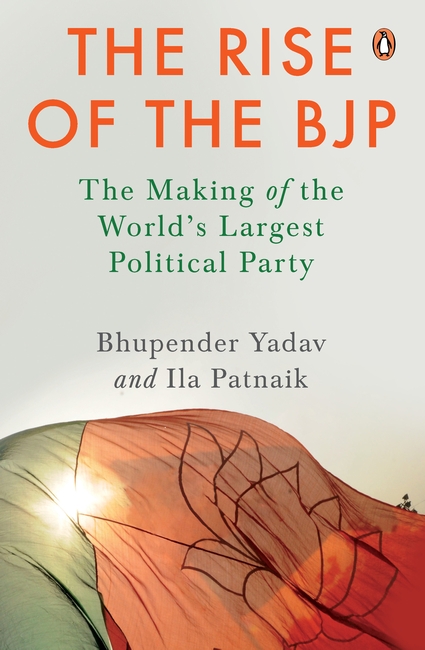
The Bharatiya Janata Party is an idea that was seeded into the minds of nationalist Jana Sangh leaders when they began to envision India after Independence. Much like the very core the freedom struggle was built on, they saw India as a demographically, culturally and historically cohesive and unified nation – as Bharat.
In this book, senior BJP leader and cabinet minister Bhupender Yadav and leading economist Ila Patnaik come together to trace the BJP’s journey from its humble roots, through ups and downs and to eventually getting 303 seats in Lok Sabha in 2019 and becoming the world’s largest political party. While focusing on the larger economics and political story, the book encapsulates many smaller, yet hugely significant stories of individuals and incidents, which brought the BJP to where it stands now.
For the first time ever, The Rise of the BJP, tells us the inside story of how one of the most powerful political parties makes decisions, implements ideas and executes policy. Meticulously researched and immensely readable, the book shows us how the BJP fought competing ideologies, political assaults and catapulted to the centre stage of national politics.
The Muslim Vanishes
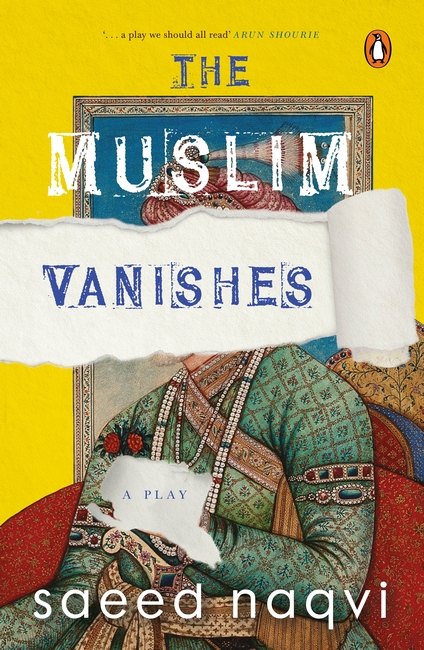
“…a narrative that is controversial, explosive and unputdownable.” KABIR KHAN
“…a stark, compelling portrait of our times.”
ADOOR GOPALAKRISHNAN
The great poet Ghalib, part of a long tradition of eclectic liberalism, found Benaras so compelling that he wrote his longest poem on the holy city. If we take Ghalib and his myriads of followers out of the equation, will Hindustan be left with a gaping hole or become something quite new? The Muslim Vanishes, a play by Saeed Naqvi, attempts to answer that question.
A Muslim-free India, as a character speculates naively in the play, would be good for socialism, since what the 200 million Muslims leave behind would be equitably shared by the general population. Meanwhile, another character, a political leader, is traumatized by the sudden disappearance of the Muslim voter base and the prospect of a direct electoral confrontation with the numerically stronger Dalits and other backward classes.
Caste, the Hindu-Muslim divide, Pakistan and Kashmir-the decibel levels on these subjects are too high for a conversation to take place, with each side fiercely defending their own narrative. What is the way out of this trap?
How to douse the social and political flames? In this razor-sharp, gentle and funny play, Saeed Naqvi draws on a mix of influences-from grandma’s bedtime stories to Aesop’s fables and Mullah Nasruddin’s satirical tales-to spring an inspired surprise on us, taking us on a journey into the realms of both history and fantasy.
Let Me Hijack Your Mind
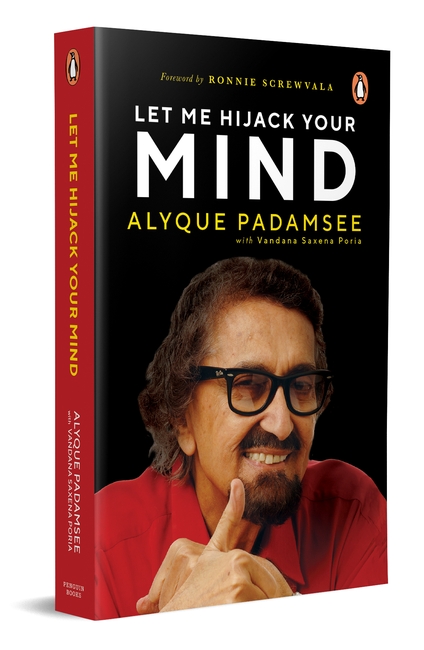
In this one-of-its-kind book by the late Alyque Padamsee, he invites us to re-examine and think afresh about some of our most deeply held beliefs, from love, marriage, terrorism, leadership, money, gender, faith to education. Let Me Hijack Your Mind is Alyque’s parting gift to Indians, exhorting them to throw out the old and embrace new ways of approaching everything, which will lead them towards a more exciting and contented life-and a better society and country. It is a way to open windows in their mind to think about life aside from greed, power and money. This is a book designed to throw everyone off-balance in a good way, because it is crammed with fresh ideas on how to live, how to dream and how to completely reset our mindset and attitudes. As Alyque says in his inimitable style: ‘Get people out of stuffy thinking.’
Some of the provocative questions he asks are:
– Why should marriage be ’till death do us part’?
– Why are terrorists breaking the law of their very own holy books?
– Why are multinational companies obsessed with GNP (Gross National Product) instead of GNH (Gross National Happiness)?
– Why do men fear women? And why do women hate themselves?
A fun, racy and often shocking read, the book busts some of the most well-known taboos, includes life hacks drawing on his experiences in advertising and theatre, as well as new ‘commandments’ for the present generation.
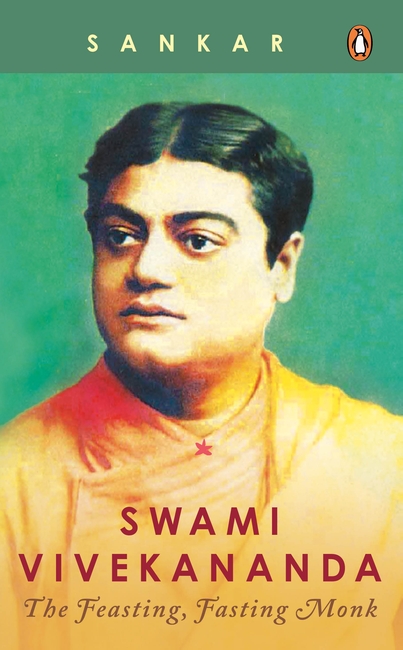
Swami Vivekananda
What did Swami Vivekananda recommend about the eating of vegetarian and non-vegetarian food?
Which of these did Swamiji enjoy the most: his mother’s chorchori (a mixed vegetable delicacy), his father’s pulao or his own khichuri?
Was he fond of spicy food, sweets, or ice cream?
During his days of hunger and want, for how many days at a stretch did Swamiji have to go without food?
Over the last 150 years, writings on Swami Vivekananda’s culinary interests have intrigued a wide spectrum of people across the world. This includes hitherto unknown stories of his spreading the art of making pulao and khichuri along with his propagation of the Vedas, in the United States of America.
While many thinkers wonder at Swamiji’s immense enthusiasm for teaching Indian cooking, yet it is not quite clear why no complete book about our culinary-enthusiast monk Vivekananda has ever been published in any language.
Swami Vivekananda: The Feasting, Fasting Monk is the humble, illumination of a thousand faceted diamond by Sankar.
Unburden
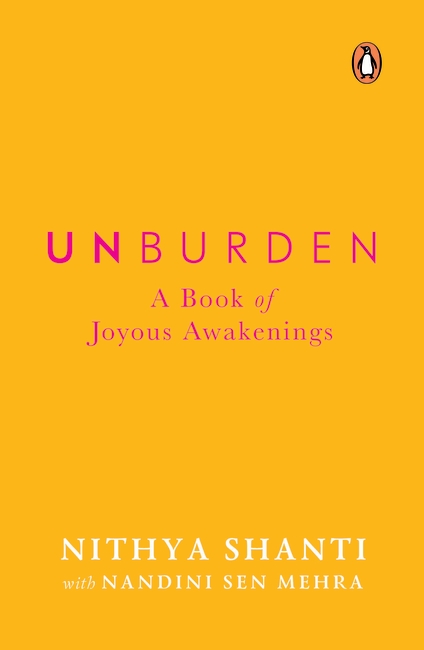
Playful Principles for Conscious Living
What if, to lead our most fulfilling life, there was nothing to acquire, nothing to accomplish, nothing to master? What if we are already home, already whole, already complete? What if, all that is needed, is to gently set down the burden?
Unburden is an invitation to examine ideas, identities and concepts that bind and limit us. We begin to access the power and potency that comes from trusting the silence underlying all thoughts and experiences.
In Nithya Shanti’s inimitable voice, discover profound teachings, simply told. Nithya shares anecdotes, exercises for self-discovery and pointers for awakening, through a distillation of timeless wisdom and contemporary discoveries, along with his own innovations from decades of intensive teaching and practice.
Let this book provoke, challenge and inspire us to step into a realm of awareness, gratitude and joy. As an everyday companion and guide, may it take us on what may well be the most significant shift we ever experience – being happy and fulfilled for no reason.
Split
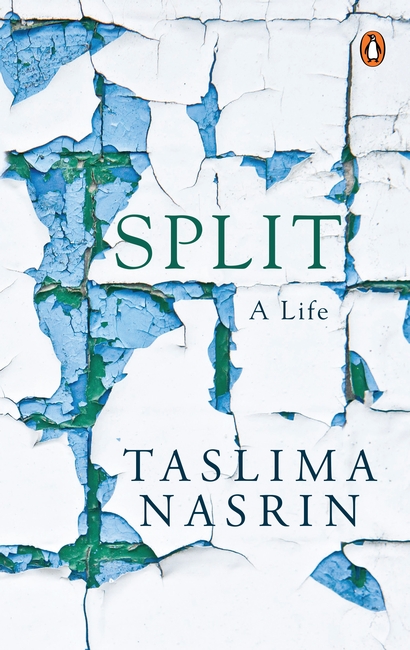
Taslima Nasrin is known for her powerful writing on women’s rights and uncompromising criticism of religious fundamentalism. This defiance on her part had led to the ban on the Bengali original of this book by the Left Front in West Bengal as well as the Government of Bangladesh in 2003. While the West Bengal government lifted the injunction after the ban was struck down by the Calcutta High Court in 2005, Nasrin was eventually driven out of Kolkata and forced to expunge passages from the book, besides facing a four-million-dollar defamation lawsuit. Bold and evocative, Split: A Life opens a window to the experiences and works of one of the bravest writers of our times.
Brahma Purana Volume 1
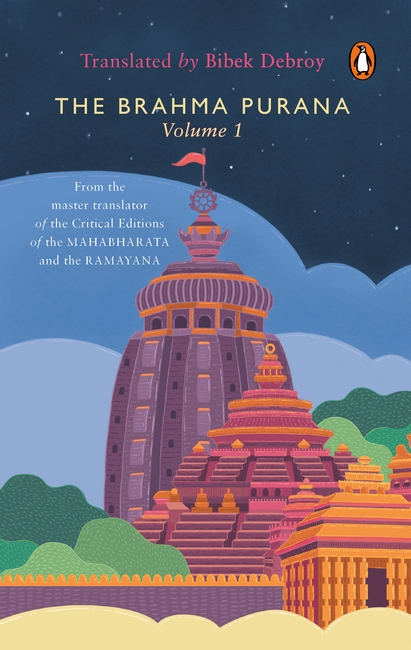
Translated by Bibek Debroy
A GLORIOUS RENDITION OF ONE OF THE OLDEST PURANAS BY A MASTER TRANSLATOR
The Brahma Purana is the first of a series of eighteen texts known collectively as the Puranas. These are counted amongst the foundational texts of Hinduism. The holy trinity of Brahma as the creator, Vishnu as the preserver and Shiva as the destroyer constitutes the central deities of this series and features in its narratives. Sometimes referred to as Adi Purana, Brahma Purana oscillates between being a work of geography with a focus on the holy sites of the River Godavari, and being an encyclopaedic work of cosmology, genealogy and mythology.
Reading almost like a travel guide, it celebrates temples and sites related to Vishnu, Shiva and Devi as it focuses on places like modern-day Odisha and Rajasthan. Brimming with insight and told with clarity, this luminous text is a celebration of a complex mythological universe populated with gods and mortals, providing readers with an opportunity to truly understand Indian philosophy.