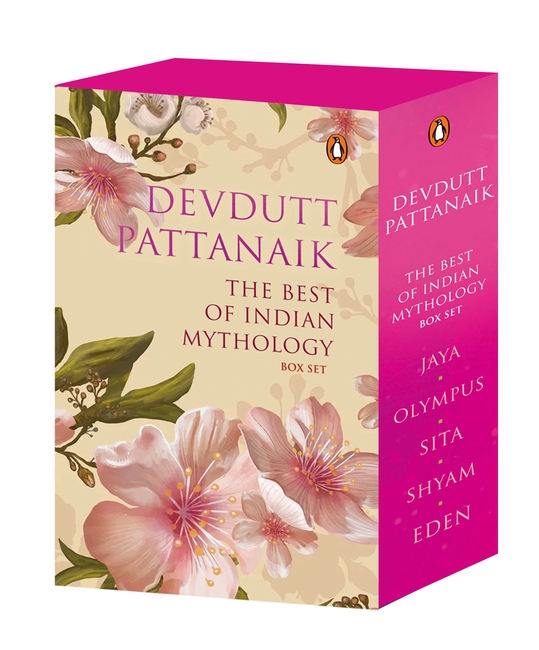
Shyam: The wisdom of the Bhagavata for the modern reader
Sita: An unheard voice from the Ramayana
Jaya: Folklore from the epic Mahabharata
Olympus: Indian parallels for classic Greek myths
Eden: A unique take on Abrahamic lore
For curious first-time readers of Indian mythology, this new collection of Devdutt Pattanaik’s five best-selling books is the perfect gift.
Take an epic voyage with Devdutt through ancient and mythological worlds. This captivating, richly illustrated narrative will regale readers with the many legends and parables that make our collective cultural heritage. Through decades of research, Devdutt decodes ancient epic tales and presents them with a blend of simplicity, candidness, and elegance. This box-set is sure to ring in the festive spirit this holiday season.

The path to spiritual understanding can be a confusing one. The manic pace of the present age has loosened the threads that tied our ancestors to prayer and faith. But role models could still help us find our way back. In Icons of Grace, respected ISKCON monk Nityanand Charan Das introduces readers to the lives of twenty-one extraordinary people who served as spiritual guides, through their teachings and through personal example.
At one level, the lives of these great souls-from Mirabai and Ramanujacharya to Sant Tukaram and Adi Shankaracharya-are a practical demonstration of the most essential spiritual principles. In relating them, though, Nityanand Charan Das aims not just to record the richness of their cultural and spiritual legacies but also to convey to readers the lessons one can learn through one’s daily actions and choices. Icons of Grace is inspiring. It also offers hope: however imperfect our journey has been thus far, spiritual redemption is accessible to us all.

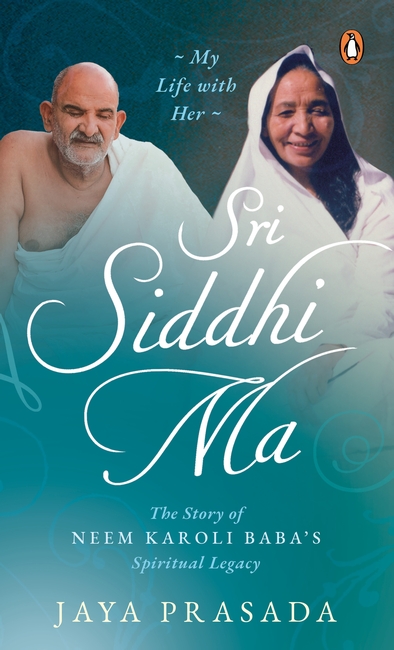
Revered the world over, Baba Neem Karoli Maharaj, known as Maharaj ji, emphasized ‘manav seva hi madhav seva hai.’ ‘Service to humanity is service to god.’ His simple boundless love and compassion drew deep devotion from the east and the west.
The beacon of light taking forward Maharaj ji’s spiritual legacy was his chosen disciple Sri Siddhi Ma, the silent saint of Kainchi. Living by the highest precepts of renunciation and devotion to the guru, Ma remained the eternal disciple to the eternal guru, Maharaj ji.
This perceptive account by Jaya Prasada reflects her journey with Sri Siddhi Ma. Prasada, though not a strong believer in her early days, was eventually blessed with a life with Sri Siddhi Ma, and imbibed through Ma the divine essence of Maharaj ji.
Filled with anecdotes of her time with Ma and Maharaj, and accounts of the godly and supernatural events Prasada saw with her own eyes in the company of such strong, spiritually charged figures, she recounts their journey as well as her own with such sensitivity, conviction, wit and charm that it is enough to turn any non-believer into a believer.

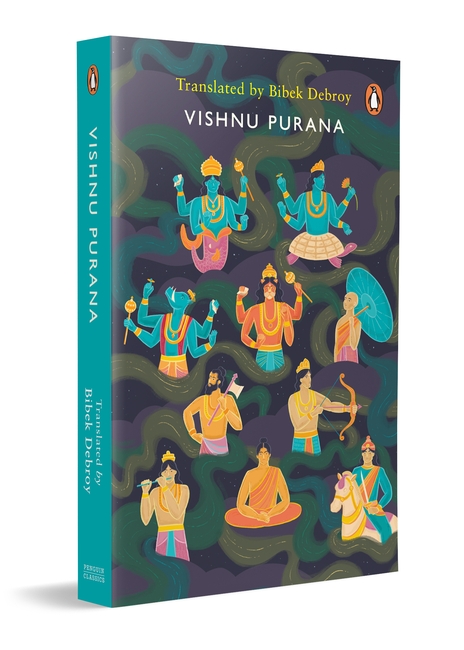
LORD VISHNU AND THE CREATION
The Vishnu Purana is part of a series of eighteen sacred Hindu texts known collectively as the Puranas. It occupies a prominent position among the ancient Vaishnava Puranas which recount tales of creation and the many incarnations of Lord Vishnu. It describes the four classes of society, the four stages of life, and key astronomical concepts related to Hinduism.
Brimming with insight and told with clarity, this translation of the Vishnu Purana by Bibek Debroy presents readers with an opportunity to truly understand the classical Indian mythic texts. Debroy has previously translated the Bhagavata Purana, the Markandeya Purana, and the Brahma Purana.

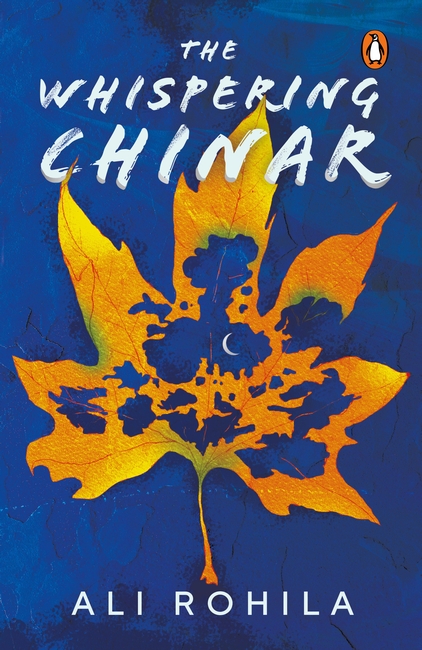
In Charbagh, Khyber-Pakhtunkhwa, a short detour from the Grand Trunk Road that leads towards Afghanistan, stands a chinar tree in the garden of Khan Mohammad Usman Khan. Legend has it that it was planted by a saint known to the grandfather of the Khan, who had told him that the family would prosper till this tree survived. The tree has stood for generations, a silent witness to the many stories of Charbagh, its grounds held sacred until the day a bullet fired by the oldest son of the Khan hit one of its branches.
In this debut collection of interlinked stories, the banker author recounts the stories as seen by the chinar tree. In Charbagh, a village where modernity slowly creeps in, there are tales of unrequited love, of family honour and religious persecution, of patriarchy and breaking its shackles, and of what it means to belong to Charbagh in tumultuous times.
Here, Fahad Khan falls in love with Saad Bibi, but it is a dangerous affair that threatens to uproot social norms. An imam competes with another for devotees, and an air-crash survivor-turned-teacher is charged with the crime of blasphemy. In Charbagh, Nazo learns why she has been sent away from her family, and Ali finds out how far friendship and trust can go. A banker struggles to make sense of his misfortunes, while Farid Khan must acquaint himself with a woman’s rejection.
Beginning from the 1970s, when the Indus was dammed near Charbagh, these stories chronicle a time and a place of belonging, of nostalgia, and of relationships and friendships. The Whispering Chinar is an extraordinary debut collection that tells stories from an unknown part of our world.

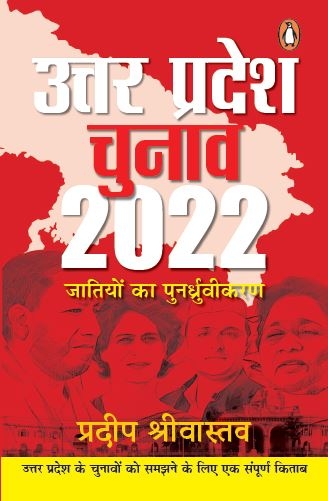
It is said that road to India’s power corridor runs through Uttar Pradesh, the most populous state of the country which sends eighty MPs to the lower house of the Parliament. Till date, most of the Prime Ministers of India belonged to this state and an electoral win in the state assembly paves the way for the formation of a central government.
The question is, do we have a barometer to guess the political pulse of the people? What are the political trends in the state? Which are the political, social, and economic factors that affect those trends?
Would extreme backward castes (EBCs) be successful in getting direct share in the power structure, which has been a dream so far for them?
This book written by veteran journalist Pradeep Srivastava tries to find out answers to these questions with in-depth analysis and in an easy to understand language.

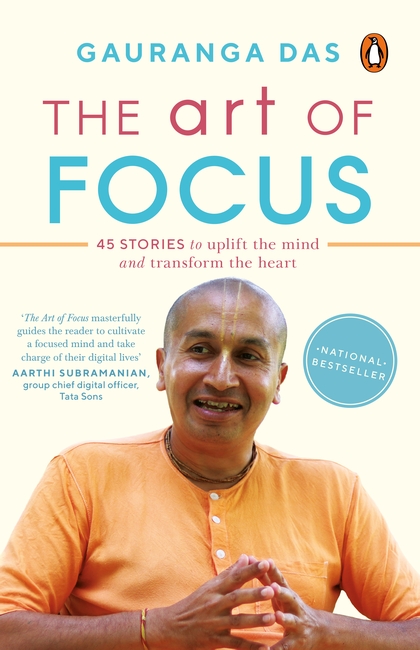
The COVID-19 pandemic has transformed the world we live in, more so than all the recent events put together. The pandemic has made humans question certain assumptions, relook at priorities and adjust life according to the new normal in the twenty-first century. As we take stock of life ahead, beyond this cusp of change, focus emerges as the fulcrum to help ease this transformation.
The Art of Focus, the second book in this three-part series, presents forty-five simple stories filled with revelations to enthral readers with learnings from the experiences of the protagonists and the dynamics of the situations that manifested in their lives.
The first book in the series, The Art of Resilience, presented ingredients to the readers to help them develop resilience in challenging situations that manifested at the start of the COVID-19 pandemic. The Art of Focus builds on the first book and inspires the resilient heart to develop a focused mind. This collective presentation will better equip the readers to take charge of their lives and adapt to the new normal effectively.

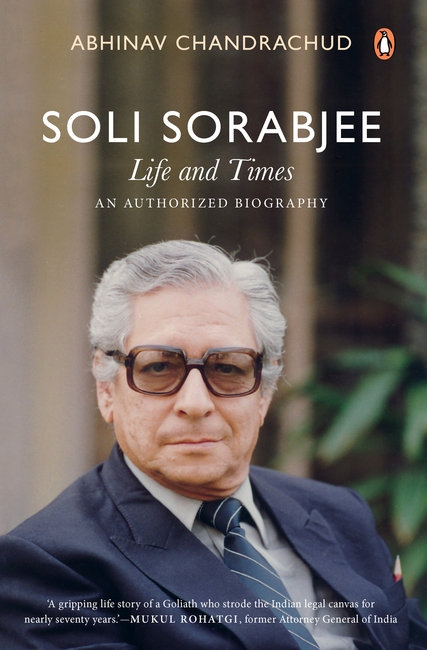
The first authorized biography of Soli Sorabjee
‘A gripping life story of a Goliath who strode the Indian legal canvass for nearly seventy years.’ – Mukul Rohatgi, former Attorney General of India
‘Superbly researched, this book by Abhinav Chandrachud is a must read. ‘ – Madhavi Goradia Divan, Additional Solicitor General in the Supreme Court of India
How does a Parsi lawyer, deeply influenced by the principles of Roman Catholicism, fall in love with a Bahá’í and go on to become the Attorney General of India for a Hindu nationalist BJP government? How does a boy with a broken leg, who studied in a Gujarati-medium school, and lost his father at the age of nineteen, go on to mount a heroic defense of the Janata government’s decision to dissolve Congress state legislatures (in 1977) in the Supreme Court? How does a newspaper columnist who admires Nehru, who criticizes the BJP for being ‘obsessed’ with ‘demolishing mosques’ and advises them to replace ‘Hindutva’ with ‘Bharatva’ or ‘Indianness’, get chosen by Prime Minister Vajpayee to represent the government in the Supreme Court in many cases, including the Ayodhya case? How does a lawyer with a humdrum customs and excise law practice, whose grandfather sold horsedrawn carriages in Bombay, become a U.N. human rights rapporteur, and repeatedly defend the fundamental right to free speech and expression in the Supreme Court of India?
Definitive, comprehensive and absolutely unputdownable, this first biography of Soli Sorabjee opens a window into the life and times of one of India’s foremost constitutional experts.

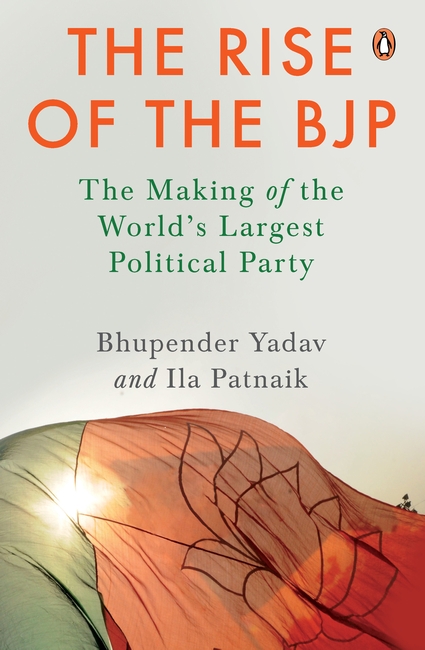
The Bharatiya Janata Party is an idea that was seeded into the minds of nationalist Jana Sangh leaders when they began to envision India after Independence. Much like the very core the freedom struggle was built on, they saw India as a demographically, culturally and historically cohesive and unified nation – as Bharat.
In this book, senior BJP leader and cabinet minister Bhupender Yadav and leading economist Ila Patnaik come together to trace the BJP’s journey from its humble roots, through ups and downs and to eventually getting 303 seats in Lok Sabha in 2019 and becoming the world’s largest political party. While focusing on the larger economics and political story, the book encapsulates many smaller, yet hugely significant stories of individuals and incidents, which brought the BJP to where it stands now.
For the first time ever, The Rise of the BJP, tells us the inside story of how one of the most powerful political parties makes decisions, implements ideas and executes policy. Meticulously researched and immensely readable, the book shows us how the BJP fought competing ideologies, political assaults and catapulted to the centre stage of national politics.

“…a narrative that is controversial, explosive and unputdownable.” KABIR KHAN
“…a stark, compelling portrait of our times.”
ADOOR GOPALAKRISHNAN
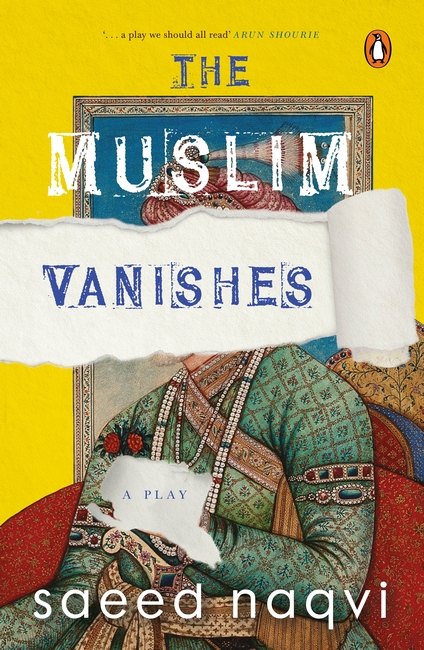
The great poet Ghalib, part of a long tradition of eclectic liberalism, found Benaras so compelling that he wrote his longest poem on the holy city. If we take Ghalib and his myriads of followers out of the equation, will Hindustan be left with a gaping hole or become something quite new? The Muslim Vanishes, a play by Saeed Naqvi, attempts to answer that question.
A Muslim-free India, as a character speculates naively in the play, would be good for socialism, since what the 200 million Muslims leave behind would be equitably shared by the general population. Meanwhile, another character, a political leader, is traumatized by the sudden disappearance of the Muslim voter base and the prospect of a direct electoral confrontation with the numerically stronger Dalits and other backward classes.
Caste, the Hindu-Muslim divide, Pakistan and Kashmir-the decibel levels on these subjects are too high for a conversation to take place, with each side fiercely defending their own narrative. What is the way out of this trap?
How to douse the social and political flames? In this razor-sharp, gentle and funny play, Saeed Naqvi draws on a mix of influences-from grandma’s bedtime stories to Aesop’s fables and Mullah Nasruddin’s satirical tales-to spring an inspired surprise on us, taking us on a journey into the realms of both history and fantasy.