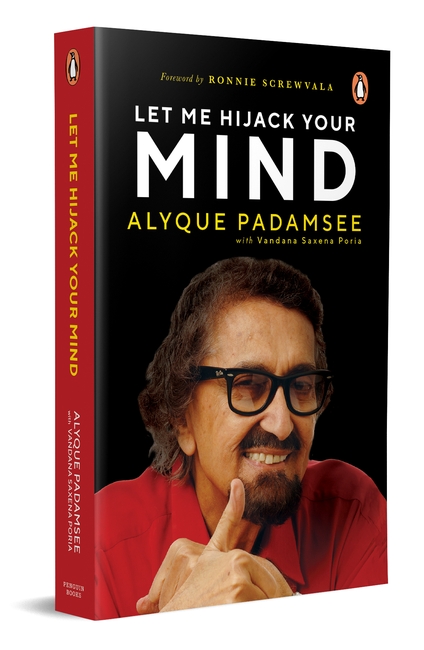
In this one-of-its-kind book by the late Alyque Padamsee, he invites us to re-examine and think afresh about some of our most deeply held beliefs, from love, marriage, terrorism, leadership, money, gender, faith to education. Let Me Hijack Your Mind is Alyque’s parting gift to Indians, exhorting them to throw out the old and embrace new ways of approaching everything, which will lead them towards a more exciting and contented life-and a better society and country. It is a way to open windows in their mind to think about life aside from greed, power and money. This is a book designed to throw everyone off-balance in a good way, because it is crammed with fresh ideas on how to live, how to dream and how to completely reset our mindset and attitudes. As Alyque says in his inimitable style: ‘Get people out of stuffy thinking.’
Some of the provocative questions he asks are:
– Why should marriage be ’till death do us part’?
– Why are terrorists breaking the law of their very own holy books?
– Why are multinational companies obsessed with GNP (Gross National Product) instead of GNH (Gross National Happiness)?
– Why do men fear women? And why do women hate themselves?
A fun, racy and often shocking read, the book busts some of the most well-known taboos, includes life hacks drawing on his experiences in advertising and theatre, as well as new ‘commandments’ for the present generation.

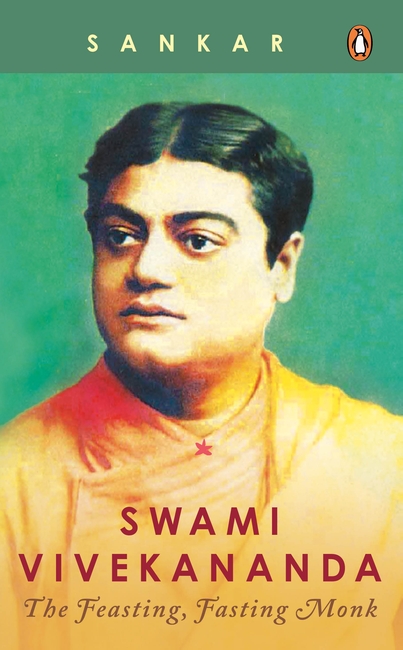
What did Swami Vivekananda recommend about the eating of vegetarian and non-vegetarian food?
Which of these did Swamiji enjoy the most: his mother’s chorchori (a mixed vegetable delicacy), his father’s pulao or his own khichuri?
Was he fond of spicy food, sweets, or ice cream?
During his days of hunger and want, for how many days at a stretch did Swamiji have to go without food?
Over the last 150 years, writings on Swami Vivekananda’s culinary interests have intrigued a wide spectrum of people across the world. This includes hitherto unknown stories of his spreading the art of making pulao and khichuri along with his propagation of the Vedas, in the United States of America.
While many thinkers wonder at Swamiji’s immense enthusiasm for teaching Indian cooking, yet it is not quite clear why no complete book about our culinary-enthusiast monk Vivekananda has ever been published in any language.
Swami Vivekananda: The Feasting, Fasting Monk is the humble, illumination of a thousand faceted diamond by Sankar.
Playful Principles for Conscious Living
What if, to lead our most fulfilling life, there was nothing to acquire, nothing to accomplish, nothing to master? What if we are already home, already whole, already complete? What if, all that is needed, is to gently set down the burden?
Unburden is an invitation to examine ideas, identities and concepts that bind and limit us. We begin to access the power and potency that comes from trusting the silence underlying all thoughts and experiences.
In Nithya Shanti’s inimitable voice, discover profound teachings, simply told. Nithya shares anecdotes, exercises for self-discovery and pointers for awakening, through a distillation of timeless wisdom and contemporary discoveries, along with his own innovations from decades of intensive teaching and practice.
Let this book provoke, challenge and inspire us to step into a realm of awareness, gratitude and joy. As an everyday companion and guide, may it take us on what may well be the most significant shift we ever experience – being happy and fulfilled for no reason.

Taslima Nasrin is known for her powerful writing on women’s rights and uncompromising criticism of religious fundamentalism. This defiance on her part had led to the ban on the Bengali original of this book by the Left Front in West Bengal as well as the Government of Bangladesh in 2003. While the West Bengal government lifted the injunction after the ban was struck down by the Calcutta High Court in 2005, Nasrin was eventually driven out of Kolkata and forced to expunge passages from the book, besides facing a four-million-dollar defamation lawsuit. Bold and evocative, Split: A Life opens a window to the experiences and works of one of the bravest writers of our times.

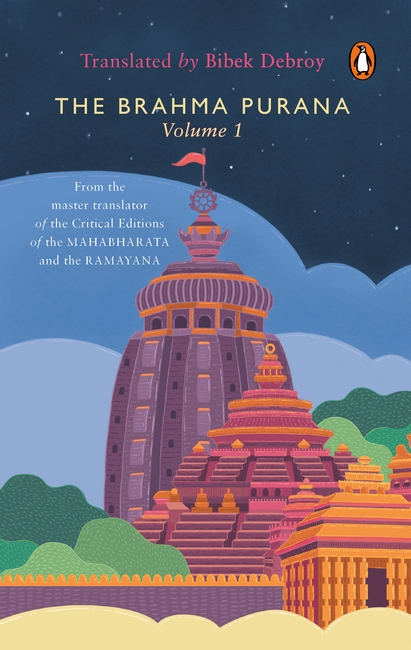
Translated by Bibek Debroy
A GLORIOUS RENDITION OF ONE OF THE OLDEST PURANAS BY A MASTER TRANSLATOR
The Brahma Purana is the first of a series of eighteen texts known collectively as the Puranas. These are counted amongst the foundational texts of Hinduism. The holy trinity of Brahma as the creator, Vishnu as the preserver and Shiva as the destroyer constitutes the central deities of this series and features in its narratives. Sometimes referred to as Adi Purana, Brahma Purana oscillates between being a work of geography with a focus on the holy sites of the River Godavari, and being an encyclopaedic work of cosmology, genealogy and mythology.
Reading almost like a travel guide, it celebrates temples and sites related to Vishnu, Shiva and Devi as it focuses on places like modern-day Odisha and Rajasthan. Brimming with insight and told with clarity, this luminous text is a celebration of a complex mythological universe populated with gods and mortals, providing readers with an opportunity to truly understand Indian philosophy.

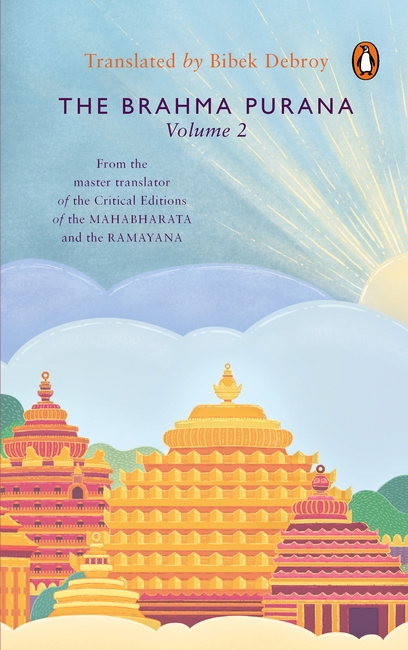
Translated by Bibek Debroy
A GLORIOUS RENDITION OF ONE OF THE OLDEST PURANAS BY A MASTER TRANSLATOR
The Brahma Purana is the first of a series of eighteen texts known collectively as the Puranas. These are counted amongst the foundational texts of Hinduism. The holy trinity of Brahma as the creator, Vishnu as the preserver and Shiva as the destroyer constitutes the central deities of this series and features in its narratives. Sometimes referred to as Adi Purana, Brahma Purana oscillates between being a work of geography with a focus on the holy sites of the River Godavari, and being an encyclopaedic work of cosmology, genealogy and mythology.
Reading almost like a travel guide, it celebrates temples and sites related to Vishnu, Shiva and Devi as it focuses on places like modern-day Odisha and Rajasthan. Brimming with insight and told with clarity, this luminous text is a celebration of a complex mythological universe populated with gods and mortals, providing readers with an opportunity to truly understand Indian philosophy.
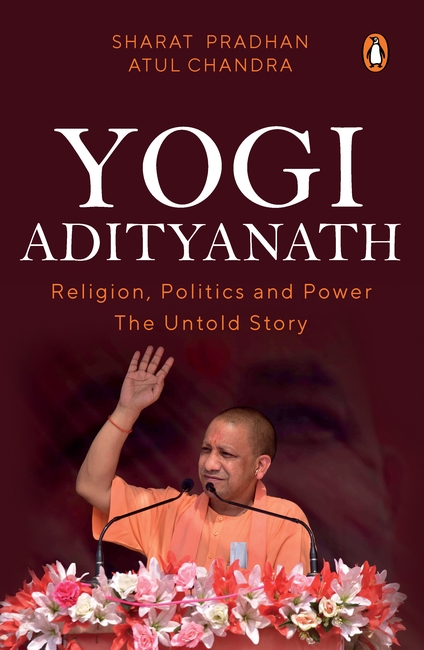
Is he the next Prime Minister in the making?
He is young and dynamic. He is a fierce orator and is often perceived as unconventional. Most importantly, he is an incredibly popular politician in India.
Is Yogi Adityanath India’s next Prime Minister in the making? His unprecedented rise in the Bharatiya Janata Party and his over-the-top campaigns and displays of his photograph along with Prime Minister Narendra Modi’s on billboards, among many other moves, seem to suggest his political ambition.
Tracing his early life, entry into electoral politics and elevation to the position of the Chief Minister of Uttar Pradesh, India’s most populous state, this book evaluates many untold stories of Yogi Adityanath. Sifting through information on the Chief Minister’s out-of-the-box administrative skills; his claims on law and order situation in Uttar Pradesh; and handling of the COVID-19 crisis in the first and the second waves of the pandemic, the authors present to us what is probably the first critical biography of Yogi Adityanath.

KERALA SAHITYA AKADEMI AWARD WINNER
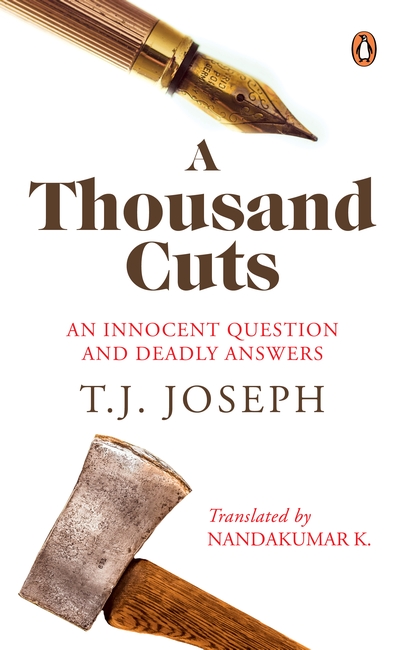
A Thousand Cuts is a harrowing, sobering and ultimately inspiring autobiography of Professor T.J. Joseph, who in 2010 became the victim of a brutal terrorist assault, accused of blasphemy after setting an exam question that enraged fundamentalists. This book is an important reminder of the pernicious effect of religious extremism and the duty of every person to speak out against those who would silence free expression’ SHASHI THAROOR
‘There is excruciating agony here, but also black humour and irony that enliven and lighten the narrative even at the height of anguish’ K. SATCHIDANANDAN
‘The poignant tale, with its sense of urgency and helplessness, has been sensitively translated as A Thousand Cuts‘ RANA SAFVI
A chilling account of religious extremism
In 2010, T.J. Joseph, a professor of Malayalam at Newman College, Kerala, framed an innocuous question for an internal examination that changed his life forever. Following a trumped-up charge of blasphemy, members of a radical Islamist organization set upon him in public, viciously maiming him and chopping off his right hand. His memoir, told with amazing restraint and wry humour, is the moving tale of his life and family as they went through hell and beyond. Here’s the extraordinary story of a man who survived dismembering only to be betrayed by his
own Church. Let alone stand by him, it robbed him of his livelihood and isolated him from his community, driving Joseph’s long-suffering wife to melancholia and eventual suicide. Joseph’s story is one of fortitude, will power, forgiveness and compassion, told with rare wit that will make readers chuckle through their tears.
This is a tale that will leave the reader seething, weeping and smiling by turns.

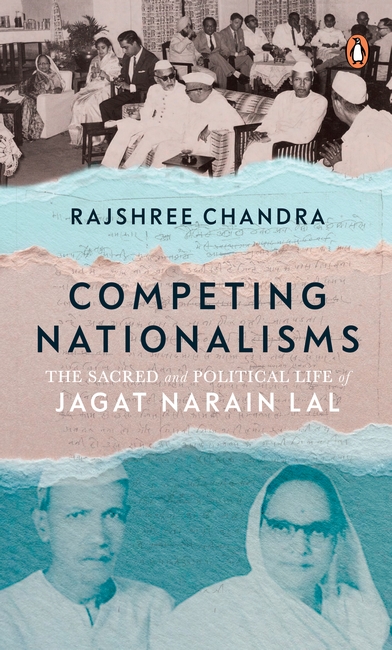
Competing Nationalisms is more than a political biography of Jagat Narain Lal-now forgotten by history, but once an influential member of the freedom movement in Bihar. As a member of the Congress and of the Hindu Mahasabha; as a Hindu nationalist who wanted to combine religion with civic virtues; as a Gandhian and an ‘ascetic nationalist’ seeking freedom in a political world, Jagat Narain Lal’s life becomes a mirror for the times in which a mix of religiosity, spirituality and ritual could not be separated from either the social or the political field.
The book travels with Jagat Narain Lal on his journey through four pathways-Ascetic, Hindu Nationalist, Anti-Colonial and Civic nationalisms. His life and times give us a glimpse into these intersecting, contesting and mutating idioms of nationalism. There are bigger leaders, taller nationalists, more valiant fighters of freedom, but none who perhaps so tortuously embodied the many possibilities and contradictions of Indian nationalism. In his anxieties, vulnerability, negotiations and truth-telling, we glimpse Indian nationalism’s own fraught relationship with questions of identity, faith and nationhood.
In leafing through her grandfather’s life, page by yellowed page, Chandra presents not just his political biography but, in a sense, a personal biography of Indian nationalism as well. In Jagat Narain Lal’s small story lies a bigger history of competing nationalisms, as well as a tale that
speaks to the present.
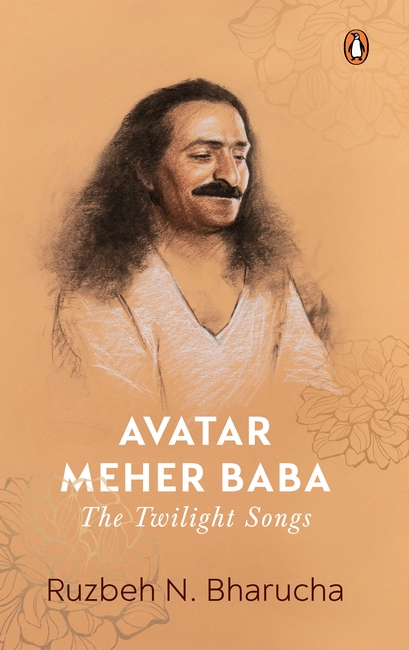
‘When the word of my love breaks out of its silence and speaks in your hearts, telling you who I really am, you will know that this is the real word you have always been longing to hear’ -Meher Baba
Known as one of the Perfect Masters, Avatar Meher Baba touched millions of lives and passed away in 1969. Since then, his followers, who were blessed to have had been under his direct care, feel his presence strongly, even until date, and live their lives in complete devotion to him.
Now, after more than fifty years after his passing, one of the most read and loved spiritual writers, Ruzbeh N. Bharucha, pieces together what it was to have experienced Baba in person-to have been blessed by him. Through interviews with his followers, Bharucha recreates the life and times of Baba, his deep connection with his Mandali, his miracles, his methods and his teachings.
Such is the power of their words that Baba comes alive to readers like he had never been gone. It is a rare collection for those who would like to know more about what it was like to be with the Avatar himself.