



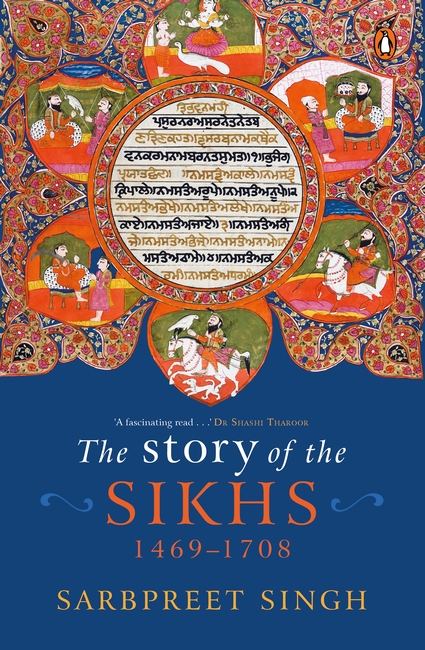
The power of storytelling meets the colourful history of the Sikh faith in The Story of the Sikhs. In this book, author Sarbpreet Singh helps us reimagine the lives of the Sikh Gurus through a rich narrative that intricately weaves in selections from the Guru Granth Sahib, the Dasam Granth and epic Braj poetry.
Starting from the birth of the first guru, Guru Nanak, the book charts the lives of the ten Gurus. Through carefully curated stories, the book does not just show the egalitarian ideals and compassionate worldview that have come to define the faith, but also sheds light on the historical context that defined the foundational principles which guided Sikhs during the era of each Guru.
Sarbpreet has deliberately approached this retelling as a storyteller rather than as a student of history in an attempt to make the work accessible and engaging. Immersive and expansive, The Story of the Sikhs is a tour de force that weaves a multi-dimensional tapestry of narrative and poetry.
Catagory: Religion
Secrets of Divine Love
Secrets of Divine Love draws upon the spiritual secrets of the Qu’ran, mystical poetry and stories from the world’s greatest prophets and spiritual masters to help you reignite your faith, overcome your doubts and deepen your connection with God. Practical exercises and guided meditations will help you develop the tools and awareness to overcome the inner critic that prevents you from experiencing God’s all-encompassing love.
The passages in this book serve as a compass and guiding light that return you to the source of divine peace and surrender. Through the principles and practices of Islam, you will learn how to unlock your spiritual potential and your divine purpose. Secrets of Divine Love uses a rational yet heart-based approach towards the Qu’ran that not only enlightens the mind, but also inspires the soul towards deeper intimacy with God.
The Spirit of Enquiry
As a vocalist in the Karnatik tradition, T.M. Krishna eludes standard analyses. Uncommon in his rendition of music and original in his interpretation of it, Krishna is at once strong and subtle, manifestly traditional and stunningly innovative. He is searingly outspoken about issues affecting the human condition. His work is spread across the whole spectrum of music and culture, politics and the social sphere; he is at once philosophical, aesthetic and sociopolitical, and asks important questions about how art is made, performed and disseminated. Unabashedly given to rethinking classical paradigms, he addresses crucial issues of caste, class and gender with nuance and openness.
For the first time, T.M. Krishna’s key writings have been put together in this extraordinary collection. The Spirit of Enquiry: Dissent as an Art Form draws from his rich body of work, thematically divided into five key sections: art and artistes; the nation state; the theatre of secularism; savage inequalities; and in memoriam. Revised and expanded, and with marvellous new additional materials and powerful new introductions, this is a collection that reflects the critical and cultural engagement of one of our finest thinkers, public intellectuals and practitioners of art.
Eden
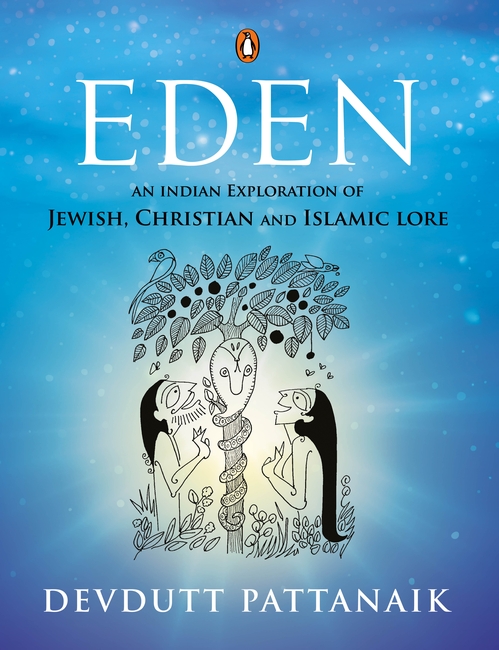
Eden is the garden of happiness that humankind lost when Adam and Eve the first human couple, disobeyed the one true god, i.e., God, and ate the fruit of the forbidden tree. To this garden all humanity shall return if we accept God’s love and follow God’s law. It represents paradise in Abrahamic lore, which emerged over 4,000 years ago in the Middle East and has since spread to every corner of the world in three forms: Judaism, Christianity and Islam.
Like the Ramayana and Mahabharata, Jewish, Christian and Islamic tales too are cultural memories and metaphors, i.e. mythologies. They seek to make life meaningful by establishing a worldview based on one God, one life, and one way of living based on God’s message transmitted through many messengers. But these stories contrast Indian mythologies that are rooted in rebirth, where the world is without beginning or end, where there are infinite manifestations of the divine, both within and without, personal and impersonal, simultaneously monotheistic, polytheistic and atheistic.
Eden explores the vast world of Abrahamic myths from a uniquely Indian prism, through storytelling that is intimate but not irreverent, and to introduce readers to the many captivating tales of angels, demons, prophets, patriarchs, judges and kings. It also retells stories from Mesopotamian, Egyptian and Zoroastrian mythologies that in?uenced Abrahamic monotheism over time.
A Childhood in Tibet (True life-story of a woman, who spent 22 years under atrocities of the Chinese rule)
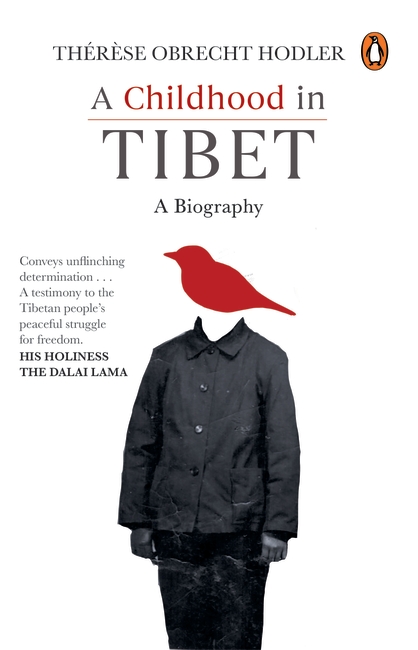
Tendöl Namling turned 60 in March 2019. She was born at the time when the Dalai Lama fled from Lhasa and the uprising of his people by the Chinese People’s Army was brutally suppressed. She has lived for 22 years under Chinese rule. As the daughter of a high government official, she underwent the ordeal of ‘re-education’ with full force. All she has kept from these years are painful memories and some crumpled photographs. They show her with her friends and cousins in Lhasa, smiling as if nothing had happened. When Tendöl turned 10 her brother was arrested and her mother sentenced to ten years in prison. Tendöl was sent to work in road construction for several years. At the age of 20 she was allowed to start an apprenticeship as motor mechanic. Thanks to the efforts of her family in exile, Tendöl was able to leave Tibet in 1982. After twenty years of hardship she landed in prosperous Switzerland. It felt as if she had to start her life all over again. She struggled but she never gave up. She founded a family and a business and reconciled herself with the painful past.
In Tendöl’s words, ‘this little book is dedicated to all the Tibetans who continue to rebel against the Chinese occupation’.
Fire in the Mind
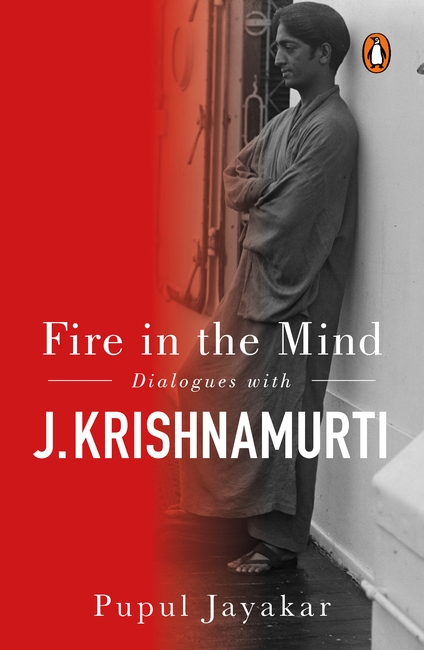
Inspired and inspiring dialogues with one of the world’s greatest teachers
Fire in the Mind is a book of important discussions conducted with J. Krishnamurti. Held from the end of the 1960s to 28 December 1985, seven weeks before his death on 17 February 1986, these dialogues cover a vast ocean of human concerns-fear, sorrow, death, time, culture, ageing and the renewal of the brain. They also explore subjects that are central to scientific research today, such as the questions of biological survival, the nature of consciousness, artificial intelligence, computers and the mechanical mind.
J. Krishnamurti needs no introduction. A sage, a seer, a religious revolutionary and a teacher of profound compassion, Krishnamurti negated all spiritual authority. These dialogues reveal his approach to self-knowing and his way of investigation into the brain, the mind and the consciousness. In a world brought to the edge of the abyss by growing violence, soaring religious fundamentalism, the desecration of nature and a massive assault on human integrity, they provide a new direction to those of us seeking an alternative way of life.
The Power of Purity
Who am I? Where have I come from? Why am I here?
What is my purpose? Why do people suffer? What is karma?
What is reincarnation?
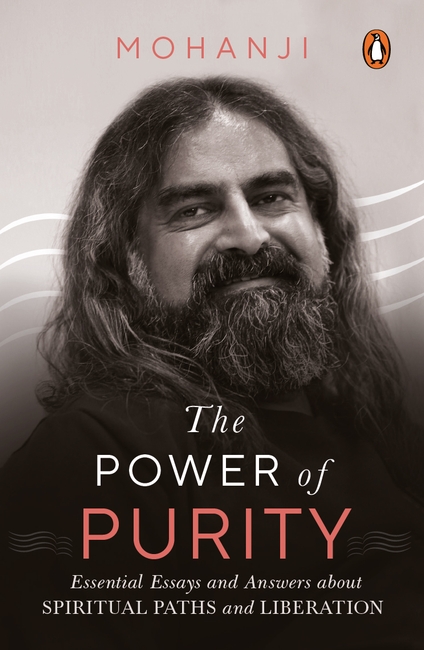
Such burning existential questions have intrigued many since time immemorial. It is not for the faint of heart to pore over abstruse and often cryptic scriptures, or perform intense spiritual practices to get a glimpse of the truth. A panacea for seekers, The Power of Purity is a compilation of Mohanji’s spontaneous answers to questions posed during various satsangs (spiritual discourses) and interactions across the world. With razor-sharp clarity and wit, Mohanji provides the reader with deep, subtle, yet easy-to-understand insights into the varied aspects of human existence, uniting the seemingly contrasting goals of spiritual mastery and worldly success. Many can use this book as a guide to finding solutions to life’s myriad problems by randomly turning to one of its pages. In Mohanji’s words, ‘This book has been compiled to aid you to find your SELF and stay with your own soul. Those who are not eligible to read this book will not get to see it. Those who are casual readers will not understand this book. Those who were awaiting this message will take the cue and the next step . . . Nothing is accidental.’
India’s Power Elite
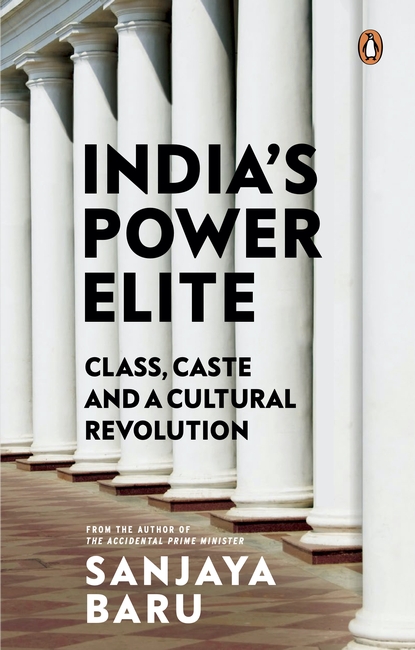
From the bestselling author of The Accidental Prime Minister, here comes an insightful analysis of Indian politics and elitism that answers many important political questions today.
India’s Power Elite is a study of the nature of power and elitism in postcolonial India. Its point of departure is the political transition under way in twenty-first-century India, with the marginalization of the Congress Party and the staging of a cultural revolution symbolized by the rise of Hindu majoritarianism. Baru deconstructs the morphology of the Indian power elite-comprising remnants of a feudal gentry, kulaks, a metropolitan business class, the civil services and a cultural elite of opinion-makers. He also examines the role of caste, class and culture in the emergence of a ‘New India’. Aimed at the socially engaged reader, this book will interest both students as well as those who wield power.
The main target readership for this book includes socially engaged readers, people interested in politics, activism, students, etc.
The Art of Resilience
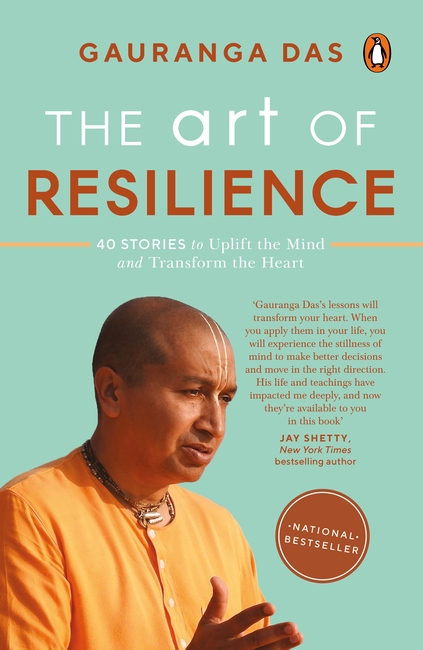
Losing sleep over what others think about you? Or can’t care less? Happiness in life nonetheless depends on what you think about yourself.
Social media has certainly given us individual authorship over how we present ourselves to the world. Susceptible to live by the dictates of ‘likes’ and ‘comments’ of others, we network with the world in a carefully filtered image of ourselves. But is it truly our authentic self that we are presenting to the world? Can it cater lasting happiness and honest relationships?
In this first volume of Yoga Stories, Gauranga Das takes you on an inner journey to explore your inner self, beyond the hills of expectation, through the valleys of disapprovals and beneath the layers of self-deception. Thus, bringing you closer to the home of your heart, enabling you to open the door and introduce yourself, to finally meet, the real you.
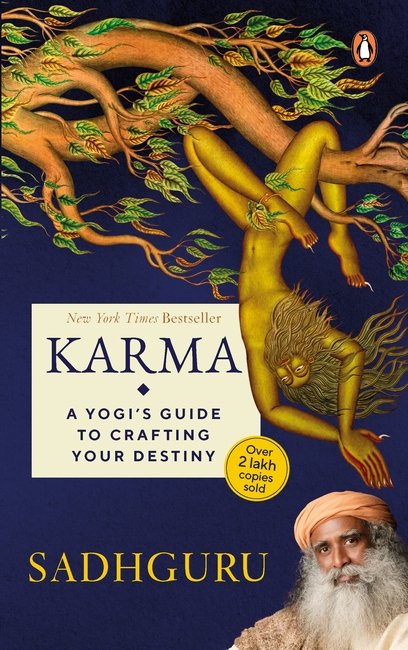
Karma
“Full of valuable insights to guide you.”-WILL SMITH
“Thoughtful and life-affirming . . . a must-read.”-TONY ROBBINS
“Forget what you think you know about karma-Sadhguru shows us it’s not a punishment for bad behavior, but a vehicle for transformation and empowerment. This book will put you back in charge of your own life.”-Tom Brady
“Pursuing your truth. Understanding this human experience. Embodying the divine is such an ongoing process of unveiling, adapting, and redesigning. The words in this book are the key to unlocking your truth, to see with no eyes, to hear the truth that lies in silence, and to connect with your inner wisdom. Thank you, Sadhguru, for such an enlightening creation, an offering to all seekers.”-HRH Princess Noor bint Asem of Jordan
“At last, a book about karma that can be trusted. I have never found a book that explains-and solves-the mystery of karma with the simplicity, clarity, and hopefulness of this invaluable book.”-Deepak Chopra
“Sadhguru here offers an easy read on a difficult subject: karma, or the volition to perform action. A truly captivating view from a renowned yogi and mystic on free will and the destiny of the human mind.”-Prof. Dr. Steven Laureys, neurologist, University Hospital of Liège, Belgium
“The tools Sadhguru provides in Karma bring me to a place of peace within myself. Thank you for your wisdom and transformational guidance.”-Rosanna Arquette
“In Karma, Sadhguru brilliantly demystifies the concept of karma and how we can harness our perceptions to change our own futures and, in doing so, create a more sustainable, just, and spiritually enlightened world. If you want to be the change you want to see in the world, read Karma and begin the journey.”-Terry Tamminen, Secretary of the California Environmental Protection Agency for Governor Arnold Schwarzenegger
“This five-letter word that has baffled humans for thousands of years is finally explained in 272 pages. It’s a compass for navigating life. Thank you, Sadhguru.”-Jay Naidoo, Minister in President Nelson Mandela’s cabinet, recipient of the Chevalier de la Légion d’Honneur, France
A much-used word, Karma is loosely understood as a system of checks and balances in our lives, of good actions and bad deeds, of good thoughts and bad intentions. A system which seemingly ensures that at the end of the day one gets what one deserves. This grossly over-simplified understanding has created many complexities in our lives and taken away from us the very fundamentals of the joy of living.
Through this book, not only does Sadhguru explain what Karma is and how we can use its concepts to enhance our lives, he also tells us about the Sutras, a step-by-step self help & self improvement guide to navigating our way in this challenging world. In the process, we get a deeper, richer understanding of life and the power to craft our destinies.