Publish with Us

Follow Penguin

Follow Penguinsters

Follow Penguin Swadesh

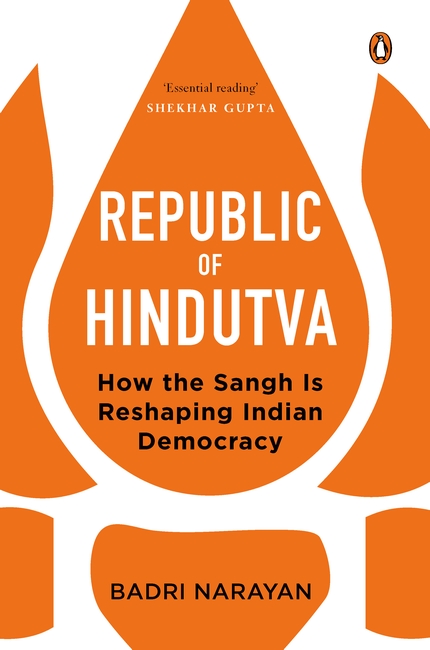
Republic of Hindutva

‘Essential reading’ ~ Shekhar Gupta

A handy insight into the activities, reach and influence of the RSS’ ~ Indian Express

‘[Yields] insights for students of Indian democracy’ ~ The Hindu

Very insightful and is recommended reading for both critics as well as admirers of the RSS’ ~ Financial Express

AN EXPLOSIVE ACCOUNT OF HOW THE RSS HELPS THE BJP WIN ELECTIONS

The RSS is like the tip of an iceberg, exerting its influence much beyond what is visible. Beginning with the choice of Narendra Modi as the forerunner for the 2014 general election up to the campaign for the 2019 election, RSS cadres have been a formidable force behind the staggering rise of the BJP in national politics.

In this eye-opening, necessary book, Badri Narayan offers an intimate glimpse of how the Sangh and its vast network of educational, cultural and social outfits have been digging deep roots in the Indian psyche. By refashioning its modes of mobilization as well as assimilating Dalits, OBCs, tribals and other marginalized communities, the RSS has made the Hindutva metanarrative appealing to a large section of Indians. During elections, the BJP-instead of wiping out caste from electoral politics-reaps rich political dividends from this social appropriation.

Drawing on extensive field research in the heartland of India and interviews with RSS volunteers, Narayan reveals how a new public is being forged at the grassroots, which will determine the course of Indian democracy.
This World Below Zero Fahrenheit

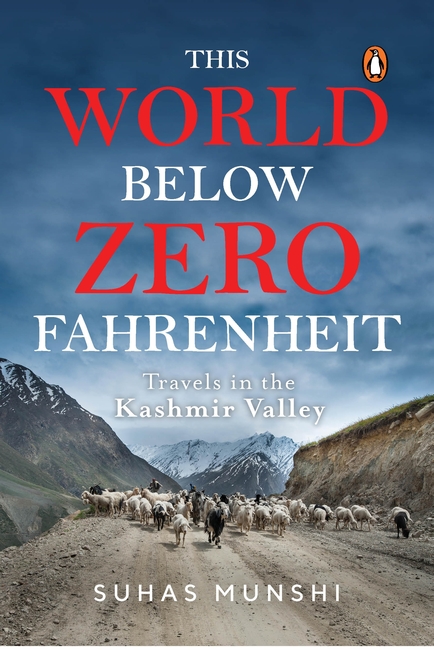
On 5 August 2019, Suhas Munshi was returning to Srinagar from a visit to legendary poet Habba Khatoon’s relic in Gurez, when an unprecedented curfew was imposed upon Jammu and Kashmir, and Article 370 was abrogated. Through his travels and conversations with people across the Valley, Munshi tries to give a sense of what that moment has meant to the common Kashmiri.
This insightful travelogue breaks away from the clichéd view of Kashmir, one that sees it either as an earthly paradise or a living hell. It takes you to unexpected places, into the homes of poets, playwrights and street performers; to a heartwarming Christmas service with the minuscule Christian community in Baramulla; and inside the barricaded city of Srinagar’s football stadium, which is a lively refuge for the elderly and their memories of a glorious past. Over three weeks, for fear of being abandoned in a harsh terrain, Munshi struggles to keep up with a group of Bakarwal nomadic shepherds as they make their way from Srinagar to Jammu over the mighty Pir Panjal mountains. And he finds a lone Pandit family living in a decrepit ghost colony in Shopian, the hub of militancy in Kashmir.
This World below Zero Fahrenheit presents a portrait of a people who’ve been overshadowed by the place they live in, even as it ruminates on the idea of home and exile.

A Functioning Anarchy?

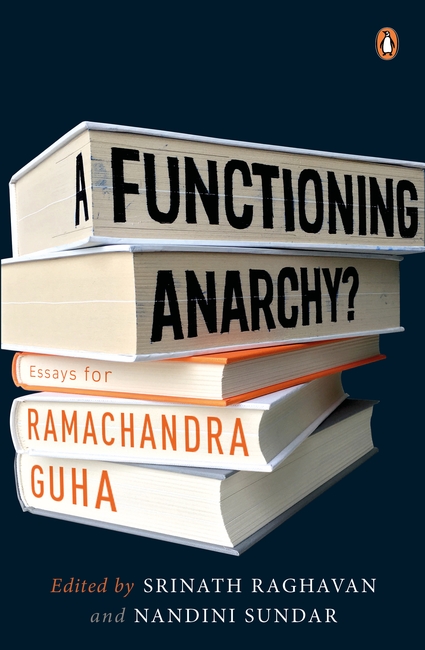
In a long and versatile career spanning thirty-five years, Ramachandra Guha has produced a vast body of work. Each time, he has broken new ground-his pioneering environmental histories of India and his still-relevant work on ecology and equity; his social histories of Indian cricket; his monumental history of the Indian republic; his biographies of Verrier Elwin and Gandhi; his anthologies of ecological, social and political thought in India; and his collections of biographical and political essays.

Sparked by Guha’s wide-ranging and important work, A Functioning Anarchy is a collection of essays by historians, social scientists, ecologists and journalists.

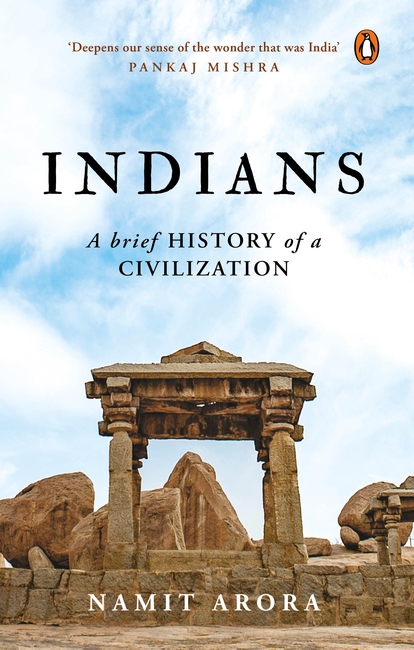
Indians

‘Deepens our sense of the wonder that was India’ ~ Pankaj Mishra

‘A gem of a book that is a joy to read . . . You can almost touch and feel the centuries and millennia as they pass by’ ~ Tony Joseph

‘Arora explores how Indians lived, ate, loved, built, fought and made sense of the material, rational and spiritual world down the ages . . . [A] mega-ambitious project’ ~ The Hindu

‘A wonderfully evocative book. Arora invites the reader to reflect on the past, without overwhelming her with dry historical facts but luring her in with vivid human stories’ ~ Prof. Mohan Rao

A BRILLIANT, ORIGINAL BOOK THAT REVEALS INDIA’S RICH AND DIVERSE HISTORIES

What do we really know about the Aryan migration theory and why is that debate so hot?
Why did the people of Khajuraho carve erotic scenes on their temple walls?
What did the monks at Nalanda eat for dinner?
Did our ideals of beauty ever prefer dark skin?

Indian civilization is an idea, a reality, an enigma. In this riveting book, Namit Arora takes us on an unforgettable journey through 5000 years of history, reimagining in rich detail the social and cultural moorings of Indians through the ages. Drawing on credible sources, he discovers what inspired and shaped them: their political upheavals and rivalries, customs and vocations, and a variety of unusual festivals. Arora makes a stop at six iconic places — the Harappan city of Dholavira, the Ikshvaku capital at Nagarjunakonda, the Buddhist centre of learning at Nalanda, enigmatic Khajuraho, Vijayanagar at Hampi, and historic Varanasi — enlivening the narrative with vivid descriptions, local stories and evocative photographs. Punctuating this are chronicles of famous travellers who visited India — including Megasthenes, Xuanzang, Alberuni and Marco Polo — whose dramatic and idiosyncratic tales conceal surprising insights about our land.

In lucid, elegant prose, Arora explores the exciting churn of ideas, beliefs and values of our ancestors through millennia — some continue to shape modern India, while others have been lost forever. An original, deeply engaging and extensively researched work, Indians illuminates a range of histories coursing through our veins.

The Little Book of Encouragement

His Holiness The Dalai Lama, a perennial source of inspiration, is one of the most eminent spiritual leaders in the world. Recipient of the Noble Peace Prize, His Holiness’s life and works have inspired millions of lives throughout the world. In this specially curated companion volume, His Holiness shares words of encouragement to deal with new realities in a pandemic stricken world.

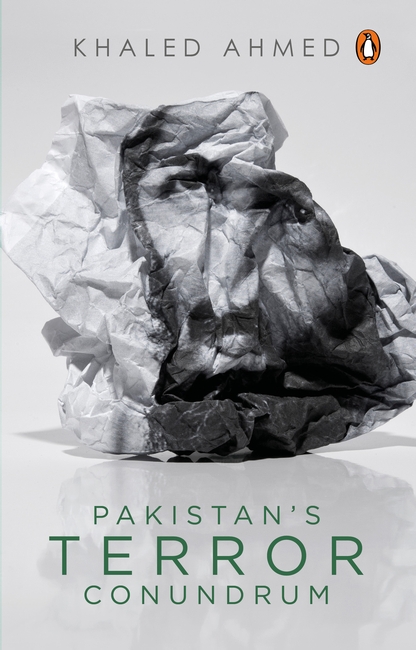
Pakistan’s Terror Conundrum

Pakistan was born amid communal violence and a collective consciousness of danger. Right from the outset, democracy was up for debate between the politicians nurtured by the British Raj and an orthodox clergy that advocated a utopia in which Islam was to be the ideological guide. Today, the threat of religion as an extra-legal force is causing many Pakistanis to think if the state can move forward into the future with Islam as its credo.
In this carefully curated collection of his writings in several publications, senior journalist Khaled Ahmed examines Pakistan’s policies regarding terrorism against the backdrop of increasing pressure from international organizations. Despite joining the US in its war against terror after 9/11, the country has been perceived as a safe haven and breeding ground for terrorists. Ahmed looks at the origins and activities of the various terrorist organizations, the role of the state and the ideology of its founding figures, some of whom seem to have been forgotten.

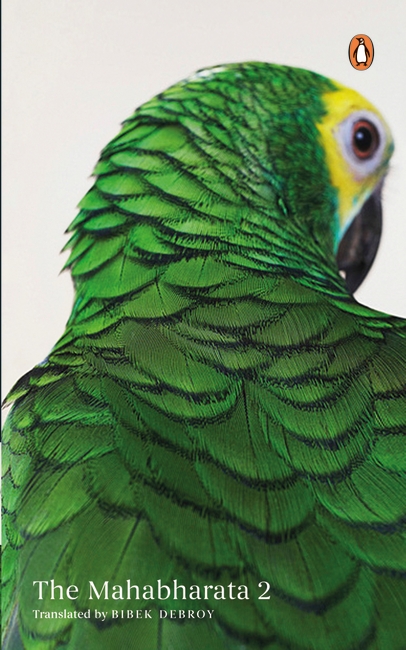
The Mahabharata

This definitive and magnificent 10-volume unabridged translation is one of the rare English translations of full of the epic. Bibek Debroy makes the Mahabharata marvelously accessible to contemporary readers. Dispute over land and kingdom may lie at the heart of this story of war between cousins-the Pandavas and the Kouravas-but the Mahabharata is about conflicts of dharma. These conflicts are immense and various, singular and commonplace. Throughout the epic, characters face them with no clear indications of what is right and what is wrong; there are no absolute answers. Thus every possible human emotion features in the Mahabharata, the reason the epic continues to hold sway over our imagination.

In this superb and widely acclaimed translation of the complete Mahabharata, Bibek Debroy takes on a great journey with incredible ease. This is the second volume in the series.

The Mahabharata

The Mahabharata is one of the greatest stories ever told. Though the basic plot is widely known, there is much more to the epic than the dispute between the Kouravas and Pandavas that led to the battle in Kurukshetra. It has innumerable sub-plots that accommodate fascinating meanderings and digressions, and it has rarely been translated in full, given its formidable length of 80,000 shlokas or couplets. This magnificent 10- volume unabridged translation of the epic is based on the Critical Edition compiled at the Bhandarkar Oriental Research Institute. Volume 1 consists of most of Adi Parva, in which much happens before the Kouravas and the Pandavas actually arrive on the scene. This volume covers the origins of the Kuru clan; the stories of Poushya, Poulama and Astika; the births of the Kouravas and the Pandavas; the house of lac; the slaying of Hidimba and Baka; Droupadi’s marriage; and ends with the Pandavas obtaining their share of the kingdom. Every conceivable human emotion figures in the Mahabharata, the reason why the epic continues to hold sway over our imagination. In this lucid, nuanced and confident translation, Bibek Debroy makes the Mahabharata marvellouly accessible to contemporary readers.

The Mahabharata

This definitive and magnificent 10-volume unabridged translation is one of the rare English translations of full of the epic. Bibek Debroy makes the Mahabharata marvelously accessible to contemporary readers. Dispute over land and kingdom may lie at the heart of this story of war between cousins-the Pandavas and the Kouravas-but the Mahabharata is about conflicts of dharma. These conflicts are immense and various, singular and commonplace. Throughout the epic, characters face them with no clear indications of what is right and what is wrong; there are no absolute answers. Thus every possible human emotion features in the Mahabharata, the reason the epic continues to hold sway over our imagination.

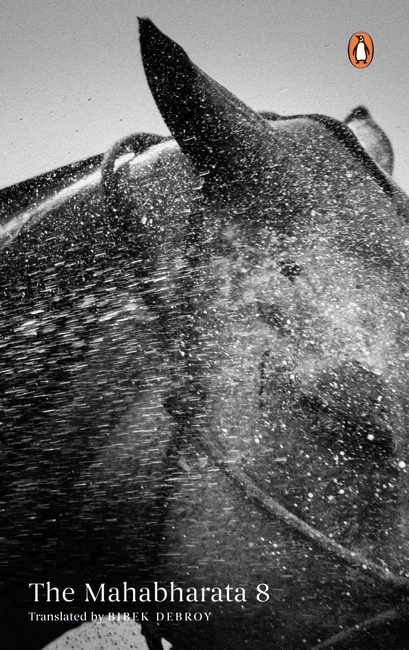
In this superb and widely acclaimed translation of the complete Mahabharata, Bibek Debroy takes on a great journey with incredible ease. This is the eighth volume in the series. It is the aftermath of the war. Ashvatthama kills all the remaining Pandavas-with the exception of the five Pandava brothers-and Panchalas. The funeral ceremonies for the dead warriors are performed. Bhishma’s teachings in the Shanti Parva, after Yudhishthira is crowned, is about duties to be followed under different circumstances.

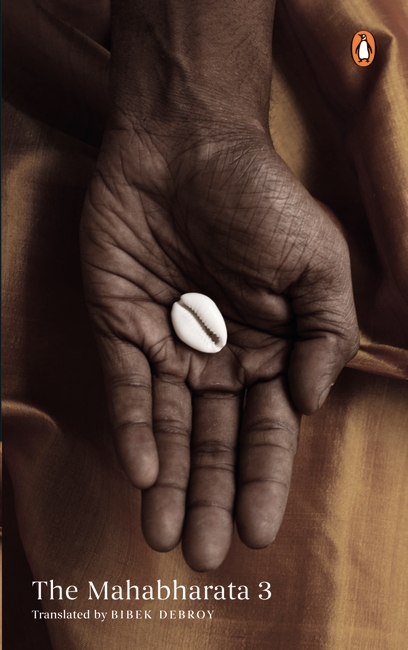
The Mahabharata

This definitive and magnificent 10-volume unabridged translation is one of the rare English translations of full of the epic. Bibek Debroy makes the Mahabharata marvelously accessible to contemporary readers. Dispute over land and kingdom may lie at the heart of this story of war between cousins-the Pandavas and the Kouravas-but the Mahabharata is about conflicts of dharma. These conflicts are immense and various, singular and commonplace. Throughout the epic, characters face them with no clear indications of what is right and what is wrong; there are no absolute answers. Thus every possible human emotion features in the Mahabharata, the reason the epic continues to hold sway over our imagination.

In this superb and widely acclaimed translation of the complete Mahabharata, Bibek Debroy takes on a great journey with incredible ease. This is the seventh volume in the series.

error: Content is protected !!