Patriarchy asserts men are superior to women
Feminism clarifies women and men are equal
Queerness questions what constitutes male and female
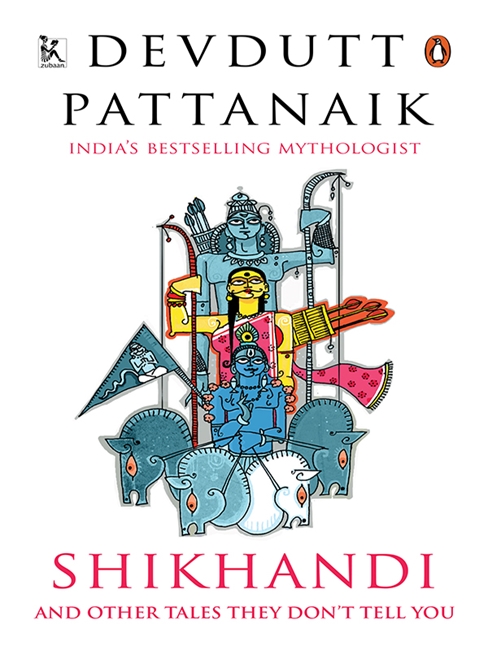
Queerness isn’t only modern, Western or sexual, says mythologist Devdutt Pattanaik. Take a close look at the vast written and oral traditions in Hinduism, some over two thousand years old, and you will find tales of:
Shikhandi, who became a man to satisfy her wife
Mahadeva, who became a woman to deliver a devotee’s child
Chudala, who became a man to enlighten her husband
Samavan, who became the wife of his male friend
and many more . . .
Playful and touching—and sometimes disturbing—these stories when compared with tales of the Mesopotamian Gilgamesh, the Greek Ganymede, the biblical Sodom or the Chinese ‘cut sleeve’ Emperor reveal the unique Indian way of making sense of queerness.
Devdutt Pattanaik’s new book builds on profound ideas that our ancestors shared but which we have rarely inherited.
This book has content for mature audiences. Discretion advised.
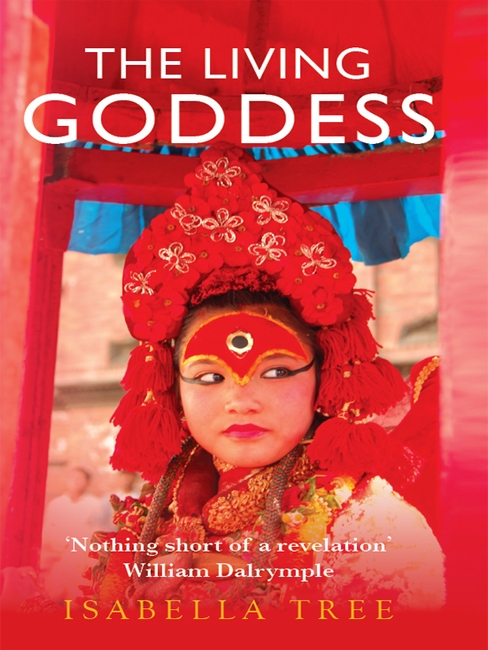
In a small medieval palace on Kathmandu’s Durbar Square lives Nepal’s famous Living Goddess-a child chosen from the Buddhist caste of goldsmiths whose role is to watch over the country and protect its people. Once she attains puberty, another girl takes her place.
To Nepalis she is the embodiment of Devi and for centuries the kings of Nepal have sought her blessing to rule. Legends swirl about her. But the facts remain shrouded in secrecy and closely guarded by the Living Goddess’s priests and caretakers. Why are Buddhist girls worshipped by Hindu monarchs? Are the initiation rituals as macabre as they are rumoured to be? And what happens to Living Goddesses once they attain puberty?
Using myth, religion, history and her unprecedented access to the priests, caretakers and ex-Living Godessess, Isabella Tree takes us deep into this hidden world. Through it she draws a vivid portrait of the girl-goddess, the beliefs and practices of traditional Nepal, and the uneasy journey it now makes towards modernity. Deeply felt and written over many years of travel and research, The Living Goddess is a profound, compelling and extremely moving book.
The Mahabharata is one of the greatest stories ever told. Though the basic plot is widely known, there is much more to the epic than the dispute between the Kouravas and Pandavas that led to the battle in Kurukshetra. It has innumerable sub-plots that accommodate fascinating meanderings and digressions, and it has rarely been translated in full, given its formidable length of 80,000 shlokas or couplets. This magnificent 10- volume unabridged translation of the epic is based on the Critical Edition compiled at the Bhandarkar Oriental Research Institute. Volume 1 consists of most of Adi Parva, in which much happens before the Kouravas and the Pandavas actually arrive on the scene. This volume covers the origins of the Kuru clan; the stories of Poushya, Poulama and Astika; the births of the Kouravas and the Pandavas; the house of lac; the slaying of Hidimba and Baka; Droupadi’s marriage; and ends with the Pandavas obtaining their share of the kingdom. Every conceivable human emotion figures in the Mahabharata, the reason why the epic continues to hold sway over our imagination. In this lucid, nuanced and confident translation, Bibek Debroy makes the Mahabharata marvellouly accessible to contemporary readers.

This definitive and magnificent 10-volume unabridged translation is one of the rare English translations of full of the epic. Bibek Debroy makes the Mahabharata marvelously accessible to contemporary readers. Dispute over land and kingdom may lie at the heart of this story of war between cousins-the Pandavas and the Kouravas-but the Mahabharata is about conflicts of dharma. These conflicts are immense and various, singular and commonplace. Throughout the epic, characters face them with no clear indications of what is right and what is wrong; there are no absolute answers. Thus every possible human emotion features in the Mahabharata, the reason the epic continues to hold sway over our imagination.
In this superb and widely acclaimed translation of the complete Mahabharata, Bibek Debroy takes on a great journey with incredible ease. This is the second volume in the series.

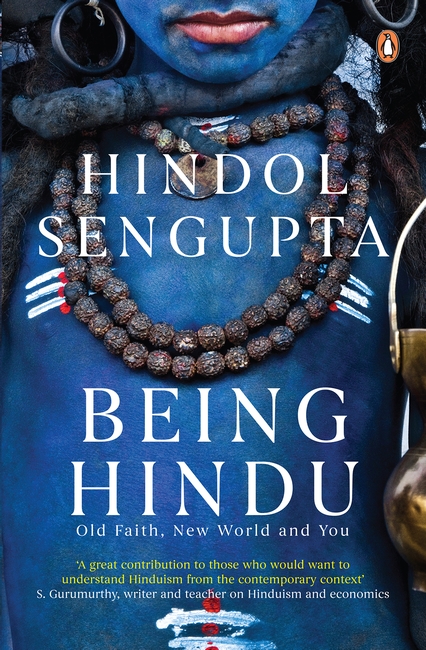
One of the world’s oldest forms of faith, Hinduism has an unbroken trajectory of beliefs and rituals that have continued for many millennia through the footsteps of pilgrims and the pedagogies of theologists; through myth, science and politics. But what does all that mean to the modern Hindu today? Why do Hindus call themselves so? Is it merely because their parents were Hindus? In what way does the faith speak to those who profess to follow it? What does Hinduism mean to the everyday-practising or sometimes-accessing ordinary Hindu? Away from the raucous debate around religion, this is the journey of a common Hind, an attempt to understand why, for so many Hindus, their faith is one of the most powerful arguments for plurality, for unity in diversity, and even more than the omnipresent power of God, the sublime courage and conviction of man.
Being Hindu is an exploration of Hinduism in a way you have never seen before, almost through your own eyes. This is the first book on Hinduism to have won the Wilbur Award given by the Religion Communicators Council of America for excellence in writing about religion.

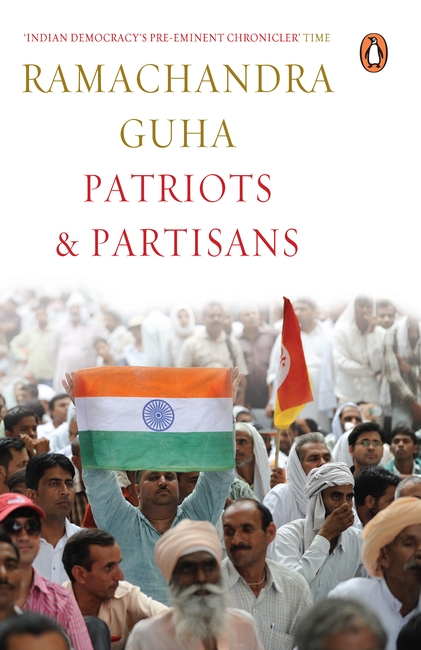
‘I am a person of moderate views,’ writes Ramachandra Guha, ‘these sometimes expressed in extreme fashion.’ In this wide-ranging and wonderfully readable collection of essays, Guha defends the liberal centre against the dogmas of left and right, and does so with style, depth, and polemical verve. The book begins with a brilliant overview of the major threats to the Indian Republic. Other essays turn a critical eye on Hindutva, the Communist left, and the dynasty-obsessed Congress party.
The essays in Part II of this book focus on writers and scholars, and include some sparkling portraits. Whether writing about politics or culture, whether profiling individuals or analysing social trends, Ramachandra Guha displays a masterly touch, confirming his standing as India’s most admired historian and public intellectual.

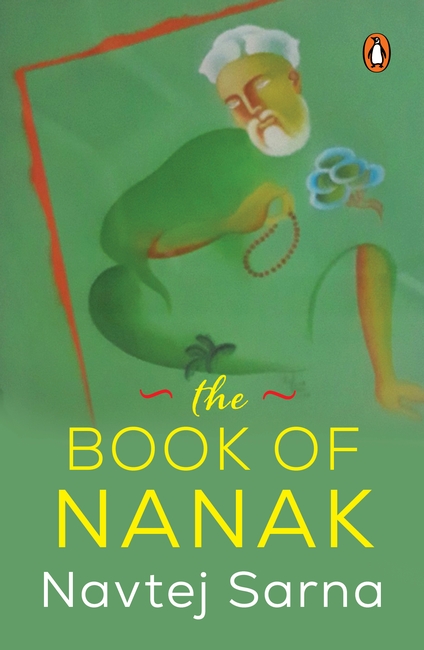
Guru Nanak was deeply spiritual from an early age, having being born into a society caught in the throes of orthodoxy and ritualism. The ills of child marriage, infanticide and a rigid caste system had further crippled his people. The outpouring of Nanak’s faith evolved into the universal message of the omnipresence and existence of one God, of true love, equality and compassion, which appealed to Hindus and Muslims alike.
Drawing upon the various myths and legends contained in anecdotal biographies and placing them in as precise a historical framework as possible, The Book of Nanak traces the chronology of the main events of Nanak’s life. It sheds new light on Guru Nanak’s message and includes translations of some of his hymns, which continue to inspire people the world over.

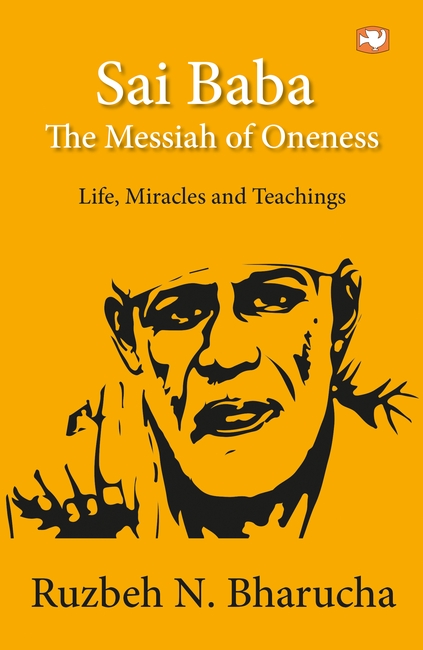
On the occasion of the 100th anniversary of Baba Sai’s Mahasamadhi, bestselling author Ruzbeh N. Bharucha chronicles His years of selfless altruism and spiritual teaching in the human form, through poignant stories and simple day-to-day practices rooted in Baba’s philosophy for the benefit of all hose fumbling to find peace amidst the chaos of the modern world. This book is a wonderful companion for your spiritual journey…

Osho’s Yoga: The Supreme Science is a guide on how to use the inner science of yoga to dispel all of life’s anxieties.
Ruzbeh N. Bharucha’s Rabda: My Sai . . . My Sigh is a unique journey into the life and philosophy of Sai Baba of Shirdi, often in His own words.
Sadhguru’s More Than a Life is the incredible story of the making of this world-renowned spiritual guru.
Venugopal Acharya’s Are You Connected? 25 Keys to Live, Grow and Succeed with Self and Others offers deep insight into living a life of harmony, success and happiness.

Guru Nanak’s Japji contains the quintessence of Sikh religious thought and philosophy. This analysis weaves Japji into an integrated essay to make a more explicit understanding of the theme. The appendices also contain translations of Rahiras, Sohila and Ardas.