



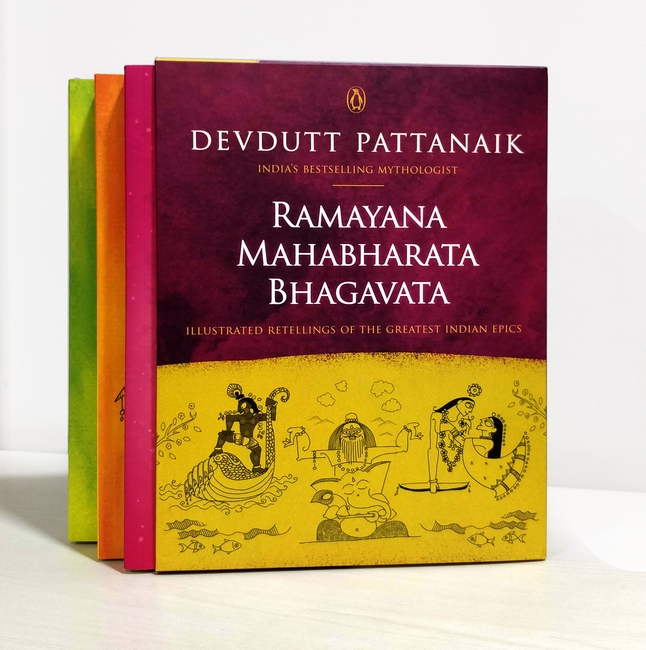
An enthralling retelling of India’s greatest epic, the Mahabharata, Jaya seamlessly weaves into a single narrative plots from the Sanskrit classic as well as its many folk and regional variants. With clarity and simplicity, the tales in this elegant volume reveal the eternal relevance of the Mahabharata and the complex and disturbing meditation on the human condition that has shaped Indian thought for over 3000 years.
Sita approaches Ram and the Ramayana by speculating on the titular character: her childhood with her father, Janaka, who hosted sages mentioned in the Upanishads; her stay in the forest with her husband, who had to be a celibate ascetic while she was in the prime of her youth; her interactions with the women of Lanka, recipes she exchanged, the emotions they shared; her role as a goddess, the untamed Kali as well as the demure Gauri, in transforming the stoic prince of Ayodhya into God.
The Bhagavata is the story of Krishna, known as Shyam to those who find beauty, wisdom and love in his dark complexion. Shyam tells the story of Krishna’s birth and his death, bringing together the fragments of this great epic composed over thousands of years, first as the Harivamsa, then as the Bhagavata Purana, and finally as the passionate songs of poet-sages in various regional languages.
Catagory: Religion
The Open Road
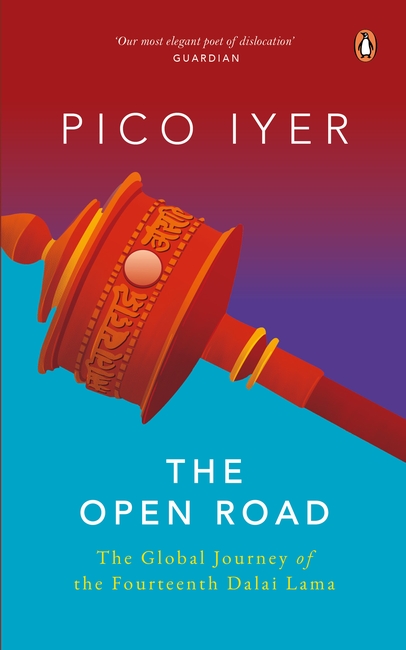
Pico Iyer has been engaged in conversation with the Dalai Lama (a friend of his father’s) for the last many decades-about his message and its effectiveness. Now, in this insightful, impassioned book, Iyer captures the paradoxes the Dalai Lama embodies: he is a religious leader who warns against being needlessly distracted by religion; a Tibetan head of state who suggests that exile from Tibet can be an opportunity; an incarnation of a Tibetan god who champions globalism and technology.
Moving from Dharamsala, India, to Lhasa, Tibet, to venues in the West-where the Dalai Lama’s pragmatism, rigour and scholarship are sometimes lost on an audience yearning for mystical visions-The Open Road illuminates the hidden life, the transforming ideas and the daily challenges of a global icon.
Daily Inspiration from His Holiness The Dalai Lama
Chronologically arranged for each calendar day, this book is a source of courage, compassion, wisdom and inspiration from His Holiness The Dalai Lama
The Book Of Man; The Book of Woman
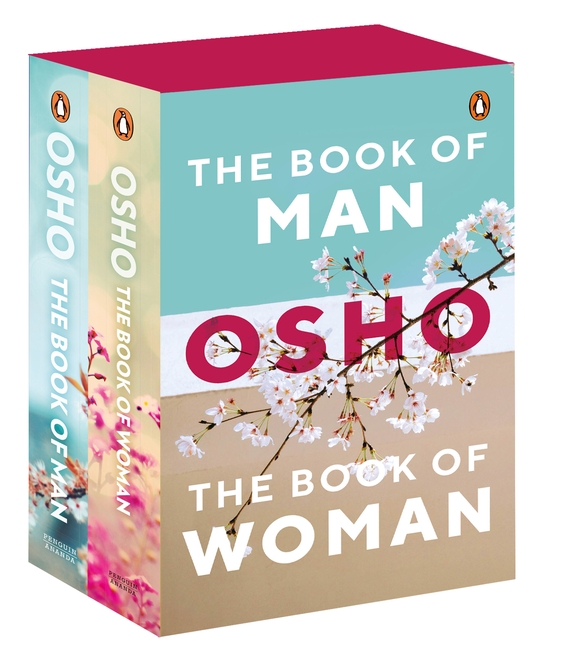
Osho’s most celebrated meditations on the human condition
For Osho, the ideal man is Zorba, the Buddha?a perfect blend of matter and soul. This seamless collection of discourses takes the reader through the various stages of man’s evolution: from Adam to Slave, Son, Homosexual, Priest and Politician, until he attains the pinnacle of his consciousness as the Rebel or Zorba. Sparkling with anecdotes and enriched with brilliant repartee, The Book of Man is a remarkable blend of wisdom and wit.
The Book of Woman describes what it means to be a woman and explores the feminine aspect of human beings. A woman, Osho says, should not imitate man: ‘Rejoice in your feminine qualities, make a poetry out of them.’ The perfect state of being, according to Osho, is a synthesis between the head and the heart, with the heart remaining the master. The rare sensitivity of Osho’s words on issues ranging from sexuality and love to work and politics, will appeal to both men and women.
Republic of Religion
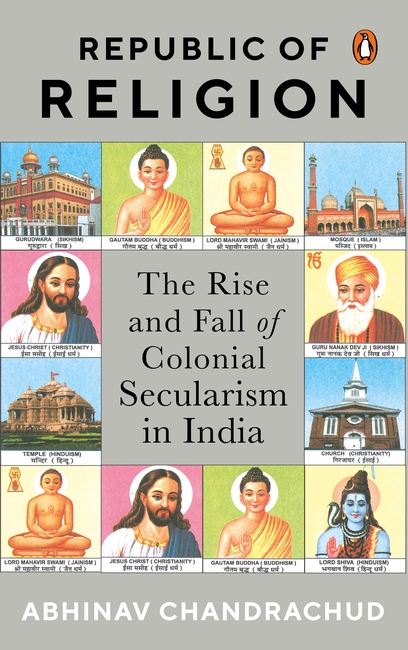
How did India aspire to become a secular country? Given our colonial past, we derive many of our laws and institutions from England. We have a parliamentary democracy with a Westminster model of government. Our courts routinely use catchphrases like ‘rule of law’ or ‘natural justice’, which have their roots in London. However, during the period of colonial rule in India, and even thereafter, England was not a ‘secular’ country. The king or queen of England must mandatorily be a Protestant. The archbishop of Canterbury is still appointed by the government. Senior bishops still sit, by virtue of their office, in the House of Lords.
Thought-provoking and impeccably argued, Republic of Religion reasons that the secular structure of the colonial state in India was imposed by a colonial power on a conquered people. It was an unnatural foreign imposition, perhaps one that was bound, in some measure, to come apart once colonialism ended, given colonial secularism’s dubious origins.
Kashmir and Beyond 1966-84
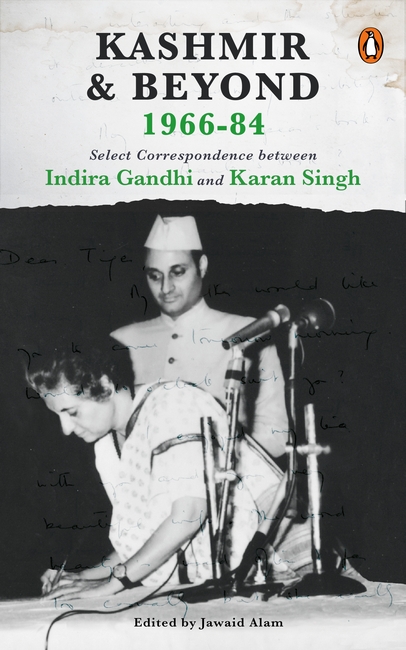
Dr Karan Singh became a member of Prime Minister Indira Gandhi’s Cabinet as minister for tourism and civil aviation, and worked closely with Gandhi for almost the entire duration of her tenure. They held each other in high esteem, shared great rapport as Cabinet colleagues and had mutual regard on a personal level as well.
Bringing together over 300 letters exchanged between Mrs Gandhi and Dr Singh, Kashmir and Beyond provides valuable insights into such historic events as the signing of the Tashkent Declaration, the Emergency and Operation Bluestar. Even as these letters map the important landmarks of recent Indian history, they also provide a fascinating glimpse into the inner workings of the government and the magnitude of the effort of running a country that houses ‘one-seventh of the human race’.
Kashmir and Beyond is an immensely important book for anyone who wants to make sense of the knotty issues that confront contemporary India.
Jammu and Kashmir 1949-1964
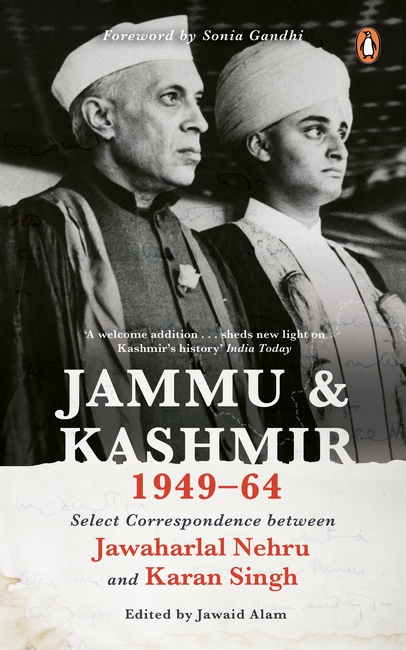
In 1949, Dr Karan Singh had just turned eighteen when he was appointed regent of Jammu and Kashmir, two years after his father, Maharaja Hari Singh, signed the Instrument of Accession merging the then independent state with India. Under the mentorship of Pandit Jawaharlal Nehru, Dr Singh was at the helm of affairs in the state for eighteen years, successively as regent, Sadar-i-Riyasat and governor.
This carefully conceived selection of over 200 letters exchanged between Dr Singh and Pandit Nehru sheds light on significant issues and events, including the teething problems of a fledgling country and a newly grafted state, the emerging conflicts between Pakistan and India, and the Chinese aggression of 1962. In addition to valuable insights into the political situation of the period, these letters also provide rare glimpses into the personal lives and thoughts of Pandit Nehru and Dr Singh. The memorandum submitted by Maharaja Hari Singh to President Rajendra Prasad in August 1952 is published in full, revealing how the identity and future of Kashmir were shaped.
A rare collection, Jammu and Kashmir offers an unmatched ringside view of the momentous events in Kashmir and the rest of India after Independence.
Pakistan
Among the USA’s allies in the war against terrorism, Pakistan cannot be easily characterized as either friend or foe. Nuclear-armed Pakistan is an important centre of radical Islamist ideas and groups. After 9/11, the selective cooperation of President General Pervez Musharraf in sharing intelligence with the United States and apprehending Al-Qaeda members led to the assumption that Pakistan might be ready to give up its long-standing ties with radical Islam. But Pakistan’s status as an Islamic ideological state is closely linked with the Pakistani elite’s world view and the praetorian ambitions of its military.
Pakistan: Between Mosque and Military analyses the origins of the relationships between Islamist groups and Pakistan’s military, and explores the nation’s quest for identity and security. Tracing how the military has sought US support by making itself useful for concerns of the moment-while continuing to strengthen the mosque-military alliance within Pakistan-Haqqani offers an alternative view of political developments since the country’s Independence in 1947.
This new edition of this classic work includes data updates and an Epilogue by the author.
Identity & Survival
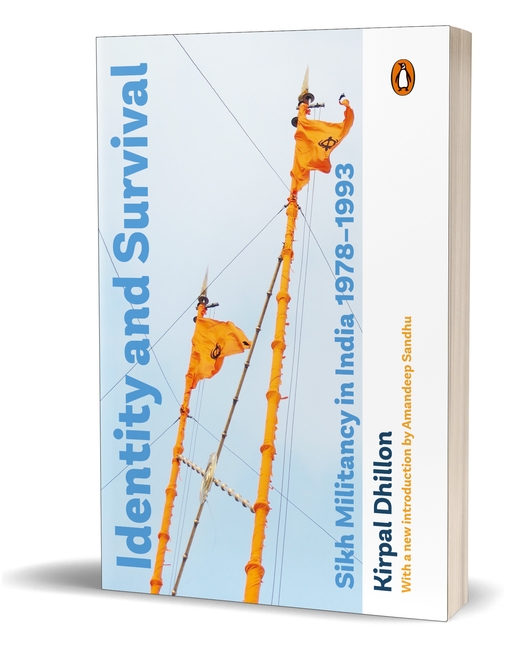
Drawing on his experiences in Punjab as director general of police from 3 July 1984-within weeks of Operation Blue Star-to 22 August 1985, Kirpal Dhillon writes about the phase of militancy in the state as not just a law and order problem but a question of Sikh nationalism, of a minority under threat. This is an insider’s view of the factors that bedeviled Punjab for close to two decades. Coming from a man who witnessed the drama first-hand and analyzed its historical causes, this book is a valuable addition to literature on the Sikh community’s darkest years-a phase that is not necessarily over.
Sarama And Her Children
The most recognized dog in Indian myth is the dog in the Mahabharata that accompanied the Pandavasnot actually a dog but Dharma in disguise. There are, however, several more references to dogs in the classical texts. Mentioned for the first time in the Rg Veda, the eponymous Sarama is the dog of the gods and the ancestor of all dogs. In Sarama and Her Children, the evolution of the Indian attitude towards dogs is traced through the vedas, epics, puranas, dharmashastras and niti shastras. The widespread assumption is that dogs have always been looked down upon in Hinduism and a legacy of that attitude persists even now. Tracing the Indian attitude towards dogs in a chronological fashion, beginning with the pre-Vedic Indus Valley civilization, Bibek Debroy discovers that the truth is more complicated. Dogs had a utilitarian role in pre-Vedic and Vedic times. There were herd dogs, watchdogs and hunting dogs, and dogs were used as beasts of burden. But by the time of the Mahabharata, negative associations had begun to creep in. Debroy argues convincingly that the change in the status of the dog in India has to do with the progressive decline of the traditional Vedic gods Indra, Yama and Rudra (who were associated with dogs), and the accompanying elevation of Vishnu, associated with an increase in brahmana influence. Debroy demonstrates that outside the mainstream caste Hindu influence, as reflected in doctrines associated with Shiva and in Buddhist jataka tales, dogs did not become outcasts or outcastes. Drawing references from high and low literature, folk tales and temple art, Sarama and Her Children dispels some myths and ensures that the Indian dog also has its day.