



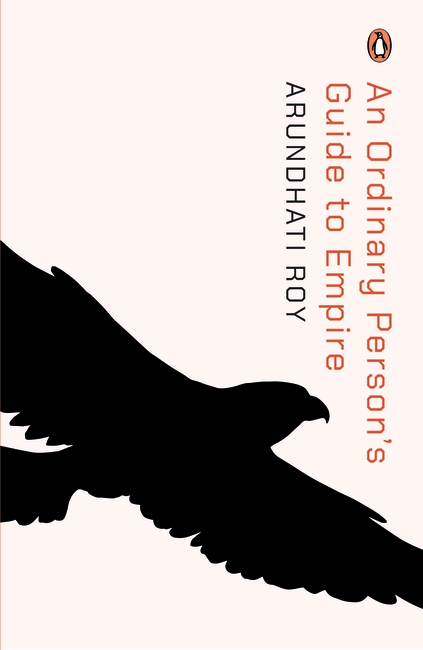
This second volume of Arundhati Roy’s collected non-fiction writing brings together fourteen essays written between June 2002 and November 2004. In these essays she draws the thread of empire through seemingly unconnected arenas, uncovering the links between America’s War on Terror, the growing threat of corporate power, the response of nation states to resistance movements, the role of NGOs, caste and communal politics in India, and the perverse machinery of an increasingly corporatized mass media. Meticulously researched and carefully argued, this is a necessary work for our times.
Catagory: Religion
Ways of Worship
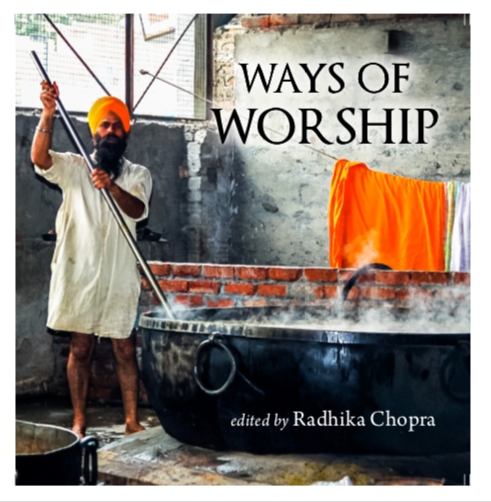
Ways of Worship is a visual chronicle of ritual and religion in India. The photographs, taken by anthropologists in the course of fieldwork, illustrate the innovative, cosmopolitan and visually striking ways on which people please their gods. The photographs display the sophisticated visual cultures that frame the relationship between ordinary devotees and their gods.
Leadership Secrets From The Mahabharata
Management insights culled from the Mahabharata, one of the greatest books of all time, is not simply the story of a fratricidal war or a fount of wisdom for philosophers; it is also a comprehensive manual on strategy. From this storehouse of knowledge, Meera Uberoi selects the most pertinent shlokas to reveal the secrets of leadership and the path to success. She shows that the Mahabharata is equal, if not superior, to other management bibles such as The Art of War, The Prince and Go Rin No Sho, The Book of Five Rings. The aphorisms in Leadership Secrets from the Mahabharata have been selected from the Santi Parva, the Bhagvad Gita Parva and the Adi Parva.
As Bhishma lies dying on the battlefield of Kurukshetra, Krishna realizes that with Bhishma’s death, the world will lose ‘all knowledge’. To prevent this, Krishna asks him to impart to Yudhisthira all he knows. These teachings, coming as they do from Bhishma, the wisest of them all, contained in the Santi Parva, form the core of Uberoi’s book. Apart from detailing how to apply the craft of kingship to modern business practices, the book also explores the analogy between kingship and leadership. Pithy and insightful, Meera Uberoi’s selection is a practical guide to leadership in any field of life. The aphorisms, grouped under heads like Duty, War, Espionage and Conduct, deal with eternal values and truths that are as relevant today as they were 3000 years ago.
The Modern Monk
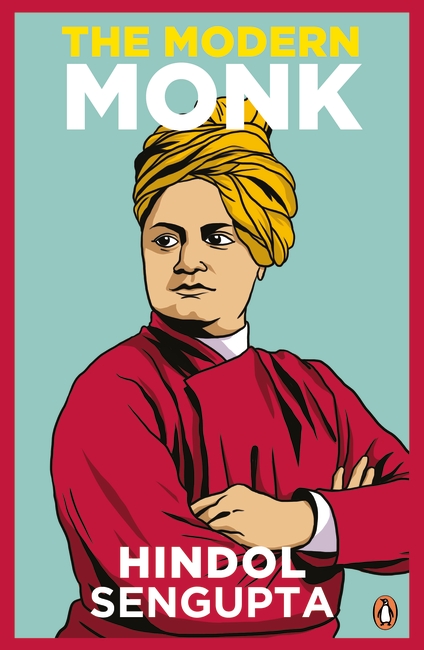
He loved French cookbooks, invented a new way of making khichdi, was interested in the engineering behind ship-building and the technology that makes ammunition. More than 100 years after his death, do we really know or understand the bewildering, fascinating, complex man Swami Vivekananda was? From his speech in Chicago that mesmerised America to his voluminous writings and speeches that redefined the idea of India, Vivekananda was much more than a monk. His work sweeps through Indian politics, economics, sociology, arts and culture, and of course religion. So ubiquitous are his sayings that they pop everywhere from the speeches of politicians to t-shirts and mugs. It may perhaps be said about Vivekananda that he rarely had a boring idea – and even when he did, he never expressed it boringly! We see and hear so much about Vivekananda that we have almost forgotten how critical he is to our understanding of ourselves as Indians, and indeed, as human beings. Vivekananda is one of the most important figures in the modern imagination of India. He is also an utterly modern man, consistently challenging his own views, and embracing diverse, even conflicting arguments. It is his modernity that appeals to us today. He is unlike any monk we have known. He is confined neither by history nor by ritual, and is constantly questioning everything around him, including himself. It is in Vivekananda’s contradictions, his doubts, his fears and his failings that he recognize his profoundly compelling divinity – he teaches us that to try and understand God, first one must truly comprehend one’s own self. This book is an argument that it is not just because he is close to God but also because he is so tantalizingly immersed in being human that keeps us returning to Vivekananda and his immortal wisdom.
The Other Side of Belief
Described as the thinker who shuns thought, U.G. Krishnamurti is the most enigmatic and iconoclastic ‘anti-guru’ of our times. His conviction that doubt is the other side of belief emerged from an uncompromising negation of everything that can be expressed, not from a desire for some ‘comfy dialectical thesis’.
The Other Side of Belief Interpreting U G. Krishnamurti is a candid and refreshing chronicle ofUG’s life and the evolution of his radical outlook and ideas. Tracing the development of UG’s notion of enlightenment as a series of biological mutations devoid of mystical or religious connotations, Mukunda Rao weaves a complex portrait—of a man who doesn’t hesitate to challenge and demolish society’s most cherished and comforting values and ideals, but nonetheless commands a most fervent respect and veneration from multitudes of admirers.
UG has always been adamant that life must be described in pure and simple physical and physiological terms so that it is de-psychologized and demystified. He underwent, in his own words, a ‘calamity’: a series of bodily metamorphoses that catapulted him into the unique state of the ‘declutched’ mind. This book gives the reader a vivid description of UG’s cellular revolution’ and an intensely personal insight into UG’s unflinching and relentless insistence on freedom from the ‘stranglehold of thought.’
With a foreword by Mahesh Bhatt, film-maker and lifelong admirer of UG, The Other Side of Belief offers a searching exploration of the incredible charisma of a man who has transformed the lives of people all over the world.
Ganesha on the Dashboard
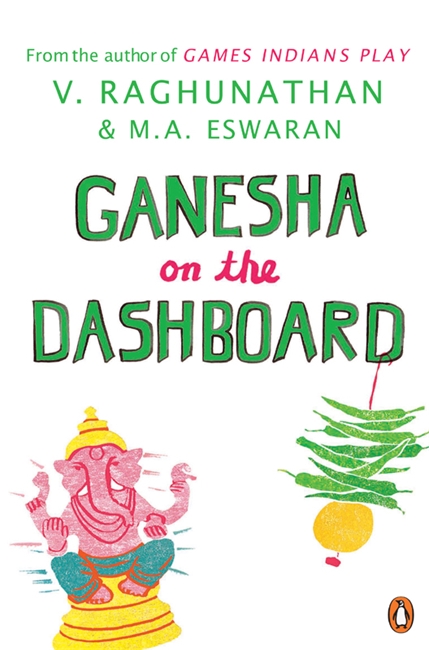
Take the way we go about buying a new car. We identify an auspicious date and time, then proceed to break a coconut, plonk a plastic deity of Ganesha on the dashboard and zoom off at great speed, refusing to wear our seat belts.Supposedly educated, smart and tech-savvy, Indians can be surprisingly unscientific in their daily lives. Think of the crores spent every year remodelling homes according to Vaastu, in the hope of changing luck; and the continued horrors of female infanticide, because it is only the son who can help the father’s journey to heaven . . . This unsparingly critical, scathingly analytical book points out the shocking lack of scientific temper among the vast majority of Indians, and how this holds us up as a nation in the twenty-first century.
The Transformed Mind Reflections on Truth, Love and Happiness
In his characteristically endearing and informal style, His Holiness the Dalai Lama examines the nature of the human mind and emphasises the need to transform it if we want to lead more fulfilling lives. In the form of several discourses delivered over a period of nine years, he talks about suffering, happiness, love and truth, and imparts practical wisdom on issues ranging from religious tolerance to world economy. Stressing the need for compassion and non-violence, the Dalai Lama reiterates the essential goodness of the human heart and teaches us how to live and die well, reminding us constantly of the responsibility of our actions and thoughts, and the interdependence between action and result. Wise, inspiring and always candid, The Transformed Mind gives us hope and solace in this new millennium.
And…Perhaps Love
A new normal has replaced the established order. Distant relationships, virtual work, blurred futures and measuring our way back to this reality occupy us every day. Negotiating these changes, Sanil Sachar’s And . . . Perhaps Love will work as your companion. It is a silent observer for when you want to read it, and a patient listener when you wish to communicate with it. Capturing the ideas of love, darkness and the attempt to find balance in life, this is a book for now and forever.
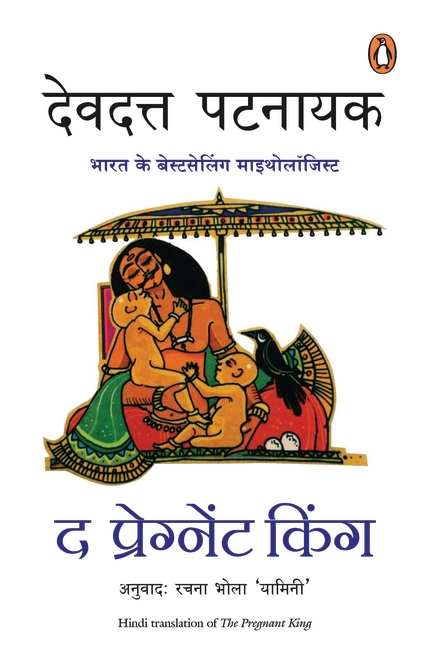
The Pregnant King
‘I am not sure that I am a man,’ said Yuvanashva. ‘I have created life outside me as men do. But I have also created life inside me, as women do. What does that make me? Will a body such as mine fetter or free me?’
Among the many hundreds of characters who inhabit the Mahabharata, perhaps the world’s greatest epic and certainly one of the oldest, is Yuvanashva, a childless king, who accidentally drinks a magic potion meant to make his queens pregnant and gives birth to a son. This extraordinary novel is his story.
It is also the story of his mother Shilavati, who cannot be king because she is a woman; of young Somvat, who surrenders his genitals to become a wife; of Shikhandi, a daughter brought up as a son, who fathers a child with a borrowed penis; of Arjuna, the great warrior with many wives, who is forced to masquerade as a woman after being castrated by a nymph; of Ileshwara, a god on full-moon days and a goddess on new-moon nights; and of Adi-natha, the teacher of teachers, worshipped as a hermit by some and as an enchantress by others.
Building on Hinduism’s rich and complex mythology-but driven by a very contemporary sensibility-Devdutt Pattanaik creates a lush and fecund work of fiction in which the lines are continually blurred between men and women, sons and daughters, husbands and wives, fathers and mothers. Confronted with such fluidity the reader is drawn into Yuvanashva’s struggle to be fair to all-those here, those there and all those in between.
Living in the Now
“Only one moment exists—this moment—all else is a projection of the mind.”
We live planning for a future that is never guaranteed, building towards a life that we may not even be around to enjoy. The only guarantee one gets in life is death and it is the most difficult truth of all to accept.
The first step along the path of enlightenment is mindfulness—being extremely present in the moment, living the now to its complete potential. In fact, this is usually considered the secret to a happy life. And yet, so many of us forget to live in the moment, choosing instead to live weighed down by our past while constantly worrying about the future.
Living in the Now is Osho’s eye-opening guide to living a truly happy and fulfilled life, and how to make the most of our time on earth.