The Mahabharata is one of the greatest stories ever told. Though the basic plot is widely known, there is much more to the epic than the dispute between Kouravas and Pandavas that led to the battle in Kurukshetra. It has innumerable sub-plots that accommodate fascinating meanderings and digressions and it has rarely been translated in full, given its formidable length of 80,000 shlokas or couplets. This magnificent 10-volume unabridged translation of the epic is based on the Critical Edition compiled at the Bhandarkar Oriental Research Institute.
The final volume ends the instructions of the Anushasana Parva. The horse sacrifice is held and Dhritarashtra, Gandhari, Kunti, Vidura and Sanjaya leave for the forest. Krishna and Balarama die as the Yadavas fight among themselves. The Pandavas leave on the great journey with the famous companion – Dharma disguised as a dog. Refusing to abandon the dog, Yudhishthira goes to heaven in his physical body and sees all the Kurus and the Pandavas are already there.
Every conceivable human emotion figures in the Mahabharata, the reason why the epic continues to hold sway over our imagination. In this lucid, nuanced and confident translation, Bibek Debroy makes the Mahabharata marvellously accessible to contemporary readers.

The Mahabharata is one of the greatest stories ever told. Though the basic plot is widely known, there is much more to the epic than the dispute between Kouravas and Pandavas that led to the battle in Kurukshetra. It has innumerable sub-plots that accommodate fascinating meanderings and digressions, and it has rarely been translated in full, given its formidable length of 80,000 shlokas or couplets. This magnificent 10-volume unabridged translation of the epic is based on the Critical Edition compiled at the Bhandarkar Oriental Research Institute.
*
The final volume ends the instructions of the Anushasana Parva. The horse sacrifice is held, and Dhritarashtra, Gandhari, Kunti, Vidura and Sanjaya leave for the forest. Krishna and Balarama die as the Yadavas fight among themselves. The Pandavas leave on the great journey with the famous companion-Dharma disguised as a dog. Refusing to abandon the dog, Yudhishthira goes to heaven in his physical body and sees all the Kurus and the Pandavas are already there.
*
Every conceivable human emotion figures in the Mahabharata, the reason why the epic continues to hold sway over our imagination. In this lucid, nuanced and confident translation, Bibek Debroy makes the Mahabharata marvellously accessible to contemporary readers.

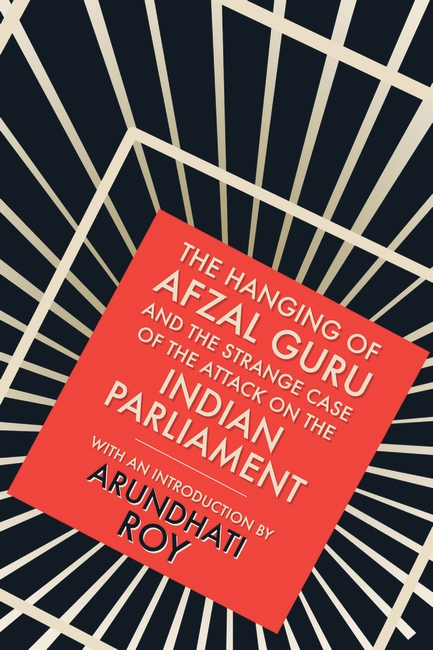
A comprehensive, sensitive view of one of the most controversial hangings of modern India
On 13 December 2001, the Indian Parliament was attacked by a few heavily armed men. Eleven years later, we still do not know who was behind the attack, nor the identity of the attackers. Both the Delhi high court and the Supreme Court of India have noted that the police violated legal safeguards, fabricated evidence and extracted false confessions. Yet, on 9 February 2013, one man, Mohammad Afzal Guru, was hanged to ‘satisfy’ the ‘collective conscience’ of society.
This updated reader brings together essays by lawyers, academics, journalists and writers who have looked closely at the available facts and who have raised serious questions about the investigations and the trial. This new version examines the implications of Mohammad Afzal Guru’s hanging and what it says about the Indian government’s relationship with Kashmir
The Shape of the Beast is our world laid bare by a mind that has consistently and unhesitatingly engaged with its changing realities and often anticipated the way things have moved in the last decade.
In the fourteen interviews collected here, conducted between January 2001 and March 2008, Arundhati Roy examines the nature of state and corporate power as it has emerged during this period, and the shape that resistance movements are taking. As she speaks about people displaced by dams and industry, the genocide in Gujarat, Maoist rebels, the war in Kashmir and the global War on Terror, she raises fundamental questions about democracy, justice and non-violent protest.
Unabashedly political, this is also a deeply personal collection that talks about the necessity of taking a stand and about the dilemma of guarding the private space necessary for writing in a world that demands urgent, unequivocal intervention.

Now with a new introduction by the author discussing the election of India’s new prime minister, Narendra Modi.
In eleven powerful, and closely argued, linked essays, Arundhati Roy takes a hard look at the underbelly of the world’s largest democracy. Beginning with the state-backed killing of Muslims in Gujarat in 2002, she writes about how ‘progress’ and genocide have historically gone hand in hand; about the murky investigations into the 2001 attack on the Indian Parliament; about the dangers of an increasingly powerful and entirely unaccountable judiciary; and about the collusion between large corporations, the government and the mainstream media. The volume ends with an account of the August 2008 uprising in Kashmir and an analysis of the November 2008 attacks on Mumbai. ‘The Briefing’, included as an appendix, is a compelling fictional text that brings together many of the issues central to the collection.

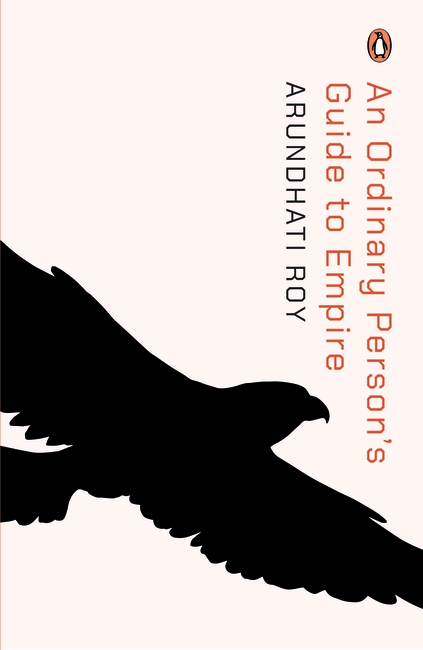
This second volume of Arundhati Roy’s collected non-fiction writing brings together fourteen essays written between June 2002 and November 2004. In these essays she draws the thread of empire through seemingly unconnected arenas, uncovering the links between America’s War on Terror, the growing threat of corporate power, the response of nation states to resistance movements, the role of NGOs, caste and communal politics in India, and the perverse machinery of an increasingly corporatized mass media. Meticulously researched and carefully argued, this is a necessary work for our times.

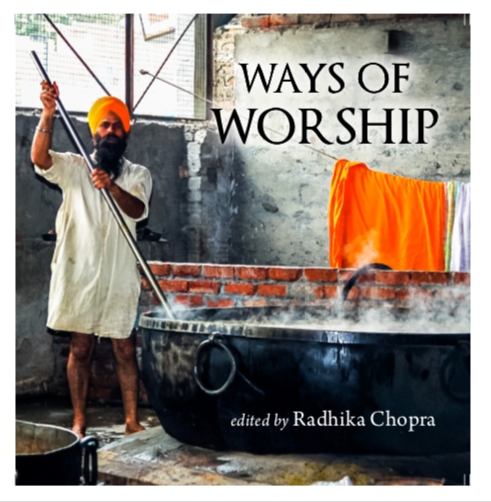
Ways of Worship is a visual chronicle of ritual and religion in India. The photographs, taken by anthropologists in the course of fieldwork, illustrate the innovative, cosmopolitan and visually striking ways on which people please their gods. The photographs display the sophisticated visual cultures that frame the relationship between ordinary devotees and their gods.

Management insights culled from the Mahabharata, one of the greatest books of all time, is not simply the story of a fratricidal war or a fount of wisdom for philosophers; it is also a comprehensive manual on strategy. From this storehouse of knowledge, Meera Uberoi selects the most pertinent shlokas to reveal the secrets of leadership and the path to success. She shows that the Mahabharata is equal, if not superior, to other management bibles such as The Art of War, The Prince and Go Rin No Sho, The Book of Five Rings. The aphorisms in Leadership Secrets from the Mahabharata have been selected from the Santi Parva, the Bhagvad Gita Parva and the Adi Parva.
As Bhishma lies dying on the battlefield of Kurukshetra, Krishna realizes that with Bhishma’s death, the world will lose ‘all knowledge’. To prevent this, Krishna asks him to impart to Yudhisthira all he knows. These teachings, coming as they do from Bhishma, the wisest of them all, contained in the Santi Parva, form the core of Uberoi’s book. Apart from detailing how to apply the craft of kingship to modern business practices, the book also explores the analogy between kingship and leadership. Pithy and insightful, Meera Uberoi’s selection is a practical guide to leadership in any field of life. The aphorisms, grouped under heads like Duty, War, Espionage and Conduct, deal with eternal values and truths that are as relevant today as they were 3000 years ago.

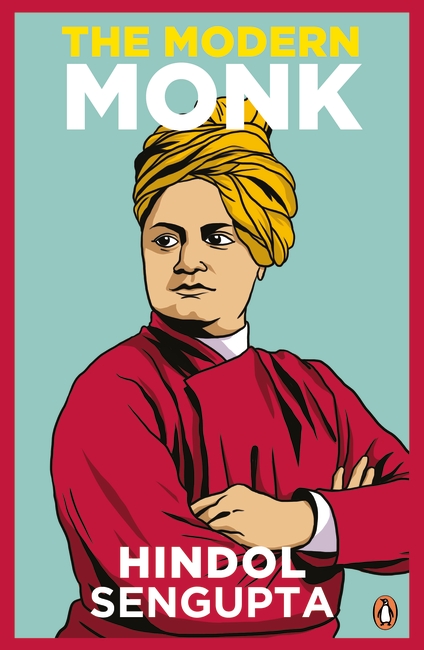
He loved French cookbooks, invented a new way of making khichdi, was interested in the engineering behind ship-building and the technology that makes ammunition. More than 100 years after his death, do we really know or understand the bewildering, fascinating, complex man Swami Vivekananda was? From his speech in Chicago that mesmerised America to his voluminous writings and speeches that redefined the idea of India, Vivekananda was much more than a monk. His work sweeps through Indian politics, economics, sociology, arts and culture, and of course religion. So ubiquitous are his sayings that they pop everywhere from the speeches of politicians to t-shirts and mugs. It may perhaps be said about Vivekananda that he rarely had a boring idea – and even when he did, he never expressed it boringly! We see and hear so much about Vivekananda that we have almost forgotten how critical he is to our understanding of ourselves as Indians, and indeed, as human beings. Vivekananda is one of the most important figures in the modern imagination of India. He is also an utterly modern man, consistently challenging his own views, and embracing diverse, even conflicting arguments. It is his modernity that appeals to us today. He is unlike any monk we have known. He is confined neither by history nor by ritual, and is constantly questioning everything around him, including himself. It is in Vivekananda’s contradictions, his doubts, his fears and his failings that he recognize his profoundly compelling divinity – he teaches us that to try and understand God, first one must truly comprehend one’s own self. This book is an argument that it is not just because he is close to God but also because he is so tantalizingly immersed in being human that keeps us returning to Vivekananda and his immortal wisdom.