Publish with Us

Follow Penguin

Follow Penguinsters

Follow Penguin Swadesh

The Other Side of Belief

With a foreword by acclaimed film director Mahesh Bhatt, this is the definitive biography of U. G. Krishnamurti — the man who called himself an anti-guru and lived that truth with uncompromising intensity.

What am I? Is there meaning and purpose to life? These ancient questions have haunted humanity from the beginning of recorded history. They also led Mukunda Rao to the doorstep of UG — a man described by those who met him as perhaps the most subversive human being alive.

The Other Side of Belief is a candid, deeply researched, and profoundly engaging chronicle of UG’s life and the evolution of his radical vision. Tracing the extraordinary arc of his journey — from his early spiritual longing and relentless search for enlightenment, through his encounters with J. Krishnamurti, the Theosophical Society, and teachers from diverse traditions, to the shattering biological transformation of 1967 that destroyed everything he had pursued — Rao constructs the most comprehensive portrait yet written of this enigmatic and deeply unsettling figure.

UG insisted that enlightenment was not a mystical achievement, a spiritual attainment, or a transcendental state, but rather a series of biological mutations within the human organism itself. What happened to him, he maintained, was cellular, physical, and entirely beyond the reach of spiritual discipline, meditation, belief, or seeking. He dismantled society’s most cherished ideals, rejected every form of religious authority, denied that he had anything to teach, and yet profoundly altered the lives of countless people who encountered him.

Part biography, part philosophical inquiry, and part existential exploration, The Other Side of Belief goes beyond merely recounting UG’s words. It enters the heart of the man himself — his conflicts, his relentless honesty, his iconoclasm, and the startling biological reality he claimed lay behind the phenomenon called enlightenment.

Readers have described this as ‘the most complete book on UG’ and ‘the book that puts a full stop to the so-called spiritual search’. For anyone drawn to the work of U. G. Krishnamurti, or for those questioning the very foundations of spirituality, belief, and self-transformation, this book remains the essential starting point.
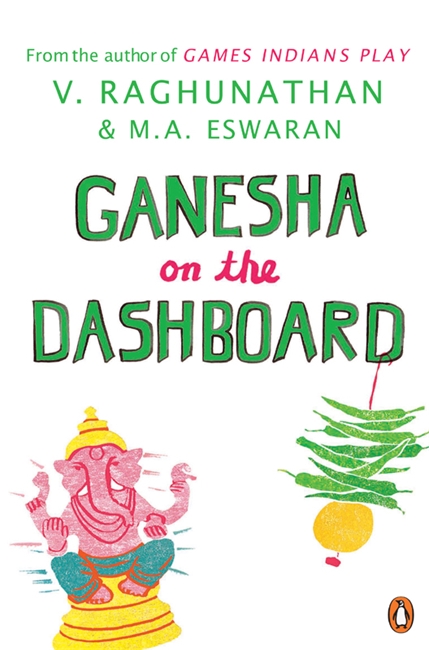
Ganesha on the Dashboard

Take the way we go about buying a new car. We identify an auspicious date and time, then proceed to break a coconut, plonk a plastic deity of Ganesha on the dashboard and zoom off at great speed, refusing to wear our seat belts.Supposedly educated, smart and tech-savvy, Indians can be surprisingly unscientific in their daily lives. Think of the crores spent every year remodelling homes according to Vaastu, in the hope of changing luck; and the continued horrors of female infanticide, because it is only the son who can help the father’s journey to heaven . . . This unsparingly critical, scathingly analytical book points out the shocking lack of scientific temper among the vast majority of Indians, and how this holds us up as a nation in the twenty-first century.

The Transformed Mind Reflections on Truth, Love and Happiness

In his characteristically endearing and informal style, His Holiness the Dalai Lama examines the nature of the human mind and emphasises the need to transform it if we want to lead more fulfilling lives. In the form of several discourses delivered over a period of nine years, he talks about suffering, happiness, love and truth, and imparts practical wisdom on issues ranging from religious tolerance to world economy. Stressing the need for compassion and non-violence, the Dalai Lama reiterates the essential goodness of the human heart and teaches us how to live and die well, reminding us constantly of the responsibility of our actions and thoughts, and the interdependence between action and result. Wise, inspiring and always candid, The Transformed Mind gives us hope and solace in this new millennium.

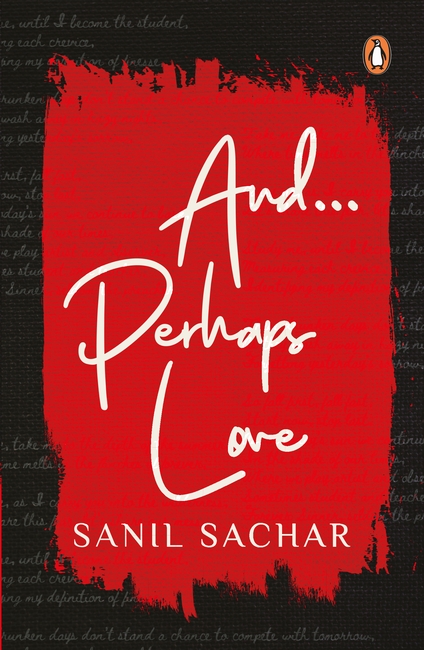
And…Perhaps Love

A new normal has replaced the established order. Distant relationships, virtual work, blurred futures and measuring our way back to this reality occupy us every day. Negotiating these changes, Sanil Sachar’s And . . . Perhaps Love will work as your companion. It is a silent observer for when you want to read it, and a patient listener when you wish to communicate with it. Capturing the ideas of love, darkness and the attempt to find balance in life, this is a book for now and forever.

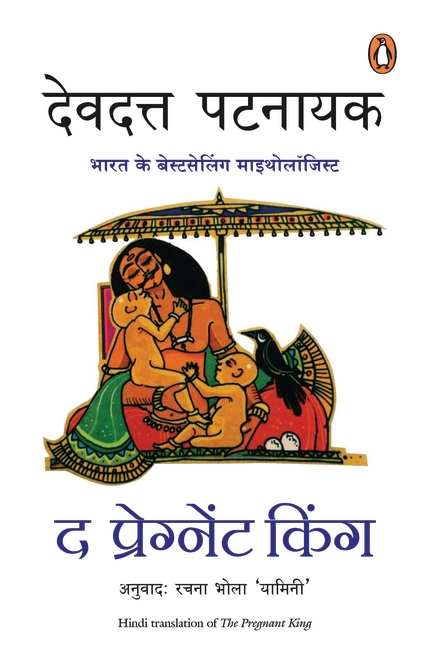
The Pregnant King

‘I am not sure that I am a man,’ said Yuvanashva. ‘I have created life outside me as men do. But I have also created life inside me, as women do. What does that make me? Will a body such as mine fetter or free me?’

Among the many hundreds of characters who inhabit the Mahabharata, perhaps the world’s greatest epic and certainly one of the oldest, is Yuvanashva, a childless king, who accidentally drinks a magic potion meant to make his queens pregnant and gives birth to a son. This extraordinary novel is his story.

It is also the story of his mother Shilavati, who cannot be king because she is a woman; of young Somvat, who surrenders his genitals to become a wife; of Shikhandi, a daughter brought up as a son, who fathers a child with a borrowed penis; of Arjuna, the great warrior with many wives, who is forced to masquerade as a woman after being castrated by a nymph; of Ileshwara, a god on full-moon days and a goddess on new-moon nights; and of Adi-natha, the teacher of teachers, worshipped as a hermit by some and as an enchantress by others.

Building on Hinduism’s rich and complex mythology-but driven by a very contemporary sensibility-Devdutt Pattanaik creates a lush and fecund work of fiction in which the lines are continually blurred between men and women, sons and daughters, husbands and wives, fathers and mothers. Confronted with such fluidity the reader is drawn into Yuvanashva’s struggle to be fair to all-those here, those there and all those in between.

Living in the Now

“Only one moment exists—this moment—all else is a projection of the mind.”

We live planning for a future that is never guaranteed, building towards a life that we may not even be around to enjoy. The only guarantee one gets in life is death and it is the most difficult truth of all to accept.

The first step along the path of enlightenment is mindfulness—being extremely present in the moment, living the now to its complete potential. In fact, this is usually considered the secret to a happy life. And yet, so many of us forget to live in the moment, choosing instead to live weighed down by our past while constantly worrying about the future.

Living in the Now is Osho’s eye-opening guide to living a truly happy and fulfilled life, and how to make the most of our time on earth.

What is Enlightenment?

“You are both and neither, and that is transcendence.”

The ultimate destination on a spiritual journey is enlightenment. But there’s a reason why countless people embark on this journey yet only a handful reach the destination.

Enlightenment is as much about the journey as it is about achieving the goal at the end. It is understanding and accepting different truths—some easy and some nearly impossible to handle. It is about singular focus and accepting the bigger picture at the same time. In other words, it is anything but straightforward.

However, if there’s anyone who can explain a difficult concept in the most straightforward manner, it is Osho and in What is Enlightenment?, he does exactly that. Read on.

How the Master Chooses a Disciple

When a person truly becomes a disciple, trust without any judgements is the only trait they must possess. The unknown—the knowledge a master possesses—can only be learned, not taught. And the only person who knows whether the disciple is ready is the master.

This is why, truly knowing your master is as important as becoming a true disciple. But how does one get to know their master, let alone get chosen by one?

Read on as Osho throws light on a subject that is rarely talked about in this short but eye-opening guide, How the Master Chooses a Disciple.

The Gift of Life

“When you don’t search for happiness, happiness searches for you.”

The biggest irony of life is that we end up spending a lifetime searching for our true purpose without actually living. Learning to value the life we have been given is a rare skill and sadly, one that very few possess.

There is plenty of literature out there that claim to help one achieve wealth and success and not nearly enough literature that tells you to cherish the more important things in life, like love and happiness.

In The Gift of Life, Osho analyses a short but intriguing Sufi story to talk about the real gift we have all been given: life. Read on.

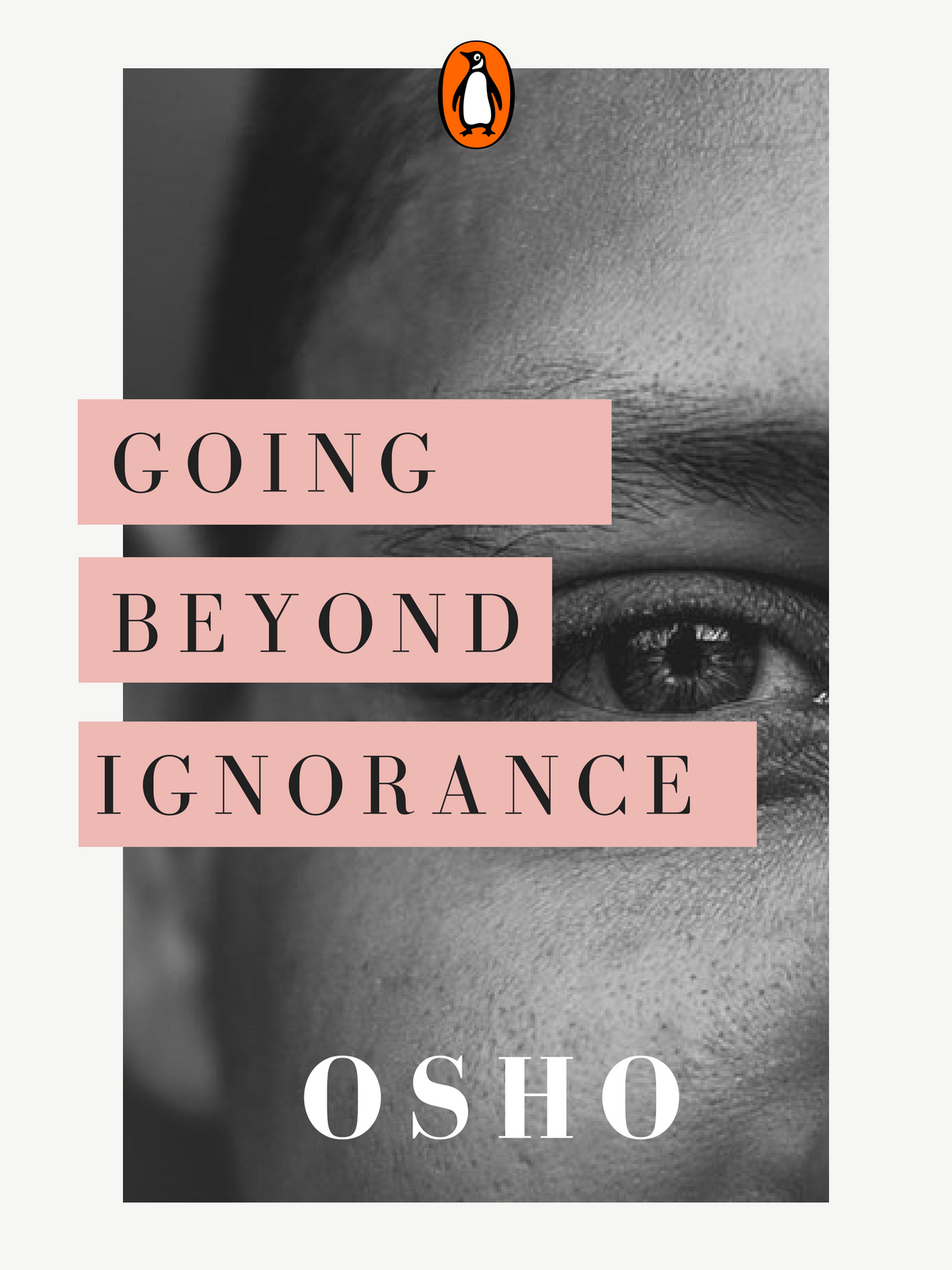
Going Beyond Ignorance

“The husband of an ugly woman is best blind”

This opening to an intriguing Sufi story is the foundation to understanding ignorance and all that we forego because of it.

We live our lives according to an ambiguous ‘moral compass’ that’s justified by our conscience, not realising that every person’s moral compass aligns with a different north and they all believe, just like us, that they’re right.

There are countless opportunities to gain self-knowledge and yet, we as a species choose to remain ignorant. Do we realise what we lose when we choose ignorance over knowledge? What is stopping us from taking that leap into the unknown?

Read on as Osho throws light on these questions and many more like them in Going Beyond Ignorance.

error: Content is protected !!