It was dharma that made Ram the rightful king of Ayodhya, and it was dharma that made Sita live the rest of her life raising two children in the forest. It was dharma that helped Ram defeat Ravana, and it was dharma that separated him from the love of his life.
While dharma made Ram follow rules even if it gave him unhappiness, Sita was under no such obligation. This is why the choices she made have had such a huge impact on the lessons the epic has to offer.
Sita’s Righteousness is a lesson in understanding the value of righteousness even in the most difficult circumstances. Narrated and illustrated by the inimitable Devdutt Pattanaik, this simple yet powerful story is a compelling read.
Dharma is supposed to be the foundation of a civilized, peaceful society. However, it can also have a dark side that forces a man to be a king first and a husband later.
After Ram defeats Ravana in the epic fight that lasted ten days, Sita’s honour is saved, good has triumphed over evil, and everything wrong with the world has been righted. However, this is also the moment when Sita has to make her most humiliating choice.
Sita’s Humility is an intriguing tale of a woman’s resilience that has been beautifully narrated and illustrated in Devdutt Pattanaik’s straightforward style.
Sita first meets Hanuman in the garden of Ashoka trees, where she has been held captive by Ravana, waiting for her husband to rescue her. Despite living in the land of demons with her honour being threatened every day, she has faith in Ram and his ability to save her. She is overjoyed when Ram’s messenger appears before her.
The mighty Hanuman is the bearer of good news, but he leaves with the burden of Sita’s most difficult choice—one that will prolong her suffering indefinitely instead of putting an end to it immediately.
Beyond the story of Ram and Ravana, Ramayana is the story of the only person who could make choices—Sita. Read on as Devdutt Pattanaik enlightens us with another story that highlights Sita’s virtuosity, with illustrations that bring the action alive.
Humans use choices and rules to create a world where there is more kindness and less cruelty, more right and less wrong.’
Our ability to make decisions that serve others more than ourselves is what differentiates humans from animals. Considering the needs of others first is one of the biggest tenets of dharma, the rules of society. Having grown up with this foundation, Sita and Ram present the very definition of a dharmik life. While dharma makes for a civilized and peaceful society, it also leads to Sita making a choice that marks the end of all happiness in her life.
Elegantly narrated and illustrated by Devdutt Pattanik, read on to discover Sita’s fateful choice and the consequences that make Ramayana the epic it is.
The rulers of the sun-city were called sun-kings because they dazzled by the virtue of always following the rules of the land.’
Sita and Ram lived in an age where living according to dharma, or the rules of society, was of utmost importance, even if it meant living in exile for fourteen years. When Kaikeyi demands her two boons from King Dashratha, everyone except the one who has to suffer is heartbroken. Ram stoically accepts the consequences of his father’s word as his destiny. However, Sita displays astounding grace when she makes a choice that isn’t expected from her.
In the din of Ravana’s cruelty and Ram’s valour, something is often overlooked—the story of Sita, the woman who chose. From the master of mythology, Devdutt Pattanaik, this is the story of the first, and possibly the most difficult, choice that Sita makes.
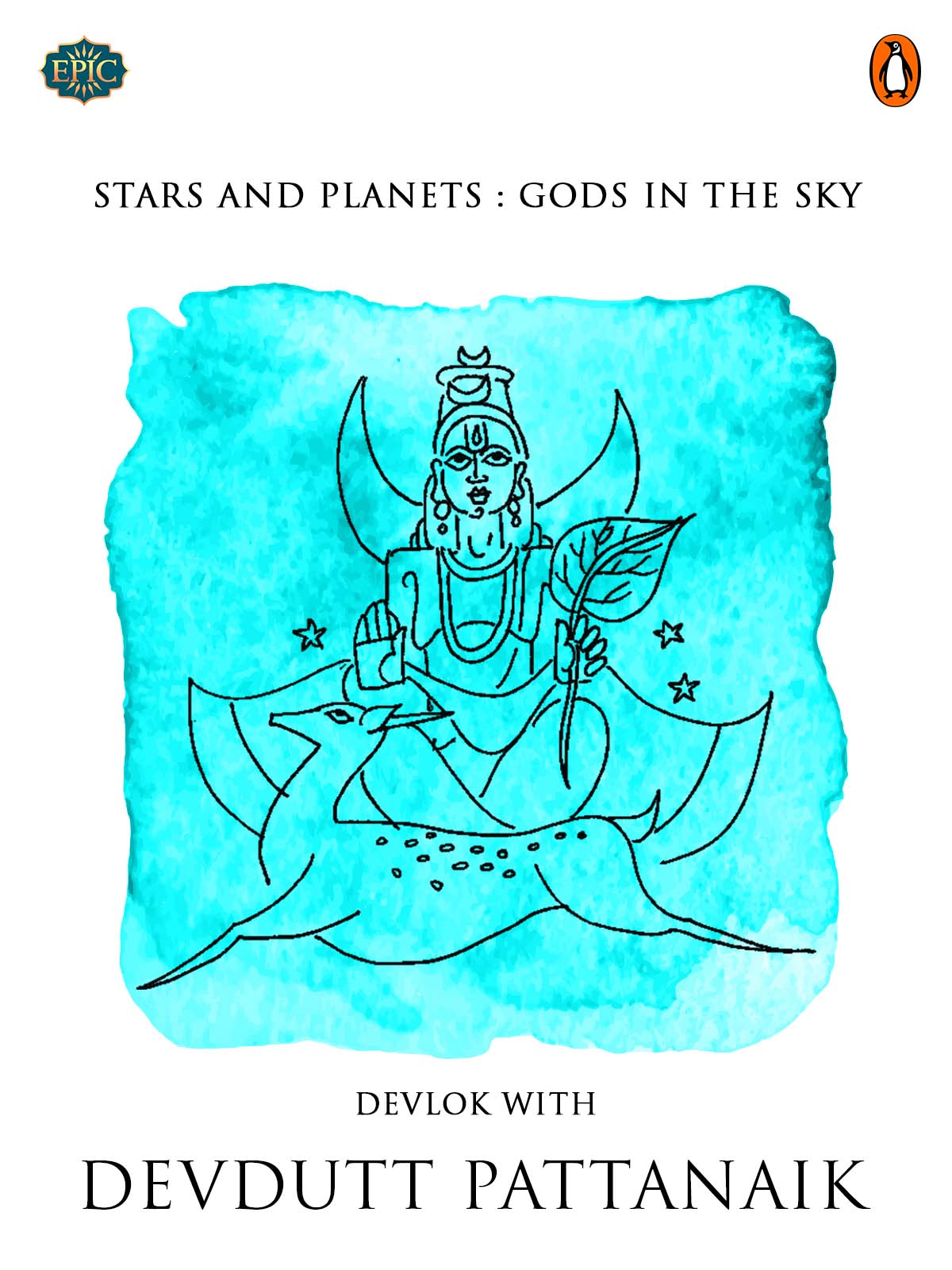
Why do the Vedas give so much importance to stars and planets? What is a rashi, and what is a nakshatra? Are all nakshatras wives of the moon Chandra, and why does Chandra wax and wane? Do you know the love story of the sun and the the flower raat ki rani? What is Shanivar, Saturday, there to teach you?
Devdutt brings the sky to life with his thrilling stories of our celestial folklore. From the place of homosexuality in the puranas to the enchanting wedding ritual of searching for the star Arundhati, the night sky comes alive with romance and wonder in this short, sweet read from Devlok.
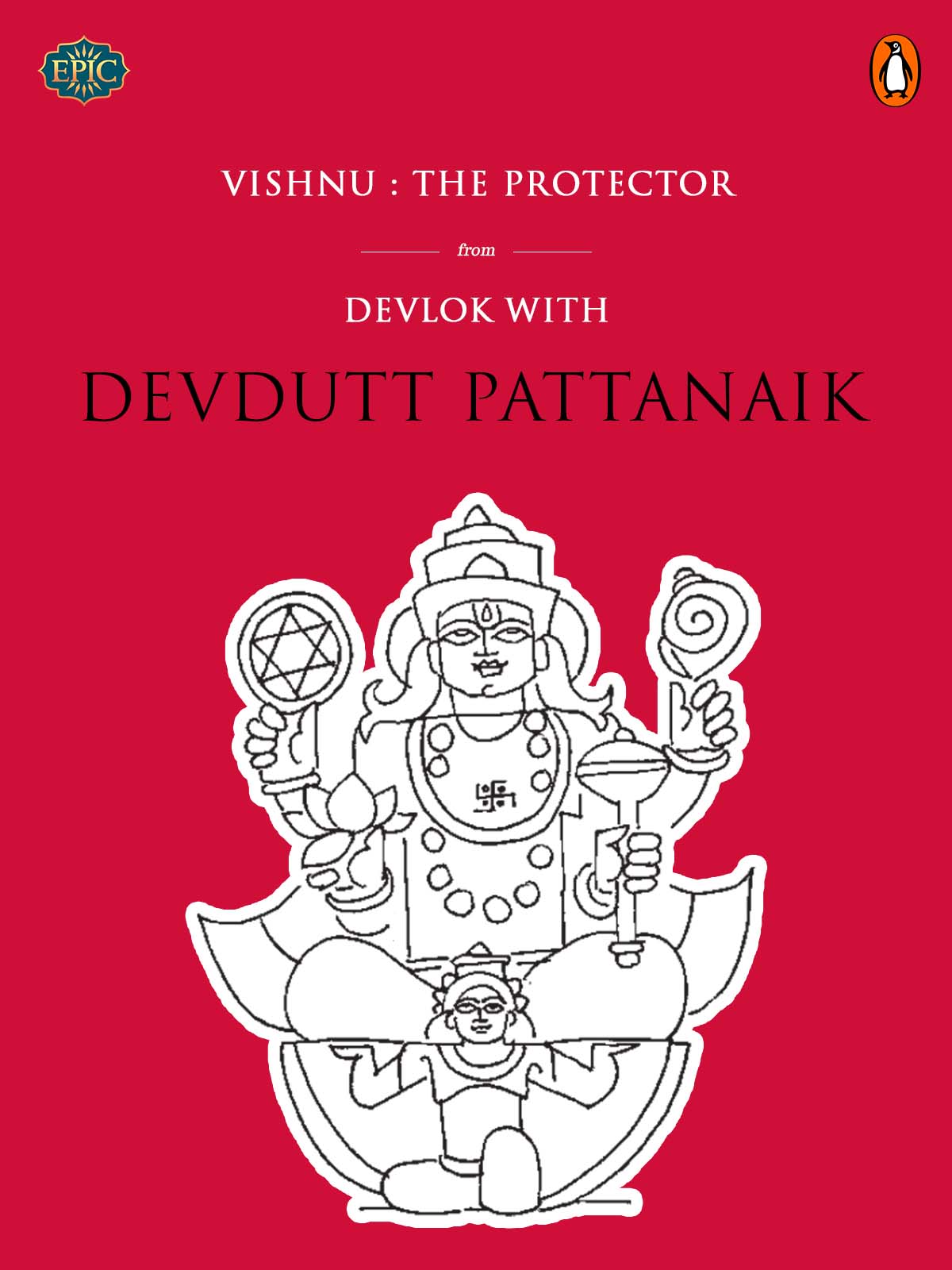
How many avatars does Vishnu actually have? Is Buddha an avatar of Vishnu? What do Bodhisattva and Vishnu have in common? What do all of his avatars symbolize? Is there a connection between Vishnu’s avatars and Darwin’s theory of evolution?
It is believed that Vishnu always comes to earth when Devi is suffering—Parashurama for Renuka, Ram for Sita. Another belief is that every time Vishnu takes an avatar, Devi too is born. A Vishnu avatar went on a rampage destroying all Kshatriyas, but also strives to protect the weeping earth goddess who appeared before him as a cow.
Which of these many personas does Vishnu represent? Find out more about the rich symbolism of his multitude of personas in this short, sweet read from Devlok.
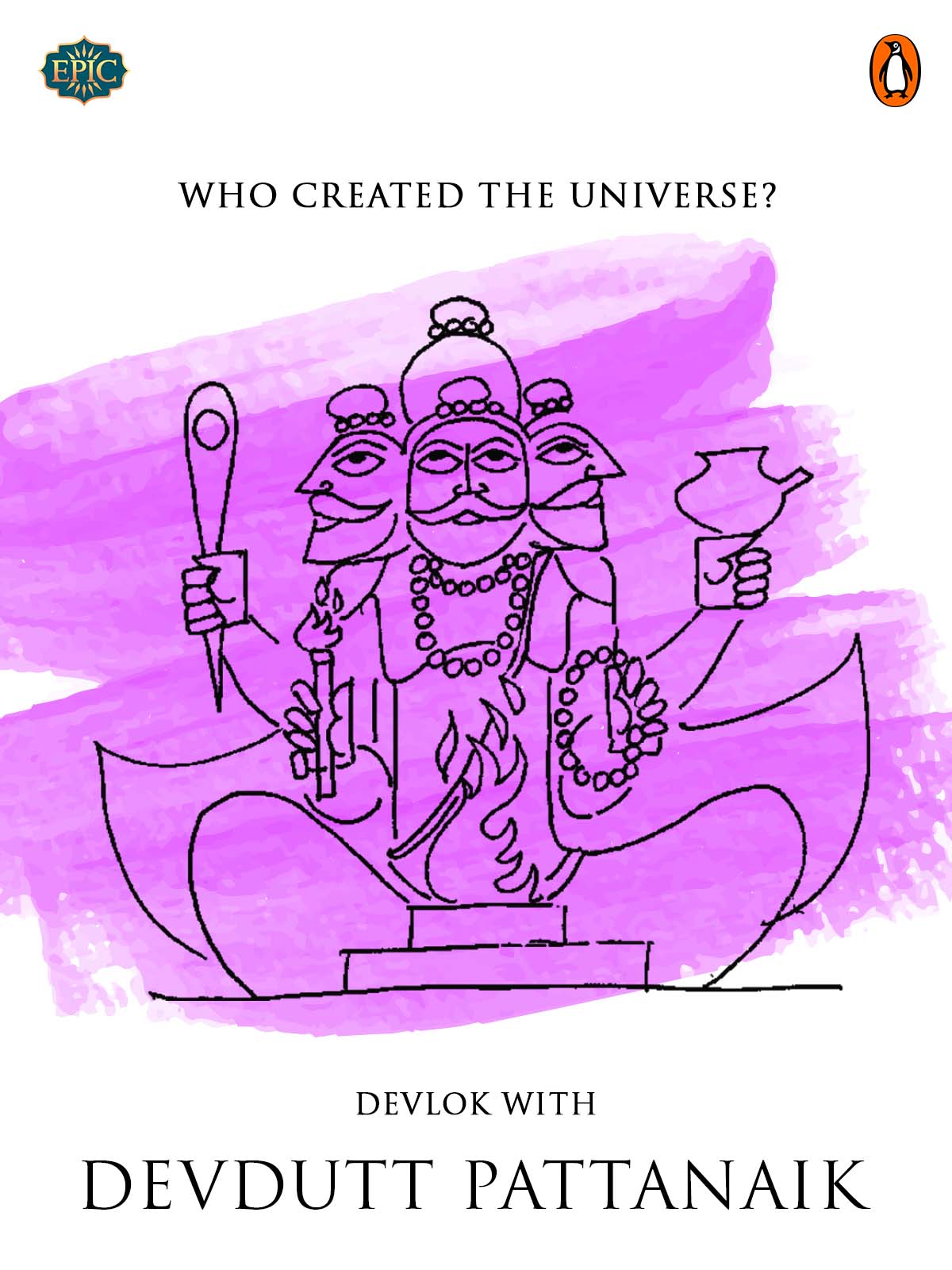
Did Brahma create the universe? Was it born out of the sacrifice of Prajapati? Did his wife Shatarupa create animals while being pursued by him? Or was it all a product of Manu?
A Vedic poet says that for anything to be created in the universe, it must be preceded by desire. If desire is the seed, the cosmos is its fruit. A Shaiva story says that in the beginning there was a golden woman in the shape of a lotus, and when it bloomed, Brahma was in it, and he then divided into Shiva and Shakti. The Vaishnava tradition says that in the beginning, everything was asleep – and then Vishnu awoke, and the first creation was born of the fear of loneliness. The Shakta tradition says that before the earth was born, Shiva was doing tapasya and there was pralaya – everything was frozen and barren. Then Parvati emerged from the mountain and seduced and married him. The heat or energy within him was then released and the snow started to melt and the earth became fertile.
Which is it? Discover all these origin myths and more in this short, sweet read from Devlok.
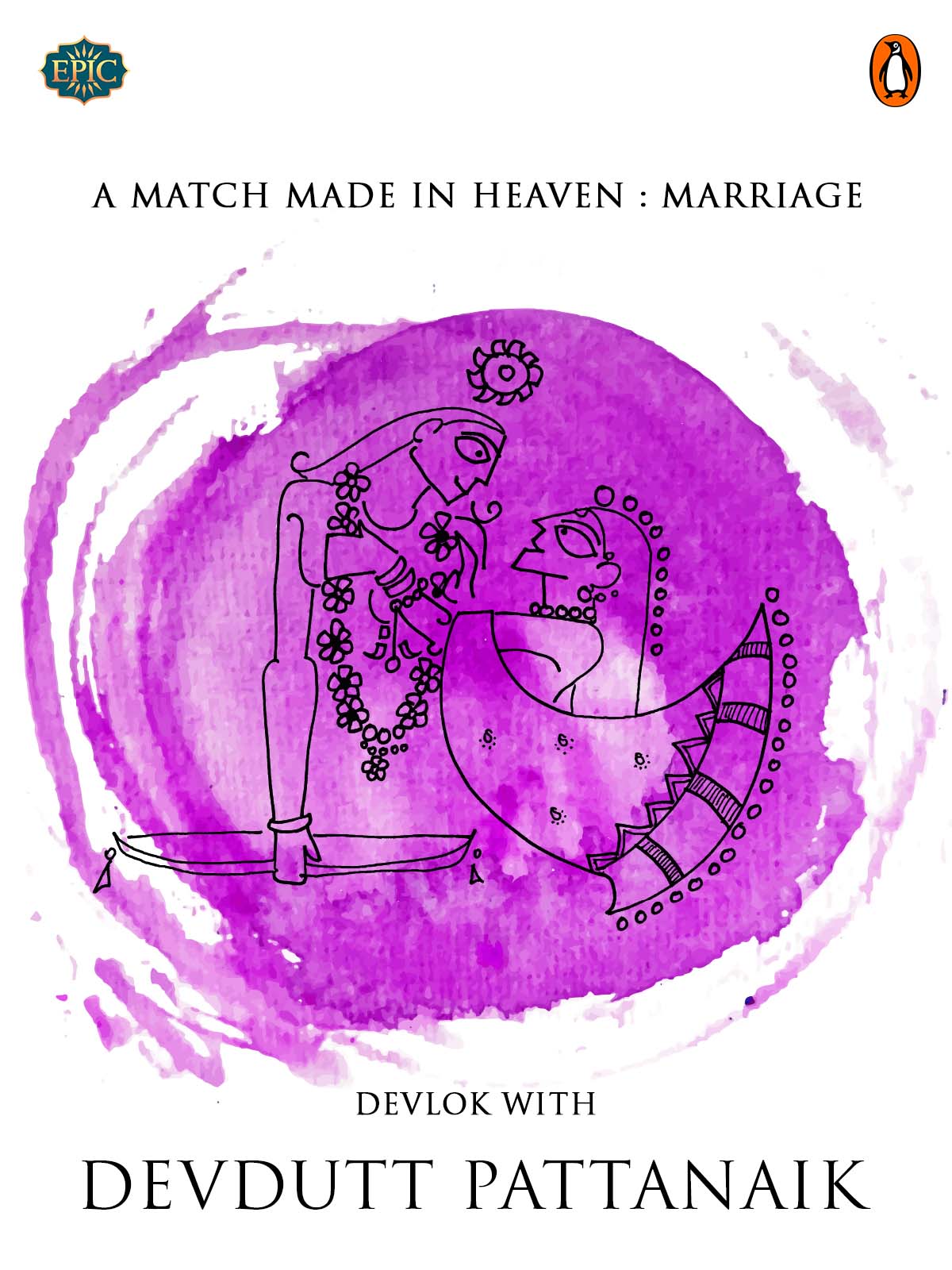
Can a human being marry a god? There are a few gods who are brahmachari, bachelors—why is that? Devis are called kumaris—are they brahmachari? Why are most of our gods married? How many wives does Vishnu really have? And our gods are polygamous but our society is not . . . why?
Vivaah is meant to be a metaphysical union of the body and the soul, but our gods also love and marry as we do. With compelling love stories and thoughtful interpretations of the societal movements from polygamy to monogamy, we find here a rare insight into the personal lives of the gods themselves and the concept of marriage through the ages. Join Devdutt on a lovely romp through the deeper meaning of sanskaari romance in India through the ages with this short, sweet read from Devlok.
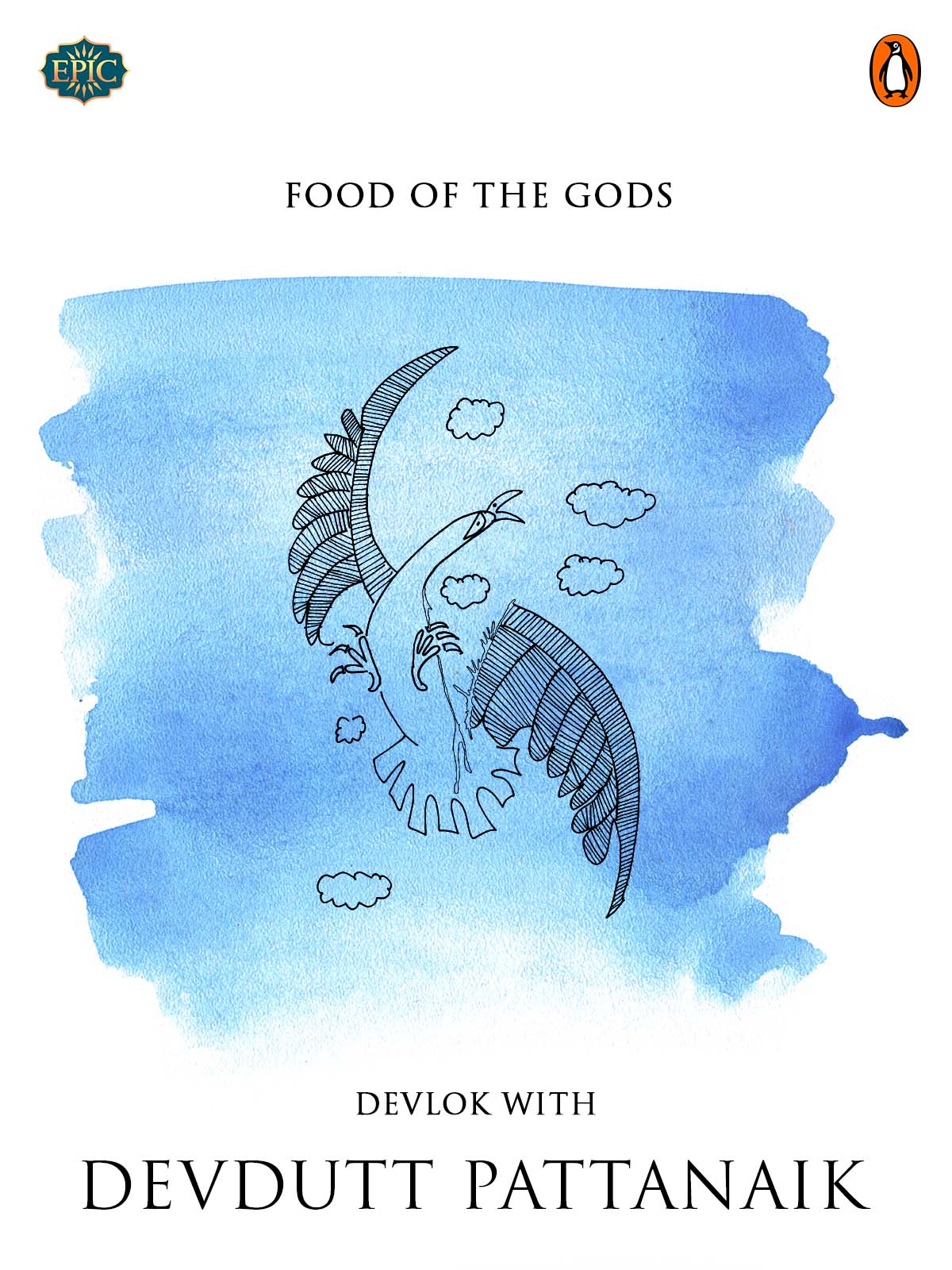
Why do we offer Vishnu butter, but Shiva milk? Why is Krishna offered the chappanbhog—fifty-six items of food—during Annakuta? Do the goddesses not like bhog? Where does the custom of hanging a lemon and seven chillies come from? Is there a legendary male cook among the gods?
Anna is called Brahmin, the way bhasha is called Brahmin. Food and the action of eating maintain life. And yet, traditionally the devis remind you that whenever you eat, you’ve killed something, sacrificed someone, even plants which come from farms, decimating forests and rivers. The devi reminds one that to build your civilization—sanskriti—you destroy your nature—prakriti.
Feast your mind on intricate details behind how we offer food to the gods, and why certain foods are part of the Indian tradition, in this short, sweet read from Devlok.