This definitive and magnificent 10-volume unabridged translation is one of the rare English translations of full of the epic. Bibek Debroy makes the Mahabharata marvelously accessible to contemporary readers. Dispute over land and kingdom may lie at the heart of this story of war between cousins-the Pandavas and the Kouravas-but the Mahabharata is about conflicts of dharma. These conflicts are immense and various, singular and commonplace. Throughout the epic, characters face them with no clear indications of what is right and what is wrong; there are no absolute answers. Thus every possible human emotion features in the Mahabharata, the reason the epic continues to hold sway over our imagination.
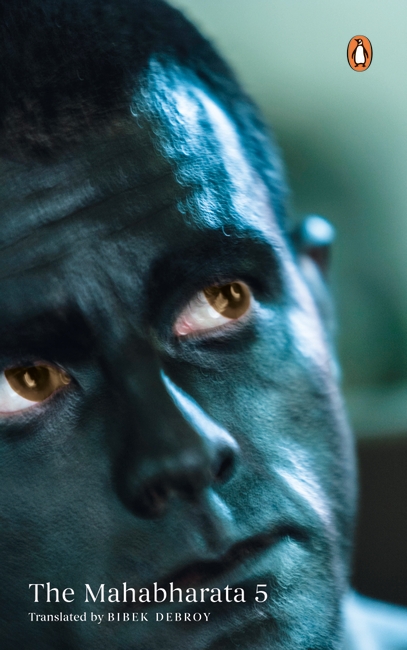
In this superb and widely acclaimed translation of the complete Mahabharata, Bibek Debroy takes on a great journey with incredible ease. This is the fifth volume in the series.

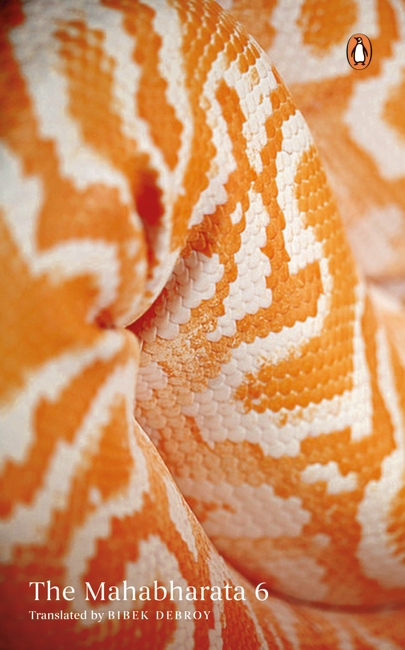
This is the sixth book in the definitive and magnificent 10-volume unabridged translation of one of the rare English translations of the full epic. Bibek Debroy makes the Mahabharata marvellously accessible to contemporary readers. Dispute over land and kingdom may lie at the heart of this story of war between cousins-the Pandavas and the Kouravas-but the Mahabharata is about conflicts of dharma. These conflicts are immense and various, singular and commonplace. Throughout the epic, characters face them with no clear indications of what is right and what is wrong; there are no absolute answers. Thus every possible human emotion features in the Mahabharata, the reason the epic continues to hold sway over our imagination. In this superb and widely acclaimed translation of the complete Mahabharata, Bibek Debroy takes on a great journey with incredible ease.

The Mahabharata is one of the greatest stories ever told. Though the basic plot is widely known, there is much more to the epic than the dispute between the Kouravas and the Pandavas that led to the battle in Kurukshetra. It has innumerable sub-plots that accommodate fascinating meanderings and digressions, and it has rarely been translated in full, given itsformidable length of 80,000 shlokas or couplets. This magnificent 10-volume unabridged translation of the epic is based on the Critical Edition compiled at the Bhandarkar Oriental Research Institute.
With the ninth volume, the magnificent epic approaches its end. The war is over and Yudhishthira is crowned. Bhishma’s teachings that began in the eighth volume continue past the Shanti Parva into the Anushasana Parva.
Every conceivable human emotion figures in the Mahabharata, the reason why the epic continues to hold sway over our imagination. In this lucid, nuanced and confident translation, Bibek Debroy makes the Mahabharata marvellously accessible to contemporary readers.
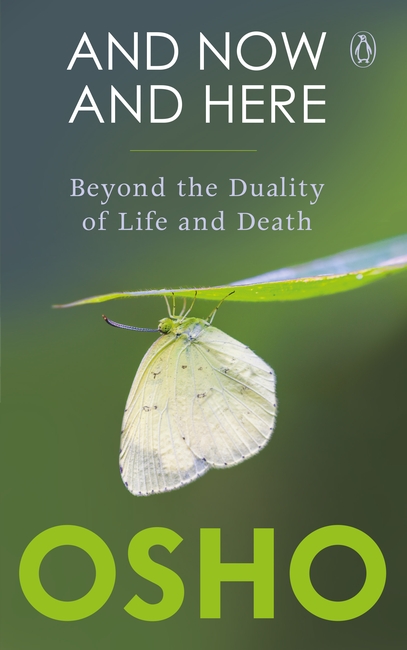
‘All our lives we are running. What are we running from? What is the fear? The fear is that on the one hand we are unable to live fully, and on the other hand the fear of death is imminent, present. Both things are interconnected . . . then what is the answer?’ Osho
Most of us look for security in our relationships and in our choice of living and working conditions. Underlying this search for security is a deep, instinctive fear of death, which continually colours our lives and drives our focus outward, toward survival.
But we also have a longing to turn inward, to relax deeply within ourselves, and experience the sense of freedom and expansion this brings. With this book the reader can start an exploration of his or her inner world.
Osho debunks the myths and misunderstandings around death and invites us to experience our eternal inner space that is now and here.

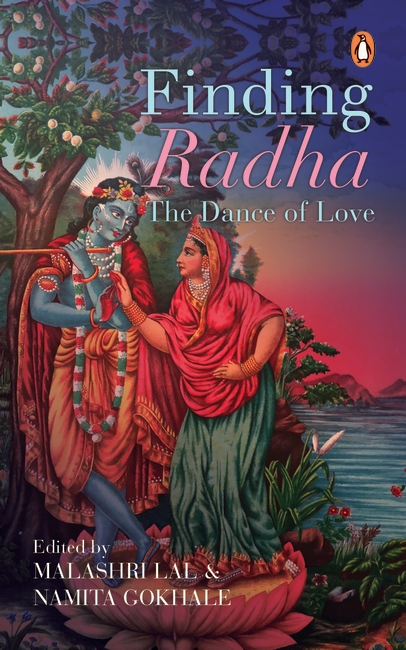
Who was Radha, and why has she captured the imagination of so many writers across centuries? No other goddess combines the elements of bhakti and shringara quite as exquisitely as the divine milkmaid. She spans a vivid rainbow of imagery-from the playfulness of the Ras Lila to the soulfulness of her undying love, from the mystic allure of her depictions in poetry, art and sculpture to her enduring legacy in Vrindavan. In a way that sets her apart from other female consorts, Radha is idealized and dreamed of in a way that is almost more elemental than mythical.
Namita Gokhale and Malashri Lal, who brought us In Search of Sita: Revisiting Mythology, now present an anthology on the mysterious Radha, the epitome of love, who defies all conventional codes yet transcends social prohibitions through the power of the spiritual and the sensual, the sacred and the erotic. Finding Radha is the first of its kind: a collection of poetry, prose and translation that enter the historical as well as the artistic dimensions of the eternal romance of Radha and Krishna.

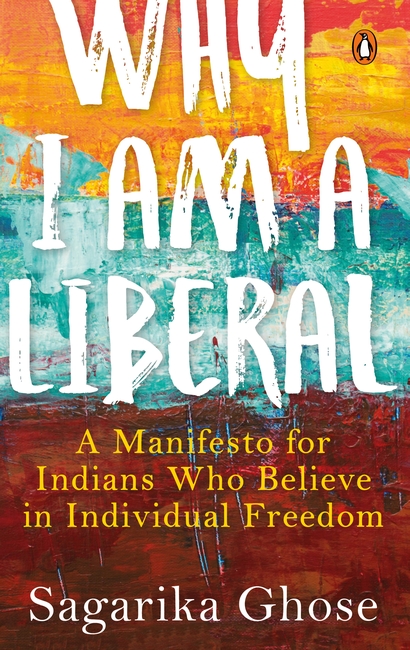
The stamping out of difference, the quelling of diversity and the burial of argument is, in fact, most un-Indian. Anyone who seeks to end that dialogue process is ignoring Indianness and patriotism. The liberal Indian argues for the rights of the marginalized in the tradition of Gandhi for trust, mutual understanding and bridge-building. Real patriotism lies in old-fashioned ideas of accommodation, friendship and generosity; not in force, muscle flexing and dominance. Why I Am a Liberal is Sagarika Ghose’s impassioned meditation on why India needs to be liberal.

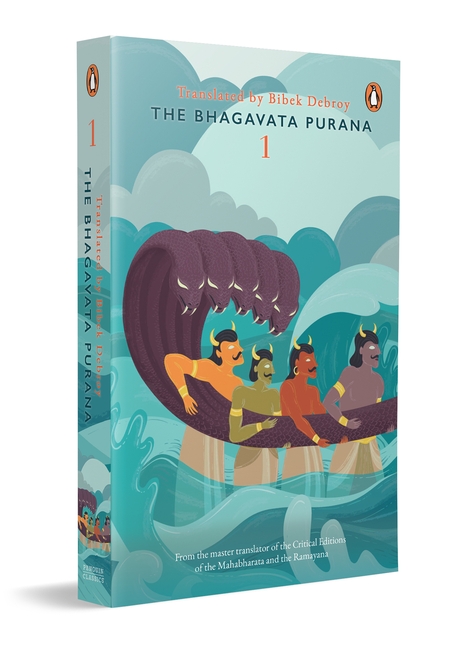
A seamless blend of fable and philosophy, the Bhagavata Purana is perhaps the most revered text in the Vaishnava tradition. It brings to life the legends of gods, asuras, sages and kings-all the while articulating the crucial ethical and philosophical tenets that underpin Hindu spiritualism.
The narrative unfolds through a series of conversations and interconnected stories. We are told how the sage Vyasa was inspired by Narada to compose the Bhagavata Purana as a means to illumine the path to a spiritual life. We learn of the devotion of Prahlada, the austerity of Dhruva, and the blinding conceit of Daksha. Also recounted are tales of the many incarnations of Vishnu, especially Krishna, whom we see grow from a beloved and playful child to a fierce protector of the faithful.
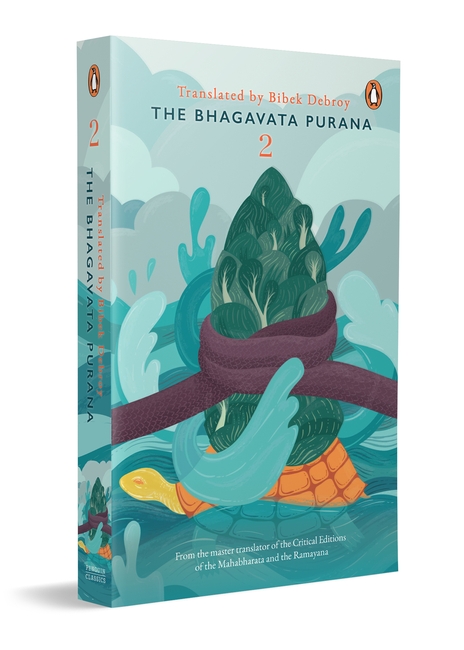
A seamless blend of fable and philosophy, the Bhagavata Purana is perhaps the most revered text in the Vaishnava tradition. It brings to life the legends of gods, asuras, sages and kings-all the while articulating the crucial ethical and philosophical tenets that underpin Hindu spiritualism.
The narrative unfolds through a series of conversations and interconnected stories. We are told how the sage Vyasa was inspired by Narada to compose the Bhagavata Purana as a means to illumine the path to a spiritual life. We learn of the devotion of Prahlada, the austerity of Dhruva, and the blinding conceit of Daksha. Also recounted are tales of the many incarnations of Vishnu, especially Krishna, whom we see grow from a beloved and playful child to a fierce protector of the faithful.
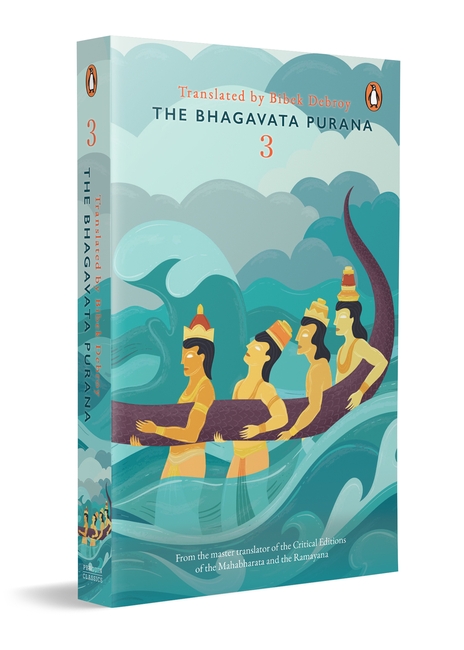
A seamless blend of fable and philosophy, the Bhagavata Purana is perhaps the most revered text in the Vaishnava tradition. It brings to life the legends of gods, asuras, sages and kings-all the while articulating the crucial ethical and philosophical tenets that underpin Hindu spiritualism.
The narrative unfolds through a series of conversations and interconnected stories. We are told how the sage Vyasa was inspired by Narada to compose the Bhagavata Purana as a means to illumine the path to a spiritual life. We learn of the devotion of Prahlada, the austerity of Dhruva, and the blinding conceit of Daksha. Also recounted are tales of the many incarnations of Vishnu, especially Krishna, whom we see grow from a beloved and playful child to a fierce protector of the faithful.

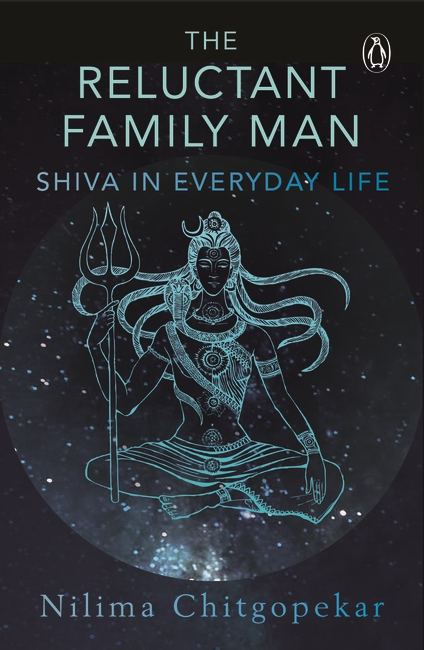
He’s the destroyer of evil, the pervasive one in whom all things lie. He is brilliant, terrifying, wild and beneficent. He is both an ascetic and a householder, both a yogi and a guru. He encompasses the masculine and the feminine, the powerful and the graceful, the Tandava and the Laasya, the darkness and the light, the divine and the human.
What can we learn from this bundle of contradictions, this dreadlocked yogi? How does he manage the devotions and duties of father, husband and man of the house, and the demands and supplications of a clamorous cosmos?
In The Reluctant Family Man, Nilima Chitgopekar uses the life and personality of Shiva-his self-awareness, his marriage, his balance, his detachment, his contentment-to derive lessons that readers can practically apply to their own lives.With chapters broken down into distinct frames of analysis, she defines concepts of Shaivism and interprets their application in everyday life.