High above the sky stands Swarga, paradise, abode of the gods. Still above is Vaikuntha, heaven, abode of God.
The doorkeepers of Vaikuntha are the twins, Jaya and Vijaya, both whose names mean ‘victory’. One keeps you in Swarga; the other raises you into Vaikuntha. In Vaikuntha there is bliss forever, in Swarga there is pleasure for only as long as you deserve.
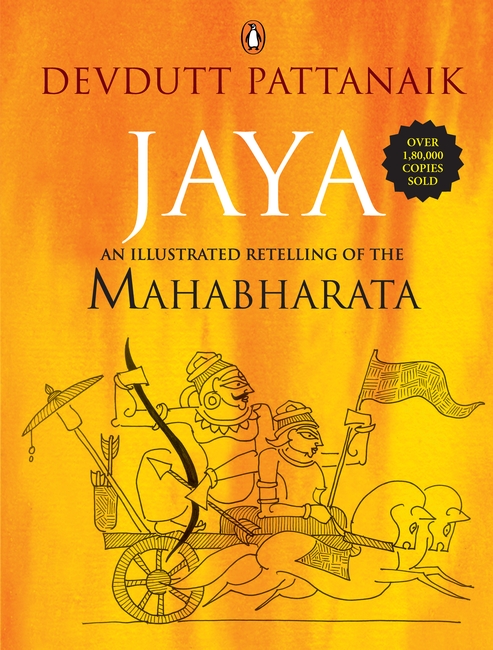
What is the difference between Jaya and Vijaya? Solve this puzzle and you will solve the mystery of the Mahabharata. In this enthralling retelling of India’s greatest epic, the Mahabharata, originally known as Jaya, Devdutt Pattanaik seamlessly weaves into a single narrative plots from the Sanskrit classic as well as its many folk and regional variants, including the Pandavani of Chattisgarh, Gondhal of Maharashtra, Terukkuttu of Tamil Nadu, and Yakshagana of Karnataka.
Richly illustrated with over 250 line drawings by the author, the 108 chapters abound with little-known details such as the names of the hundred Kauravas, the worship of Draupadi as a goddess in Tamil Nadu, the stories of Astika, Madhavi, Jaimini, Aravan and Barbareek, the Mahabharata version of the Shakuntalam and the Ramayana, and the dating of the war based on astronomical data. With clarity and simplicity, the tales in this elegant volume reveal the eternal relevance of the Mahabharata, the complex and disturbing meditation on the human condition that has shaped Indian thought for over 3000 years.

Between the third centuries BC and AD were written thousands of verses in Tamil that have collectively come to be known as Sangam literature. The expressions of love between a man and a woman in these love poems gave way to passionate expressions of devotional love, where the heroine became the devotee and the hero became God. Through the centuries of patriarchy, women negotiated varied levels of existence and largely went unnoticed until they found a path for self-expression through bhakti or devotion. While the dominant form of worship was to prostrate before God, women found innovative ways of personal expression, often seeing the lord as a lover, friend, husband, or even son. The individual outpourings and the unfettered voices of these women refused to be drowned in the din of patriarchy gathering momentum until this became a pan India movement.
In For the Love of God, Sandhya Mulchandani delves deep into historical accounts of these women who fell in love with God.

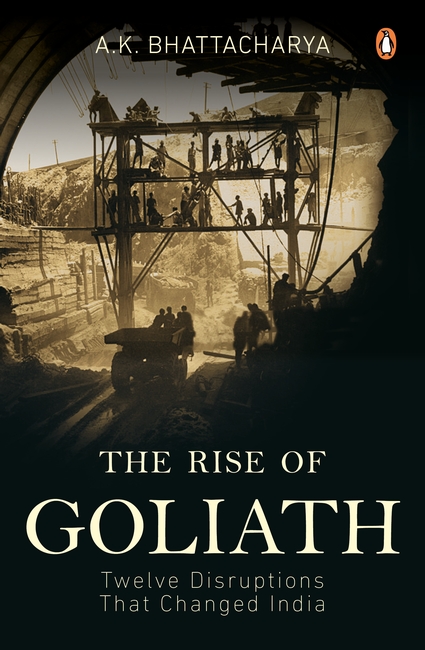
What can best illustrate India’s journey in the last seven decades? Disruptions.
Almost every decade of India’s history since Independence has been marked by major disruptions.
India became independent through an act of disruption-Partition-that killed millions in communal violence and turned many more into refugees. The turn towards a model of state-led economic development delivered as big a shock to the economy as did the food crisis or the spike in crude oil price. If the Emergency in 1975 shook the foundations of India’s democracy, the unprecedented balance-of-payments crisis of 1990 turned India towards a path of economic reforms. Just as the reservation of jobs for backward castes changed the idiom of India’s politics, the movement for building a temple for Ram drove India closer to becoming a majoritarian state. No less disruptive have been the telecom revolution, the banking crisis, demonetization and the launch of the goods and services tax.
How did these disruptions impact India? How did they influence the rise of this Goliath?
This is the story of twelve disruptions that changed India. The book also provides a peek into the kind of disruptions India could face in the coming years.

I saw myself
I was the Beloved
I made the world
I myself seek it
Travelling into the stark deserts of Kutch, I Saw Myself explores the contemporary presence of epic love legends of the region, such as Sohini-Mehar and Sasui-Punhu, brought to throbbing verse by the powerful eighteenth-century Sufi poet Shah Abdul Latif Bhitai. As the authors travel to villages to meet folk singers and lovers of Latif’s poetry, immersing in sessions that stretch into the night, they unearth a unique, thriving love-soaked ethos in which the call to oneness rings out like a defiant manifesto for our divisive times.
Retelling epics along with other tales and historical events that created the field of experience from which Shah Latif’s poems sprang, I Saw Myself brings into English a selection of his finest poems. A spell is cast, of story and song, of metaphor and meaning. The insights that emerge are subtle, even startling, radical at times, solace-giving at others, but always deeply meaningful.

A biblical story travels across regions and time-ultimately reaching medieval India where it is transformed by Shaivite overtones. The result is an exquisite epic love poem of love which also attests to the rich diversity of India’s cultural past.
In an unnamed kingdom in the West, the beautiful princess Zuleikha has nightly visions of a handsome, young man. So captivated is she by this beautiful stranger that her waking hours are afflicted with heartache, much to the anxiety of her father. Zuleikha is resolved to be with Yusuf, and it is in her dreams that she learns of the obstacles that separate her from her beloved. What ensues is a captivating tale of longing and love-a parable of the journey of the soul in its search for the divine.
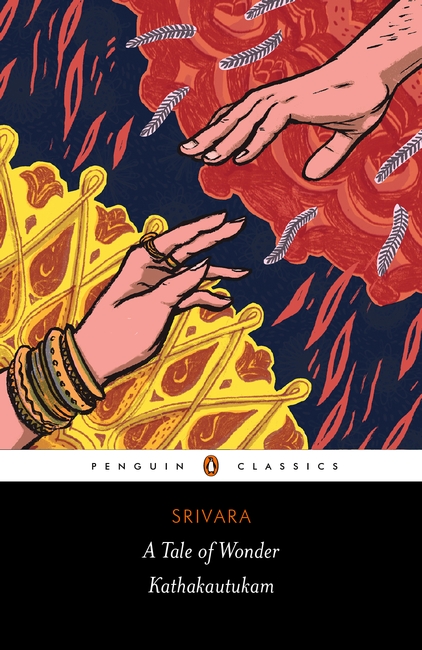
Magnificent in its simple elegance, A Tale of Wonder is a timeless story that challenges the insidious notion that India has always been dominated by one faith only and insular to other cultural and religious influences.

The essential message of J. Krishnamurti, revered philosopher and spiritual teacher, challenges the limits of ordinary thought. In talks to audiences worldwide, he pointed out the tangled net of ideas, organizational beliefs and psychological mindsets in which humanity is caught, and that truth-the understanding of what is-not effort is the key factor of human liberation.
Commentaries on Living, a three-volume series, records Krishnamurti’s meetings with individual seekers of truth from all walks of life. In these dialogues, he reveals the thought-centred roots of human sorrow and comments on the struggles and issues common to those who strive to break the boundaries of personality and self-limitation. In over fifty essays in each volume, Krishnamurti explores topics as diverse as knowledge, truth, fulfillment, meditation, love, effort, seeking life and death and education.
The series invites readers to take a ‘voyage on an uncharterd sea’ with Krishnamurti in his exploration of the conditioning of the mind and its freedom.
The essential message of J. Krishnamurti, revered philosopher and spiritual teacher, challenges the limits of ordinary thought. In talks to audiences worldwide, he pointed out the tangled net of ideas, organizational beliefs and psychological mindsets in which humanity is caught, and that truth-the understanding of what is-not effort is the key factor of human liberation.
Commentaries on Living, a three-volume series, records Krishnamurti’s meetings with individual seekers of truth from all walks of life. In these dialogues, he reveals the thought-centred roots of human sorrow and comments on the struggles and issues common to those who strive to break the boundaries of personality and self-limitation. In over fifty essays in each volume, Krishnamurti explores topics as diverse as knowledge, truth, fulfillment, meditation, love, effort, seeking life and death and education.
The series invites readers to take a ‘voyage on an unchartered sea’ with Krishnamurti in his exploration of the conditioning of the mind and its freedom.

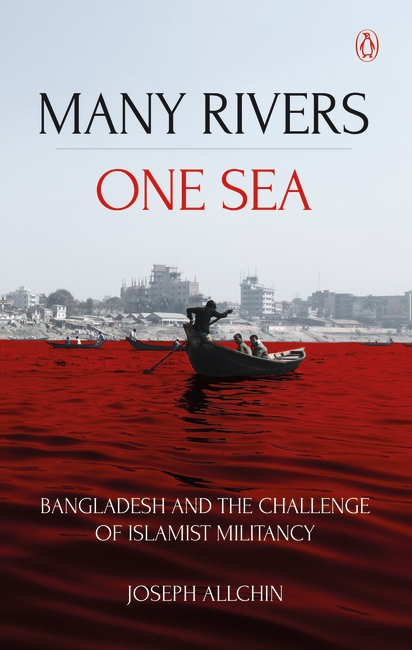
In July 2016, the world’s attention fell upon a café in a leafy Dhaka neighbourhood, as the barbarity of a distant ‘Caliphate’ was visited on this corner of South Asia. Twenty-nine died in the assault on the Holey Bakery, affixing an unbidden nightmare to the image of a supposedly tolerant Muslim nation.
Joseph Allchin dives into this burgeoning Muslim nation’s travails with extremism and politics in this penetrating work. Examining Bangladesh’s recent and not-so-recent past, Allchin explores a recent rise in Islamist politics, as well as violent terrorism. With a compelling blend of history, narrative journalism and political analysis, Allchin demonstrates how Bangladesh’s society and politics are starkly contemporary and relevant to our inter-connected world.
Delving into the local and global differences between political actors, he exposes the continued influence of the country’s independence struggle and global geopolitics on today’s tumultuous body politic. Scrutinizing the careers and dissensions of the country’s political rivals: current prime minister Sheikh Hasina, and her predecessor Khaleda Zia.
This deep-dive investigation examines the multitude of relationships between radical Islam and politics in India’s neighbourhood, laying bare the forces that seek to shape Bangladesh’s present and its destiny.

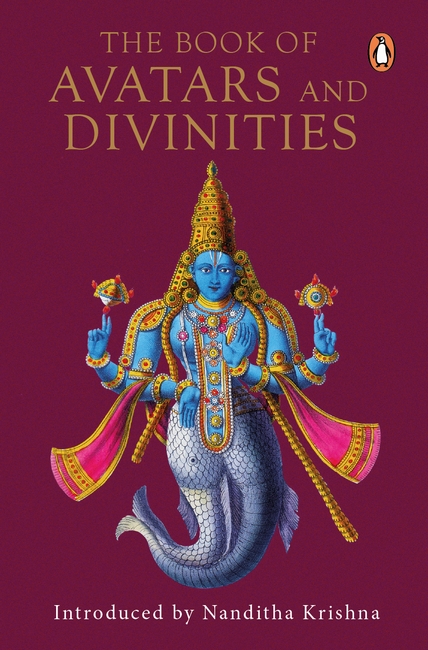
In the Hindu universe, gods and goddesses play freely among human beings to help them, nudge them towards the right action and mete out justice. They may appear to us as avatars in human form or manifest themselves as forces of nature. The many myths of Hinduism become colourful and entertaining when Shiva, Vishnu and Devi take different forms to enact their rivalries, destroy demons and teach devotees with superpowers a lesson in humility.
This first-of-its-kind book brings together the major deities of the Hindu pantheon, describing the different manifestations by which they are recognized, celebrated and worshipped-from Durga to Sita to Kali, and from Narasimha to Parashurama to Krishna. The contributions by Bulbul Sharma, Namita Gokhale, Nanditha Krishna, Parvez Dewan, Royina Grewal and Seema Mohanty offer enchanting stories about our favourite divinities.
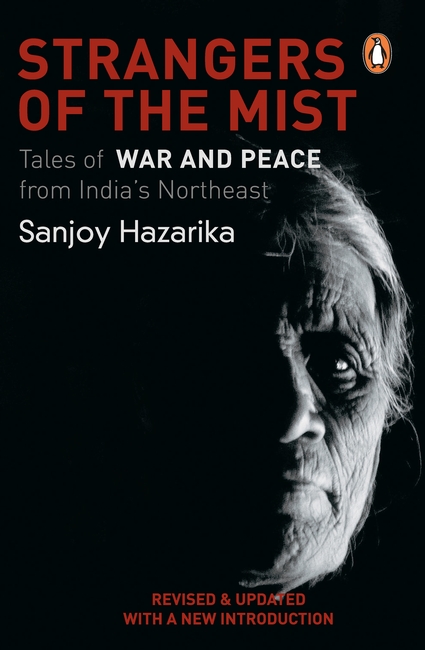
A classic on the festering issues in the North-east
In this insightful book, Hazarika systematically presents the developments in Assam and the neighbouring regions, from post-Independence onwards to the present day. He sheds light on possible causes and factors behind ethnic clashes, separatist outbreaks and political unrest, that this region has come to be known for. He candidly discusses the issue of migrating refugees from nearby countries to the north-eastern states, which has caused tension between the many ethnicities in these states. With a balanced and clear-eyed view, Hazarika urges the reader to take heed of the urgent situation in the region. Strangers of the Mist is considered a classic on the issues facing the North-east.