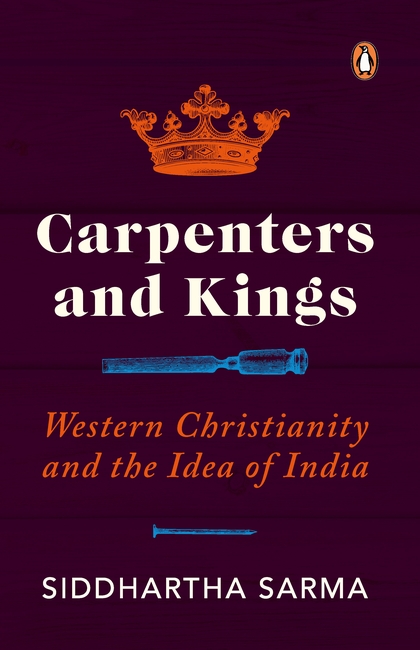
Jordanus Catalani, the first bishop of the Church of Rome in India, introduced the northern part of the subcontinent to his readers in fourteenth-century Europe in this manner. Two hundred years before the advent of Vasco da Gama, Western Christianity-which comprises the Catholic Church, the Anglican Communion and Protestant denominations today-had already arrived in India, finding among its diverse people and faiths the Church of the East already at home since the beginning of Christianity.
This is an account of how global events, including the Crusades and the Mongol conquests, came together to bring Western Christianity to India.
A gripping narrative of two diagonally opposite impulses in Christianity: of humble scholars trying to live the Christian ideal, and of ambitious ecclesiastical empire-builders with more earthly goals.
Carpenters and Kings is a tale of Christianity, and, equally, a glimpse of the India which has always existed: a multicultural land where every faith has found a home through the centuries.

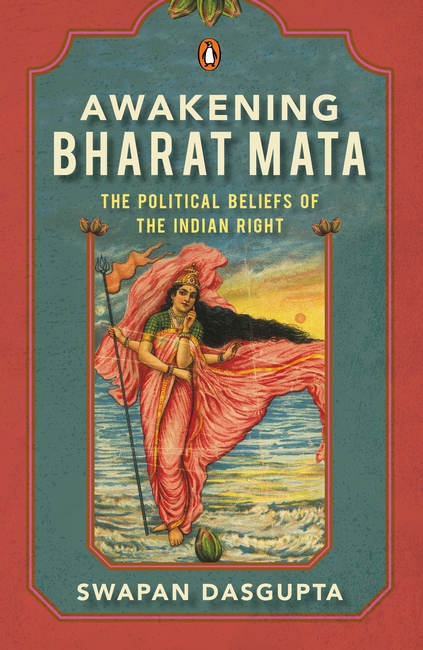
The rise of the Bharatiya Janata Party (BJP) was much more than an ordinary electoral phenomenon: it brought to the fore two contrasting views of nationhood: between those who saw modern India in terms of secular republicanism and on the other hand were those who sought to blend technological modernity with the country’s Hindu inheritance. The Right’s ascendancy and the debates that accompanied it, anticipated many of the concerns that find reflection today in the United States and Europe.
The phenomenon of Hindu nationalism was also a profound intellectual challenge to the loose Left-liberal consensus that had prevailed in India since Jawaharlal Nehru became Prime Minister in 1947. The idea of Hindutva and the political character of the BJP have been closely scrutinised by scholars, and the impulse has been to view India’s Right-wing politics as either a variant of fascism or merely a collection of sectarian prejudices.
In fact, the inspiration for the Right in India has come from multiple and often contradictory sources, including the influence of individuals such as Sarvarkar, Bankim Chandra Chatterjee, Swami Vivekananda and Sri Aurobindo, not to mention the Arya Samaj movement.
This collection is an attempt to showcase the phenomenon of Hindu nationalism in terms of how it perceives itself. Many of the concerns that drive the Indian Right are located in the country’s nationalist culture. In trying to locate some of the ideas, attitudes and beliefs that define the Indian Right, Awakening Bharat Mata also seeks to identify the nature of Indian conservatism and identify its similarities and differences with political thought in the West.
This book is not about Hindu nationalism in power but as a social and political movement and its aim is to encourage a more informed understanding of an idea that will remain relevant in Indian life far beyond victories and defeats in elections.

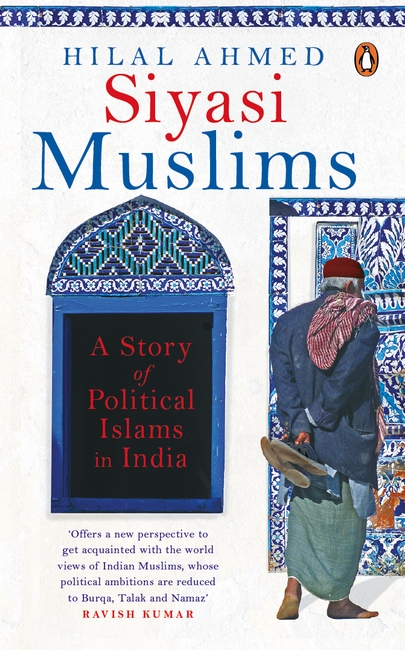
How do we make sense of the Muslims of India?
Do they form a political community?
Does the imagined conflict between Islam and modernity affect the Muslims’ political behaviour in this country?
Are Muslim religious institutions-mosques and madrasas-directly involved in politics?
Do they instruct the community to vote strategically in all elections?
What are ‘Muslim issues’?
Is it only about triple talaq?
Are Muslims truly nationalists? Or do they continue to remain just an ‘other’ in India?
While these questions intrigue us, we seldom debate to find pragmatic answers to these queries. Examining the everydayness of Muslims in contemporary India, Hilal Ahmed offers an evocative story of politics and Islam in India, which goes beyond the given narratives of Muslim victimhood and Islamic separation.

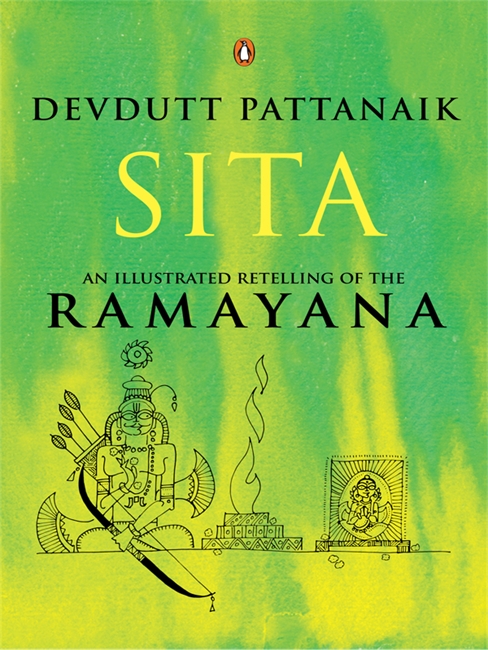
It is significant that the only character in Hindu mythology, a king at that, to be given the title of ekam-patni-vrata, devoted to a single wife, is associated with the most unjust act of abandoning her in the forest to protect family reputation. This seems a deliberate souring of the narrative, made even more complex by Ram’s refusal to remarry despite the pressure on royalty to produce an heir. The intention seems to be to provoke thought on notions of fidelity, property and self-image. And so mythologist and illustrator Devdutt Pattanaik narrates the Ramayan, drawing attention to the many oral, visual and written retellings composed in different times by different poets, each one trying to solve the puzzle in their own unique way. This book approaches Ram by speculating on Sita-her childhood with her father, Janak, who hosted sages mentioned in the Upanishads; her stay in the forest with her husband who had to be a celibate ascetic while she was in the prime of her youth; her interactions with the women of Lanka, recipes she exchanged, emotions they shared; her connection with the earth, her mother; her role as the Goddess, the untamed Kali as well as the demure Gauri, in transforming the stoic prince of Ayodhya into God.
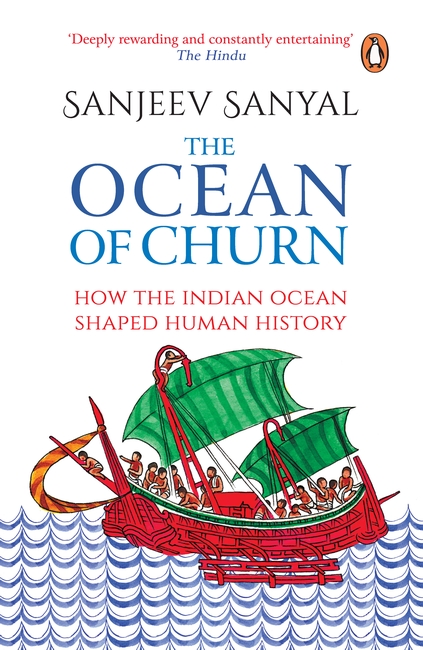
In this ambitious book, bestselling author Sanjeev Sanyal chronicles the grand sweep of history from East Africa to Australia, conjuring the great cities of Angkor and Vijayanagar, medieval Arab empires and Chinese ‘treasure fleets’ in rich, vivid detail. He explores remote archaeological sites, maritime trading networks and half-forgotten oral tales to challenge established historical narratives with fresh evidence. Shining new light on medieval geopolitics and long-lost cities, The Ocean of Churn is a mesmerizing journey into the heart of a vibrant civilization.

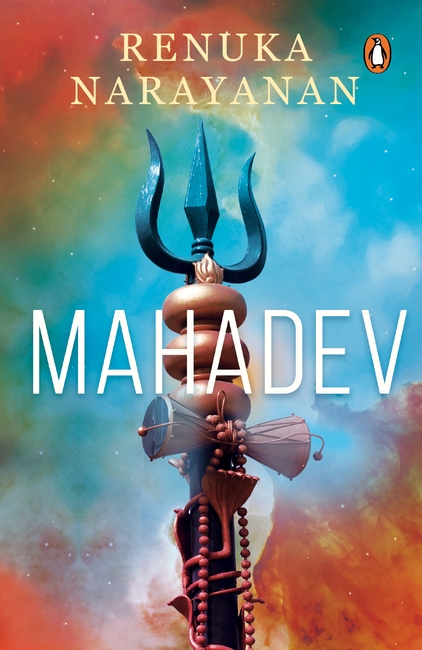
A little girl asks who Shiva is and it is the beginning of a family journey through stories and incidents across the expanse of Shivbhumi-all the way from the mystical Mount Kailash to the fabled Ocean of Milk and the netherworld.
Story after story from across India takes us closer to this elusive but much-loved god of gods, the Mahadev-his avatars and his lilas; his drinking the Kalakuta poison to save the world and his grief at the passing of Sati; his restoration as a householder and his eternal identity as the Mahayogi; his temples and their history; and his quirky, tender and wholly unpredictable involvement with the mortals who love him.
Writing in the Harikatha style of traditional storytelling, Renuka Narayanan builds a unique narrative to draw the reader into the loving, giving world of Mahadev.

Twenty years, a thousand pages, and now a single beautiful edition of Arundhati Roy’s complete non-fiction.
My Seditious Heart collects the work of a two-decade period when Arundhati Roy devoted herself to the political essay as a way of opening up space for justice, rights and freedoms in an increasingly hostile environment. Taken together, these essays trace her twenty year journey from the Booker Prize-winning The God of Small Things to the extraordinary The Ministry of Utmost Happiness: a journey marked by compassion, clarity and courage. Radical and readable, they speak always in defence of the collective, of the individual and of the land, in the face of the destructive logic of financial, social, religious, military and governmental elites.
In constant conversation with the themes and settings of her novels, the essays form a near-unbroken memoir of Arundhati Roy’s journey as both a writer and a citizen, of both India and the world, from ‘The End of Imagination’, which begins this book, to ‘My Seditious Heart’, with which it ends.

High above the sky stands Swarga, paradise, abode of the gods. Still above is Vaikuntha, heaven, abode of God.
The doorkeepers of Vaikuntha are the twins, Jaya and Vijaya, both whose names mean ‘victory’. One keeps you in Swarga; the other raises you into Vaikuntha. In Vaikuntha there is bliss forever, in Swarga there is pleasure for only as long as you deserve.
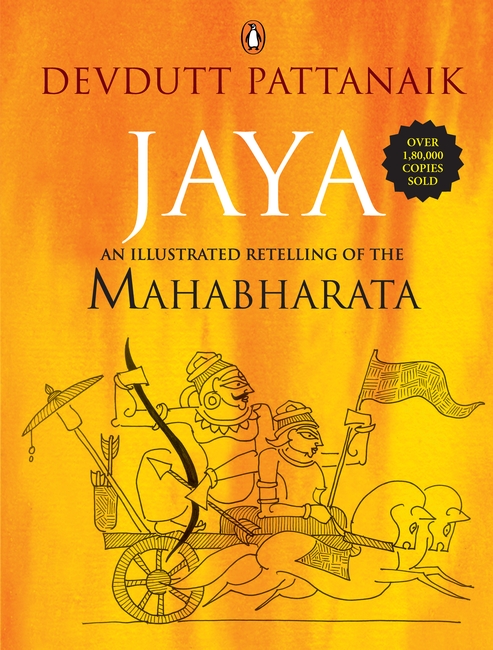
What is the difference between Jaya and Vijaya? Solve this puzzle and you will solve the mystery of the Mahabharata. In this enthralling retelling of India’s greatest epic, the Mahabharata, originally known as Jaya, Devdutt Pattanaik seamlessly weaves into a single narrative plots from the Sanskrit classic as well as its many folk and regional variants, including the Pandavani of Chattisgarh, Gondhal of Maharashtra, Terukkuttu of Tamil Nadu, and Yakshagana of Karnataka.
Richly illustrated with over 250 line drawings by the author, the 108 chapters abound with little-known details such as the names of the hundred Kauravas, the worship of Draupadi as a goddess in Tamil Nadu, the stories of Astika, Madhavi, Jaimini, Aravan and Barbareek, the Mahabharata version of the Shakuntalam and the Ramayana, and the dating of the war based on astronomical data. With clarity and simplicity, the tales in this elegant volume reveal the eternal relevance of the Mahabharata, the complex and disturbing meditation on the human condition that has shaped Indian thought for over 3000 years.

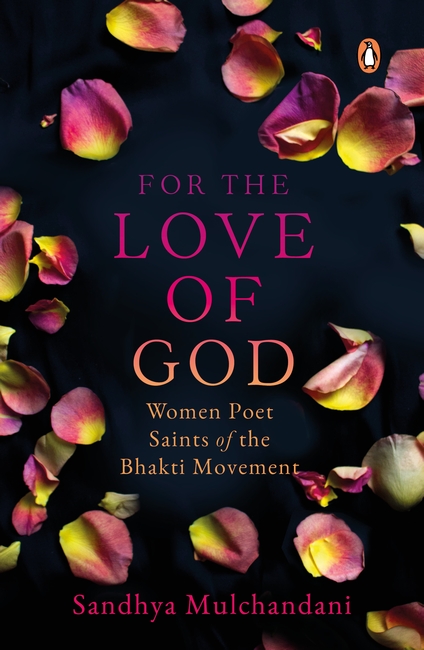
Between the third centuries BC and AD were written thousands of verses in Tamil that have collectively come to be known as Sangam literature. The expressions of love between a man and a woman in these love poems gave way to passionate expressions of devotional love, where the heroine became the devotee and the hero became God. Through the centuries of patriarchy, women negotiated varied levels of existence and largely went unnoticed until they found a path for self-expression through bhakti or devotion. While the dominant form of worship was to prostrate before God, women found innovative ways of personal expression, often seeing the lord as a lover, friend, husband, or even son. The individual outpourings and the unfettered voices of these women refused to be drowned in the din of patriarchy gathering momentum until this became a pan India movement.
In For the Love of God, Sandhya Mulchandani delves deep into historical accounts of these women who fell in love with God.

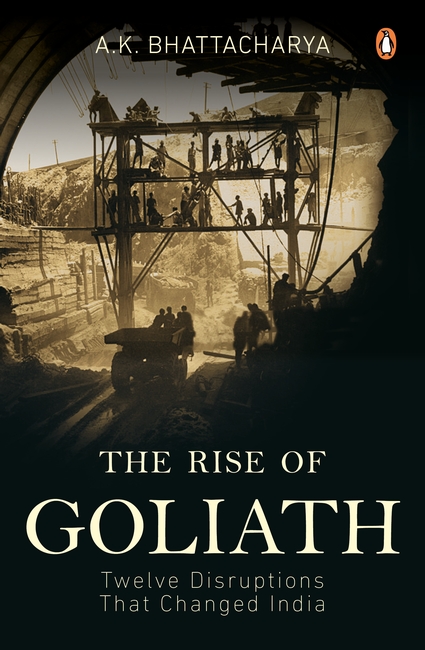
What can best illustrate India’s journey in the last seven decades? Disruptions.
Almost every decade of India’s history since Independence has been marked by major disruptions.
India became independent through an act of disruption-Partition-that killed millions in communal violence and turned many more into refugees. The turn towards a model of state-led economic development delivered as big a shock to the economy as did the food crisis or the spike in crude oil price. If the Emergency in 1975 shook the foundations of India’s democracy, the unprecedented balance-of-payments crisis of 1990 turned India towards a path of economic reforms. Just as the reservation of jobs for backward castes changed the idiom of India’s politics, the movement for building a temple for Ram drove India closer to becoming a majoritarian state. No less disruptive have been the telecom revolution, the banking crisis, demonetization and the launch of the goods and services tax.
How did these disruptions impact India? How did they influence the rise of this Goliath?
This is the story of twelve disruptions that changed India. The book also provides a peek into the kind of disruptions India could face in the coming years.